


News
Company at forefront of stress breakthrough



Directors: Dr Frederic Boy and Sian Roderick
A WHITLAND company could join the fight against stress and mood swings, following research by Swansea University Doctors.
Magstim, which has been at the cutting edge of transcranial magnetic stimulation (TMS) for many years, could find themselves developing research recently carried out at the University of Swansea.
Brain scientists and psychologists at the university are developing a new technique which can reduce the impact of stress on mood and help improve your emotional wellbeing.
Dr Frederic Boy, who works at both the College of Human and Health Science and the School of Management at the university, is leading the research. And his work is already receiving international interest in the short period since his paper was published in scientific journal Frontiers in Psychology.
Dr Boy said: “When facing stressful events, the frontal regions of the brain are particularly active and constantly appraise the positive or negative emotions which are generated, and that will, in turn, shape how we react to situations.

“Over time, the negative impact of stressors build up and the physical and emotional wellbeing may be compromised. We asked ourselves – can the impact of stress on the brain of a non-depressed individual be reduced?”
Along with fellow academic Sian Roderick, new brain science research employing weak electrical impulses to stimulate the frontal cortex by placing electrodes on the top of the head has been developed.
And if this sounds like a intimidating process, Sian says the technique is actually very simple and the stimulation is very subtle. She said: “We don’t want anyone to think this is like electrical treatments used in the past. The volunteers were all very relaxed with the process and the stimulation lasts for a very short period and feels like a much weaker version of a TENS machine, for example.”
Dr Boy added: “Advances in transcranial electrical stimulation techniques mean we are able to investigate different clinical and nonclinical people and specific areas of the human brain and see how those regions regulate people’s behaviour.

“What was clear is that the way people behave results from a complex interaction between a number of genetic, social and environmental factors.”
The scientists studied 66 healthy young women, with no history of psychiatric disorders or substance dependence. The volunteers filled in questionnaires, which helped assess different aspects of their current mood, the building bricks of the emotional and physical wellbeing. They underwent a course of 12 min-a-day brain electrical stimulations sessions for five days. A total of 22 individuals received an ineffective, but realistic, placebo stimulation, while the 44 others were administered a real, active stimulation.
Dr Boy explained: “This technique employs electrical power that is more than a thousand times lower than the one used by an energy saving light bulb, and result in a feeble tingling lasting a few seconds in the first instants of the stimulation session.”

Over the duration of the research, the team found that those volunteers who received the active stimulation gradually reported having experienced less negative mood states in the past day. On the contrary, participants in the placebo group did not report notable changes in mood.
“This type of treatment has been accredited by the NHS to be used to treat depression last August. We have shown that weak electric stimulation is also effective to improve the mood of those who are not depressed, but are still affected by the consequence of a stressful, restless and demanding lifestyle,” added Dr Boy, who is Head of Translational and Consumer Neuroscience in the Department of Psychology.
“This technique is based on robust scientific research and we hope it will be developed to create an over-thecounter device which can be used to improve mood and lower stress.”
With the recent statistics showing that more and more young people, are turning to medicating their emotional wellbeing – the number of young people in the UK prescribed anti-depressants increased by more than 50% between 2005 and 2012, according to the new study – could Dr Boy’s research lead to a reduction in this worrying trend?
“Yes, we are hopeful this research can assist in the treatment of low mood without having to resort to medication. “As well as the possible side effects this type of treatment can have on the patient, prescribing drugs in the first instance is a huge drain on the NHS. We are aiming to align our work with the Prudent Healthcare agenda set out by the Health Minister.
“As a university we are excited to be part of ARCH (A Regional Collaboration for Health).
“The ARCH partners are working to use innovation and research to drive health service improvements and we believe this research could be a part of this transformational approach.
“We hope that in developing a device which people can choose to use we are also empowering the population to take responsibility for their own health and wellbeing.”
Dr Boy and Sian Roderick are both directors of the emerging life science firm Neurotheraputics, and are hopeful their research can be developed by West Wales medical devices firm Magstim.
The Whitland-based company, who pioneer and manufacture non-invasive magnetic stimulation devices, say they are excited by the research.
Charles Hounsell, Magstim product specialist, said: “Magstim is delighted to explore opportunities with Swansea University to expand our understanding of therapeutic techniques using neurostimulation devices.
“The field of non-invasive brain stimulation is expanding rapidly and we are hugely excited about the potential benefits of Transcranial Magnetic Stimulation (TMS). We look forward to discussing this research further with Dr Boy and his team.”



THE LOCAL health board has launched new targeted measures after recording a sharp rise in the use of steroids and other image-enhancing drugs across the region.
Hywel Dda University Health Board says needle exchange figures show significant growth over the past two years in people seeking support related to Image and Performance Enhancing Drugs (IPEDs), including anabolic steroids and so-called Selective Androgen Receptor Modulators (SARMs).
SARMs, while marketed online as safer alternatives to steroids, are illegal to sell in the UK and health professionals warn they carry serious and largely unknown risks.
The health board has now teamed up with Dyfed Drug and Alcohol Service (DDAS) and Choices, a young people’s substance use service, to tackle what officials describe as an “emerging public health challenge”.
Workshops and outreach
Two key initiatives have been introduced.
Educational workshops are being delivered to young people, focusing on the risks of using performance-enhancing substances during physical development and the potential long-term effects on hormones, mental health and fertility.
At the same time, enhanced support is being offered to people already involved in gym and fitness culture, with harm-reduction advice, health monitoring and confidential drop-in services.
Support includes testosterone testing, blood checks, cycle provision kits and discreet one-to-one consultations.
One service user described the programme as “quick, professional and non-judgemental”.
They said: “The drop-in clinic for my blood test was really convenient. I was seen quickly and given a full run-down of the services available. The staff made me feel comfortable the whole time and I got my results back faster than expected.”
Taking support into the community
The team has also worked directly with local gyms, leisure centres and sports venues, speaking to more than 100 people during five outreach sessions.
Twelve DDAS staff members have completed specialist IPED training delivered by Public Health Wales to strengthen expertise within the service.

Rachel Wilson, Resilient Families Manager at Choices, said the aim is to reduce stigma.
She said: “We’re proud to work alongside Hywel Dda to ensure people who use IPEDs are met with understanding, not judgement. These initiatives are helping us reach individuals who may not have previously considered accessing support.”
Craig Jones, Prevention and Population Health Improvement Manager, added: “This work is about meeting people where they are. By listening and responding with compassion and evidence-based care, we’re making a real difference.”
Dr Ardiana Gjini, Executive Director of Public Health, said the approach showed the board’s commitment to early intervention.
She said: “These initiatives reflect a proactive, collaborative response to emerging health challenges and demonstrate our dedication to protecting the health of our communities.”
Anyone seeking confidential advice or support can contact DDAS on 03303 639997 to book an appointment.

Milford Haven and other UK energy hubs urged to stay vigilant amid rising European threats
CONCERNS about the security of major European ports have intensified after two men were arrested over an alleged attempt to sabotage German naval vessels at the Port of Hamburg.
Eurojust, the EU’s crime agency, said the suspects are believed to have deliberately interfered with ships by disabling safety switches, removing fuel tank caps, puncturing water lines and dumping more than twenty kilograms of abrasive gravel into an engine system.
Officials warned that, had the damage gone undetected, it could have caused serious mechanical failure, delayed deployments and endangered German Navy operations.
The suspects, port workers aged thirty-seven and fifty-four, were arrested in Germany and Greece following coordinated raids. Homes in several countries were searched as part of the investigation.

While Germany has not formally blamed Moscow, the arrests come amid growing fears of Kremlin-linked disruption activity across Europe since Russia’s invasion of Ukraine.

Recent incidents have included damaged undersea cables in the Baltic and suspicious drone activity around airports and military facilities.
Security analysts say ports — especially those handling military or energy assets — are increasingly viewed as soft targets.
The developments have clear relevance for west Wales, home to the Milford Haven waterway and the Port of Milford Haven — one of the UK’s most strategically important energy hubs.
The Haven handles a significant share of Britain’s liquefied natural gas imports and hosts major oil and gas infrastructure, alongside commercial and fishing traffic. Any disruption could have national consequences for energy supply as well as local jobs.
Maritime security experts say the Hamburg case highlights how insider access can pose risks.
The suspects there reportedly worked at the port itself, allowing them proximity to vessels and systems without raising immediate suspicion.
That has prompted calls for tighter background checks, improved surveillance and stronger reporting procedures at critical UK ports.

A senior maritime security consultant told The Herald: “The biggest threat is often not dramatic attacks but low-level interference — someone loosening fittings, contaminating fuel, damaging cables. Small acts can cause very expensive and dangerous failures.
“Energy and naval ports are now considered critical infrastructure and must be protected accordingly.”
A spokesperson at the Port of Milford Haven, said: “Security across the Waterway is made up of physical measures, procedures, information‑sharing, and intelligence work. These activities are coordinated across all facilities to maintain an effective, intelligence‑led approach to security.
“Both land‑based and marine teams contribute, including commercial operators and government agencies. Each organisation uses its own vetting processes, all of which follow national standards, regulations, and best practice.”
UK vigilance
Across the UK, ports already operate under the International Ship and Port Facility Security Code, which requires controlled access zones, patrols and monitoring.
However, the scale and complexity of sites such as Milford Haven mean constant vigilance is needed.
Industry sources say collaboration between harbour authorities, police and counter-terrorism teams has increased in recent years, particularly following the war in Ukraine.
A Port of Milford Haven spokesperson previously said security measures are regularly reviewed and updated to “protect people, vessels and infrastructure”.
Police have not indicated any specific threat locally.
Nevertheless, the Hamburg arrests serve as a reminder that sabotage attempts are no longer theoretical.
For communities around the Haven — where tankers, refineries and supply chains underpin the local economy — the message is simple: what happens in European ports today could easily have implications at home tomorrow.

Teenager arrested on suspicion of attempted murder after lockdown triggered
A TEACHER was assaulted by a pupil brandishing a weapon at Milford Haven School on Tuesday afternoon (Feb 4), triggering an emergency lockdown and a major police response.
Officers from Dyfed-Powys Police were called to the school at around 3:20pm following reports that a member of staff had been attacked.
A lockdown was immediately implemented, with doors secured and pupils and staff told to remain inside classrooms and offices while the situation was dealt with.
Most pupils had already left at the end of the school day, but some remained on site for after-school activities.
Police confirmed that the injured teacher’s wounds are not believed to be stab injuries and they are currently receiving medical treatment.
Superintendent Chris Neve said: “We can confirm police are at Milford Haven Comprehensive School, following a report of the assault of a teacher by a pupil brandishing a weapon at the school at approx. 3.20pm.
“The teacher’s injury is not a stab injury. A lock down was implemented but has now been lifted. The teacher is receiving medical treatment for their injuries.
“All pupils at the location are safe, and most have gone home. Officers remain at the school.
“A 15-year-old boy has been arrested on suspicion of attempt murder and is in police custody.”

Parents told The Herald they were alerted to the lockdown shortly after 3:00pm via messages and social media, with some describing staff and pupils being kept inside rooms for safety as a precaution.
The lockdown has since been lifted, but officers remain at the scene while enquiries continue.
There have been no reports of any injuries to pupils.
The Herald has also contacted Pembrokeshire County Council for further comment.
Photo caption: Police vehicles outside Ysgol Aberdaugleddau Milford Haven School following Tuesday afternoon’s incident (Pics: Herald).



Crime5 hours ago
Teacher injured and teenager arrested for attempted murder at Milford Haven School
Lockdown triggered as pupil allegedly attacks staff member with weapon – boy, 15, held on suspicion of attempted murder A...


international news10 hours ago
Pembrokeshire women conquer Atlantic in epic 3,000-mile row
PEMBROKESHIRE’S all-female rowing crew Merched y Mor have completed one of the hardest endurance challenges on the planet after crossing...


Crime1 day ago
Sex offender jailed after living off grid in Pembrokeshire and refusing to register
Man walked into police station after months avoiding authorities A CONVICTED sex offender who told police he intended to live...


Crime1 day ago
More rape and sexual assault survivors to get right to challenge dropped cases
New review scheme to be rolled out across CPS Cymru-Wales following successful pilot SURVIVORS of rape and serious sexual assault...

Crime2 days ago
Man spared jail after admitting child abuse image offences
Police seized devices after intelligence linked Pembrokeshire address to illegal cloud storage accounts A 23-YEAR-OLD Pembrokeshire man has avoided immediate...


Community2 days ago
Cleddau at heart of major water reforms as ministers promise ‘fundamental reset’
New regulation plan aims to tackle pollution, sewage spills and ageing infrastructure COMMUNITIES along the River Cleddau could see tighter...


Crime2 days ago
Man caught in hotel sting after trying to meet girl, 13
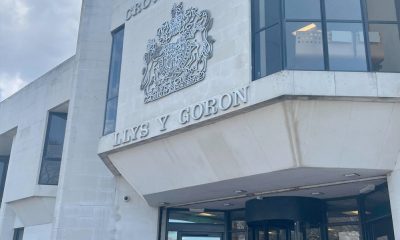
Laugharne defendant confronted by paedophile hunters at St Clears Travelodge before suspended jail term at Swansea Crown Court A LAUGHARNE...


News2 days ago
Princess of Wales visits historic Pembrokeshire woollen mill
Catherine the Princess of Wales visited Melin Tregwynt, a historic family-owned woollen mill, today, highlighting the enduring traditions and skills...


Crime3 days ago
Arrest made after Carmarthen park stabbing investigation
Police thank community and media following public appeal to trace suspect AN ARREST has been made following last week’s stabbing...


Crime3 days ago
Search continues for attempted murder suspect after Carmarthen park stabbing
Police expand searches across riverbank and woodland as public urged to come forward with information DYFED-POWYS POLICE say their search for...
-
Crime1 day ago
Sex offender jailed after living off grid in Pembrokeshire and refusing to register
-
News2 days ago
Princess of Wales visits historic Pembrokeshire woollen mill
-

 Crime6 days ago
Pembroke man accused of child sex offences sent to Swansea Crown Court
-

 Health4 days ago
Doctor struck off after sexual misconduct findings at Withybush Hospital
-
Crime5 hours ago
Teacher injured and teenager arrested for attempted murder at Milford Haven School
-
 Crime6 days ago
Manhunt intensifies after woman seriously injured in Carmarthen park stabbing
-

 Education6 days ago
Conference spotlight on Senedd election and new apprenticeship programme
-

 Community6 days ago
50s women threaten legal action over pension compensation refusal