


Community
Missing out on bedtime stories



Encouraged to read:
Bookish charity BookStart found that only 37%
of children in Wales are read to before bed
SHOCKING statistics which have been revealed by Booktrust, Britain’s largest reading charity, have shown that only a measly 37% of children in Wales are read a bedtime story before they go to sleep.
This research has been conducted as part of BookTrust’s drive to get children and families into the habit of reading together every day while children are still young.
Evidence has shown that by reading together every day, parents will help their children to be almost 12 months ahead of their age group when they start school.
For busier parents, even reading to children three to five times a week gives them up to a six-month head-start over those who are read to less often.
Wales’ result is much lower than any other region in the UK except for London, where only a meagre 28% of children are read a book by a family member in the 20 minutes before they go to sleep.

Cardiff fared particularly badly in the results, with parents and carers in the Welsh capital less likely to read to their children before bedtime than any other city in the UK.
Only 30% of children in Cardiff said that they read with a family member before going to bed, compared to 55% of children in Bristol, the highest scoring city, and 42% as a UK wide average.
Making reading a bedtime story part of your nightly routine can have real benefits for both children and tired parents.
Diana Gerald, CEO of BookTrust, said: “Reading together at any time of day has real benefits, but there’s something extra special about a bedtime story.

“Children need to feel safe and secure when they sleep, and reading together creates a special quiet time to wind down together.
“Storytime also enhances children’s vocabulary and literacy skills, and enables them to foster a love of reading.’
Through its Bookstart programme, BookTrust is hoping to support families to make sure that reading together every day remains a top priority.

Through Bookstart, every child in Wales can receive free English and Welsh books in their first year of life and again when they are two years old.
Between Monday (Jun 6) and Sunday (Jun 12), the charity will be celebrating National BookStart Week, working with libraries and various early years teams across Wales.
This year’s theme of ‘Under the Sea’ is based on the fun picture book ‘A Hole in the Bottom of the Sea’ by Jessica Law, which will be given free to every child who attends the National Bookstart Week events.
National Bookstart Week was launched at Rhyl SeaQuariaum on Monday (June 6), with a fun family event led by Denbighshire Libraries’ BookStart Team.
There are hundreds of free events for babies, toddlers, preschoolers and their families which are being held at libraries, nurseries and in early years sessions across the country. Events include stories, rhymes and lots of fun activities to inspire families to read together and enjoy books.
Bethan Hughes, Customer Service Manager at Denbighshire Libraries, said: “Reading and sharing books every day has huge benefits for all children, however young they are.
“Children who read and enjoy books are happier, healthier and do better in life than those who don’t.
“Local libraries welcome children from birth and offer free access to fabulous children’s books – for bedtime stories and reading at any time of day.”
More information about National BookStart Week, as well as fun activities for families, can be found on the BookStart website.
BookStart is funded by the Welsh Government’s Department for Education and Skills and delivered in partnership with Welsh libraries and Health Visitors.


Community rallies around grieving family as club honours much-loved player at weekend fixture
JOHNSTON FC paid an emotional tribute at the weekend to Rhyan Nolan after his sudden death at the age of 27.
The club marked the occasion with a flawlessly observed minute’s silence before kick-off, as both teams, officials and supporters came together in his memory.
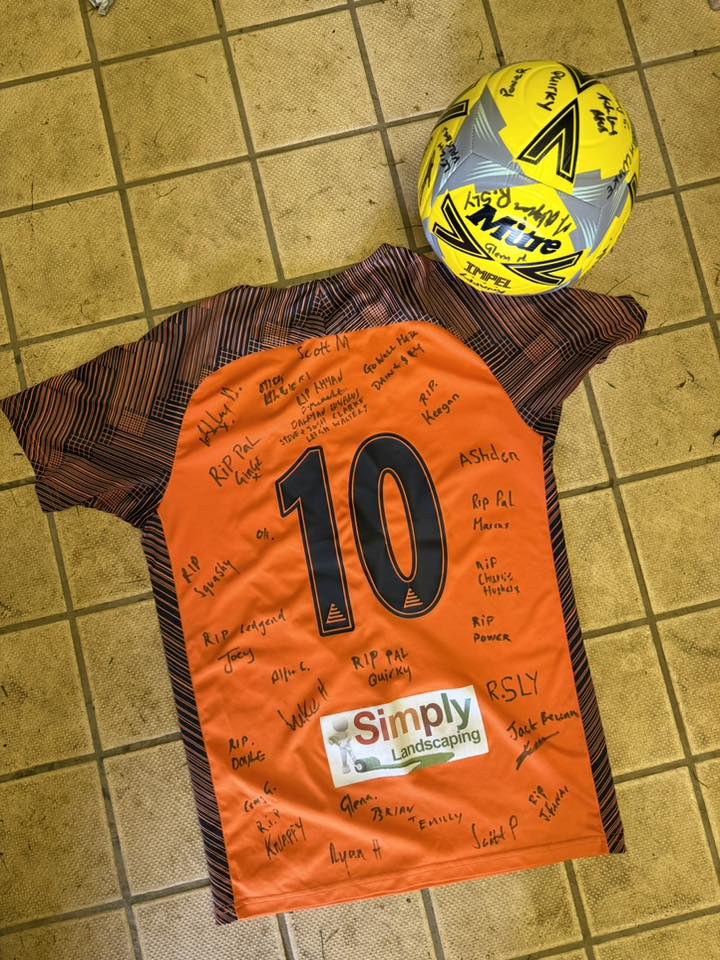
A signed match ball and Rhyan’s much-worn number ten shirt, covered in messages from team-mates and friends, were also prepared to be handed to his family, who were present for the tribute.
The death of Rhyan has sent shockwaves through the local community, with many gathering around his loved ones in the days since the devastating news emerged.

A fundraiser set up on GoFundMe says his family received the heartbreaking news on Monday that they had lost their “precious, loving son and brother” suddenly at such a young age.

The appeal names his close family as Nichola, Shamus, Brandon, Callum and Lilly, and says relatives are hoping to ease the financial burden while giving Rhyan the send-off he deserves.
It states: “Rhyan deserves a celebration of his short life.”
Johnston FC said it had been a difficult week for all those who knew and loved him, but said it had also been heartwarming to see such an outpouring of love at the match.
The club thanked everyone who helped make the tribute possible, along with those who had sent messages of support and donated towards helping the family.

Photographs shared after the game showed the scale of the moment, with both sides lined up in silence and the orange number ten shirt left covered in handwritten tributes.
For many in attendance, it was a powerful and deeply personal farewell to a young man clearly held in enormous affection.
A GoFundMe appeal has now been launched to support the Nolan family.


Natural Resources Wales (NRW) has issued a Flood Alert for the Pembrokeshire coastfollowing rising water levels. The alert, which affects areas between St Dogmaels, Cardigan and Amroth, warns that flooding is possible in the region due to adverse weather conditions and high tides.
The alert was issued at 12:53 PM today (Apr 4), urging local residents to be prepared for potential flooding in the coming hours.
Key Advice for Residents
As the flood risk increases, NRW has shared crucial advice to help people stay safe:
- Prepare a flood plan: If you have one, now is the time to follow it.
- Protect valuables: Residents should move important items, such as documents and sentimental belongings, to higher ground or safer locations.
- Stay alert and pack an emergency kit: Ensure your phone is charged, and pack essential items like medications, chargers, insurance documents, and warm clothing in case you need to evacuate quickly.
- Check on vulnerable individuals: Ensure that children, elderly relatives, and pets are safe, with a plan for their evacuation if necessary.
Avoid Floodwater at All Costs
NRW is also stressing the importance of avoiding floodwater, as even shallow levels of water can be extremely dangerous. As little as 30 cm (1 foot) of floodwater can sweep away a car, and 15 cm (6 inches) can knock you off your feet.
Authorities are urging everyone to never walk or drive through flooded areas.
How to Stay Updated
Residents are advised to stay informed through NRW’s website, where they can track water levels and access real-time updates. The agency also recommends checking its social media accounts for the latest information.
For more detailed information or if you need assistance, call Floodline at 0345 988 1188 (quick dial number: 503013).
For More Information:
- Flood Warning Details: Flood Warning Page
- Check River and Rainfall Levels: River Levels
- Floodline: 0345 988 1188
Follow NRW on Twitter: @NatResWales

Image: Herald file photo

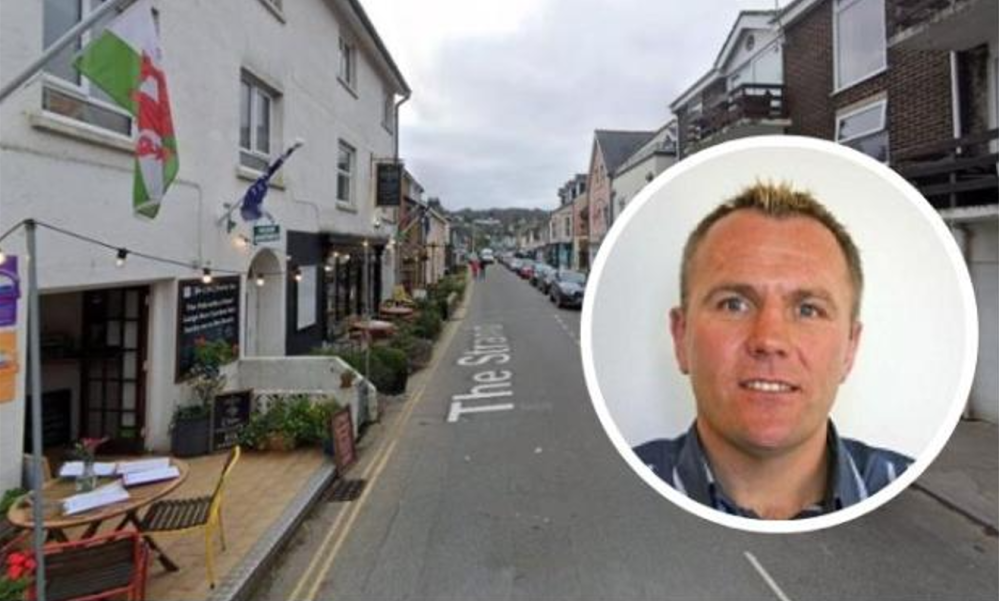
A FORMER Pembrokeshire county councillor who owns many hostelries in the county has submitted plans to the national park to rejuvenate a “tired” seaside pub.
In an application to Pembrokeshire Coast National Park, Mike Evans of Harbwr Brewery, a former county councillor and national park authority member, seeks a partly retrospective permission for works at the Old Chemist Inn, The Strand, Saundersfoot.
The works include proposed internal alterations to the basement and ground floor, a new rear balcony area to replace the existing one, improvements to front façade, a change of use of shop space to food/drink, and installation of seating booths in the rear garden.
It says the changes proposed will increase the number of staff employed to 15 full time and 10 part-time.
No objections to the proposal were raised by local community council Saundersfoot.
A supporting statement through agent David J P Morgan RIBA Architect, says the 19th Century pub “has endured many alterations during its lifetime and at present it needs improvements to echo the recent upgrading of the village, both in the general tourism support facilities, as well as the new innovative harbour development,” with the appearance and interior facilities “tired” and needing “works both inside and outside to enable the inn to achieve and provide the high levels of cuisine and facilities now expected”.
It says: “The Inn has been purchased by a local company who have a number of establishments within Saundersfoot and Tenby. The company is owned by local people, they use local produce, they employ local labour and work actively with local communities to achieve the high standards expected.
“The proposals include internal alterations to the internal layout of basement and ground floor which will improve bar, kitchen and food facilities and allow a much more varied menu including lots of local produce and locally caught seafood dishes. New toilet facilities will be provided on both levels to cater for the increase in visitors to the Inn.”
It adds: “The applicant has recently purchased the small retail unit on the ground floor. This was a single room, situated in between the two entrances into the Inn and with its own entrance door from the street.
“The current proposals include integrating this unit into the public house bar area and consequently the application includes a change of use from retail to the serving of food and drink.”
It goes on to say: “The rear ‘beer garden’ will be improved to allow more space and comfortable seating areas.
“The applicant is well known for the extensive use of external plotted plants in open areas at their establishments and the garden area will give the opportunity of using such to soften the garden area whilst giving greater habitat opportunities for birds and insects.”
There were initial objections from the Park’s buildings conservation officer to some of the parts of the design, a 2025 application being withdrawn early that year; amended plans being later submitted.
The application will be considered by park planners at a later date.



News7 hours ago
St Davids Cathedral marked Easter Sunday with full day of worship
FROM dawn vigil to choral evensong, the cathedral welcomed worshippers for one of the most important days in the Christian...


Crime8 hours ago
Neyland man spared immediate jail over aggravated vehicle taking
Defendant given a suspended prison sentence after magistrates heard the offence was serious enough to cross the custody threshold KRISTIAN...


Health1 day ago
Crumbling NHS faces £1bn repairs bill in Wales
Senedd election promises collide with the harsh reality of ageing hospitals, fire safety concerns and a maintenance crisis stretching across...


News1 day ago
Emergency services respond to incident in Haverfordwest town centre
EMERGENCY SERVICES were called to an incident in Haverfordwest town centre on Saturday morning (Apr 4), with police and ambulance...

News1 day ago
Teenager intervenes after bridge incident
A TEENAGER was left shaken after stepping in to help a young woman in distress on Clay Lanes bridge in...


Crime3 days ago
Driver spared jail after crash killed young couple
A PEMBROKE DOCK driver who caused the deaths of a young couple in a road crash has been given a...


Entertainment3 days ago
BBC unveils major new Welsh dramas with Tenby set for prime-time spotlight
New crime series Old Town Murders and supernatural thriller The Witch Farm will both be filmed and set in Wales...


Health3 days ago
No jobs for new paramedics in Wales as graduates told to apply for technician roles
Students trained at public expense urged to take lower-grade jobs as anger grows over NHS workforce planning NEWLY qualified paramedics...


News4 days ago
Health minister refuses to act on Withybush despite 15,000-signature petition
Senedd pressure grows as Welsh Government declines to intervene over surgery fears THE WELSH GOVERNMENT has refused to step in...


Business5 days ago
Fishguard to Wexford rail tunnel plan backed by Elon Musk firm
Six-hour London to Dublin service proposed in £32bn project ahead of Senedd election PLANS for a rail tunnel linking west...
-

 News2 days ago
Accommodation providers in Wales will be required to register under new law
-
Business5 days ago
Fishguard to Wexford rail tunnel plan backed by Elon Musk firm
-

 Entertainment3 days ago
From Milford Haven to the world: The story of The Evolution Experience
-
Entertainment3 days ago
BBC unveils major new Welsh dramas with Tenby set for prime-time spotlight
-

 Charity6 days ago
RSPCA calls for stronger animal welfare measures as Welsh Labour launches manifesto
-
 Tourism7 days ago
Moving to Australia from the UK: What you need to Kknow
-

 Community7 days ago
Pembrokeshire school allows Sikh pupil to wear Kirpan
-

 News6 days ago
Labour promises 48-hour GP access as manifesto faces questions over delivery