


Community
Welsh Prime Minister’s favourite cakes revived

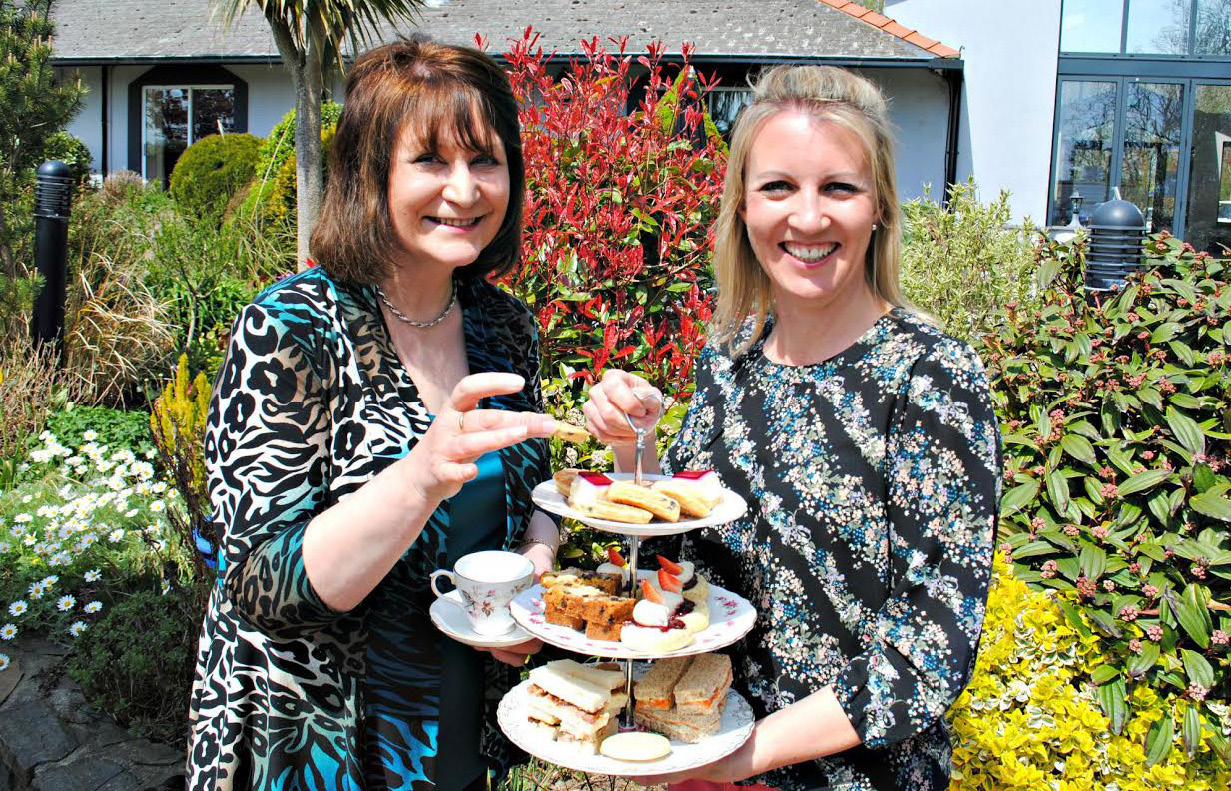

Recipe restored: Rosalind
Raymond of Jordanston Church
with Mandy Stirling of Wolfscastle
Country Hotel
TO MARK the centenary of David Lloyd George becoming the only Welsh Prime Minister, a hotel has revived the original recipes for Welsh cakes he enjoyed and is using them to fund further restoration to his family church in Pembrokeshire.
Wolfscastle C ountry Hotel near Haverfordwest discovered the recipes for Welsh Cakes and Bara Brith which Lloyd George’s wife Dame Margaret, donated to a cookery book originally published in 1919 by the Criccieth Women’s Institute.
Subtitled ‘Recipes for the Favourite Dishes of The Prime Minister’ the book was reprinted in the early 1970s.
The hotel is working with nearby Jordanston Church in Pembrokeshire, which is to hold an exhibition (June 17-19) commemorating the centenary of David Lloyd George taking office as the only Welsh Prime Minister. The exhibition is open to the public at Jordanston Church and Hall between 10.30am-8pm each day.
Lloyd George’s father, grandfather, grandmother, and step grandfather are buried in the church and his family farmed the neighbouring farm of Trecoed.

As a curtain-raiser to the event Wolfscastle Hotel is hosting a fundraising afternoon tea featuring the Lloyd George cakes, on Sunday, June 12, commencing 4.30pm.
Andrew Stirling, proprietor of the four star Wolfscastle Hotel since 1976 said: “We were fascinated to learn about Lloyd George’s family connection with Pembrokeshire and wanted to help by supplementing the great fundraising work of the wardens of Jordanston Church in the best way we can, by baking cakes!
“We hope people will be equally fascinated to try out cakes made to the exact recipe which Lloyd George enjoyed over 100 years ago.”
Speaking on behalf of the Jordanston Church fundraising team, which has so far raised £100,000 to repair and restore the church including a £63,000 Heritage Lottery grant, Rosalind Raymond said: “We are thrilled that Andy and Mandy Stirling have offered to contribute to our exhibition in this way.
The whole purpose is to raise funds specifically to repair windows at this small and much loved church which has so many historic connections and is very much at the heart of our community.”
Of his roots in the county, Lloyd George once said: “I am a Pembrokeshire lad. I come from Pembrokeshire stock and am proud of it.” (David Lloyd George – Crymych, October 30, 1924).
The Welsh Cakes are referred to in the book as ‘Cachen Gri (Dame Margaret’s Way)’ and the ‘Bara Brith’ is also described as Currant Cake in the 1919 recipe.

Mandy Stirling of Wolfscastle Hotel said: “In trialling the recipes, we found the Welsh Cakes were less sweet than is the norm these days; they are almost savoury and you can imagine them being served spread with butter. These days we tend to add zest of fruit to give a little more flavour, mixed spices, again for more flavour.
The Bara Brith was even more of a marked difference than the style people expect these days. The 1919 recipe used lard, lots of eggs and milk, whilst we use warm black tea in the recipe, which is more common.
Whereas people today will be used to a Bara Brith that is moist and quite sticky, the Lloyd George recipe produced a crumbly, drier cake with just currants rather than the mixed fruit we have. But it is nonetheless delicious and we look forward to serving these lovely cakes to our guests.”
Tickets to the Lloyd George Exhibition Charity Afternoon Tea cost £12 per person, with £6.00 going to the Jordanston Church restoration fund.
Tickets are available from www. wolfscastle.com

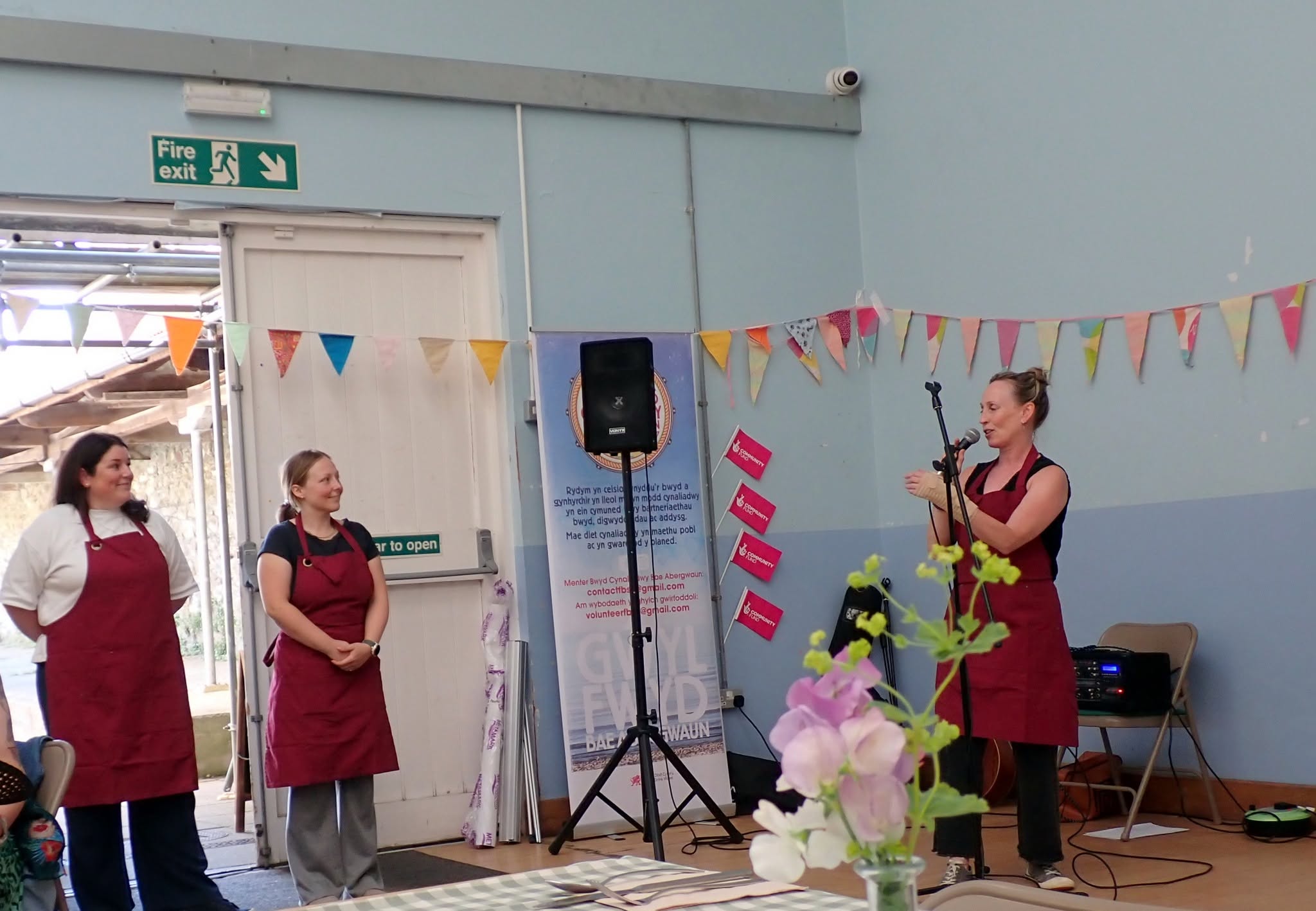
Ford Pawb offers affordable, nutritious meals alongside friendship and community spirit
A NEW community dining initiative has enjoyed a successful opening night, welcoming a packed gathering to Fishguard Town Hall for an evening of affordable food and friendly conversation.
Ford Pawb, also known as Everyone’s Table, has been launched by the Fishguard Bay Sustainable Food Initiative CIC and will serve a low-cost, nutritious meal open to everyone on Monday evenings.
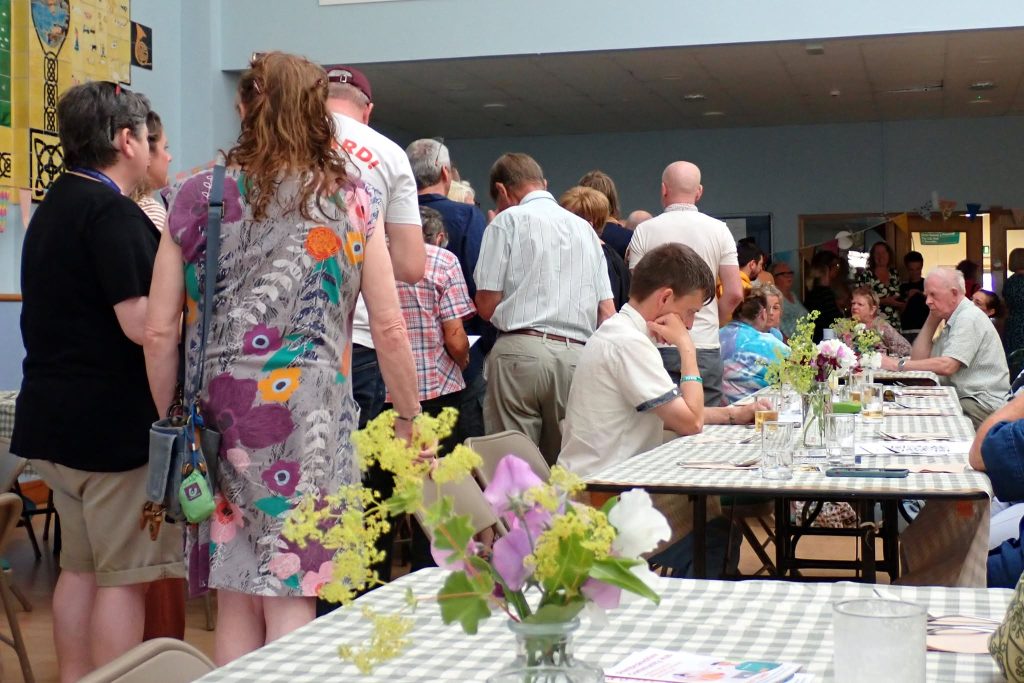
The first event attracted residents of all ages, with tables filling as people gathered to eat, catch up with friends and meet others from the community.
Guests were served vegetable lasagne with potatoes and salad, followed by a fresh garden berry crumble and a selection of non-alcoholic drinks. Much of the food was locally sourced, with diners praising both the generous portions and the quality of the meal.
Flowers decorated the tables, adding to the welcoming atmosphere, while music followed the meal as guests continued to socialise.
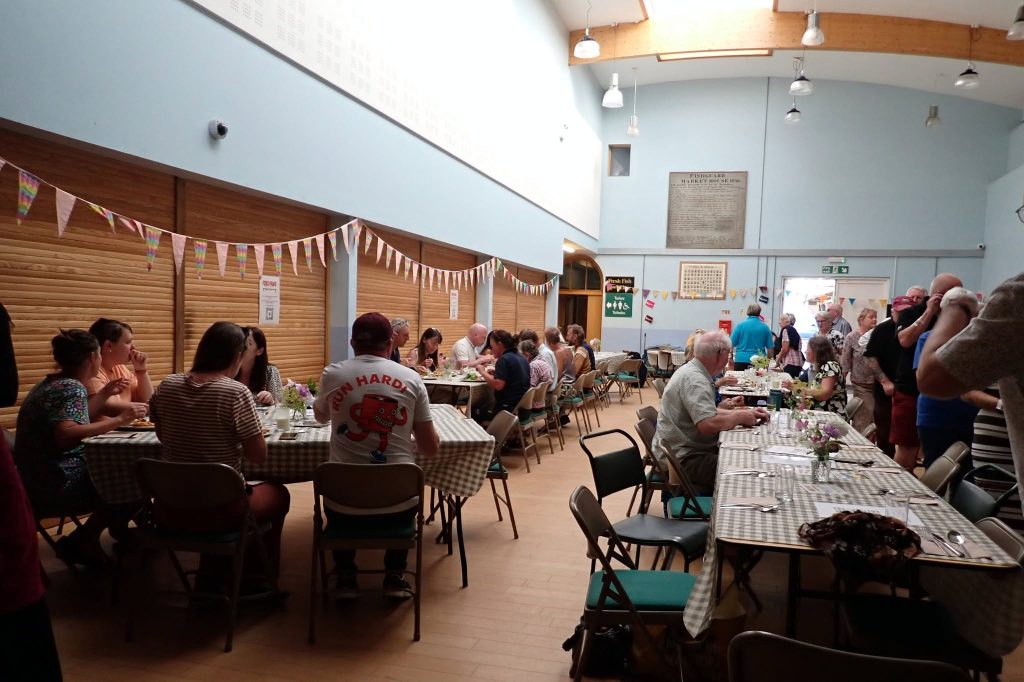
Behind the scenes, a team of volunteer cooks and servers worked throughout the evening to prepare and serve the food, clear tables and ensure the new project got off to a smooth start.
Organisers hope Ford Pawb will provide more than simply an affordable meal. The weekly gatherings are also intended to offer a warm and inclusive place where people can spend time together, reduce social isolation and strengthen community connections.
The strong turnout on the opening night demonstrated the appetite for such an initiative in Fishguard and Goodwick, and organisers and volunteers were congratulated for their hard work in bringing the project to life.
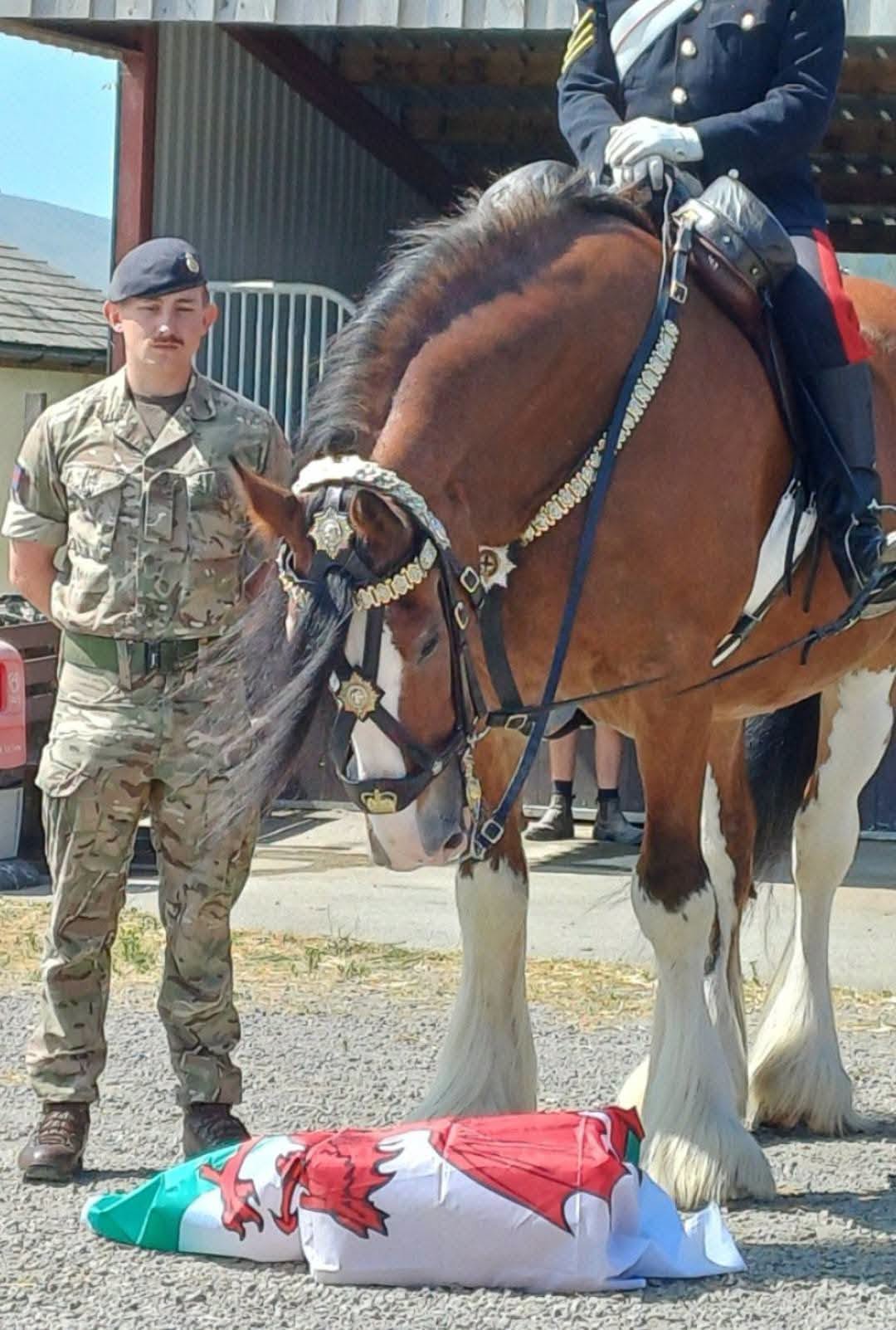
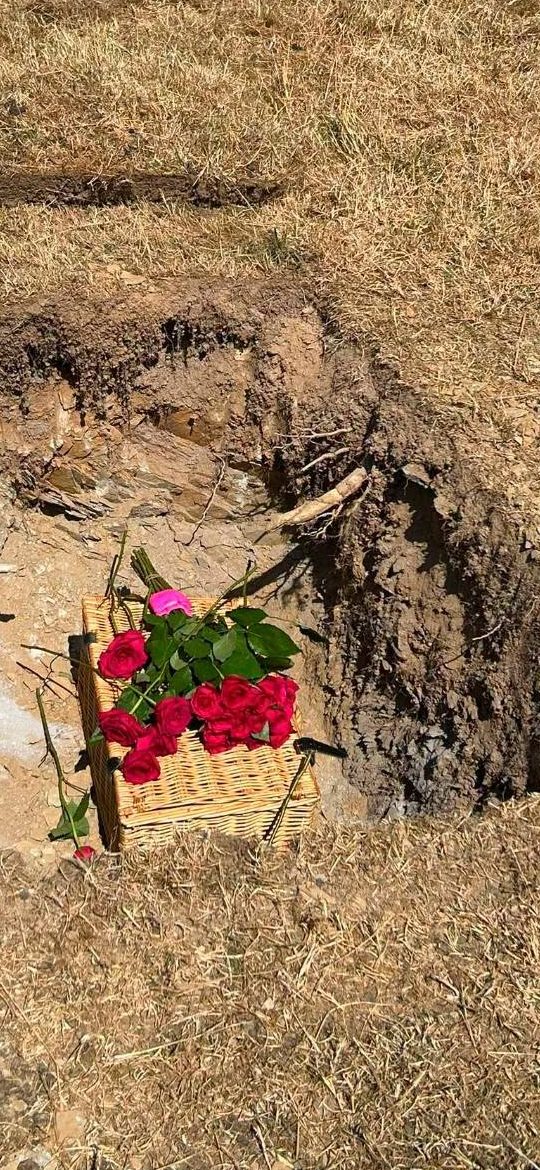
Dyfed Willa Rose, who became Major Juno and the first mare to serve as a Household Cavalry Drum Horse, was laid to rest at the farm where she was born
A PIONEERING Pembrokeshire horse who made military history has been laid to rest at the farm where she was born following an emotional final homecoming.
Dyfed Willa Rose, who served with the Household Cavalry under the name Major Juno, became the first mare in history to take on the prestigious role of Drum Horse.
Family members, friends, soldiers and admirers gathered at Dyfed Shire Horse Farm to remember a horse whose journey took her from the fields beneath the Preseli Hills to the heart of major state and military ceremonies in London.
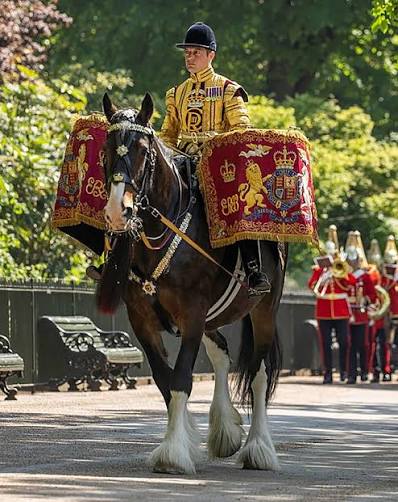
Born at the farm on May 10, 2013, Willa Rose left Pembrokeshire in 2021 to begin an intensive period of training with the Household Cavalry.
After two years of preparation, she qualified for one of the most demanding and recognisable equine roles in the British Army.
Drum horses lead military bands while carrying two large silver kettledrums, together with the weight of their rider and ceremonial equipment.
The role requires not only exceptional size and strength, but also a calm and dependable temperament. The horses must remain composed while surrounded by crowds, marching troops, music, traffic and the noise of major ceremonial occasions.
Willa Rose’s successful appointment saw her become Major Juno, the first mare to serve as a Household Cavalry Drum Horse.
Her historic achievement challenged a long-established tradition and secured her place in British military and equestrian history.
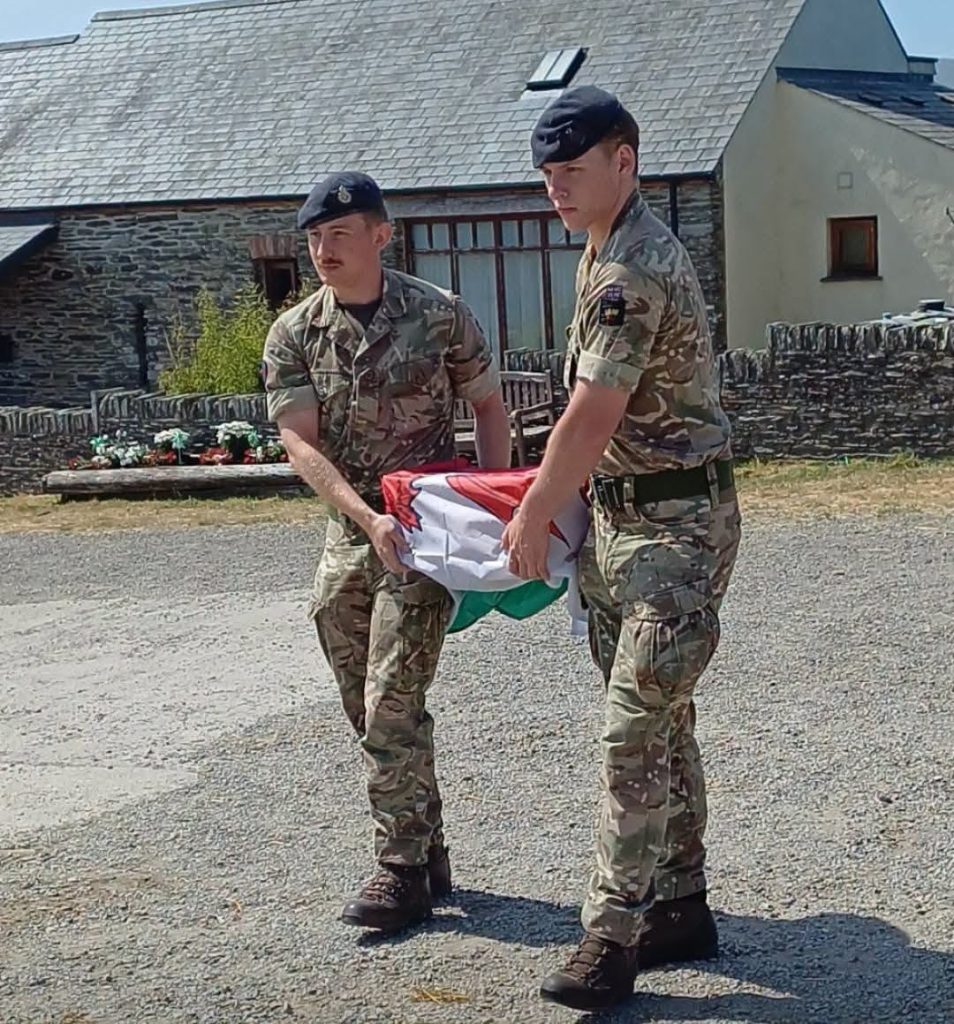
For her final journey, her cremated remains were brought back from London to Dyfed Shire Horse Farm.
The farm thanked Corporal of Horse James Harvard and the Household Cavalry team for bringing Juno home, alongside her former companion Major Perseus, who helped guide her on the last stage of her journey.
A memorial service was held in the farmyard and was introduced by Huw Carnhuan Murphy.

The service was led by Minister Sian Elin Thomas, with a eulogy celebrating Willa Rose’s life and achievements delivered by Mark Cole.
Her remains were then placed in a horse-drawn carriage pulled by her daughter, Morgana, for a final procession through the farm.
Those present described a striking silence as the carriage made its way towards the place where Willa Rose would be laid to rest.
According to an account of the ceremony shared by Whitestone Media Group, horses appeared at their stable doors and gathered along the edges of surrounding fields as the procession passed.
Willa Rose was laid to rest beneath the Preseli Hills alongside her uncle, Celt Mercury Drumhorse, and her grandmother, Dyfed Countess.
Her grandson was also present at the farm during the ceremony, providing a reminder of the bloodline and legacy she leaves behind.
In a poignant coincidence, another young horse from Dyfed Shire Horse Farm was due to be collected on the same day to begin its own journey with the Household Cavalry and start training towards becoming a Drum Horse.
The farm said the occasion had been filled with grief, emotion and immense pride in a mare whose achievements were recognised far beyond Pembrokeshire.
A tribute shared by Dyfed Shire Horse Farm said: “It was with great emotion and pride that the family, with friends from near and far, welcomed home one final time our Dyfed Willa Rose to lay her to rest on the farm of her birth.”
The farm added: “A day full of emotion, but of pride for a horse that broke the glass ceiling as the first ever mare to make Drum Horse in the Household Cavalry.
“She is now with the stars that will look down upon her from those old hills, and she will be remembered forever with love and affection both here in Pembrokeshire and, indeed, all around the world.”
Thanks were also offered to Karen Gott and Julie Davies for photographing the memorial and Willa Rose’s final journey.
Whitestone Media Group described her homecoming as the completion of an extraordinary journey which had begun in the same Pembrokeshire fields 13 years earlier.
Its tribute concluded: “Rest easy, Major Juno. You marched into history, and today, you came home.”
Cysga’n dawel, Willa Rose.

The 25-year-old from Llanfihangel Glyn Myfyr has been described as a dearly loved son, brother and grandson whose death will leave a huge void in his community
THE family of a 25-year-old man who died at a campsite near the Royal Welsh Showground have paid a moving tribute to their “beloved and dear” son, brother and grandson.
Dewi Aeron Evans, from Llanfihangel Glyn Myfyr, near Corwen, died following a medical emergency at Penmaenau Farm, Llanelwedd, on Saturday night (July 18).
Emergency services were called to the campsite at around 10.30pm. Despite the efforts of paramedics, Dewi was pronounced dead at the scene.
In a statement released through Dyfed-Powys Police, his family said: “Dewi Aeron Evans, a beloved and dear son, brother and grandson, will be a huge loss to the family and community in Uwchaled.
“The family and community would appreciate privacy at this difficult time.”
Dewi came from the close-knit rural community of Llanfihangel Glyn Myfyr, which forms part of the Uwchaled area of southern Conwy.
The community lies near Cerrigydrudion and Corwen, and news of his death has brought sadness to the area where he lived and was known.
Dyfed-Powys Police said the death was continuing to be treated as unexplained.
Three men were arrested on suspicion of drug-related offences following the incident. Police have not said that the arrests establish the cause of Dewi’s death, and enquiries into the circumstances remain ongoing.
Temporary Chief Superintendent Steve Davies described the incident as tragic and said officers’ thoughts remained with Dewi’s family.
He also reassured visitors and residents that it was being treated as an isolated incident, with no evidence of an ongoing risk to the wider public.
The incident happened at Penmaenau Farm, a privately operated campsite immediately beside the Royal Welsh Showground, as thousands of visitors were arriving in the area ahead of the four-day Royal Welsh Show.
The show itself opened on Monday morning and is continuing as scheduled.
The Royal Welsh Agricultural Society said it was deeply saddened by the death and that its thoughts were with Dewi’s family, friends and everyone affected.
The society said it would continue supporting the police investigation and was working with members of the Builth Wells Event Safety Group to provide medical, welfare and safety support throughout the event.
Police have asked that Dewi’s family and the Uwchaled community be allowed privacy as they come to terms with their loss.


Community2 hours ago
Household Cavalry drum horse returns home to Pembrokeshire for final farewell
Dyfed Willa Rose, who became Major Juno and the first mare to serve as a Household Cavalry Drum Horse, was...

News19 hours ago
Jo Stevens out as Welsh Secretary as Burnham reshapes government
Cardiff East MP repeatedly visited Pembrokeshire to champion clean energy jobs, but her successor inherits unresolved questions over Milford Haven’s...


Crime1 day ago
Teen cleared of attempted murder but guilty of GBH after Milford teacher stabbed
Jury returns 11-1 majority verdict on charge of causing grievous bodily harm with intent, with sentencing set for September 3...

Community1 day ago
French troops march through Fishguard as Britain’s last invasion returns to life
Battle scenes, cavalry displays and a surrender procession brought one of Pembrokeshire’s most extraordinary stories back to the streets MUSKET...


News1 day ago
Andy Burnham promises new politics as he enters Downing Street
New Prime Minister admits politicians have “not been good enough” as he sets out a ten-year plan for Britain and...


Health2 days ago
Two new surgeons appointed as Hywel Dda admits orthopaedic waits remain too long
Health board says it is increasing capacity after figures revealed hip replacement patients waited an average of 64 weeks HYWEL...

Community3 days ago
84-year-old man rescued after falling overboard near Tenby
A MAYDAY call sparked a major nighttime rescue after an 84-year-old man fell from a tender and was swept towards...


Crime4 days ago
Jury hears final arguments in Milford Haven teacher stabbing trial
Defence says there was no motive or intention to kill as judge reviews competing accounts of classroom knife incident SPECIAL...


News4 days ago
Andy Burnham becomes Labour leader and prepares to enter No 10
Former Greater Manchester mayor promises an ‘unashamedly Labour’ government after completing extraordinary return to Westminster ANDY BURNHAM has been formally...

News4 days ago
Motorcyclist dies following collision near Narberth
Police appeal for witnesses and footage after fatal crash on B4313 at Redstone A MOTORCYCLIST has died following a collision...
-

 Health1 day ago
Welsh Ambulance Service invites public to AGM and Board meeting
-
Crime1 day ago
Teen cleared of attempted murder but guilty of GBH after Milford teacher stabbed
-
News2 days ago
Andy Burnham set for No 10 as Wales awaits change
-

 Crime1 day ago
What the Milford Haven School stabbing verdict really means
-

 Business1 day ago
Port appoints two new directors as energy and regeneration projects advance
-
 Community2 days ago
Tributes paid to long-serving Mansel Davies driver Gareth Griffiths
-
Community2 hours ago
Household Cavalry drum horse returns home to Pembrokeshire for final farewell
-
 Farming2 days ago
Welsh farmers promised £1bn funding package under three-year deal