


News
Jamie Adams: “Something’s got to give”


 CONTINUING our interview with Council leader Jamie Adams about the County Council’s 21st Century Schools programme, we spoke about the Council’s plan for funding the scheme and future of secondary education in Pembrokeshire.
The question of funding
“We are lucky in Pembrokeshire,” begins Jamie Adams. He pauses. “No, not lucky: we have been very well-managed. As I said before, we are looking at using our assets more efficiently and disposing of part of our estate to release capital and reduce expenditure. The requirement for funding the schools programme has significantly increased in cost after the Welsh Government reduced its own input into it
“Our plan as a Council is to get one third or so of our funding from the Welsh Government, to raise one third of the funding through efficiency savings and asset sales, and to raise the rest by prudential borrowing. We are not looking, at this time, at models like the Private Finance Initiative or Public Private Partnerships.
“We are able to access prudential borrowing, because of the way we have managed the Council’s finances and thought strategically about the future. In the long-term prudential borrowing is likely to cost us a good deal less than other finance options

“While I am confident about funding the schools programme that does not mean there are not challenges we need to face: particularly about secondary education.
Populating the classrooms
“When we look at our schools provision for the 11 plus group, we have to look at the population of Pembrokeshire, more particularly its distribution.”
He gestures to the large map of Pembrokeshire on the wall to underline his point:

“We have eight secondary schools in Pembrokeshire and 1,000 spare spaces. In the future we are projected to have greater additional capacity. We have an unsustainable secondary education provision and it is clear something has to give.
“As to how our future provision will look: that is a matter for consultation. But we will have to make tough decisions and they should not be put off. The Welsh Government has given a very clear lead on reducing the amount of the education budget spent on spare capacity within the system. In a time when public finances are stretched we cannot afford to maintain underused buildings, under-occupied classrooms and excess school places.
“With those surplus places, we are spending a disproportionate amount of scarce resources in circumstances where there can be no positive return for that money in terms of outcomes for students. As an authority, our focus is very firmly on getting the best outcomes we can for investing in the education system.

“I understand the concerns of local communities. Other Cabinet members and I went out to listen to them and to get the views of Pembrokeshire’s people on how we could improve our services and deliver them more efficiently. As part of that exercise, I went to Saint Davids. There has been a lot of speculation about the future of Ysgol Dewi Sant and very strong local feeling has been expressed in the press and at public meetings. People who spoke to me there: well, it was not all about “don’t close the school”. Parents and other members of the community in Saint Davids were concerned about putting viable options forward for the future.
“It would be nice to have a federal structure with different parts of the curriculum delivered on different sites,” he gestures at the map again, “travel times between the scattered sites make that unsustainable and impractical.
A new plan for Pembrokeshire
“Of course, as a Council we have to make decisions in relation to the County-wide provision of secondary education. We have to consider what opportunities exist to improve our secondary provision and offer a broad and enriching education to kids.
“We have to be straight here: some pupils do not achieve academically in the current system. We want to provide opportunities for varied training and education post-14 in conjunction with Pembrokeshire College. Again, this is focussing on outcomes for all Pembrokeshire children.
“Traditionally, in my view, education in Pembrokeshire has been a ‘comfortable’ place to be. We’ve achieved ‘comfortable’ outcomes. My personal opinion is that for too long there has been a focus on obtaining a degree as the be all and end all of education. I profoundly disagree with that position, there has to be a good pathway for those who wish to follow vocational or career-based education and for those who are less-academically inclined.
“We have been in discussions with Pembrokeshire College about what we can do to improve the situation for 14-19 year olds. Those discussions have been frank on both sides: we have acknowledged and the College has acknowledged that there are things we do well and things we do not as well.
“That honesty and those discussions mean that we are in the process of forging a partnership that will substantially change the provision of education in Pembrokeshire for pupils after the age of 14. That partnership is based on us complementing what each other do.
“Every pupil deserves the chance to make the best of their abilities. I want to make sure that we improve the outcomes not only for those academically gifted students who progress on to higher education and go on to well paid, professional careers. We will continue to encourage those students and be pleased for their success. Outcomes exist, however, that cannot be measured simply in terms of only academic success. There is absolutely nothing wrong with a successful vocational education.
“What I want education in Pembrokeshire to achieve is to enrich learning, to motivate teachers and to achieve outcomes that bring out the very best in all of our children, be that in terms of academic success or otherwise. We want our children to be motivated to succeed wherever their strengths lie and to give them chances to do so, whether those strengths are academic, entrepreneurial, arts, or skilled trades.
“We are thinking for the medium to long-term: not quick fixes or fiddling around the edges. Some other local authorities have gone for easy solutions. I believe, in the future they will regret not taking the opportunities that the 21st Century Schools programme has offered them.”
It is time to go. We exchange pleasantries, shake hands and head our separate ways. As I head down the stairs, I thank the Council’s press officer who arranged the meeting.
Here at The Pembrokeshire Herald, we are sometimes critical of the Council and its IPPG leadership. We have occasionally suggested that they have got things wrong. But Jamie Adams has been brisk, professional and thoughtful – especially about some of the left-field questions thrown at him.
As I head out into a December evening, I reflect that Jamie Adams’ attitude to the future of Pembrokeshire’s education system is in marked contrast to the squally weather. He seems very certain, very confident.
Driving off into the rain, I can’t help thinking about the storm of public opinion as schools programme unfolds. It will be interesting, to interview him again when consultations have concluded, decisions have been made and the public have given their reaction to see how events have influenced the Council’s vision.

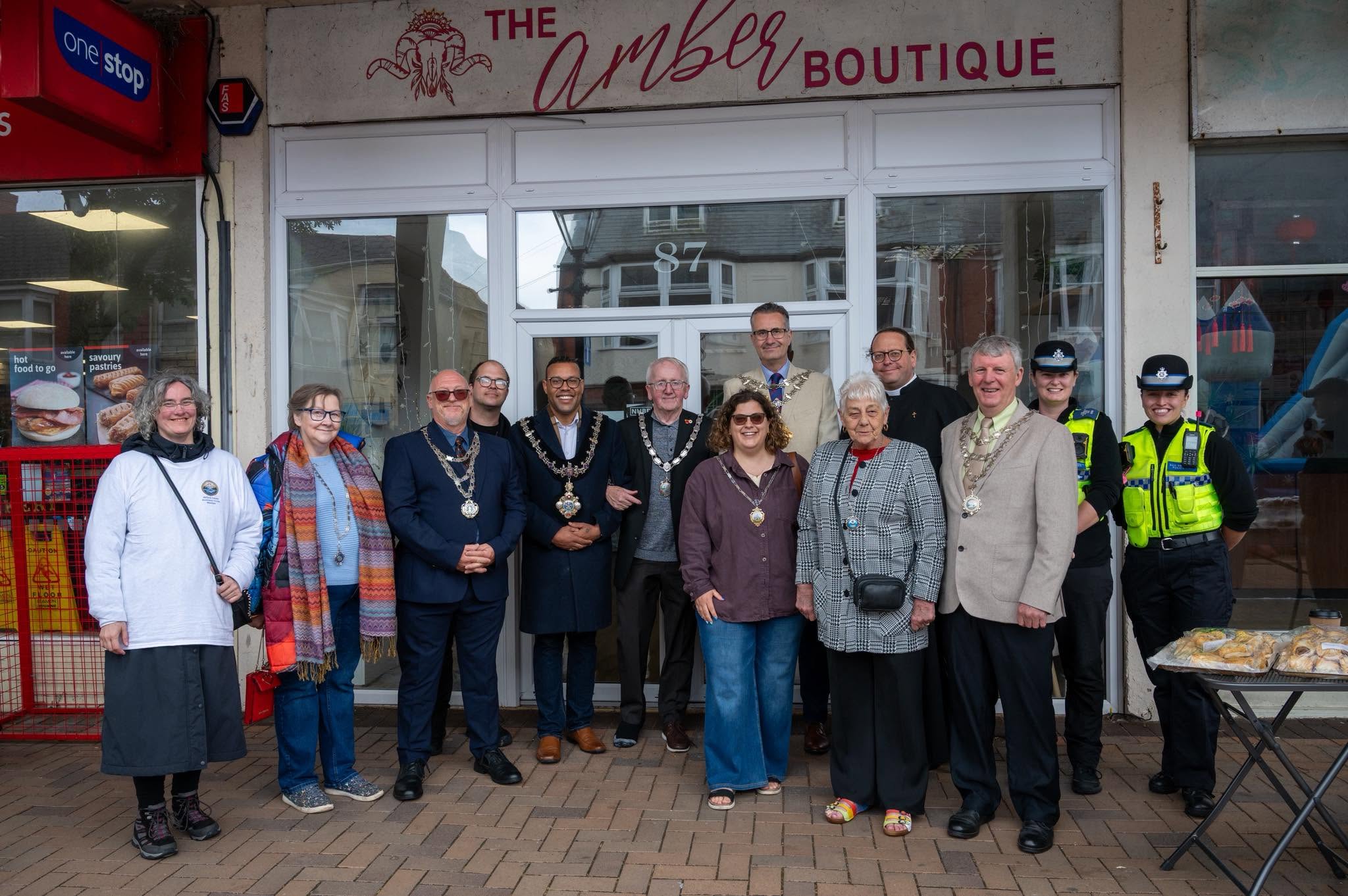
Town’s civic leaders praised as event highlights community spirit
A HOST of civic dignitaries and community representatives joined residents for this year’s Milford Haven Founders Day, helping to mark the town’s annual celebration of its heritage and community spirit.
The event, held on Saturday, welcomed mayors and representatives from towns across Pembrokeshire, alongside police officers, clergy and local business leaders.
Milford Haven Founders Day organisers thanked guests for attending and supporting the occasion, describing their presence as helping to make the day “even more special”.
Among those attending were the Mayor of Milford Haven, Mark Woodward, accompanied by Mayoress Evija Upeniece Woodward; the Mayor of Haverfordwest, Councillor Randell Izaiah Thomas-Turner, accompanied by Mayoress and Sheriff Councillor Dani Thomas-Turner; the Mayor of Pembroke, Jonathan Grimes; the Mayor of Pembroke Dock, Councillor Tony Wilcox; and the Mayor of Neyland, Councillor Peter Hay, accompanied by Mayoress Mitzy Hay.
The event also welcomed local Police Community Support Officers from Milford Haven and Neyland Police, Reverend Dr Adrian Furse of St Katharine and St Peter’s Church, Milford Haven, Milford Haven Business Circle chairman Byron Thomas Jenkins, and treasurer Amanda Dyson.
Organisers said the strong turnout from civic leaders reflected the importance of Founders Day as a celebration of Milford Haven’s identity and local pride.
A spokesperson for Milford Haven Founders Day said: “Your presence and support helped make the day a memorable celebration of our town, its history and its community spirit. We are truly grateful that you took the time to join us and share in the festivities.”
Pembroke Mayor Jonathan Grimes later praised the event, commenting: “Thank you for the kind invitation – it was a wonderful event!”
Photo caption:
Civic guests: Mayors, community representatives and local officers gather during Milford Haven Founders Day celebrations (Pic: Captured Soul Photography).

WELSH CONSERVATIVE Shadow Farming Minister Andrew RT Davies has called on Plaid Cymru ministers to stop funding public information campaigns which he says undermine Welsh meat.
The criticism follows a Welsh Government response to a written question from Welsh Conservative Senedd Leader Darren Millar, which showed £662,000 was allocated to the Climate Action Wales campaign during 2025-26.
Examples of the campaign include online advice on ‘green food choices’, sustainable eating and meat-free options, alongside wider material on energy, travel and consumer behaviour.
The campaign gives advice on reducing carbon emissions through choices on food, travel, energy and purchasing. Its sustainable food guidance says meat is among the largest contributors to greenhouse gas emissions, particularly from ruminant livestock such as cows and sheep.

It also advises people to limit red and processed meat, while saying those who do eat meat should try to buy local, sustainably farmed produce where available.
Mr Davies said Welsh meat should be promoted rather than undermined.
He said: “Welsh meat is of the highest quality and the industry forms a key part of our economy.
“Plaid Cymru separatists must celebrate it, not fund campaigns that undermine Welsh meat.
“No project aimed at discouraging meat consumption should receive public funds.”
The Welsh Government response said the figures related to public information campaigns connected to the previous government’s policies.

SCHOOL leaders have warned that a Welsh Government plan to increase incentive payments for trainee teachers in priority subjects risks creating a “two-tier workforce”.
NAHT Cymru said the move may help attract some new teachers, but warned it does not address the wider recruitment and retention crisis facing schools across Wales.
The Welsh Government’s priority subject incentive scheme offers grants to eligible postgraduate teacher trainees in subjects including biology, chemistry, design and technology, digital technology and computer science, mathematics, international languages, physics and Welsh.
Laura Doel, national secretary of NAHT Cymru, said: “While we agree that an ambitious plan to help schools struggling with recruitment and retention of teachers is needed, we don’t think focusing on subject-specific incentives is the way to go.
“This risks creating a two-tier workforce and appears to be a short-term sticking plaster solution for a systemic problem.”
She said there appeared to be no requirement for teachers to remain in schools for a set number of years after induction in order to keep the payment.
Ms Doel added: “We know a significant proportion of teachers leave the profession within the first five years of teaching.”
NAHT Cymru said ministers should focus instead on the wider pressures affecting teachers, school leaders and primary schools, as well as secondary subjects where recruitment is difficult.
The union said improving pay, terms and conditions, and reducing workload would do more to make teaching an attractive long-term career.
Ms Doel said: “By going further in restoring the real-terms value of pay, which fell sharply over the previous decade, improving terms and conditions, and bearing down on unsustainable levels of workload, ministers could make the profession an attractive long-term career proposition once again.
“But schools also need fairer funding to recruit the staff and support staff they need and deliver for pupils.”
She said ensuring schools receive the full consequential funding owed through the Barnett Formula should be a priority for the new administration.

NAHT represents more than 38,000 school leaders across early years, primary, secondary and special schools in England, Wales and Northern Ireland.



Crime7 hours ago
Farmers fined in bovine TB scandal face fresh court action
Hartt family members listed at Haverfordwest Magistrates’ Court over unpaid penalties linked to major cattle prosecution TWO PEMBROKESHIRE farmers convicted...


Crime11 hours ago
Pembrokeshire child killer stabbed to death in prison cell, murder trial hears
Kyle Bevan, jailed for the murder of Haverfordwest toddler Lola James, was allegedly stabbed 25 times and left ‘as if...


News18 hours ago
Pendine cliff fall victim recovering after major emergency response
A 22-YEAR-OLD man who suffered serious injuries after falling from cliffs overlooking Pendine Beach is recovering well following emergency surgery....


Community20 hours ago
Commissioner launches free course to help tackle ageism in Wales
A NEW free learning course has been launched to help people across Wales recognise and challenge ageism. The Older People’s...


News2 days ago
First Minister challenged over jobs for student nurses
REFORM WALES has accused the First Minister of failing to guarantee jobs for student nurses in Wales, despite continuing pressure...

Crime2 days ago
Knife blankets call as school staff face rising violence fears
GMB says protective equipment should be considered where risk assessments show staff could face blades SCHOOL staff should be given...

News2 days ago
Claire Archibald secures review of Milford Haven train times
RURAL TRANSPORT CONCERNS RAISED WITH TFW CLAIRE ARCHIBALD MS has secured a review of train times between Milford Haven and...


Crime2 days ago
PCC review calls for stronger youth crime prevention work
REPORT MAKES 13 RECOMMENDATIONS A REVIEW into crime and anti-social behaviour services for young adults has called for stronger prevention...


Crime2 days ago
Families condemn failed appeal by paddleboard boss jailed over Haverfordwest tragedy
RELATIVES SAY LATEST COURT BID HAS REOPENED PAIN AFTER FOUR DEATHS ON WESTERN CLEDDAU THE FAMILIES of victims of the...


Crime2 days ago
MPs warn overcrowded Welsh prisons are undermining safety and rehabilitation
A DAMNING report by MPs has warned that overcrowding, staff shortages and rising pressure across Welsh prisons are undermining safety,...
-
Crime5 days ago
Paddleboard company owner loses bid to cut sentence over Haverfordwest tragedy
-

 Crime4 days ago
Milford Haven man admits harassment and assault
-

 News4 days ago
Community appeal for privacy after serious emergency in Pendine
-

 Crime3 days ago
Sex offender in senior role at Tenby family hotel
-

 Community2 days ago
Forgotten wartime archive found in Pembroke Dock attic after 80 years
-
Crime2 days ago
Families condemn failed appeal by paddleboard boss jailed over Haverfordwest tragedy
-

 Business5 days ago
Call for gym and Padel courts at Kiln Park Farm unanimously backed
-

 Community4 days ago
Founders Day hailed a success despite rising costs and extra security