


Community
Church wins heritage lottery fund support

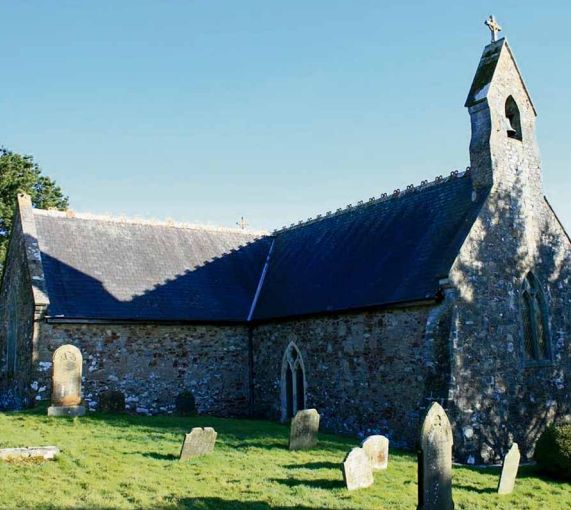
 ST JEROME’S Church in Llangwm has received initial support from the Heritage Lottery Fund (HLF) to undertake the medieval church’s renovation and to create an exhibition that tells the story of the immigration of a people who fled the collapse of sea defences in Flanders and came to Pembrokeshire to make their homes at the start of the 12th century.
Development funding of £17,700 has been awarded to help the church and the Heritage Llangwm team develop their plans to enable them to apply for a full grant to carry out the work, at a later date.
St Jerome’s Church was built by Flemish craftsmen around 1200; then in 1830 and 1879 the church underwent modernisation work that lost much of the building’s original medieval character.
But enough remained to inspire Llangwm’s Local History Society to investigate more about the church’s early history. This project when completed will see a church building well suited for the 21st century with a toilet and kitchen facility as well as environmentally friendly heating.
In addition, members of the Llangwm community will conduct extensive research into the village’s Flemish and medieval past. The aim is to create a state of art exhibition in the church telling the story of the Flemish settlement.

The exhibition will be able to be concealed from view during worship. This project will also create an opportunity for the whole village community, young and old to take part.
“This is a marvellous opportunity,” said Pamela Hunt, Chair of the Heritage Llangwm Team. “We have a church in desperate need of renovation, so while we are achieving that, why not create an exhibition that pays tribute to the very people who built it in the first place? We know so little about them at the moment, but that doesn’t stop us finding out. If you imagine the Fleming story as a 500-piece jigsaw that’s lost all but 50 of its original pieces.
“When this project is complete, we hope to have found another 300, enough to enable us to create a clearer picture of the lifestyle and culture of the people who made this part of Wales their home? And it doesn’t end there either. We have been running a successful series of concerts in the church since 2007. We plan to enhance the existing facilities to make for improved concert and of course worship experience.”
The Rev Jane Goupillon, Rector of Llangwm, concurs. “It’s a wonderful opportunity to be able to preserve this wonderful medieval building.

Worship has continued here unabated for over 800 years. This grant will enable us to continue to do so for many years to come and most importantly opening our doors to more visitors whether they come for worship, our concerts or the exhibition. All will be welcome here.”
Jennifer Stewart, Head of the HLF in Wales, said “Places of worship are a powerful, visual connection with our past and always tell a powerful, local story. The future plans for this building means that it can be enjoyed more widely throughout the community. There is certainly an interesting story to be told at St Jerome’s and I am delighted that we have been able to award a grant to help develop the plans for this exciting project, further.”
The entire project is expected to be completed by April 2016, just in time to mark the 700th anniversary to the day of the marriage of Lady Johanna and Sir David De la Roche, the biggest ‘society’ wedding that St. Jerome’s Church has ever witnessed.



Co-founder of Terrence Higgins Trust attended local plaque unveiling honouring friend Terry Higgins
A LEADING figure in the UK’s response to the HIV/AIDS crisis has died aged 71 — just months after attending a plaque unveiling ceremony in Haverfordwest honouring his close friend Terry Higgins.
Martyn Butler, who helped establish the Terrence Higgins Trust in 1982 following Higgins’ death from an AIDS-related illness, died on Friday (Feb 21). He had remained active in awareness work for more than four decades and was widely recognised for his contribution to public health campaigning.
The Terrence Higgins Trust confirmed his death, paying tribute to his lifelong commitment to supporting people living with HIV and improving sexual health education across the UK.
Butler’s connection to Pembrokeshire was particularly strong. Terry Higgins, after whom the charity is named, grew up in Haverfordwest and attended Tasker Milward School. Higgins is widely recognised as one of the first people in the UK known to have died from AIDS-related complications in 1982.
Last year, Butler travelled to Haverfordwest to attend the unveiling of a blue plaque commemorating Higgins’ life. The ceremony marked an important moment in recognising both Higgins’ story and the wider history of the HIV/AIDS epidemic, which claimed thousands of lives in the UK during the 1980s and 1990s.
Friends and colleagues described Butler as a tireless advocate who helped shape the national response to the emerging AIDS crisis at a time when fear, stigma and misinformation were widespread.
In the early days of the epidemic, Butler famously used his own home telephone number as part of one of the UK’s first AIDS helplines, offering advice and support to people who had nowhere else to turn.
Over the decades that followed, the Terrence Higgins Trust grew into the country’s leading HIV and sexual health charity, providing testing services, education programmes, support networks and national campaigning.
Butler was appointed an Officer of the Order of the British Empire (OBE) in 2022 in recognition of his services to people affected by HIV.

Tributes have been paid from across the UK health and charity sectors, with colleagues describing him as compassionate, determined and instrumental in changing public attitudes towards HIV.
His death comes at a time when medical advances mean people living with HIV can now expect near-normal life expectancy with treatment — a transformation many campaigners say would not have been possible without the groundwork laid by early activists such as Butler.
Local figures who met him during the Haverfordwest plaque unveiling said he remained passionate about ensuring the stories of those affected by HIV — including Terry Higgins — were remembered by future generations.

Funeral arrangements have not yet been publicly announced.
Image:
Martyn Butler at the Terry Higgins plaque unveiling in Haverfordwest (Pic: Martin Cavaney).

WEST Wales currently has no asylum seekers being housed in hotels, according to the latest figures published by the Home Office.
Data released up to December 31, 2025 shows that 30,657 people were being accommodated temporarily in hotels across the UK while awaiting decisions on their asylum claims. The figure represents the lowest level recorded for 18 months.
However, the statistics confirm that none of those individuals are being housed in hotels in any of the five counties that make up west Wales. Hotels across Carmarthenshire, Ceredigion and Pembrokeshire are all recorded as accommodating zero asylum seekers.
The use of hotels for asylum accommodation became a major national political issue in recent years, with protests taking place outside some sites across the UK.
Labour has pledged to end the use of asylum hotels by the end of the current Parliament, which would be 2029, if not sooner.
Plans previously existed to house asylum seekers in west Wales. The Home Office withdrew proposals to accommodate up to 241 people at the Stradey Park Hotel in Carmarthenshire in October 2023 after protests outside the site led to arrests. Dyfed-Powys Police issued an appeal for “calm and co-operation” following what they described as a concerning escalation in behaviour.
The hotel, which had been intended to house families awaiting asylum decisions, subsequently closed, resulting in the loss of 95 jobs, including 50 full-time and 45 part-time roles, and the cancellation of events.
West Wales has also previously hosted asylum accommodation at Penally military training camp near Tenby. The site was used between 2020 and spring 2021 to house between 240 and 250 men, mainly from countries including Iraq, Iran and Syria.
Both the Welsh Government and Pembrokeshire County Council argued the camp was unsuitable, with inspectors describing conditions as run down. The facility was later closed, residents were relocated elsewhere, and the site was returned to the Ministry of Defence.

Nationally, the number of asylum seekers in hotels peaked at 56,018 at the end of September 2023 under the Conservative government. It later fell to 29,561 by the end of June 2024, just before the general election.
The latest figures show numbers at the end of December were 15% lower than the previous quarter, when 36,273 people were recorded as staying in hotel accommodation.
Cover image: Asylum Seekers at Penally MOD Camp in 2020

THE NUMBER of LGBTQ+ households fostering children in Wales has risen significantly, according to new figures released this week.
There are currently 56 LGBTQ+ fostering households across Wales, representing an increase of around 30 per cent compared with 2024.
To mark LGBTQ+ Adoption and Fostering Week, which begins on Monday (Mar 2), Foster Wales Pembrokeshire is encouraging LGBTQ+ people to consider fostering and making enquiries about how they could help change children’s lives in 2026.
Fostering is open to both couples and single people, and organisations say LGBTQ+ carers often bring valuable personal life experience to supporting children and young people in care.
Pembrokeshire Fostering Team Manager Oliver Mathias said: “We know that children and young people thrive when they are cared for by adults who are open-minded, compassionate, and able to value who they are. At Foster Wales, we are proud to welcome carers from the LGBTQ+ community and from all cultures, faiths, family structures, and walks of life.
“We are committed to respecting and celebrating diversity, and to ensuring that everyone who comes forward to foster is treated with dignity, fairness, and respect. What matters most to us is not who you are or who you love, but your ability to provide a safe, nurturing, and accepting home where children can feel valued and belong.”
Suzanne Griffiths, Director of the National Adoption Service for Wales and Foster Wales, said foster carers play a vital role in providing stability and security for vulnerable children.
“Foster carers make an extraordinary difference to children and young people every day by offering stability, understanding and a safe place to thrive,” she said.
“With so many children currently in need of loving homes, we would strongly encourage anyone considering fostering or adoption to come forward and start a conversation with their local team today.”
More information about fostering is available at fosterwales.gov.wales, while adoption information can be found at adoptcymru.com.



Health6 hours ago
Hywel Dda warns of ‘significant pressure’ as A&E departments remain packed
Patients urged to use NHS 111 as Withybush, Glangwili and Bronglais face continued strain HYWEL DDA University Health Board has...


News22 hours ago
War stops Qatar gas: Milford Haven LNG supplies disrupted
UK energy security concerns grow after shutdown at major export facilities ENERGY bills in the UK could rise sharply after...


Community1 day ago
Martyn Butler dies aged 71 months after Haverfordwest visit
Co-founder of Terrence Higgins Trust attended local plaque unveiling honouring friend Terry Higgins A LEADING figure in the UK’s response...


Crime1 day ago
Nine deny Class A drugs conspiracy as case set for Crown Court trial
Eight remanded in custody as four-week trial fixed for May 18 NINE people have denied conspiring to supply Class A...


Community1 day ago
No asylum seekers housed in west Wales hotels, latest Home Office figures show
WEST Wales currently has no asylum seekers being housed in hotels, according to the latest figures published by the Home...


Community4 days ago
St David’s Day parade brings colour and celebration to Haverfordwest
HAVERFORDWEST town centre was a hive of activity today (Friday, Feb 27) as hundreds of children from schools across Pembrokeshire...


News5 days ago
Hoax 999 call sparks massive lifeboat and helicopter rescue — man arrested
Emergency services diverted from real incidents after false report off south Wales coast A MAJOR sea rescue operation involving three...


Crime5 days ago
St Dogmaels man jailed over hundreds of indecent images
Previous convictions for similar offences revealed to court A 57-YEAR-OLD man from St Dogmaels has been jailed for two-and-a-half years...


Health5 days ago
Petition against hospital service changes surges past 6,000 signatures
Public response now far exceeds health board consultation figures A PETITION calling for urgent Welsh Government intervention over services at...

Crime6 days ago
Milford Haven pensioner admits sexually assaulting two shop workers
76-year-old touched victims and kissed one on the neck, court hears A MILFORD HAVEN man has admitted sexually assaulting two...
-

 Health7 days ago
Health services row escalates as MSs demand action over Withybush and Bronglais
-

 News6 days ago
Welsh Government criticised after Russian-linked drone image used in defence announcement
-
 Business7 days ago
Bosherston Bistro 10pm alcohol licence granted by council
-
Crime6 days ago
Milford Haven pensioner admits sexually assaulting two shop workers
-

 Business6 days ago
Council reviewing complaints over Computer Solutions Wales as concerns continue
-

 Health6 days ago
Petition calling for Withybush intervention nears 5,000 signatures
-

 News7 days ago
Senedd backs assisted dying legislation in historic vote
-

 News7 days ago
Documentary ‘Fighters’ lands a knockout in Cardiff Bay screening