


News
Natasha Bradbury lay dying for ‘one to two hours’ with 53 injuries

 NATASHA BRADBURY suffered 53 separate, external injuries during a sustained and severe assault at her home in Haverfordwest, a doctor told a murder jury today.
And she lay dying for “one to two hours, hours not minutes” before her on-off boyfriend Luke George Jones dialled 999 and asked for an ambulance.
By then she was already “freezing cold” and paramedics were unable to revive her.
Jones, aged 33, of Haven Drive, Milford Haven, denies murdering Miss Bradbury at Flat A, Imperial Court, off the High Street, Haverfordwest, in the early hours of February 22.
The prosecution argue he was jealous and possessive and murdered Miss Bradbury, aged 27, just hours after being told she had slept with another man.

A jury at Swansea Crown Court today heard from Dr Deryk James, who carried out a post mortem examination on her body.
Dr James said he found 17 separate injuries to her face and head, and 13 to her neck and upper chest, including fractures to several ribs and a fracture to her spine.
“These are not injuries you get from a fall but from an assault. And not just one but many,” he said.
The injuries that would prove fatal had been caused to her liver, heart and brain, he added. A litre of blood had leaked out of her liver and into her stomach and there was a small tear in her heart.

Dr James said it would be “pretty bizarre” if the injuries could be explained by Miss Bradbury falling over or suffering a series of accidents.
Some of the injuries were of the sort seen after road traffic accidents or a severe assault.
“You don’t see these tears (to the liver and heart) in ordinary domestic falls,” he added. “It could be a stamp or being thrown against a hard surface at speed.

“The overall pattern is one of assault, a sustained and severe assault,” he said.
Dr James explained to the jury why he believed Miss Bradbury had survived for some time after the fatal injuries had been inflicted.
He said that after suffering injury the body sent inflammatory cells, and other types of cells, to the damaged area to begin the repair process.
A single medic had published a paper suggesting that process could begin as quickly as 35 minutes after impact.
But in his opinion the process did not begin for at least one to two hours.
The process certainly stopped at the point of death, he added.
But an examination of Miss Bradbury’s liver and heart revealed the process had been underway at both sites, which meant she must have remained alive “for hours rather than minutes” after those two attacks.
In addition, said Dr James, nerve fibres in her brain had begun to malfunction following the assault to her head, which was another process that took time to begin and did not take place after death.
There was no evidence, he added, that all the injuries were inflicted at the same time and he could not say that some had not been caused hours after others had.
Dr James said Jones himself had suffered small cuts and abrasions but he could not say when.
Cross examined by Chris Clee QC, the barrister leading Jones’ defence team, Dr James said he could not accept that all the injuries could have been caused by Jones kicking Miss Bradbury “forcefully” and her falling onto a glass coffee table, breaking it, and then onto a cabinet and then onto the floor.
And he could not accept that the injuries to her ribs and to her liver could have been caused by one impact.
“They were separate impacts,” he said.
The trial continues.


Local MS speaks about pressure of politics in major newspaper interview
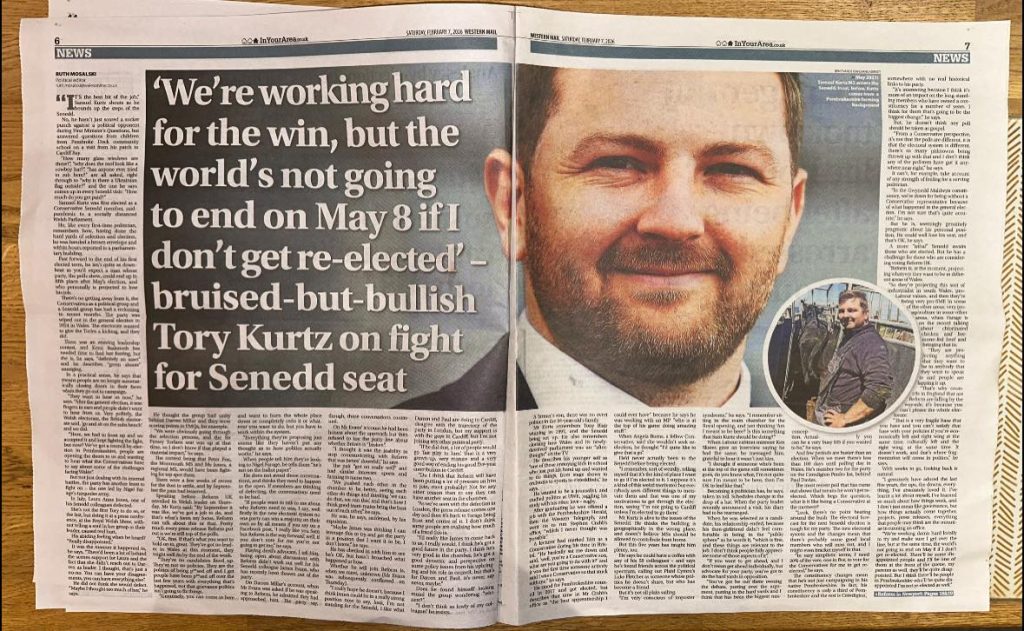
SAMUEL KURTZ has said he remains determined to retain his Senedd seat despite growing political uncertainty, following a prominent double-page interview published ahead of the Welsh Parliament election in May.
The Carmarthen West and South Pembrokeshire MS spoke candidly about the pressures of public life, the challenges facing his party, and the personal toll of political scrutiny, while insisting he remains focused on local campaigning.
Mr Kurtz said: “We’re working hard for the win, but the world’s not going to end on May 8 if I don’t get re-elected.”
The comments reflect what political observers describe as a realistic assessment of the electoral environment facing the Conservatives across Wales ahead of polling day on Thursday, May 7.
Pressure of public life
In the Western Mail article, Mr Kurtz discussed the intensity of modern politics, including criticism on social media and the impact on family life. He suggested resilience was essential for anyone working in public office, describing politics as demanding but worthwhile.
The MS also highlighted his rural upbringing and agricultural background, emphasising his connection to farming communities and countryside issues — a key theme likely to feature heavily in his re-election campaign across rural parts of the constituency.
Local record under scrutiny
Mr Kurtz has represented Carmarthen West and South Pembrokeshire since being elected to the Senedd in 2021.
During that time he has spoken on issues including agriculture policy, rural economic development, and healthcare pressures, often criticising Welsh Government performance on NHS waiting times and public services.
However, with the election approaching, local voters are expected to judge candidates primarily on issues affecting daily life in Pembrokeshire, including GP access, hospital waiting lists, transport infrastructure, employment opportunities, and the cost of living.

Political landscape changing
The upcoming election will take place under new Senedd arrangements, with boundary and voting system reforms expected to alter the political landscape across Wales.
The constituency has historically been competitive, with support shifting between Conservatives, Labour and Plaid Cymru in different elections. Analysts suggest the result in May could be influenced both by national political trends and local campaigning strength.
Campaign period begins
While Mr Kurtz has not yet formally launched his constituency campaign, activity from all parties is expected to increase significantly in the coming weeks.

The Herald will be speaking to voters and candidates across Pembrokeshire as part of its continuing coverage of the Senedd election campaign.
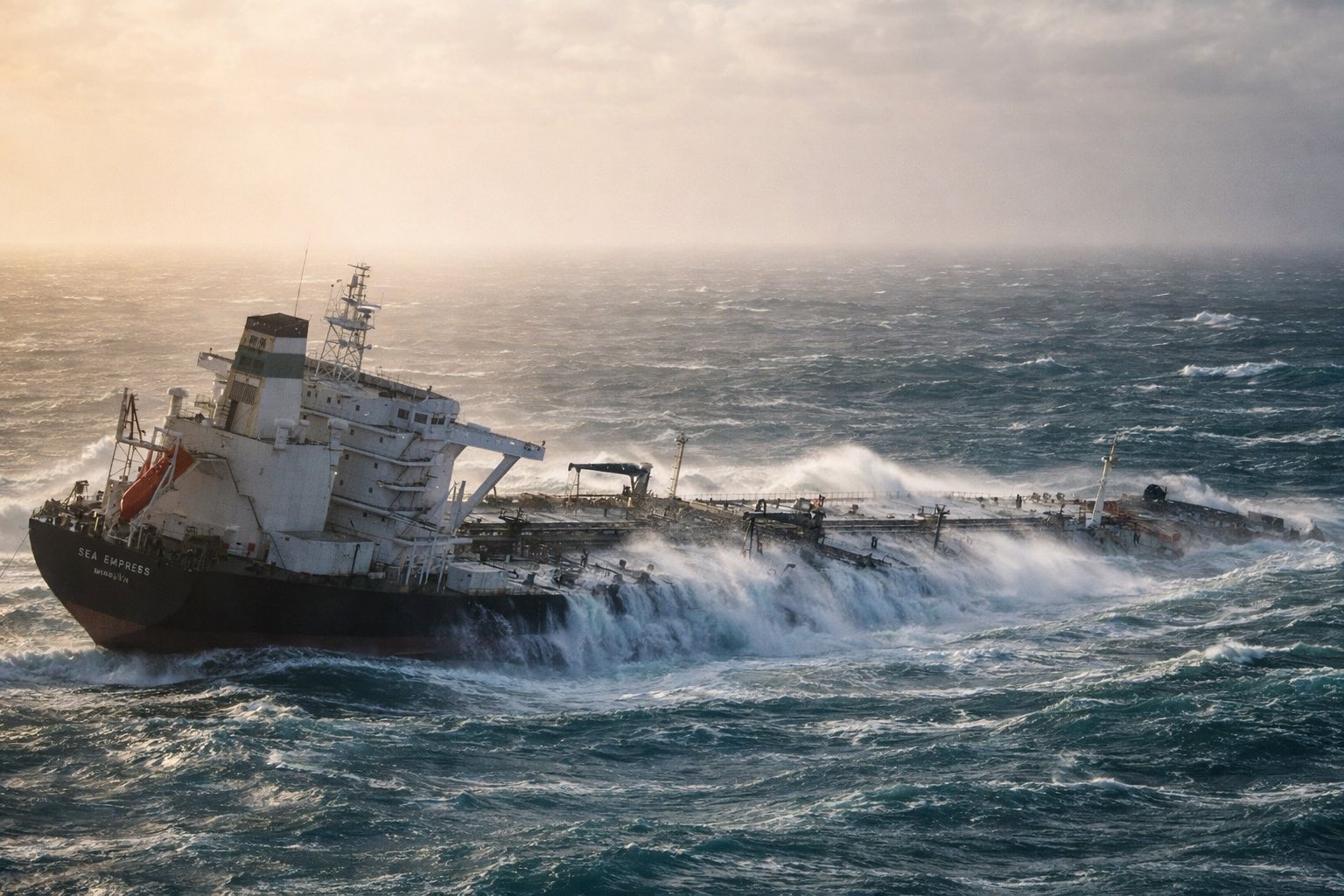
Human error, storm conditions and salvage decisions combined in one of Britain’s worst maritime disasters
THIRTY years ago this week, the oil tanker Sea Empress ran aground while entering Milford Haven, triggering a maritime emergency that would ultimately reshape safety procedures in one of the UK’s most important ports.
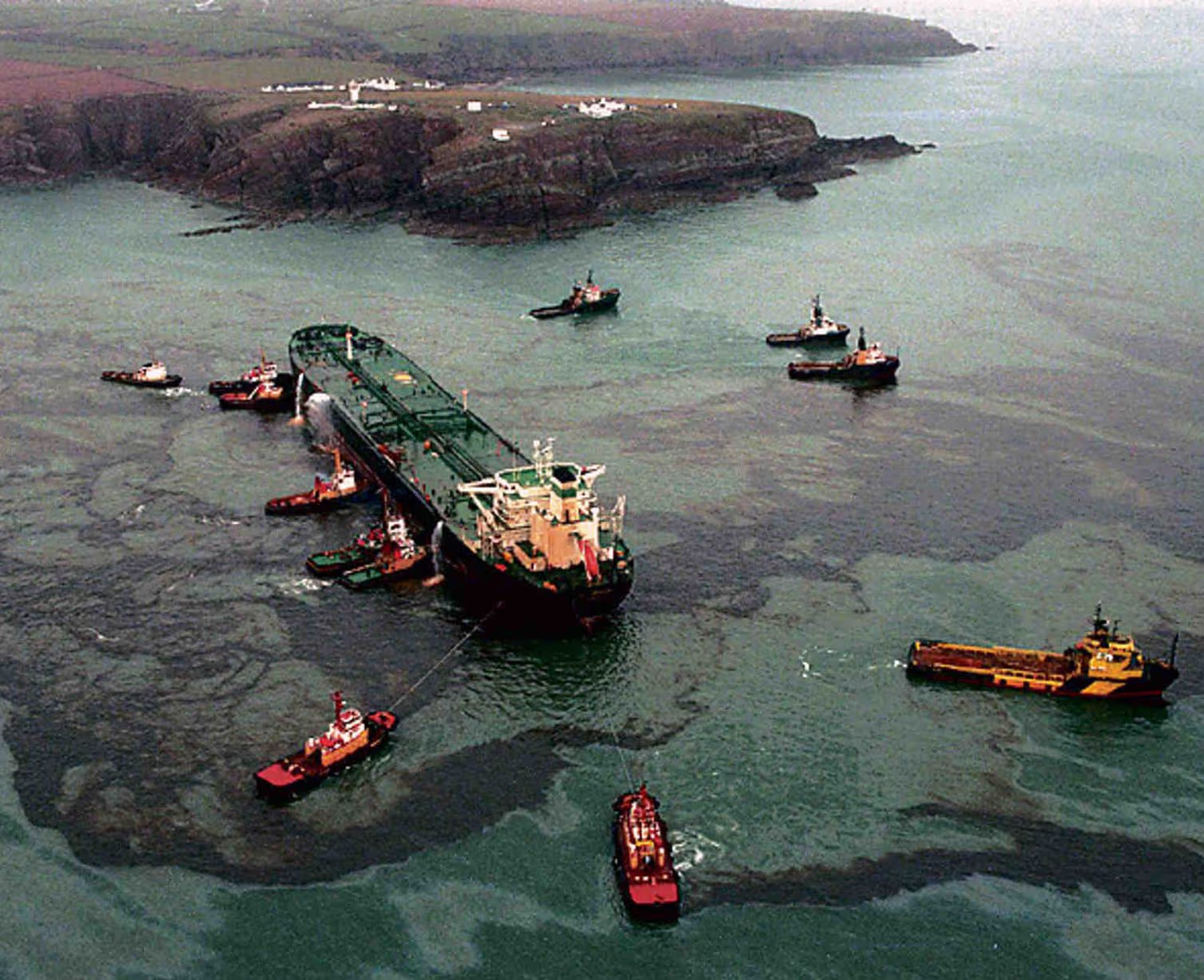
On the evening of February 15, 1996, the Liberian-registered tanker was inbound to the Texaco refinery carrying approximately 130,000 tonnes of North Sea crude oil when it struck rocks at the entrance to the Haven.
What followed was a complex and dangerous salvage operation carried out in severe weather, repeated groundings, and eventually the release of more than 70,000 tonnes of oil into the sea — making it one of the worst environmental disasters in British waters.
What actually went wrong
The Marine Accident Investigation Branch later concluded that the grounding was primarily caused by human and operational error rather than mechanical failure.
The tanker’s steering gear and propulsion systems were found to be functioning normally.
Investigators identified a sequence of navigational decisions and communication issues between the ship’s master and harbour pilot that led the vessel too close to the rocks while manoeuvring into the channel.
Strong tidal conditions and environmental factors then compounded the situation once the vessel was aground.
In simple terms, the ship was not where it should have been.
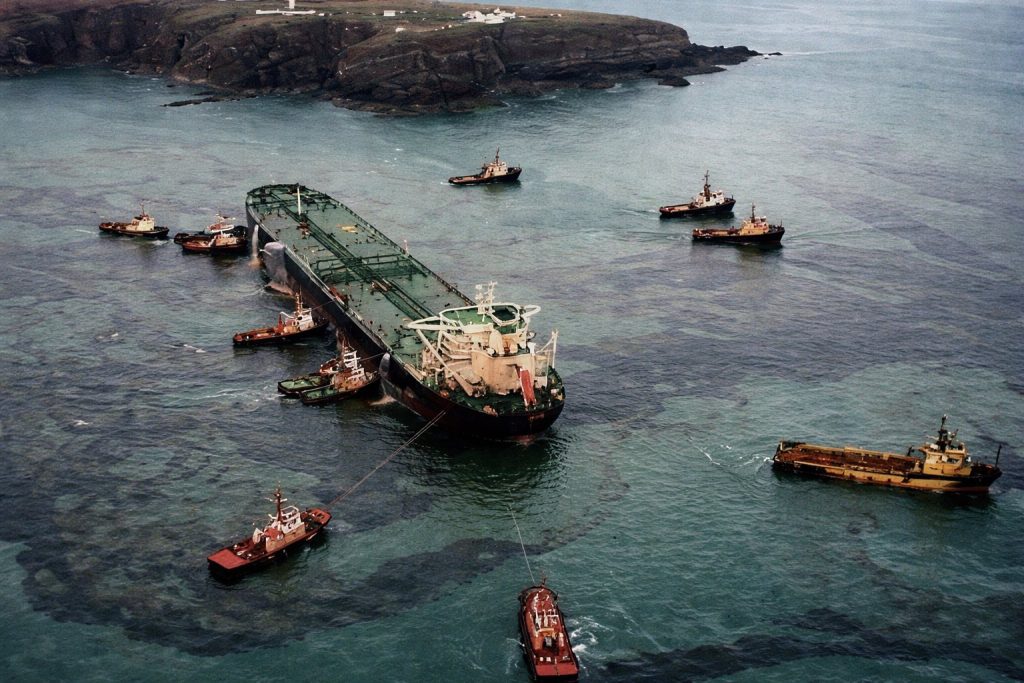
A salvage operation under pressure
Initial efforts focused on stabilising the vessel and preventing further oil loss, but worsening weather quickly made operations far more dangerous.
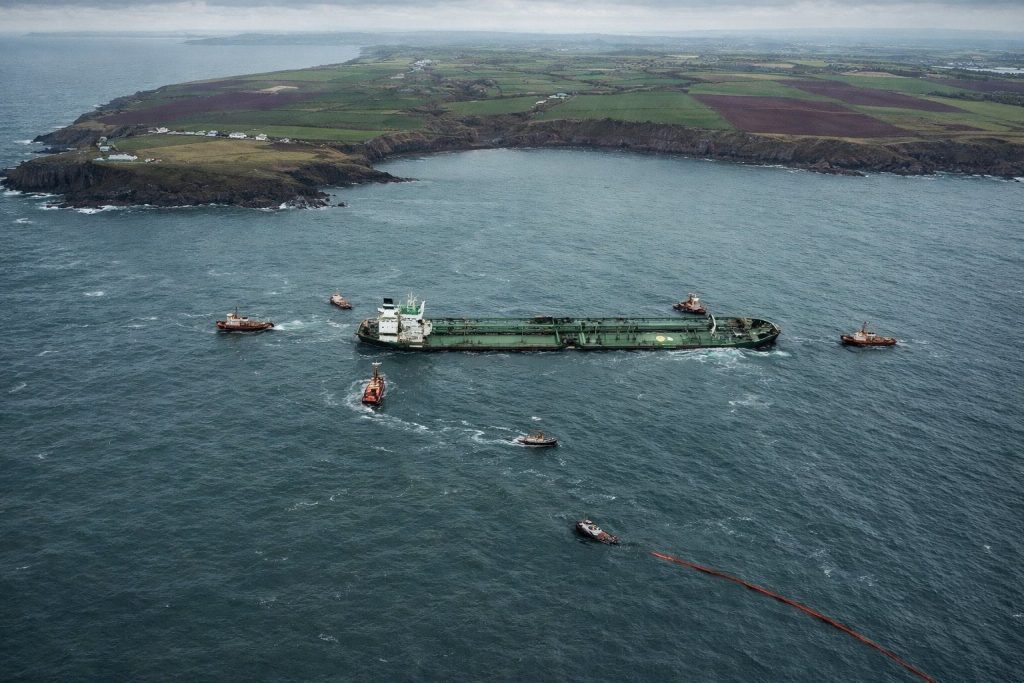
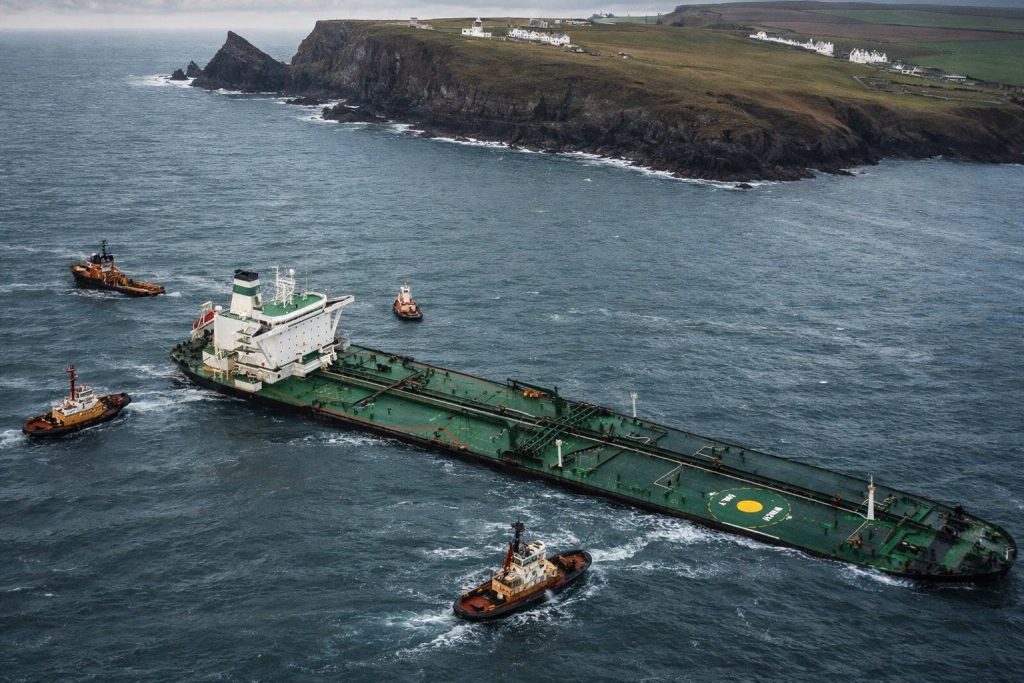
Tugs worked in gale-force winds attempting to pull the tanker clear.
During one critical phase, a tow line parted under extreme tension, allowing the ship to ground again and spill additional oil.
At the same time, fears grew that vapours from the cargo could ignite, prompting evacuations near St Ann’s Head.

Aircraft sprayed dispersants over the spreading slick while emergency services prepared for a potential explosion scenario.
The priority at that stage was to prevent the vessel breaking apart completely.
Eventually, after several days of effort, salvage crews succeeded in refloating the tanker and moving it to a safer position where the remaining cargo could be removed.
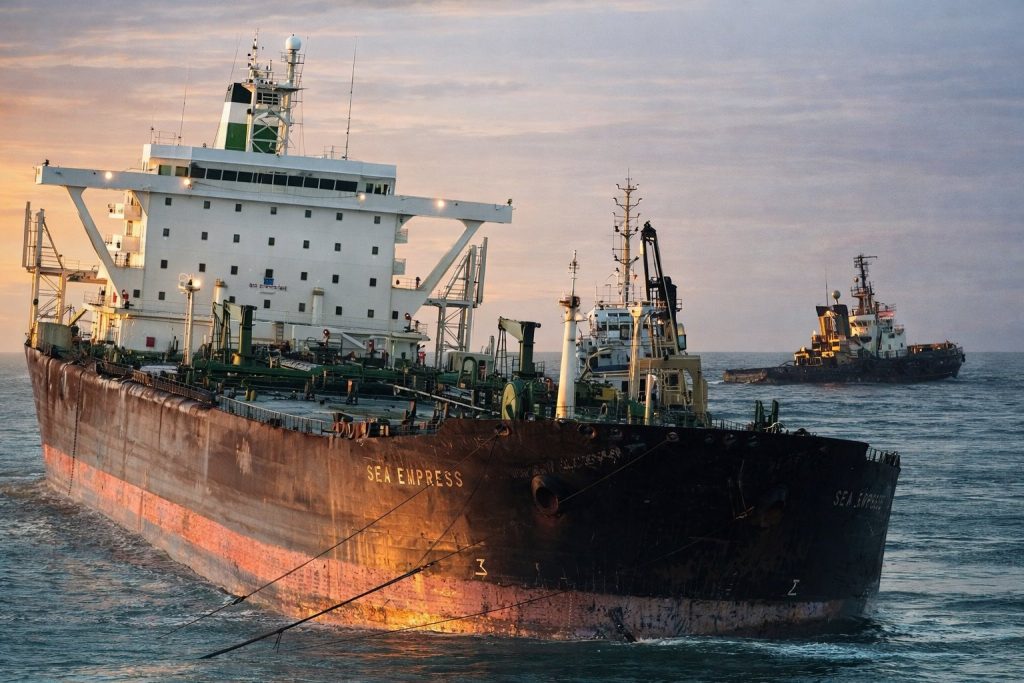
Who was blamed
Responsibility for the disaster became the subject of legal and regulatory scrutiny.
The official investigation placed primary fault on navigational decisions during the vessel’s approach rather than any equipment failure.
The ship’s master and pilot both faced criticism over judgement and coordination, though the complex operational environment was also acknowledged.
In subsequent legal proceedings, liability for the spill was largely addressed through civil compensation mechanisms involving the ship owners and insurers under international maritime conventions.
There was no single individual publicly identified as solely responsible for the scale of the environmental damage.
However, the incident exposed weaknesses in escort tug arrangements, navigation procedures and emergency response planning.
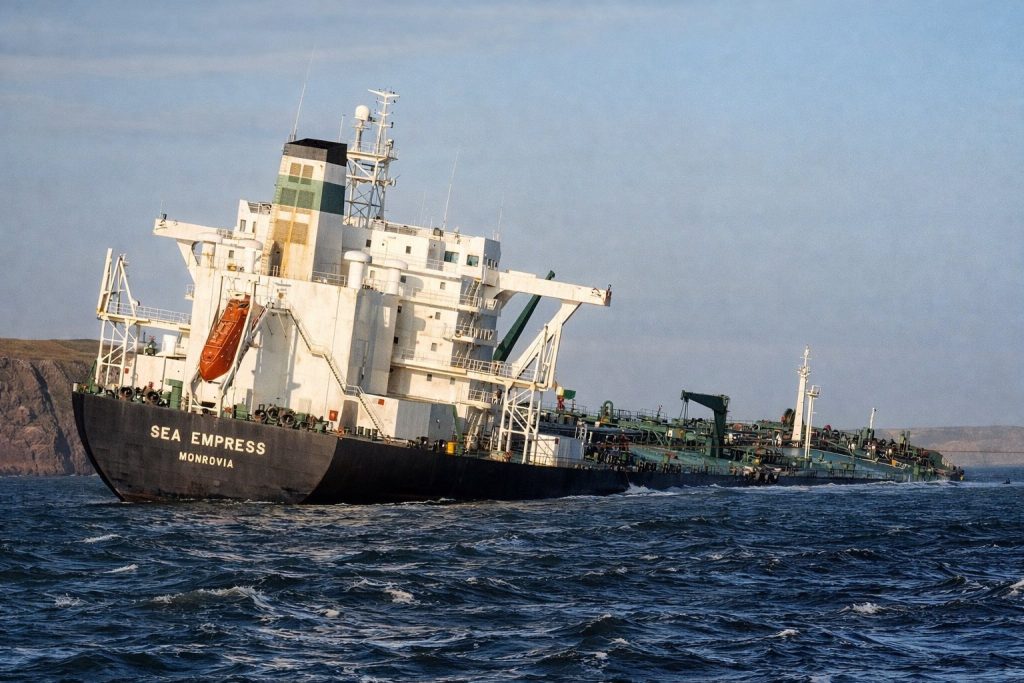
Impact on Milford Haven operations
One of the most significant long-term outcomes was the strengthening of escort tug requirements for large vessels entering the Haven.
Navigation procedures were reviewed and risk management protocols improved.
Emergency pollution response capability across the UK was also reassessed.
For the port itself, the disaster became a turning point.
Milford Haven continued operating as a major energy hub, but with tighter safety controls and increased scrutiny.
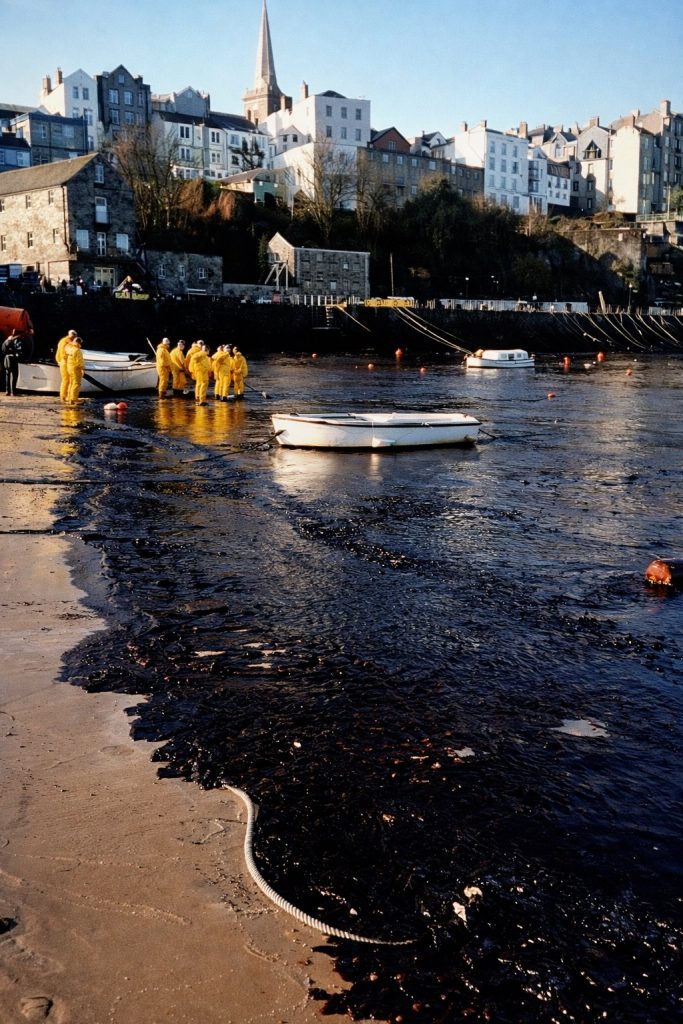
Environmental and community consequences
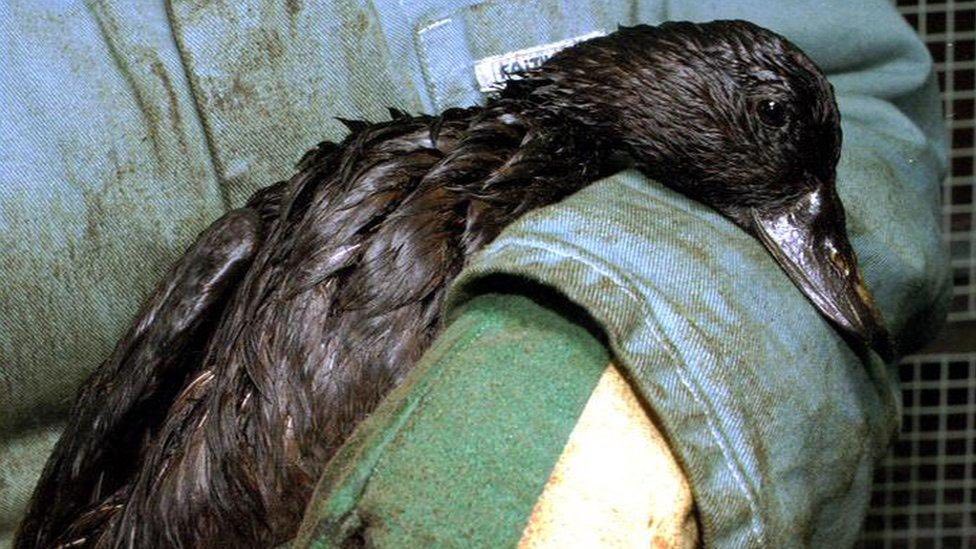
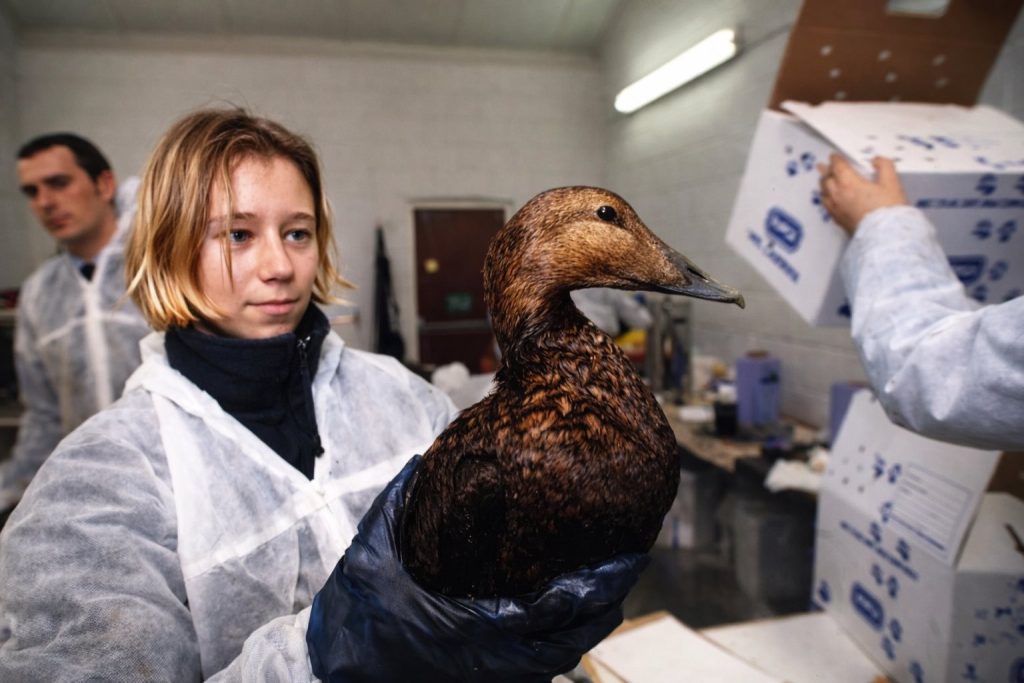
Oil contamination spread across miles of coastline, affecting wildlife habitats, fisheries and tourism.
Thousands of volunteers joined military personnel and contractors in an enormous cleanup effort that lasted months.
While environmental recovery has been substantial over the decades, the psychological impact on coastal communities and those directly involved in the response remains part of local memory.
Maritime lessons that endure
Today, the Sea Empress is widely viewed within the maritime industry as a case study in how small navigational errors can escalate into major incidents when combined with environmental pressures.
The disaster reinforced the importance of escort towing, pilotage coordination and emergency planning in high-risk ports.
Thirty years on, the Haven remains one of the UK’s busiest energy ports — operating under safety frameworks shaped directly by the events of February 1996.
Programme revisits Milford Haven 30 years after oil spill disaster
TWO well-known Pembrokeshire figures appeared on BBC television on Sunday (Feb 15) as Countryfile marked the 30th anniversary of the Sea Empress oil spill.
Phil Thompson, former public relations manager at the Texaco refinery, and Martin Cavaney, a freelance photographer who regularly works with The Herald, were among those featured during the programme, which looked back at the disaster and its lasting impact on the county.
Presenters Datshiane Navanayagam and Hamza Yassin visited Milford Haven to explore how the area has recovered three decades after the tanker ran aground at the entrance to the waterway while carrying crude oil to the refinery.
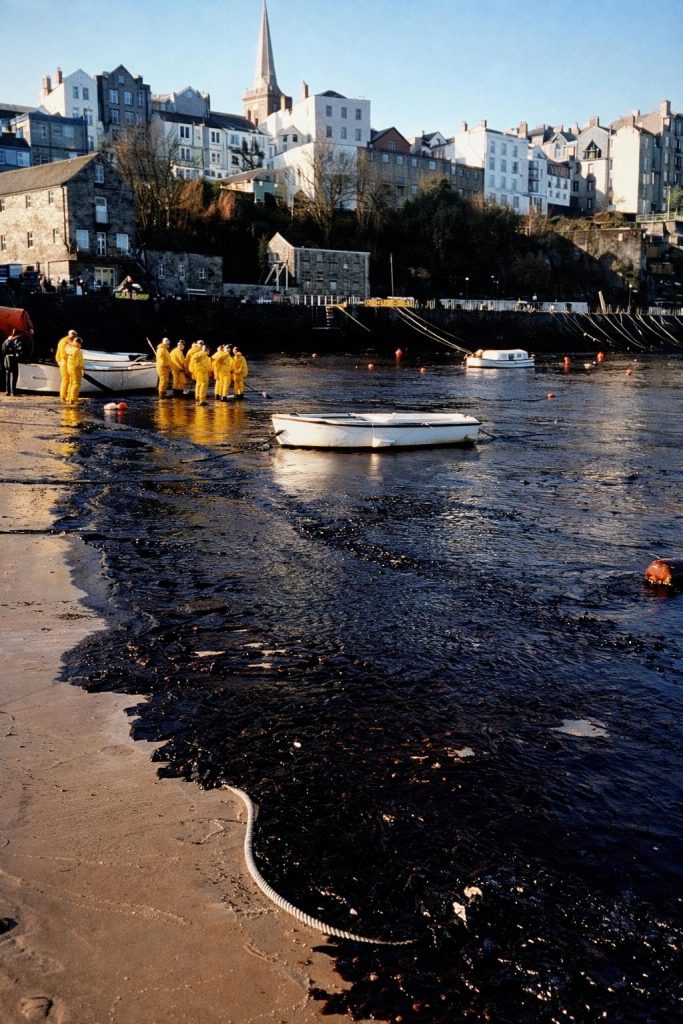
The grounding of the Sea Empress on February 15, 1996 resulted in tens of thousands of tonnes of oil being spilled into the sea, contaminating large sections of the Pembrokeshire coastline and becoming one of Britain’s worst environmental disasters.
The programme also featured Mike Ryan, Harbourmaster at the Port of Milford Haven, who explained how the incident led to significant improvements in marine safety.
Ryan, who served for around 30 years in the Royal Navy before joining the port, said the disaster remains part of the waterway’s history and helped focus attention on the need for stronger procedures. This ultimately contributed to the development of modern safety systems, including the Port Marine Safety Code introduced in 2000.
Countryfile also examined the environmental recovery that has taken place since the spill, including work by scientists and conservationists to protect wildlife across Pembrokeshire’s coastline.
The Sea Empress disaster prompted one of the largest clean-up operations ever seen in Wales, involving salvage crews, emergency responders, volunteers and environmental organisations.
The anniversary remains a significant milestone for communities around Milford Haven, where memories of oil-covered beaches and wildlife continue to resonate 30 years on.

The programme is available to watch on BBC iPlayer.

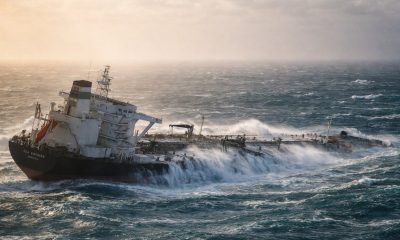

News11 hours ago
Sea Empress: 30 years since the grounding that transformed safety in Milford Haven
Human error, storm conditions and salvage decisions combined in one of Britain’s worst maritime disasters THIRTY years ago this week,...

Health1 day ago
NHS pay row erupts as ministers confirm 3.3% rise
Unions warn award amounts to real-terms cut as inflation remains above headline figure NHS staff across Wales will receive a...

Crime2 days ago
Governors defend leadership at Milford Haven School after stabbing incident
GOVERNORS at Milford Haven Comprehensive School have issued a public statement responding to concerns about leadership and staffing following last...


Crime3 days ago
Four arrested in armed police operation across Pembroke Dock
Firearms, drugs and GBH suspects detained as pre-planned raids hit Bush Street and Gordon Street A MAJOR armed police operation...


News3 days ago
Climber dies and two injured in St Govan’s Head fall
Major air and sea rescue launched as coastguard, lifeboat and helicopters scramble to Pembrokeshire cliffs A PERSON has died and...


Education3 days ago
School in special measures after inspectors raise safeguarding and leadership concerns
Estyn orders urgent action plan and regular monitoring at Pembroke secondary A PEMBROKESHIRE secondary school has been placed into special...
Crime3 days ago
Armed police arrest man after major operation in Pembroke Dock
Firearms officers, dog units and roadblocks deployed on Gordon Street as Dyfed-Powys Police investigate ARMED officers sealed off part of...

Community3 days ago
Lifeboat to find new home at Pembroke Dock museum after historic handover ceremony
A HISTORIC lifeboat which saved forty lives around the British coastline is set to begin a new chapter in Pembroke...


Crime4 days ago
Pendine man jailed for abducting and drugging teenage girl
Offender had 1,101 unlawful images of children stored on his devices, including 122 Category A images – the most serious...


Crime5 days ago
Publican admits supplying cocaine and cannabis at Crown Court
Admits cocaine and cannabis supply but denies intent and cash allegations A MILFORD HAVEN pub landlord has admitted supplying cocaine...
-
 Health5 days ago
Health Board to decide future of nine key services at two-day meeting
-

 Business7 days ago
Computer Solutions Wales under fire from customers
-

 Charity7 days ago
Welsh patient voices help shape new UK-wide online kidney forum
-

 Community6 days ago
Facebook ‘news’ site targeting Herald editor collapses after community backlash
-

 Community7 days ago
Calls for traffic calming in Neyland after car hits house
-
Crime3 days ago
Four arrested in armed police operation across Pembroke Dock
-

 News7 days ago
Fresh concerns over £60m A40 scheme after resurfacing works just months after opening
-
 Crime7 days ago
Woman admits two shop thefts and banned from town supermarkets