


News
Councillors defy officers over £6m development

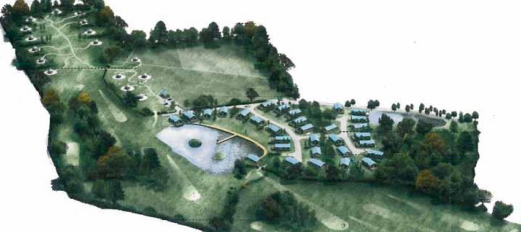
 PEMBROKESHIRE COUNTY COUNCIL’s planning and rights of way committee met on Tuesday to discuss a major development at Heatherton.
The multi-million pound project to develop 33 log cabins, 16 yurts and the development of attractions was recommended for refusal by planning officers. Some of the new attractions would include a BMX track, Zip wire, Segways and Body Zorbs. Cutting through the red tape, forward thinking councillors defied the officers’ recommendation by approving the project. The £6m being spent at Heatherton is an opportunity to ‘raise the tourism bar’ said Councillor David Pugh. The new development would also create around 30 jobs, something which councillors felt was very important. Phil Kidney, council member for St Florence, said:
“Heatherton has been open for 20 years and only shuts for three days a year. The application before you today, if successful will add another 29 jobs. Due to the current economic climate there is a very great risk that Heatherton would have to close during the winter months”.
Alison Belton, former chief executive of Pembrokeshire tourism said to councillors: “Heatherton offers a wide range of events, activities and sports for all ages. I don’t need to tell members of the importance of tourism”.
Councillor Brian Hall added: “Heatherton is a fantastic tourist attraction, it is one of the top five in Pembrokeshire, but regrettably I have to move the recommendation for refusal simply because it’s contrary to our policies”.

However, Cllr Hall’s motion was not supported and Cllr Jacob Williams then moved that the proposals be accepted and said:
“I am disappointed that this is down for refusal, I could not support this more, now is the time to get on with it. It’s a well-established business; I think we should applaud Heatherton for wanting to do this”.
Cllrs Keith Lewis, David Pugh, Peter Stock and Phil Baker also gave their support to the application.
Cllr David Pugh added: “We have a county that relies very heavily on tourism. It doesn’t charge for entry, it has a range of activities that appeal to a wide range of families. This is an application that has been two years in preparation, let’s get on with it”.

Cllr Peter Stock said: “The benefits of this project outweigh the other objections. It’s in an excellent location, it’s a natural progression and this is the type of development we must look for in the future”.
Cllr Stephen Joseph added: “This is crucial for Pembrokeshire going forward”.
They were then asked to give their reasons why they had gone against the original decision and all councillors were of the opinion that the economic benefits outweighed the recommendations for refusal.

Heatherton director Charles Davies said: “Diversifying the business model by including accommodation as well as increasing the range of activities will enable Heatherton to be successfully marketed to a wider range of customers which in turn will generate increased income and jobs to Pembrokeshire and spread those benefits throughout the year.
“I would really like to thank the forward thinking of the council members in supporting our application and those that helped in its preparation”.
The only councillor that was against the scheme was Cllr Brian Hall who said: “Regrettably, I have to move the recommendation for refusal as it goes against a number of policies”.

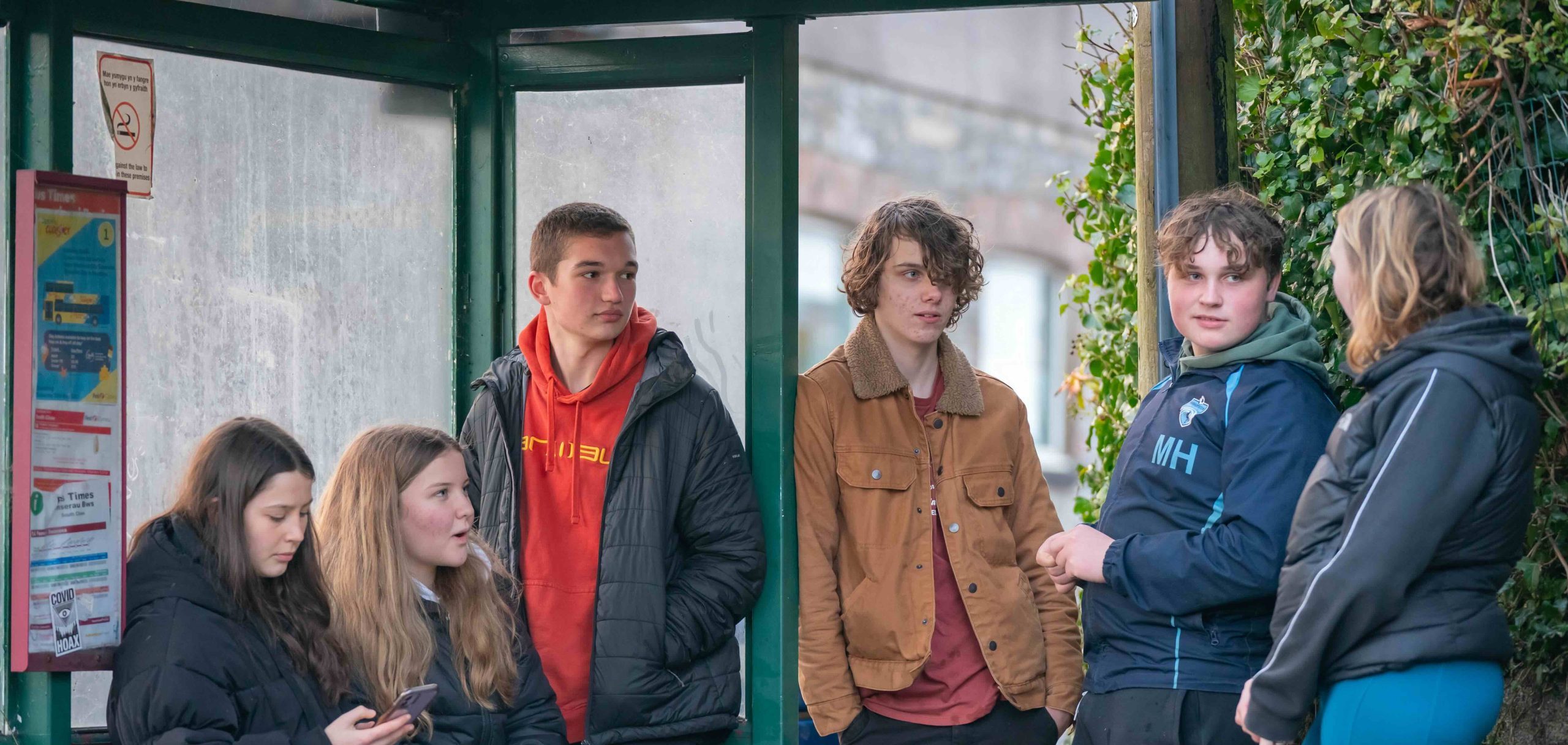
New research says 86 per cent feel they have fewer chances to connect and create than previous generations
YOUNG people in Wales are being left with “nowhere to go” as rising costs, poor transport and the decline of community spaces make it harder to meet, create and build confidence, new research suggests.
A study commissioned by the Roundhouse found that 86 per cent of 18-to-30-year-olds in Wales believe they have fewer in-person opportunities than previous generations to connect with others, be creative and build confidence outside school or work.
The findings point to growing concern over a generation increasingly pushed online, with fewer affordable places to meet, perform, volunteer, learn new skills or take part in creative activities.
More than a third of young people questioned cited a lack of safe spaces, including youth clubs, community centres and civic venues, as one of the biggest barriers to feeling connected to a community.
Financial pressures were also identified as a major issue, with 43 per cent pointing to the cost of activities, transport and participation.
More than half said they did not have enough access to creative opportunities and spaces such as music, performance, arts and dance, while one in five said most of their social interaction now takes place online.
For many young people in rural parts of Wales, those barriers can be even more pronounced, with limited public transport, fewer youth facilities and rising costs making it harder to access opportunities outside school, college or work.
The findings come amid growing concern about youth anxiety, loneliness and economic inactivity. Former Labour cabinet minister Alan Milburn recently warned of an “anxious generation” struggling to adapt to working life.
Marcus Davey CBE, Chief Executive and Artistic Director of the Roundhouse, said: “This research paints a worrying picture of life for many young people in Britain today.
“Too often, opportunities to build belonging, confidence and creativity are shaped by cost, postcode and access.
“Places like the Roundhouse are part of the solution, providing safe, affordable spaces where young people can connect, develop skills, improve wellbeing and access life-changing opportunities.
“No young person’s future should depend on where they grew up or what they can afford.”

The Roundhouse, a youth charity and multi-arts venue based in Camden, London, has also released its 20-year impact report, marking £50 million invested in more than 100,000 young people since it reopened as a youth arts charity in 2006.
It says it has delivered more than 35,000 creative sessions and provided 60,000 hours of studio time from £1 an hour.
The organisation has now launched a Young Creatives Commission with the Centre for Young Lives, aimed at exploring how access to arts and creative opportunities can be rebuilt.
The research was carried out online by Research Without Barriers between May 15 and May 18, 2026, and surveyed 1,002 UK adults aged between 18 and 30.
However, the Wales-only sample size was not disclosed, meaning the findings should be treated as indicative rather than definitive.

BROADCASTERS’ impartiality rules may be limiting proper scrutiny of political claims during election campaigns, according to a new Cardiff University report.
Academics from the university’s School of Journalism, Media and Culture spent 10 weeks analysing coverage of May’s elections in Wales, Scotland and England.
The study focused in particular on the Senedd election, which was the first held under Wales’ new voting system and following the expansion of the Senedd from 60 to 96 members.
Researchers found that scrutiny of policy and campaigning was limited in day-to-day coverage of the Welsh election.
Analysis of relevant television news items showed that 49% contained no scrutiny, 29% contained substantial scrutiny, and 22% included only brief scrutiny.
This means more than 70% of political claims on TV news received no scrutiny or only limited questioning.
The report found that scrutiny was stronger when coverage focused on one party at a time, or during one-to-one interviews. It was weaker in reports that attempted to include all six major parties in a single item.
Professor Stephen Cushion, who leads the project, said the findings raised serious questions about how the UK’s due impartiality rules are being applied during election campaigns.
He said: “Our new study suggests the UK’s current rules on broadcast impartiality limited the scrutiny of political parties across the English, Scottish and Welsh elections.
“In day-to-day reporting, the major broadcasters had to reflect a wide range of parties across three different contests – but the breadth of perspectives limited the depth of analysis, including the interrogation of specific policies and party political claims.
“This does not mean impartiality should be abandoned in a Fox News style way, but the rules need to be rethought to give broadcasters the flexibility to provide greater scrutiny in day-to-day news reporting.”
The report says broadcasters faced a significant challenge during the Senedd campaign, as they had to explain a new electoral system, the expansion of the institution, and how voters’ choices would translate into representation.

The Senedd election was also held at the same time as the Scottish election and English local elections, meaning Wales had to compete for attention in UK-wide bulletins.
Professor Cushion added: “Overall, the findings show that broadcasters played an important role in making the Senedd election visible and accessible to audiences.
“However, the analysis also identifies clear challenges. Future coverage needs to ensure that efforts to represent a broad range of parties, report public opinion and adapt election coverage for digital audiences are matched by clear explanation, consistent scrutiny and substantive engagement with policy debates in day-to-day reporting.”
The report, Reporting the 2026 UK Elections, with Wales in Focus: TV, Online and Social Media Coverage of the Senedd, has now been published by Cardiff University.
Davies says Henry Nowak case exposes institutional failings as police watchdog investigation continues
A CALL has been made for a Stephen Lawrence-style public inquiry after murdered university student Henry Nowak was handcuffed by police as he lay dying in the street.
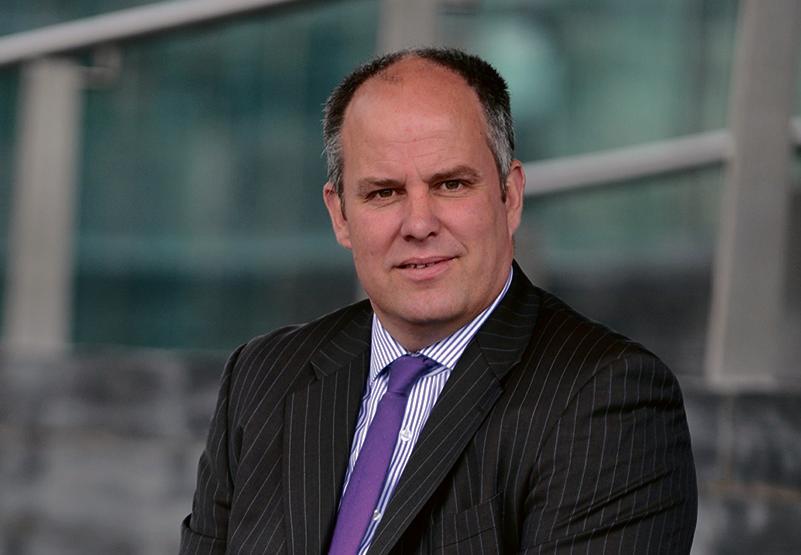
Andrew RT Davies, Conservative Senedd member for South Wales Central, said the case raised serious questions about police judgement, institutional culture and the way officers respond when allegations of racism are made at chaotic crime scenes.
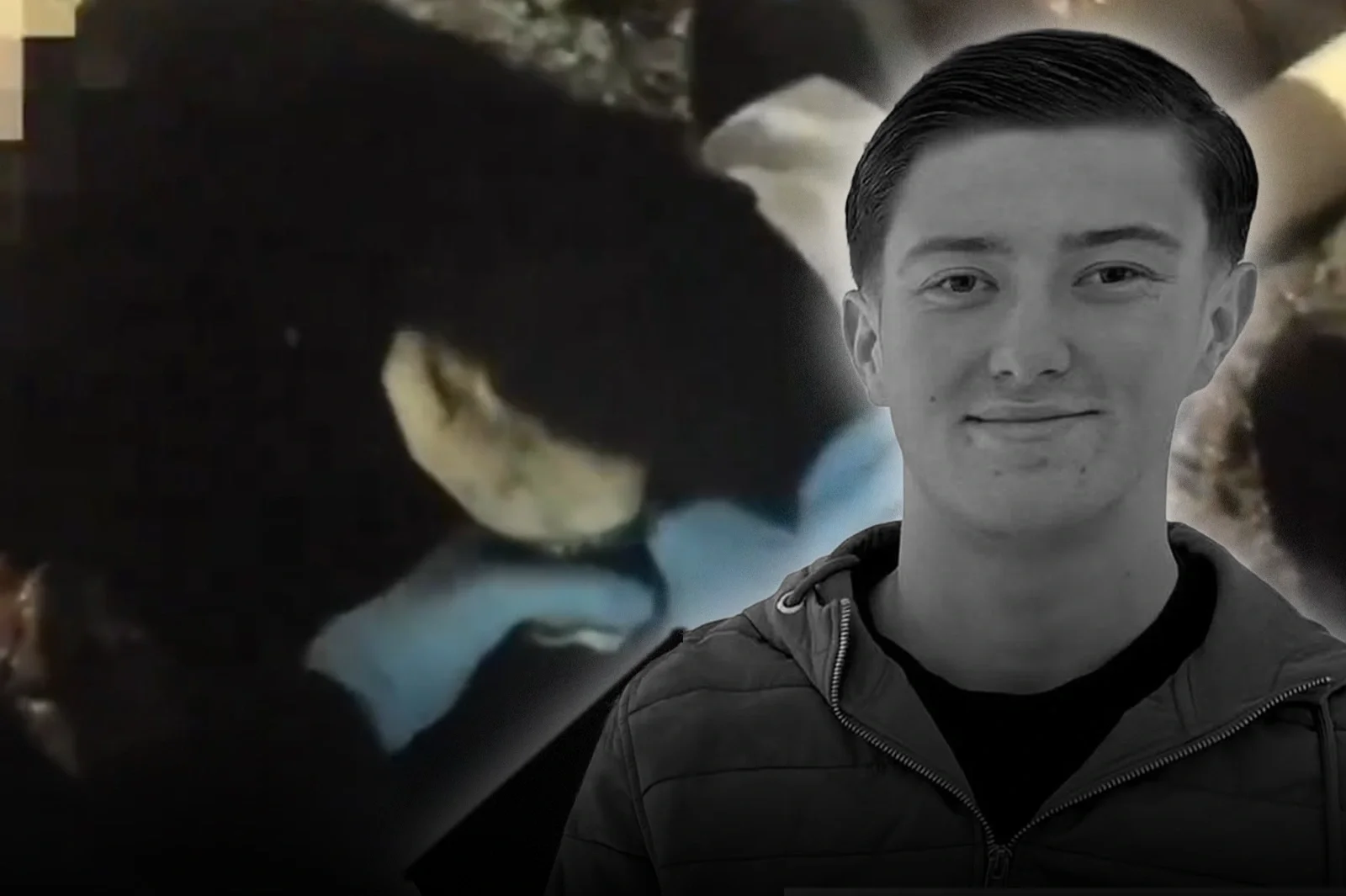
Henry, 18, was stabbed five times in Southampton on December 3, 2025, by Vickrum Digwa, 23, who later falsely claimed the teenager had racially abused him and knocked off his turban.
That account was rejected in court. Prosecutors described it as a “wicked lie”, and Digwa was jailed for life at Southampton Crown Court on Monday (June 1), with a minimum term of 21 years.
Body-worn footage released after the case showed officers initially treating Henry as a suspect, handcuffing him and reading him his rights despite his repeated pleas that he had been stabbed and could not breathe.
Hampshire Police has apologised, and the Independent Office for Police Conduct is investigating the force’s response.
Mr Davies said the case should now be examined through a wider public inquiry, arguing that it exposed cultural and structural failings beyond the actions of individual officers.
He said: “The appalling footage in which Henry Nowak was handcuffed as he bled to death has shocked many people, but attributing all blame to the officers involved would be a mistake.
“Henry Nowak’s treatment was the result of a culture of anti-racism under which white people face discrimination and are treated with suspicion.

“We need a Stephen Lawrence-style inquiry to root out these cultural and structural failings within our institutions.”
The comparison is a highly charged one. The Stephen Lawrence Inquiry, published in 1999, found the Metropolitan Police to be institutionally racist following the racist murder of black teenager Stephen Lawrence in 1993.

Mr Davies is arguing for a similarly far-reaching examination of institutional assumptions, but from a very different perspective — claiming that modern policing culture may now cause officers to give undue weight to allegations of racism even when the facts are unclear.
Henry’s family has also strongly criticised the way he was treated, although they have placed responsibility for his murder firmly on Digwa.
His father, Mark Nowak, said outside court that Henry’s treatment by police was “inhumane and degrading” and called for a full and transparent investigation.
The court heard that Digwa attacked Henry with a 21cm blade which he claimed to carry as part of his Sikh faith. However, he was also carrying a smaller ceremonial kirpan, and the judge said he had brought shame on his family, his community and his religion.
Representatives of the Sikh community have condemned the murder and stressed that Digwa’s actions were entirely contrary to Sikh teaching.
The case has now prompted wider questions about knife crime, religious exemptions in weapons law, police decision-making, and whether officers were too quick to accept Digwa’s false account of events.
Prime Minister Sir Keir Starmer has described the case as “awful” and “shocking”, while ministers have indicated that the sentence may be reviewed.
For now, the formal scrutiny rests with the IOPC. But Mr Davies’ intervention will intensify pressure for the investigation to examine not only what individual officers did, but why Henry Nowak was treated as a suspect while his killer’s false account was initially believed.



Local Government1 hour ago
National Express use of new Haverfordwest interchange still subject to risk checks
A RUMOUR that National Express coaches may struggle to use Haverfordwest’s new transport interchange has been denied by Pembrokeshire County...


Crime2 hours ago
Milford Haven man jailed for illegal Premier League streaming service
A MILFORD HAVEN man who supplied illegal Premier League streams and loaded Firesticks to almost 2,000 customers has been jailed...


Community1 day ago
RNLI lifeguards rescue beachgoers during busy heatwave weekend
FOUR PEOPLE RESCUED AS RIP CURRENTS AND OFFSHORE WINDS HIT PEMBROKESHIRE BEACHES RNLI lifeguards in Pembrokeshire rescued four people and...

Local Government1 day ago
Council and school staff pay row could hit Pembrokeshire services
COUNCIL workers, carers and school support staff in Pembrokeshire could be drawn into a growing UK-wide pay dispute after GMB...

Health2 days ago
Hywel Dda to hold second consultation on future of stroke services
A SECOND phase of public consultation is to be held on the future of stroke services across Hywel Dda University...


Community2 days ago
Warning as algal blooms mistaken for sewage on Welsh coast
Beachgoers urged to avoid contact with suspicious foam and report pollution concerns NATURAL RESOURCES WALES has issued summer advice to...


News2 days ago
Yacht towed to safety after engine failure off Tenby
A YACHT was towed to safety by Tenby RNLI after suffering total engine failure around 15 miles south-east of the...


Crime3 days ago
Haverfordwest sex offender jailed over child abuse material
Registered offender used library computers to hide social media accounts A HAVERFORDWEST sex offender who used public library computers to...


Local Government3 days ago
Milford Haven school redevelopment moves a major step closer
£141.6m scheme could transform education in the town A MAJOR step forward has been taken in the long-awaited Milford Haven...

Crime3 days ago
Castlemorris man spared jail after knife confrontation over council tax debt
A CASTLEMORRIS man has avoided immediate custody after threatening enforcement officers with a knife during an early-morning visit over unpaid...
-
 Health5 days ago
Paul Davies warns health board over Withybush and Bronglais services
-
 Crime6 days ago
Police tip-off leads to drink-drive ban for Pembrokeshire pensioner
-
Crime5 days ago
Carmarthenshire man sent to Crown accused of 33 historic sexual offences
-

 Crime6 days ago
Steynton motorist banned after drink-drive collision
-

 Crime6 days ago
Warrant issued for man accused of taking wild goldfinches
-
 Crime6 days ago
Dock man given suspended prison sentence for third drink-drive offence
-

 Crime6 days ago
Dock motorist fined £1,600 after four speeding offences
-

 Local Government7 days ago
Dennison code breach raises serious questions over common sense at County Hall
private jet charter for corporate groups
April 10, 2026 at 11:10 pm
I love how you addressed this issue. Very insightful!