
News
Llanrhian


 John Evans
Welsh Conservative
“I was born and brought up in the Mathry / Hayscastle area and currently farm at Treddiog Fach. I’m a fluent Welsh speaker and am married to Janet with three grown up children and one grandchild. I have a track record of working hard for the local community, serving on Hayscastle Community Council, being a ‘friend’ of Hayscastle School and a past President of Pembrokeshire Agricultural Society. I have also undertaken fundraising for a number of local organisations.
“I am delighted to have been selected to contest the Llanrhian ward in the County Council elections on 4th May. For too long the Independent Group has had control of the Council and they have concentrated their attention on the needs of the towns rather than the rural areas. THIS MUST CHANGE.
“I firmly believe that with more Conservative Councillors working closely with Stephen Crabb M.P. and Paul Davies A.M. we can bring about the much needed change from our County Council.
“I will, if elected, speak up for my ward, work closely with both of the local Community Councils and champion rural Pembrokeshire. Cllr David Rees will be a hard act to follow and I hope that you will place your trust in me to fill his shoes in May.”
 Chris John
Plaid Cymru
Alan Price
Independent
 Neil Prior
Independent
Neil, who is 46, moved to Pembrokeshire with his family over 30 years ago and has fond memories of holidays in the county.
Having worked in and around London, Neil moved back to Pembrokeshire a few years ago and hopes to bring some of the skills and knowledge he has learnt to the council.
Speaking to the Herald, Neil said he has a very keen interest in local government and has been actively working with public service across the UK for the last decade.
Neil has previously worked for companies such as O2 and Microsoft, in which he has dealt with over 100 councils across the UK and he hopes to bring some of those experiences to Pembrokeshire.
He said he doesn’t feel strongly enough to have joined a political party but rather wants to do the best for the community as an independent.
Neil stated that his ambition for standing has come from working with many local councils and believes that more could be done to respond to the financial pressures.
He says that he wants to put his money where his mouth is and that Pembrokeshire County Council would benefit from fresh-thinking which could create efficiencies and new ways of working to provide better public services.
If elected, Neil said he will be pro-active in the community, responding to people and their needs. He would also like to protect local services and wants to see less downgrading of Withybush Hospital.
He also hopes to be a catalyst for encouraging new ways of working and said that the council should be exploring more collaborative ways of working with other councils and voluntary sectors.

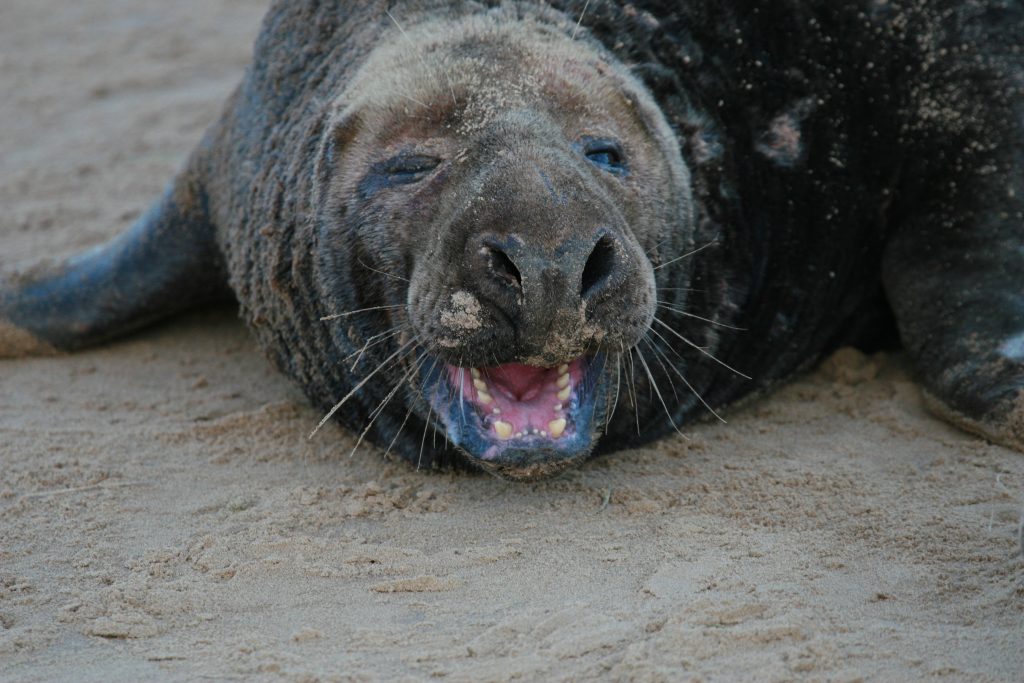
THE FIRST suspected case of a grey seal killing a common dolphin in Welsh waters has been recorded on a Pembrokeshire beach.
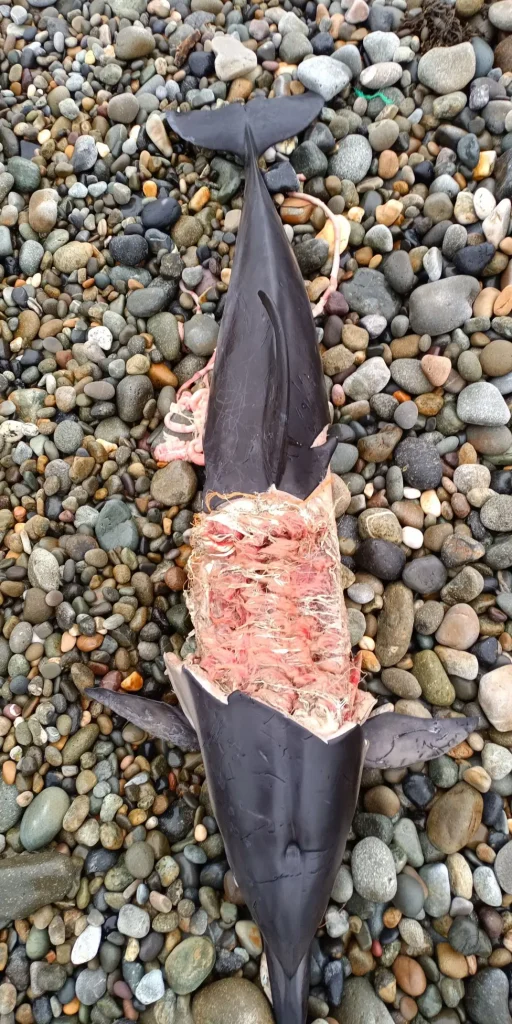
Marine investigators believe an adult female short-beaked common dolphin found stranded at Newgale Beach may have been attacked by a small group of grey seals operating between west Wales and the south-west coast of England.
The discovery marks a significant development in what researchers say is growing evidence that some male grey seals are preying on a wider range of marine mammals than previously understood.

Corkscrew injuries identified
The dolphin, measuring around six feet in length, suffered severe “corkscrew” injuries — distinctive spiral tearing of blubber and tissue — which are consistent with previous confirmed grey seal attacks on harbour porpoises.
Mat Westfield, Wales strandings co-ordinator for Marine Environmental Monitoring, said similar incidents had recently been investigated in north Devon.
He said: “It’s the first recorded case in Wales. Because it’s so close geographically to Devon, we suspect it may involve a small number of individual grey seals operating in that area.”
Bite marks were identified on the dolphin’s pectoral fins and around the torn blubber edges — patterns marine pathologists associate with grey seal predation.
The carcass has been sent for further examination. Full laboratory results could take up to six months, with tests expected to determine whether the dolphin had any pre-existing illness or injury.
Behaviour linked to adult males
Dr Izzy Langley, of the Sea Mammal Research Unit at the University of St Andrews, said evidence suggests the behaviour is limited to certain adult male grey seals rather than the wider population.
Grey seals are typically fish-eaters, feeding on sand eels, cod, herring and squid. However, over the past decade researchers have documented attacks on harbour porpoises and even other seal species.
Dr Langley said there was no clear evidence that dolphins targeted in such incidents were already sick or weakened.
She explained that researchers believe the attacks may involve ambush tactics from below, catching dolphins unaware while they forage.
“We’ve always found it difficult to understand how grey seals could kill a healthy dolphin,” she said. “It suggests this may not be an evolved predator-prey relationship, but behaviour developed by individual animals.”
Every confirmed case so far has involved adult male grey seals, leading scientists to suspect the behaviour may be learned rather than instinctive.
Rare but significant
Grey seals are common along the Pembrokeshire coastline and are a familiar sight around Ramsey Island, Skomer and the Marloes peninsula. While attacks on harbour porpoises have been recorded previously in Welsh waters, this is believed to be the first suspected fatal attack on a common dolphin.
Marine experts stress that such incidents remain rare and do not represent widespread predatory behaviour across the grey seal population.
However, the case is likely to prompt further monitoring of strandings along the west Wales coast as researchers seek to understand whether this represents an isolated event — or the emergence of a new behavioural pattern.

Patients urged to use NHS 111 as Withybush, Glangwili and Bronglais face continued strain
HYWEL DDA University Health Board has warned that its emergency departments remain under “significant pressure,” with particular concern at Withybush Hospital.
In a statement issued on Monday (Mar 2), the Health Board said A&E departments at Withybush, Glangwili and Bronglais hospitals were continuing to experience high demand.
Patients were urged to contact NHS 111 Wales for advice if they are unsure where to seek help, and to use community pharmacies and minor injury units for non life-threatening conditions.
The Health Board said: “Help us to help you get the right care in the right place.”
It added that those with serious or life-threatening emergencies should always call 999.
Delayed discharges impacting flow
The statement also highlighted pressures caused by delayed discharges, urging families to support relatives who are medically fit to leave hospital but are waiting for homecare or community health support.
Bed-blocking, often linked to shortages in social care packages, is widely acknowledged as a key factor in A&E overcrowding, as patients cannot be moved from emergency departments into inpatient wards.
When wards are full, ambulance handovers slow and patients can face long waits for assessment and treatment.
Withybush under particular strain
Withybush Hospital in Haverfordwest was singled out as being under “particular” pressure.
There were no signs yet that things were improving today (Tuesday).
The Health Board did not release figures for waiting times, ambulance delays, or bed occupancy rates in its statement.
However, it confirmed that demand remains high across west Wales.
Alternative services highlighted
The public were reminded that:
- NHS 111 Wales can provide 24-hour advice.
- Option 2 via 111 offers urgent mental health support.
- Community pharmacies can treat a range of common ailments without appointment.
- Minor injury units are available for non life-threatening issues.
The Health Board thanked residents for their support and cooperation during what it described as a challenging period.

Vote.wales to host all essential election information for the Senedd election
A BRAND new voter information website, vote.wales, has been launched today (2 March) by the Electoral Management Board for Wales, part of the Democracy and Boundary Commission Cymru.
Vote.wales is the first website of its kind in Wales and tells people everything they need to know about the election, including advice about voting, information about the Senedd, and a postcode search function to provide tailored local information.
The website holds information about who can register to vote, how voting works in polling stations, as well as postal and proxy voting, and what accessibility support people can expect when they go to vote.
A postcode search function on vote.wales allows voters to see which of Wales’ 16 new constituencies they will be voting in, as well as telling them where their local polling station is located.
Once nominations have closed, the website will also inform voters which political parties and independent candidates are standing in their area.
The website explains how the Senedd works and what it does, highlighting which policy areas are devolved to the Senedd and which remain the responsibility of the UK Parliament. It also sets out the difference between the Senedd and the Welsh Government.
Further developments are expected in the coming weeks. In a first for Welsh elections, voters will soon be able to access detailed accessibility information about their local polling station. Political parties and independent candidates will also be able to publish their election leaflets on the platform, so voters can see not only who is standing but what they stand for.
Following the election, vote.wales will publish the full election results.
Commenting on the launch, Shereen Williams MBE OStJ, Chief Executive of the Democracy and Boundary Commission Cymru, said:
“An important election is coming on 7 May, and vote.wales is the place to go to find out all about it.
“We know that people across Wales are looking forward to making their voices heard at this election, but many people don’t feel they have all the information they need before they go and vote.
“If you have questions about this election, then head to vote.wales. Voting confidence starts here.”


Hywel Dda warns of ‘significant pressure’ as A&E departments remain packed
Patients urged to use NHS 111 as Withybush, Glangwili and Bronglais face continued strain HYWEL DDA University Health Board has...


War stops Qatar gas: Milford Haven LNG supplies disrupted
UK energy security concerns grow after shutdown at major export facilities ENERGY bills in the UK could rise sharply after...


Martyn Butler dies aged 71 months after Haverfordwest visit
Co-founder of Terrence Higgins Trust attended local plaque unveiling honouring friend Terry Higgins A LEADING figure in the UK’s response...

Nine deny Class A drugs conspiracy as case set for Crown Court trial
Eight remanded in custody as four-week trial fixed for May 18 NINE people have denied conspiring to supply Class A...


No asylum seekers housed in west Wales hotels, latest Home Office figures show
WEST Wales currently has no asylum seekers being housed in hotels, according to the latest figures published by the Home...


St David’s Day parade brings colour and celebration to Haverfordwest
HAVERFORDWEST town centre was a hive of activity today (Friday, Feb 27) as hundreds of children from schools across Pembrokeshire...
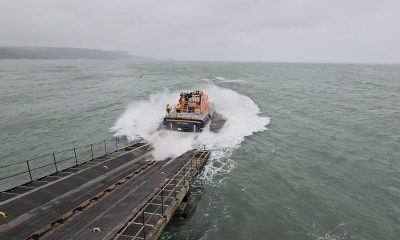

Hoax 999 call sparks massive lifeboat and helicopter rescue — man arrested
Emergency services diverted from real incidents after false report off south Wales coast A MAJOR sea rescue operation involving three...


St Dogmaels man jailed over hundreds of indecent images
Previous convictions for similar offences revealed to court A 57-YEAR-OLD man from St Dogmaels has been jailed for two-and-a-half years...


Petition against hospital service changes surges past 6,000 signatures
Public response now far exceeds health board consultation figures A PETITION calling for urgent Welsh Government intervention over services at...

Milford Haven pensioner admits sexually assaulting two shop workers
76-year-old touched victims and kissed one on the neck, court hears A MILFORD HAVEN man has admitted sexually assaulting two...
-

 News7 days ago
Labour and Plaid criticised over £1.2m anti-racism ‘metaverse’ project
-

 Health7 days ago
Health services row escalates as MSs demand action over Withybush and Bronglais
-

 Politics7 days ago
Farage vows to strip Cardiff’s ‘City of Sanctuary’ status ahead of manifesto launch
-

 Business6 days ago
Council reviewing complaints over Computer Solutions Wales as concerns continue
-

 Health6 days ago
Petition calling for Withybush intervention nears 5,000 signatures
-
 News7 days ago
Plaid Cymru drug decriminalisation policy under spotlight ahead of Senedd election
-
 Business6 days ago
Bosherston Bistro 10pm alcohol licence granted by council
-
Crime6 days ago
Milford Haven pensioner admits sexually assaulting two shop workers