


News
Five call-outs in five days for Angle RNLI



Call-out: One of five for Angle RNLI
ANGLE RNLI had a busy five days last week as they responded to five call-outs.
On the Saturday (May 27), the crew launched after a member of the public reported seeing a drifting motor boat, with the outboard engine in the down position, off Castle Pill, Milford Haven.
The Tamar class lifeboat, Mark Mason, was launched at the request of the UK Coastguard at 10pm.
As the lifeboat approached the scene, a pilot vessel had located the casualty on the shoreline with the occupant still on board.
The lifeboat’s Y Boat was deployed and went ashore to assist, when the casualty was towed back to her mooring in Castle Pill.

With no further assistance required, the Y Boat was recovered and the lifeboat returned to her station, where she was rehoused at 10.48pm.
On Sunday (May 28) the all weather lifeboat was launched at 3.15pm to assist a five metre speedboat, which had engine failure and was unsure of her position, within the Milford Haven Waterway. There were seven people on board.
On launching, further information was received that the casualty could be near the entrance to the Milford Haven Waterway, so the lifeboat proceeded to Thorn Island.
The casualty was located close to Sheep Island and six of the occupants were transferred to the lifeboat. The casualty was then taken in tow to Dale.

At Dale, the lifeboat’s Y Boat was deployed and towed the casualty to the slipway and transferred the occupants ashore. The Y Boat was recovered and the lifeboat returned to her station, to be rehoused at 5.10pm.
Later that day, the D class inshore lifeboat, SuperG II, was launched at 8.07pm to investigate the report of a drifting kayak off Milford Haven.
The lifeboat reached the scene in five minutes and sighted a log tangled up with a mooring buoy. After discussions with the first informant, it was confirmed that this was what was reported. The lifeboat then recovered the log and returned to her station, where she was rehoused at 8.27pm.

The following day (May 29) the all weather lifeboat was launched at 10.43pm to locate a despondent male on the rocks at Gelliswick Bay, Milford Haven.
The lifeboat reached the scene in nine minutes and deployed her Y Boat as a precaution. Searchlights were used to illuminate the area, while Dyfed-Powys Police and the UK Coastguard rescue officers managed to bring the casualty to safety.
The Y Boat was recovered and the lifeboat returned to her station, for rehousing at 11.50pm.
On Wednesday (May 31) the all weather and inshore lifeboats were launched at 11.07am to assist in the search for a missing 28-year-old man.
The lifeboats, along with multiple vessels and land-based teams, searched an area from Milford Haven to Lawrenny, until the casualty was located.
The inshore lifeboat recovered his body, which was transferred to an awaiting ambulance at the Port Authority jetty. Both boats were released and returned to their station.
An Angle RNLI spokesman said their thoughts are with the family and friends of the man at this difficult time.


Industry warns 100m buffer and added approvals will pile pressure on rural locals already fighting closures
PUBS across Wales are warning of a fresh hit to their finances after changes to planning rules threaten to shut down one of the most profitable summer side lines available to rural venues: temporary pop up campsites.
Under revised Permitted Development Rights (PDR), landowners will be allowed to operate temporary campsites for up to 60 days a year, an increase on the current 28 day allowance. But the new rules also introduce restrictions campaigners say will disadvantage pubs, particularly those in villages where a small field beside a pub can make the difference between surviving the winter or shutting for good.
At the centre of the controversy is a new 100 metre exclusion zone around a “protected building”, described as a dwelling not occupied by the landowner or campsite operator, which critics say will effectively prevent many pubs from hosting campers at all.
Dan Yates, founder of outdoor accommodation platform Pitchup.com, said the Welsh changes risk “hammering the final nail into the coffin” of rural pubs.
He said: “The new so called permitted development rights are riddled with restrictions that make running pop up campsites harder, not easier. Restrictions which were not thought necessary in the 78 years since the rights were first introduced.
“But it is pubs that will be really disadvantaged once it comes into force.
“The 100m exclusion zone essentially bans them from setting up temporary campsites, which in the summertime can mean the difference between going out of business and surviving another year.”
Residents’ concerns and local control
Supporters of tighter controls argue that unregulated or poorly managed temporary sites can cause problems for neighbours, including traffic, noise, waste and pressure on local services, and that new safeguards are intended to address concerns raised by residents.
The Welsh Government has said changes to permitted development rights are designed to balance rural enterprise and tourism with the need to protect communities and the environment, particularly in sensitive areas.

The new approach also introduces an approval requirement in Wales, meaning operators may need to obtain local authority sign off rather than simply proceed. Critics say this adds bureaucracy, while supporters view it as a necessary check to ensure issues like access, drainage, waste disposal and site management are properly considered.
Planning delays “too slow for summer trade”
Mr Yates warned that forcing publicans to seek planning permission could make the income stream unusable in practice, because approvals can take months and pubs need to plan well ahead for summer trade.
He said planning authorities in Wales were already struggling to meet statutory deadlines, meaning pubs applying now could miss the key season.

He said: “Even if they applied today, it is unlikely they will get permission in time for the summer season. This is going to put many pubs at serious risk of going bust.”
How much pop up camping can earn
The row comes as pubs face rising costs from staffing and utilities to wider tax and regulatory pressures, while footfall in many rural areas remains highly seasonal.
Pitchup.com says pop up campsites can generate thousands of pounds in extra revenue in a short window, helping venues stay afloat. The platform claims its top performing pub campsite earned £93,706 in 2025, with other leading sites taking £84,267 and £62,939.
Outside Wales, some publicans say the model has transformed takings.
Morris and Gwyn Fenton, who run the Grade II listed Red Lion in Brinkley, Cambridgeshire, said their campsite brought customers who also spent in the pub.
Morris said: “We’ve found 50% plus of campers spend around £100 in our bar and restaurant and for a small country pub that’s significant.
“It’s been a great thing to try, and an incredibly enjoyable thing to do for us, personally.
“We really enjoyed meeting the people that we have stay with us.”
Visitor economy warning
The British Institute of Innkeeping (BII) said temporary campsites help pubs diversify while supporting local tourism, keeping spend in communities rather than driving visitors into bigger centres.
Molly Davis, Head of Communications at the BII, said: “Pubs deliver so many opportunities for people to come together, connect and spend time with each other, and combining that with camping holidays offers the perfect way for families and friends to get away from it all.
“At a time where pubs are doing all they can to diversify their offer and provide brilliant services for their locals and visitors alike, the bureaucracy of these changes is incredibly frustrating.”
She added: “Temporary campsites offer the perfect solution for the visitor economy, keeping tourism local, and benefitting communities all at the same time, but without the flexibility for pubs to be able to offer this for just 2 months of the year, the pub’s existence will be threatened for generations to come. Common sense needs to be applied, to stop additional administration for local authorities, and to give rural pubs the chance they need to thrive.”
Wider backdrop in protected areas
The debate is playing out against a wider Welsh push to manage the impact of temporary camping, particularly in protected landscapes where councils and national park authorities have faced complaints about overcrowding, waste and environmental damage.
In Pembrokeshire Coast National Park, the planning authority has already taken steps to tighten rules on 28 day camping, caravan and mobile home sites inside the park, requiring planning permission from January 1, 2026.
Critics argue the combined effect of buffers, approvals and tighter controls risks undermining the point of permitted development, while supporters say stronger safeguards are needed to prevent harm and disruption.
For pubs, the fear is immediate: that a rule presented as an expansion of opportunity will, in practice, remove one of the few realistic ways rural venues can boost income quickly just as another difficult trading year looms.

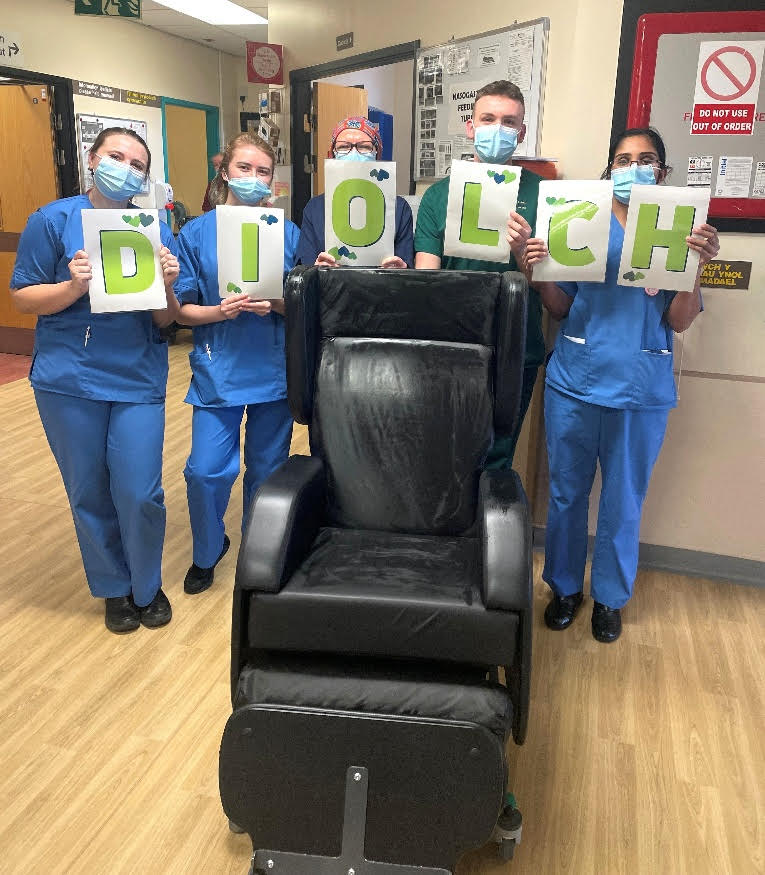
THANKS to generous donations, Hywel Dda Health Charities, the official charity of Hywel Dda University Health Board, has funded a Sorrento tilt and recliner chair worth £2,694 for Ward 4, the Cardiology and Gastroenterology Ward at Prince Philip Hospital.
The Sorrento tilt and recliner chair is designed to maximise patient comfort when sitting out of bed, providing postural support and pressure redistribution. It is adaptable to the needs of each patient, with seat depth and width adjustability, a removable seat cushion, and a variable back angle and footplate.
Julia Hippsley, Senior Sister, said: “We’re incredibly grateful that generous donations to Angharad Ward have enabled us to purchase the new Sorrento tilt and recliner chair for Ward 4.
“This chair will be a great help in caring for the patients who are unable to sit in a normal chair. The tilt and recliner chair allows these patients to be transferred from bed, offering independence and promoting their wellbeing.”
Nicola Llewelyn, Head of Hywel Dda Health Charities, the official charity of Hywel Dda University Health Board, said: “We are delighted to have been able to fund the new Sorrento chair for Ward 4. Thanks to the generosity of our local communities, we’re able to fund items and activities which go beyond what the NHS can normally offer. Every donation makes a difference, and we are deeply grateful for each one.”
For more details about the charity and how you can help support local NHS patients and staff, go to https://hywelddahealthcharities.nhs.wales/

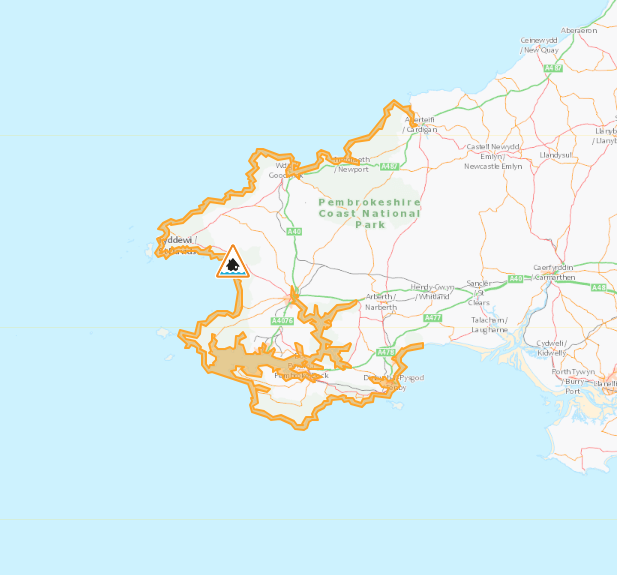
A FLOOD ALERT has been issued by Natural Resources Wales for the Pembrokeshire coastline, with flooding possible along stretches between St Dogmaels, near Cardigan, and Amroth.
Residents and businesses in coastal areas are being urged to remain vigilant and to prepare for the potential impacts of flooding as conditions develop.
Natural Resources Wales advises people in affected areas to follow any existing flood plans and to ensure they know where family members and pets are, with arrangements in place to move them to safety if required. Important and sentimental items, key documents and valuables should be placed somewhere secure and above potential flood levels.
People are also encouraged to make sure their mobile phones are fully charged, to familiarise themselves with how to turn off electricity, gas and water supplies, and to prepare a small emergency bag in case they need to leave their home. Essential items may include medication, a phone and charger, warm clothing, baby or pet supplies, sanitary items and insurance documents.
Where possible, cars, livestock and equipment should be moved away from areas at risk of flooding.
The public is strongly warned not to walk or drive through floodwater. As little as 30 centimetres (one foot) of moving water can sweep a car away, while 15 centimetres can be enough to knock a person off their feet.
Further information is available via the Natural Resources Wales flood warning service at
https://flood-warning.naturalresources.wales/Detail/102WABT02.
Floodline can also be contacted on 0345 988 1188 using quick dial number 503013.
Up-to-date river, rainfall and sea levels can be checked at https://naturalresources.wales/riverlevels.
Flood alerts and warnings can be managed by calling Floodline on 0345 988 1188. For the latest updates, Natural Resources Wales can also be followed on social media via @NatResWales.




Community1 hour ago
Flood alert issued for Pembrokeshire coast as high tides and conditions raise risk
A FLOOD ALERT has been issued by Natural Resources Wales for the Pembrokeshire coastline, with flooding possible along stretches between...

Crime22 hours ago
Haven Master spared jail after River Cleddau kayak crash
Teenager, 14, came within inches of death when speeding motor boat hit his kayak near Burton, court told A COURT...


Crime1 day ago
CCRC refers sexual offence convictions for appeal as new evidence emerges
Man convicted at Swansea Crown Court in 2017 has case sent to Court of Appeal THE CRIMINAL CASES REVIEW COMMISSION...


Crime2 days ago
West Wales teenager jailed for raping 12-year-old girl
Jake Richards, 19, sentenced to three-and-a-half years in young offenders’ institution A 19-year-old man from Garnswllt, Carmarthenshire, has been sentenced...


Business2 days ago
Rates shock fears reach the Senedd as 100+ west Wales firms back Kurtz briefing
BUSINESS rates fears in west Wales reached the Senedd this week after Samuel Kurtz MS warned that hospitality and tourism...


News3 days ago
Milford Haven man expelled from Russia amid spy allegations
A MAN originally from Milford Haven has been expelled from Russia after being accused of espionage by the country’s security services —...


Crime3 days ago
Two female police officers assaulted during arrest in Haverfordwest
Pensioner describes ‘terrifying’ struggle as suspect made off before being arrested again A RETIRED Haverfordwest woman has described a “terrifying”...


Crime3 days ago
Milford Haven couple jailed after nearly 50 animals found in ‘filthy conditions’
RSPCA officers said the stench hit them before they entered a Coombs Road home where dogs, puppies, snakes and other...


Crime4 days ago
Armed police operation in Milford Haven leads to drugs arrests
Two young men held after officers attend addresses in Vicary Crescent and Hakin ARMED police were called to addresses in...


Crime4 days ago
Rape trial set for May as Saundersfoot teenager denies charge
AN 18-YEAR OLD youth accused of rape in Saundersfoot has pleaded not guilty and is due to stand trial at...
-

 News7 days ago
Whitland Post Office to reopen under new management in March
-
News3 days ago
Milford Haven man expelled from Russia amid spy allegations
-

 Health19 hours ago
Hywel Dda board to consider refreshed health strategy to 2040
-

 News5 days ago
Campaigners threaten judicial review over state pension redress talks
-
 Local Government7 days ago
Councillor suspended for four years after tribunal finds code breaches
-

 Crime7 days ago
Christopher Phillips jailed for life for “grotesque” sexual violence against baby
-

 Community7 days ago
A generous character remembered after death of scaffolding boss Jozef Polak
-
Crime22 hours ago
Haven Master spared jail after River Cleddau kayak crash