


Politics
The Catalan crisis and Cymru


THE CRISIS in Catalonia has made for some strange political bedfellows, with Plaid Cymru and UKIP – for different motivations – railing against those seeking to preserve the Spanish state intact, while the Conservatives remain equivocal and Labour – as in Brexit – prefer to keep their heads down and hope it will all go away without anyone asking them what their position actually is.
And the reasons for those contortions, at least in Welsh politics are not too difficult to establish. While a core text of young socialists always used to be George Orwell’s ‘Homage to Catalonia’, the establishment of an independent Catalan state would only serve to stoke the well-banked fires of Welsh independence from the UK. With the Labour Party in Wales not only fundamentally unionist in the sense of wishing to ensure the UK stays together but devoted to the idea of the European Union, it does not want to see other European regions assert their independence.
In addition, at least part of Labour’s opposition is borne out of the thought that Catalonia – one of the richest Spanish regions – is seeking its independence partly because it does not want to continue funding poorer Spanish regions: a bit like Surrey declaring UDI because it did not want taxes raised there to contribute to the building of schools in Llanelli.
UKIP’s position has the merit of being both robust and transparently intellectually dishonest. A party built around the recreation of an independent UK is all in favour of other member states of the EU splitting up, especially as – they argue – the conflict highlights the fundamentally autocratic and centralising impulse of the EU. However, UKIP’s anti-unionist and pro-democratic position is not translated to national politics in the particular, only to foreign affairs in the abstract
In that, it is at least consistent with the keenest Brexiteers on the Conservative side, who are all in favour of using the trials of the Spanish state to illustrate their own view of an over-mighty EU without for one minute advancing the logic of that argument to the UK’s status quo. Which is, perhaps, why they are so reluctant to talk about it.

Of more moment, perhaps is that the EU has turned its face against Catalan separatism on the principle that it does not want to see its Union subject to further division. That attitude should be causing raised eyebrows in Edinburgh, or at least giving campaigners for independence considerable pause for thought. A key notion floated at the time of the Scottish independence referendum in 2014 was that Scotland would be an independent nation within the EU. That position – provided of course that the EU is intellectually consistent, coherent, and not prone to dabbling in its members’ internal politics – appears to be shot full of holes by the EU’s current attitude towards Catalonia. And it is worth bearing in mind that SNP supporters supported leaving the EU by a significant majority, which suggests that at least some of its members are prepared to see the lunacy of seeking to leave one union only to join another straight away.
And for Plaid Cymru, or at least those within in it who seek independence for Wales, who believe in the right of the Catalans to self-determination, Welsh self-determination, and who want to remain within the EU – or at least closely tied to it – the position is even more intellectually contorted. The EU – as an institution – shows no appetite at all to allow the federated parts of republics or semi-autonomous regions to divide themselves from the nation states of which they are constituent members. Quite how the attitude of the EU towards the Catalans gives intellectual succour to Plaid Cymru for their own hopes for an independent Wales within the EU requires a leap of logic that suggests faith and not rationality.



US response fails to answer legal question over threats to bridges, power stations and desalination plants
THE WHITE HOUSE has defended President Donald Trump after The Pembrokeshire Herald asked whether international law would constrain any US military action following his remarks about bombing bridges, power stations and desalination plants in Iran.
In response to a question sent by this newspaper on Friday (Apr 3), a White House Press Office spokeswoman issued a strongly worded statement attacking the Iranian regime, but did not directly address the legal point raised by The Herald.
She said: “The Iranian regime has committed egregious human rights abuses against its own citizens for 47 years, just murdered tens of thousands of protestors in January, and has indiscriminately targeted civilians across the region in order to cause as much death as possible throughout this conflict.
“As President Trump said, Iran can never have a nuclear weapon, and the Iranian people welcome the sound of bombs because it means their oppressors are losing.
“The President will always stand with innocent civilians while annihilating the terrorists responsible for threatening our country and the entire world with a nuclear weapon. Greater destruction can be avoided if the regime understands the seriousness of this moment and makes a deal with the United States.”
The Herald had asked whether the President believed international humanitarian law continued to apply in light of protections for civilian infrastructure and facilities essential to civilian survival.
The newspaper also asked the White House to set out the legal basis on which such threats or actions would be considered lawful.
No direct legal justification was provided in the response.
Instead, the White House framed the issue as part of a wider effort to pressure Iran over its nuclear ambitions and its conduct in the region.

The exchange follows President Trump’s public remarks about striking key Iranian infrastructure, which have prompted wider scrutiny over whether such targets would be lawful under the rules of armed conflict.
The White House statement, however, offered no further explanation of how threats against bridges, power stations or desalination plants could be reconciled with international legal protections for civilian sites.
That omission is likely to fuel further questions over the administration’s position, particularly as tensions continue to rise.

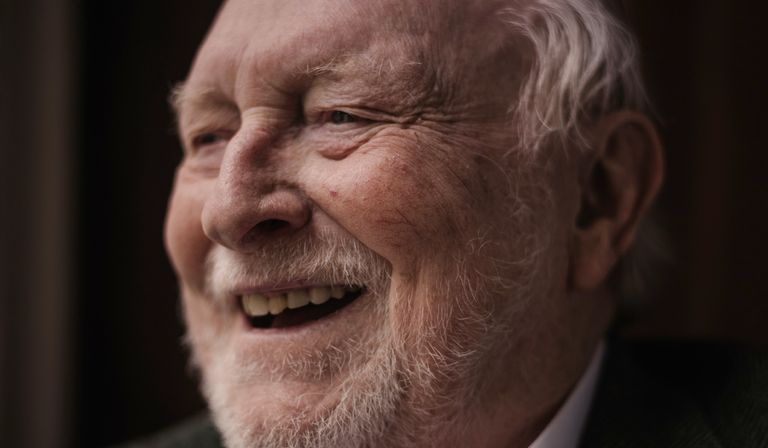
FORMER Labour leader brands party a “posh boys’ club”, accuses Nigel Farage of offering fantasy politics, and warns deep-rooted discontent is fuelling protest support across Welsh communities.
Lord Neil Kinnock has launched a blistering attack on Reform UK, accusing the party of feeding off frustration in Welsh communities while offering little in the way of substance.
The former Labour leader said Reform’s appeal was rooted in grievance rather than genuine answers, and dismissed the idea that the party speaks for working-class voters who feel ignored by mainstream politics.
Speaking about the rise of Reform in Wales, Lord Kinnock said the party was built on resentment and slogans rather than practical policies.
He said: “The only argument going for them is grievance and resentment. You can’t represent people on that basis.”
He reserved some of his strongest criticism for the party’s image and leadership, describing Reform as “a posh boys’ club” with no real concern for the lives of ordinary people in Wales.
“They don’t give a damn about the real wellbeing of the communities of Wales,” he said.
Lord Kinnock said Reform had been able to tap into genuine public anger, but argued it had done so without presenting any serious programme for change.
According to him, the party’s message was heavy on noise and light on detail, with promises that fell apart under scrutiny. He cited Brexit as an example, saying the economic rewards once held out to voters had failed to materialise.

He also took aim at Nigel Farage, accusing him of making grand claims about restoring industry in Wales without regard for economic reality.
In Lord Kinnock’s view, such rhetoric was designed to tell disillusioned voters what they wanted to hear, rather than confront the difficult truths facing post-industrial communities.
He said Reform’s politics were driven by fantasy and performance, not by any serious commitment to the future of Wales.

Lord Kinnock was equally dismissive of claims around immigration, which he said had been wildly distorted in public debate.
He argued that many migrants come to Britain to work, contribute to the economy and pay taxes, and said the suggestion that they are simply a drain on public services was untrue.
At the same time, he acknowledged that immigration had created pressures in some areas, particularly in the aftermath of Brexit, but insisted it had been inflated into a much bigger political issue than the facts justified.
He accused Reform of borrowing from a Trump-style playbook, making exaggerated claims, denying them when challenged, and then repeating them more forcefully when cornered.
He pointed to recent shifts in the party’s position on pensions and benefits as evidence of what he sees as an opportunistic and untrustworthy approach.
Lord Kinnock also criticised the role of the media and social media in Reform’s rise, arguing that views which might once have been dismissed as pub talk are now amplified to a national audience within minutes.
He said Reform had often been treated more generously by sections of the media than it deserved, partly because it provided easy headlines and instant controversy.
But while he was scathing about Reform itself, Lord Kinnock said the anger it is feeding on did not appear overnight.
He argued that discontent in Wales has deep roots, stretching back decades to the collapse of coal, steel and manufacturing communities from the 1980s onwards.
Those changes, he said, tore the economic heart out of many parts of Wales and were carried out without proper planning or meaningful replacement.
The result, in his view, was a lasting sense of abandonment that has never fully gone away.
He said communities hit by pit and factory closures were left feeling deserted by the political and economic system, creating conditions in which protest politics could flourish years later.
That same mood, he argued, also played a major part in Wales voting for Brexit.
Lord Kinnock said many Leave voters were not motivated by racism or ignorance, but by hope — hope that something different might finally improve their lives after years of austerity and neglect.
He said Wales had once enjoyed significant financial benefits from EU membership, and suggested that much of that support had still not been properly replaced.
Turning to Labour’s own position, Lord Kinnock admitted the party faces a difficult battle as the Senedd election approaches.
After nearly three decades in power in Cardiff Bay, he said Labour has the burden of office as well as responsibility for defending its record in a country facing deep structural problems.
He pointed to long-term underfunding, mounting pressure on the NHS, GP shortages, waiting lists, poor health outcomes and low incomes as factors driving dissatisfaction among voters.
He said Wales also faced additional challenges because of its geography, scattered population and limited number of major urban centres.
Taken together, he said, those pressures created a deeply difficult political climate.
Even so, Lord Kinnock insisted Labour still had strengths, praising the leadership of First Minister Eluned Morgan and saying there remained a clear desire within the party to deliver practical fairness.
He also warned that Plaid Cymru was benefiting from disenchantment with the status quo, presenting itself as an alternative for voters who want change but are not drawn to Reform.
Although talk of independence may no longer dominate every debate, he suggested the ambition remained at the heart of Plaid’s politics and said he believed that path would damage Wales rather than strengthen it.
In the end, Lord Kinnock’s argument was that the only lasting answer to Reform’s rise is to deal seriously with the conditions that have made voters so angry and disillusioned.
Unless insecurity, poor public services and economic decline are tackled, he suggested, parties built on protest and discontent will continue to find an audience.
He warned that a Welsh Government led by either Reform or Plaid would hold the country back at a time when stability and serious leadership were badly needed.
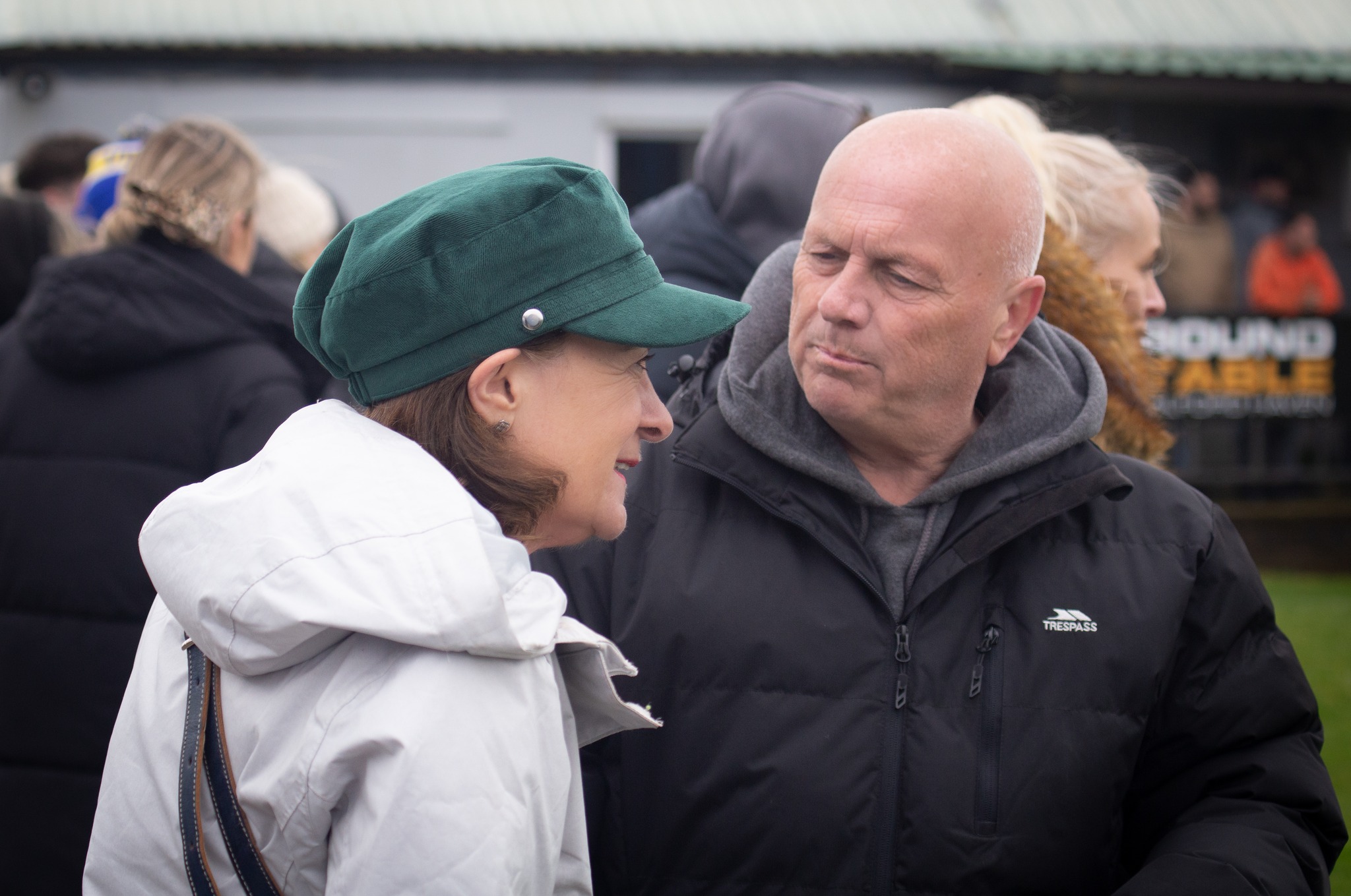
Referee Martin Jones says Eluned Morgan’s visit to a community that recently backed Reform UK showed leadership willing to listen rather than hide away
FIRST MINISTER Eluned Morgan has been praised for visiting Hakin over the bank holiday weekend, with local referee Martin Jones saying her appearance showed a willingness to engage with communities where the political tide may be turning.
In a social media post after attending the Pembrokeshire League title decider, Jones said it would have been easy for senior politicians to avoid areas where support had “clearly shifted”, but argued Morgan deserved credit for doing the opposite.
His remarks come after Hakin, part of Milford Haven, elected a Reform UK county councillor, Scott Thorley, in a result seen by some as a sign of changing political sentiment in the area.
Jones wrote that Morgan’s visit “stood out” because it showed “a willingness to engage, not retreat”.
He also praised the First Minister’s approach on the day, saying her attendance did not feel like a staged appearance.
According to Jones, Morgan stayed at the event, spoke with local people, listened to what they had to say, and took time to connect with both matchgoers and residents.
He was also complimentary about the presence of members of her team, including Marc Tierney, saying it was encouraging to see political figures engaging directly with the public rather than keeping their distance.
Jones said that, regardless of political allegiance, leadership should still be prepared to show up in person and hear what communities are thinking.
In his post, he described Morgan’s visit as “refreshingly real” and said it mattered to see politicians “turning up, listening, and being present” at a time when many political conversations can feel remote from everyday life.
The visit took place at a high-profile local football fixture over the Easter bank holiday weekend, drawing a sizeable crowd and giving the First Minister the chance to meet residents in an informal setting.
While political divisions remain sharp across Wales, Jones’s comments suggest that personal engagement on the ground can still cut through, even in places where parties face a more uncertain reception than they once did.
The First Minister was also spotted at St Davids Cathedral on Easter Sunday.
Photo caption:
First Minister Eluned Morgan speaks with local referee Martin Jones during her visit to Hakin over the bank holiday weekend (Pic: Martin Jones).



Crime7 hours ago
Four youths stabbed at Tenby railway station as two arrested
British Transport Police lead investigation after serious disorder involving group of youths FOUR youths suffered stab wounds during a major...


News9 hours ago
Major emergency response in Tenby after incident near train station
Witnesses report injuries as police and ambulance crews remain at scene on Warren Street POLICE and ambulance crews remain at...


News19 hours ago
Haverfordwest County AFC faces High Court winding-up threat from HMRC
Chairman says issue has been dealt with, but winding-up notice is still listed ahead of High Court hearing HAVERFORDWEST County...


Local Government19 hours ago
Food hygiene checks have not been carried out in parts of a Welsh county since 2019
FOOD hygiene checks have not been carried out in parts of a Welsh county since 2019 due an inspection backlog,...


Local Government20 hours ago
Bridge works on Neyland-Burton road to continue into late April
Council says safety repairs remain on programme but traffic lights will stay in place as major bridge scheme moves into...

Charity2 days ago
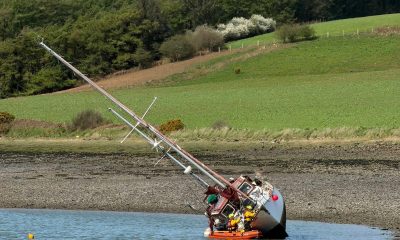
Angle RNLI answers string of call-outs across the Milford Haven Waterway
Volunteer crew launched for searches, police incidents, a medical evacuation and a grounded yacht during a busy spell from mid-February...


Charity2 days ago
St Davids RNLI launches on Easter Monday after drifting kayak spotted off Solva
Missing vessel recovered near shore after coastguard confirms it had been reported lost days earlier ST DAVIDS RNLI launched on...

News2 days ago
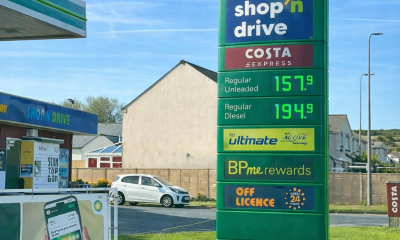
Diesel nears £2 a litre in Pembrokeshire as drivers scramble for cheaper fuel
Johnston forecourt hits 194.9p while wide price gaps and rush to fill up pile pressure on motorists across the county...


News3 days ago
St Davids Cathedral marked Easter Sunday with full day of worship
FROM dawn vigil to choral evensong, the cathedral welcomed worshippers for one of the most important days in the Christian...


Crime3 days ago
Neyland man spared immediate jail over aggravated vehicle taking
Defendant given a suspended prison sentence after magistrates heard the offence was serious enough to cross the custody threshold KRISTIAN...
-

 News5 days ago
Accommodation providers in Wales will be required to register under new law
-

 Entertainment5 days ago
From Milford Haven to the world: The story of The Evolution Experience
-
 Entertainment6 days ago
BBC unveils major new Welsh dramas with Tenby set for prime-time spotlight
-

 News7 days ago
Health minister refuses to act on Withybush despite 15,000-signature petition
-

 Community6 days ago
Sycamore Gap legacy takes root at Carew Castle
-

 Business6 days ago
Fire damaged Newgale Duke of Edinburgh Inn plans refused
-

 Crime6 days ago
Driver spared jail after crash killed young couple
-
 News3 days ago
Eluned Morgan targets Haverfordwest as Welsh Labour fights to hold its ground