


Sport
Scarlets in Seventh Heaven


By Jonathan Twigg
THE Scarlets won their fifth consecutive Guinness Pro 14 derby match of the season on Friday (Jan 5) at Parc y Scarlets against a young and inexperienced Dragons, 47-13.
The Gwent side, who have been defeated 24 times in the last 29 fixtures, started with 17 year old scum half Dan Babos and debutant flanker 18 year old Ben Roache but conceded seven tries as a rampant home side dominated the game.
The Scarlets remain on top of the Conference A table after this third derby victory in a ten day period, thanks to a 14-11 win on the 4G pitch at Cardiff Arms Park against the Blues and a last gasp try from flanker Josh MacLeod on the last Saturday of 2017 saw them triumph 12-9 over the Ospreys, despite playing for a long period with 14 men after the dismissal of Welsh winger Steff Evans for a tip tackle.
Coach Wayne Pivac, set his stall out at the start of the season for his charges to return with six victories over their Welsh rivals and they now head to Judgement Day VI on Saturday (April 28) to take on the Dragons in the final Derby match at the Principality Stadium.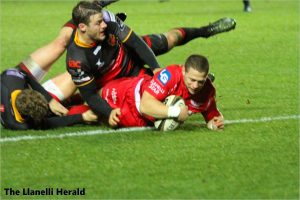

No. 8 John Barclay had the honour of leading the team out on his one hundredth appearance and his was in the thick of the action from the off as outside half Dan Jones drew Pontyberem born winger Ioan Nicholas quickly into the game.
An early scoring opportunity came when Jones pinged a cross field kick into the space occupied by winger Tom Prydie who spurned the chance when pressurised in catching the ball by full back Carl Meyer.
Haverfordwest born Rob Evans worked some magic in the lose to start his back division at a quick pace through the hands where play moved seventy metres down field and skipper Ken Owens led the charge as his pack of forwards disrupted the visiting scrum.
It was the Dragons outside half Arwel Robson who opened the scoring with an offside penalty after 15 minutes before the home side responded through another Evans inspired move ram adrift when full back Rhys Patchell failed to find Kiwi born Welsh international Hadleigh Parkes as the play crabbed cross field.

Owens picked second row Steve Cummins out from a five metre line out allowing the forwards got some momentum and former Whitland flanker James Davies crossed wide out for Jones to land the extra two points with a magnificent conversion
Ten minutes later the home eight dominated the scrum set piece and drew another penalty which Jones kicked long down the touchline; the pattern of play for the evening was firmly set as the Scarlets were happy to track with their tried and tested dominance up front.
Owens found Barclay at the base of the line out from which Parkes broke the gain line allowing Jones to switch play, for centre the Steffan Hughes to put in a grubber kick and winger Pyrdie won the foot race to score, which Jones failed to convert.

Coach Bernard Jackman astutely changed both props for the visitors before his side suffered the ignominy of a yellow card having identified the need for an improvement before the game was lost completely but pressure on winger Pat Howard drew a yet another mistake after half an hour.
Owens found his target in the line out again and the ball went through several phases before Davies made 20 meters towards the posts and the pulled the cover defender into the mix for Jones to cross unopposed under the posts and convert his try for 19-3.
The Scarlets support play and handling made an effective and timeless display of attacking rugby appreciated by the knowledgeable crowd; this is a Region whose players hearts are firmly ensconced in the local environment capturing the life and blood of the community clubs across West Wales. None more so than Hendy born flanker, Aaron Shingler a divide and conquer king on the floor to secure the ball.
Three tries to the good and the Black Dragons were unable to get out of their own half as the home side searched for the bonus point try before half time led by scrum half Aled Davies, who became a tad vigorous in his tackling as the game edged towards half time. Full back josh Meyer stepped up and reduced the deficit from the half way line to 19-6 after outside half Robson had been replaced by Robson Blake.
The sides returned for the second half and a low key opening fizzed into life after seven minutes as replacement second row Rynard Landman’s first touch was a weighty size 12 right boot to carry play deep into Scarlets territory. The defence held firm with Shingler and Davies foraging well allowing Parkes to make good ground from first phase possession.
The Dragons were more involved in the play, primarily through Landman and his boiler house partner Joe Davies although there was little respite as Cummins barged through for the Scarlets, neatly popping an inside pass to Patchell who timed the final pass for Aled Davies to scamper in from 20 metres under the posts for a converted try and 26-6.
With the bonus point in the bag after eleven second half minutes another Haverfordian Simon Gardiner replaced Samson Lee in the front row for the scrum to be anchored by former Sir Thomas Picton School props; fitting in the year which sees their school becoming defunct and the new Haverfordwest High being born from the embers of their amalgamation with Tasker Milward.
Skills taught in school were evident with the fifth try as play swayed back and forth before Shingler straightened the line to score another converted try, after Patchell, Nicholas and Hughes had been instrumental.
Pivac gave a run out to the replacements bench as the game developed into a rout where the words of former Scarlets captain Simon Easterby rang around the West Wales cauldron “In essence, I wanted to lead by example.” Such words are a suitable epitaph for current skipper, Ken Owens.
The livewire Wales Hooker was everywhere in his time on the turf, running through 60 minutes before giving way to the younger legs of Ryan Elais.
Scarlets were playing simple yet effective rugby, driven on by the commanding voice of Pivac, whose expectations of high standards are the basis for the successes. The Dragons were on the back foot and conceding penalties to stop the forward dominance to little effect as replacement flanker Wil Boyd was the recipient of his sides efforts after another Cummins catch in the line out; a sixth try converted by Patchell for 40-6 with twenty minutes to play.
Patchell had moved into the first receiver position and was calling the shots with fast hands and quick feet, putting Jonathan Evans away and Rhys Jones slid in for a converted try to leave them three points shy of the half century.
The home side had runners appearing at will, with or more importantly without the ball as an obviously fatigued and demoralised Dragons side succumbed. Patchel again put on the burners sweeping the ball across the pitch as Italian referee Marius Mitrea whistle penalised the Gwent side for offside.
Morgan Williams was guilty of an indiscretion for the home side in a brief foray into their territory with centre Jack Dixon raising spirits briefly on the cold night which quietened the 9347 crowd.
Turning down a straight forward penalty kick Angus O’Brien tried to get a nudge on as the Dragons plundered through numerous phases of tight play rewarded when Lloyd Fairbrother scrambled over for Blake to convert; 47-13 with seven minutes to play.
Patchell was nominated as man of the match as the dying embers of the game saw the Dragons enjoy the possession and territory, a little to late to affect the game result but enough for them to take some heart and soul from their visit to West Wales.









A CALL to extend a long-established Pembrokeshire golf club, bringing it up to a full 18 holes, has been submitted to county planners.
In the application, Mr and Mrs Young, through agent Preseli Planning Ltd, seek a change of use of land adjoining the Dawn Till Dusk Golf Club, Furze Hill Farm, Bastleford Road, Rosemarket, to form an extension to the existing golf course, along with landscaping and associated works.
A supporting statement through the agent says: “The application seeks full planning permission for the enlargement of the existing golf course to provide an additional six holes, to provide a total of 18 holes.
“The proposal would involve minor landscaping works to the fields and boundaries and the creation of a small number of ponds and bunkers. The extension would be located on land to the west of Furze Hill Farm and on the opposite side of the road to the existing golf course and clubhouse.
“An altered access to the land parcel is proposed as part of this application, which would provide an improved route for users crossing the public highway to avoid conflict with movements at the main entrance.

“The application site exceeds 1ha and therefore the proposal is considered major development necessitating a Pre-Application Consultation prior to formally submitting the planning application to the Local Planning Authority.”
It adds: “The existing golf course has operated in excess of 30 years and is popular with both visitors and locals. Club membership currently stands at approximately 350 and there is demand for enhancing the provisions of the course.
“The applicants’ sons have recently increased their involvement in the enterprise and in recent years wet winter months have necessitated the closure of the course, or parts of it, due to the ground becoming waterlogged, primarily due to the flat nature of the existing course.
“The extension would provide variation to the terrain, providing, dryer conditions, as well as the ability to alternate between the existing and proposed to maintain use, enhancing the viability of the enterprise.”

The application will be considered by Pembrokeshire County Council planners at a later date.

Lou Boorman celebrates home port win in round-the-world yacht race
A HAVERFORDWEST-born sailor has led her team to a landmark victory on the global stage, winning a major leg of the Clipper Round the World Yacht Race as it arrived in South Korea.
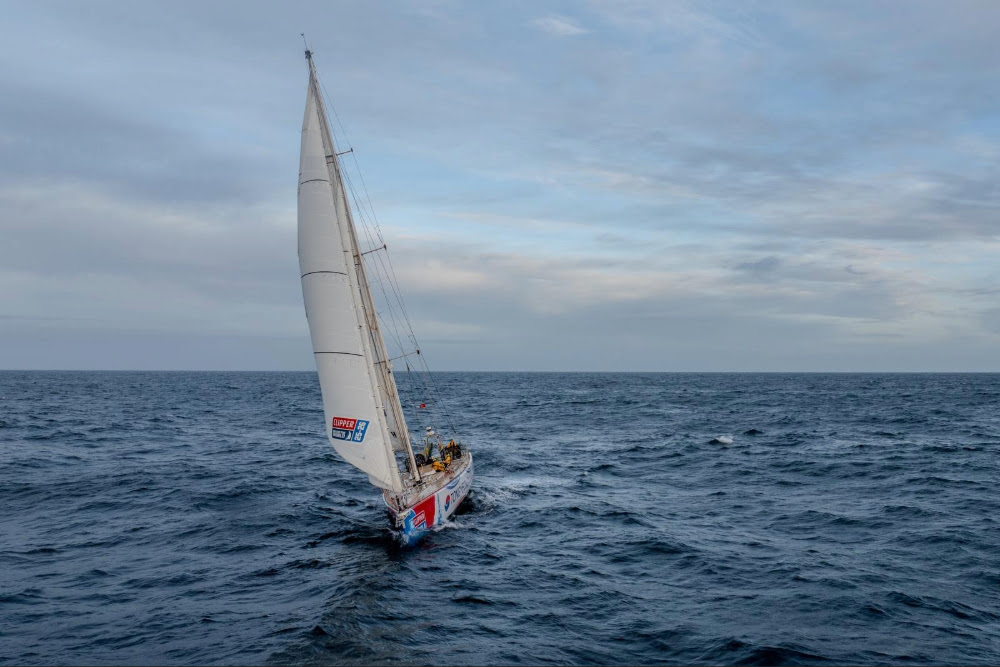
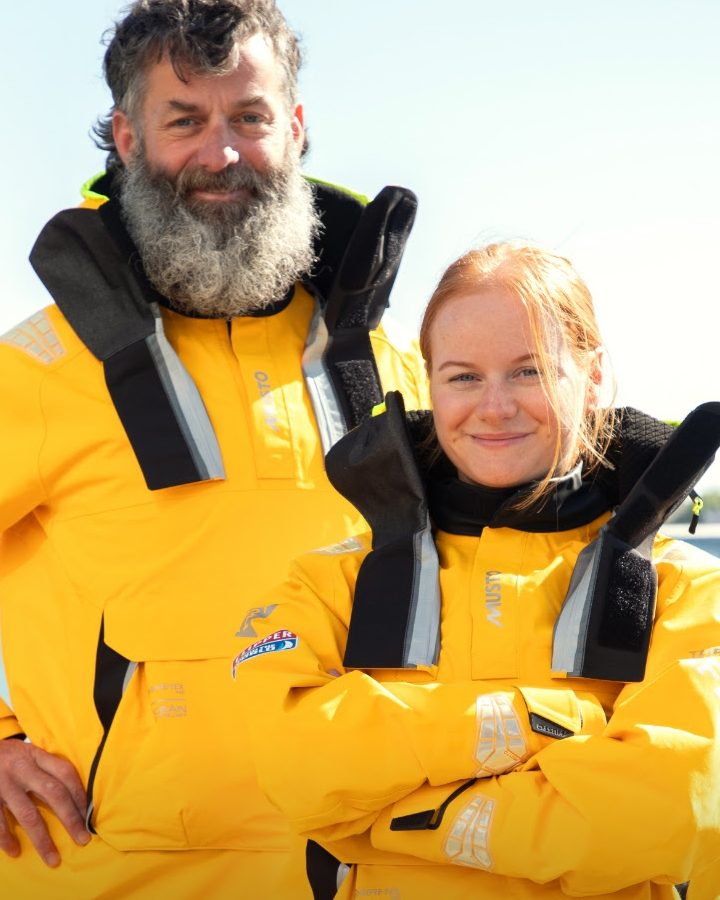
Lou Boorman, aged 23, skippered Team Tongyeong to first place as the fleet sailed into the Korean port city this week (Mar 16), marking a historic moment for the race.
The win is particularly significant as it is the first time the round-the-world event has ever stopped in Korea – and the home team claimed the top spot.
Speaking from the yacht after crossing the finish line, Lou said: “We did it, we performed under the pressure! To get a win into our home port, I can die happy!”

From Pembrokeshire to the world stage
Lou, who grew up in Haverfordwest, has quickly risen through the ranks of competitive sailing. Before taking on the challenge of leading a Clipper Race team, she had already secured titles as British, Irish and Welsh Female Champion.
Now skippering one of the race’s international teams, she is responsible not only for navigation and strategy, but also for leading a diverse crew – many of whom had never sailed before joining the race.
The Clipper Race is one of the toughest endurance challenges in sport, covering 40,000 nautical miles over eleven months, with crews facing extreme weather conditions ranging from freezing Pacific crossings to equatorial heat.

High-stakes gamble pays off
Team Tongyeong took a major risk during this stage, playing its ‘Joker’ card – a race tactic that doubles points if successful.
The gamble paid off, earning the team maximum points and securing their place at the top of the leaderboard.

Lou said: “We’ve worked really hard and put a lot of pressure on ourselves. Going into our home port there is a lot of pressure to perform, and we added to that pressure by playing our Joker – and we got twenty points, so I’m very proud of the team.”
This marks the team’s second win in recent stages, building momentum as they pass the halfway point of the global race.
Life at sea and leadership challenges
Reflecting on her journey so far, Lou highlighted the challenges of leadership as much as the physical demands of sailing.

She said: “Sometimes the sailing comes second to the people because they are the important ones. To lead them through that is one of the toughest things I’ve ever done, but it’s also one of the most rewarding.”
She added: “My favourite thing about sailing is the magic of the sea, the stars, the storms and the remoteness. I feel free and at my happiest at sea.”
Global race continues
The Clipper Race fleet will remain in Tongyeong for a week of cultural events before setting off across the North Pacific towards Seattle.
The race will later visit Panama, Washington DC, and Oban before returning to Portsmouth this summer, completing a full circumnavigation of the globe.
For Pembrokeshire, Lou’s achievement puts a local name firmly on the world sailing map – and highlights the global reach of talent from West Wales.

Six-week beginner programme offers affordable route into the sport
SOUTH PEMBROKESHIRE GOLF CLUB is preparing to launch its popular New2Golf scheme for 2026, with the latest intake starting on Monday (Apr 13).
Now in its eighth year at the Pembroke Dock course, the initiative offers a low-cost and welcoming introduction to golf. All equipment and professional tuition are included for a small fee, making it accessible to people of all ages and abilities – including complete beginners who have never picked up a club before.
The scheme is also ideal for those who have previously played golf and are looking to return to the game after a break.

Participants will receive coaching from qualified golf professionals at the club’s practice ground during early evening sessions over a six-week period. There will also be an option to continue with further sessions after the initial programme.
Golf provides a great opportunity to stay active, enjoy the outdoors and meet new people. As a low-impact sport, it allows players to gradually build fitness while learning new skills. Whether approached competitively or socially, it offers a relaxed and enjoyable way to spend time outdoors.
Last year’s New2Golf intake ranged in age from eight to 70, highlighting the sport’s broad appeal and accessibility.
Located in Pennar, Pembroke Dock, South Pembrokeshire Golf Club enjoys scenic views over the Haven waterway. The club has a thriving membership across junior, ladies’, men’s and seniors’ sections, and prides itself on being friendly and supportive to new players.
Members regularly help newcomers develop their skills on the course, offering guidance on rules, techniques and course play.
The clubhouse also serves as a social hub, offering home-cooked food, a bar and meeting facilities, with a busy calendar of events throughout the year.
Anyone who has ever considered taking up golf – or returning to the sport – is encouraged to get involved.
For more information or to enrol in the 2026 New2Golf scheme, contact [email protected] or visit the Wales Golf website.
New2Golf is organised and supported by Wales Golf.




Crime5 hours ago
Publican jailed for six years for supplying cocaine and cannabis
Milford Haven man sentenced at Swansea Crown Court following drug dealing operation A MILFORD HAVEN publican has been jailed for...

Local Government7 hours ago
Poverty summit highlights support efforts across Pembrokeshire
A SUMMIT bringing together key organisations from across Pembrokeshire has highlighted both the scale of local poverty and the work...


Education1 day ago
Milford Haven school plans unveiled but funding not yet secured
PLANS for a new £100 million school in Milford Haven have been unveiled, but the project has not yet secured...


News1 day ago
Council unveils plans for new state-of-the-art secondary school in Milford Haven
PEMBROKESHIRE COUNTY COUNCIL has revealed plans for a new state-of-the-art school in Milford Haven, promising modern, inspiring learning spaces for...


Health1 day ago
NHS waiting list falls — but cancer delays and diagnostic backlog worsen
Record progress claimed by Welsh Government as critics warn key targets are still being missed THE NHS in Wales has...


Crime2 days ago
Rapist jailed after ‘abhorrent’ attacks on woman and children
Haverfordwest man told police “women won’t have sex without force” A HAVERFORDWEST man who raped a woman and a young...


News2 days ago
Reform secures first Pembrokeshire councillor in Hakin by-election win
Late Reform candidate takes seat as independent surge and Labour withdrawal shape contest REFORM UK candidate Scott Thorley has won...


News3 days ago
Scott Thorley elected as Pembrokeshire’s first Reform councillor
REFORM UK candidate Scott Thorley has won the Hakin by-election after securing 179 votes. The full result is as follows:...


News3 days ago
Police confirm man has died after being recovered from River Cleddau
Major emergency response in town centre after concerns raised for man in water A MAN has died after being recovered...


Community3 days ago
Davies and Kurtz urge groups to seek employability funding
Community organisations in Pembrokeshire encouraged to apply for new grants supporting skills and job access LOCAL Senedd Members Samuel Kurtz...
-

 News6 days ago
Rayner and Lammy visit Wales to discuss justice and community safety
-
 News5 days ago
Fishguard linked to allegations in Many Tears Animal Rescue investigation
-

 News3 days ago
Emergency services flood Haverfordwest after reports of person in river
-

 Local Government6 days ago
Investigation confirmed after inspectors visit Many Tears Animal Rescue
-

 Crime2 days ago
Mother given community order after admitting child cruelty offence
-

 Business7 days ago
Tesco B&Q Haverfordwest click and collect pod approved
-

 Business7 days ago
Legal action backed in case over development at Dinas Cross
-

 Business6 days ago
Oil firm praised for putting customers first during price surge