


Business
Welsh Government confirms vacant land tax plan


THE WELSH GOVERNMENT will put forward the vacant land tax idea to test the Wales Act 2014 powers, Cabinet Secretary for Finance Mark Drakeford has announced.
The Cabinet Secretary will set out the next steps for proposing a new Welsh tax as part of the tax policy work plan for 2018.
Since announcing a shortlist of 4 new tax ideas alongside the draft Budget in October, the Welsh Government has been examining the case for each of these.
The 4 tax ideas were: a social care levy, a vacant land tax, a disposable plastics tax and a tourism tax.
Although the vacant land tax idea will be used to test the Wales Act powers, work will also continue on each of the other 3 tax ideas.

The decision to take forward the vacant land tax idea follows engagement with stakeholder organisations, the public and across government.
A vacant land tax has been chosen both because it could help to incentivise more timely development, and because it could help prevent dereliction and aid regeneration.
Professor Drakeford said: “Housing is a priority for the Welsh Government. A tax on vacant land could prevent the practice of land banking and land not being developed within the expected timescales.
“The Republic of Ireland vacant sites levy provides a useful starting point for how a vacant land tax could work in Wales.

“The existing model in the Republic of Ireland and the relatively narrow focus of the tax make this the most suitable of the 4 shortlisted ideas to test the Wales Act.”
The Irish measure, announced in their government’s 2018 Budget, will mean that any owner of a vacant site on the register who does not develop their land in 2018 will pay the 3% levy in 2019 and then become liable to the increased rate of 7% from 1 January 2019.
If land owners continue to hoard land in 2019, they will pay 7% in 2020.

When the Welsh Government announced it was considering such a measure in October 2017, before the UK Government said it was considering a similar plan, the House Builders’ Federation raised the spectre of developers decamping en masse to England with their large projects. That threat, such as it was, has receded but the Federation of Master Builders is still concerned.
Speaking to BBC Wales, Ifan Glyn of FMB Cymru said: “If there’s a tax that’s introduced that can focus solely on land banking for financial reasons to maximise profits, we would absolutely agree with that.
“Our issue is we don’t see how this tax can differentiate between land that’s been banked for financial reasons and land that isn’t being developed or stalling for reasons outside the developer’s control.”
A further wrinkle in the system was identified by Dr John McCartney, Director of Research at Savills Ireland.
Speaking about what were then only proposals by the Irish Government to impose the vacant site levy, he said that increasing the vacant site levy to 7% could amplify “boom-and-bust cycles” in the construction sector.
Dr McCartney said that land is a raw material for developers and it is natural for them to carry a stock of development land.
“No developer will now carry a land-bank in a slow market. This means when a recovery follows developers will spend the early years on site assembly rather than the house building they could and should be doing,” he explained.
Responding to the announcement, the Welsh Conservative Shadow Finance spokesperson, Nick Ramsay AM said: “From the outset, Welsh Conservatives have opposed the ludicrous proposal for a tourism tax in Wales, one which would cause serious harm to businesses across the country.
“While we are pleased the Welsh Government has listened to us and decided against taking this idea forward, once the mechanism has been tested, we would not expect the Labour Government to return to the table with this proposal, one which has been widely criticised by the industry.
“Our vigorous campaign will continue until Labour’s Finance Secretary consigns this ludicrous proposal to where it belongs: the bin.”
Commenting on the decision to bring forward a potential vacant land tax, Mr Ramsay added: “On the surface, we welcome the fact that, as in England, the Welsh Government is exploring the viability of a vacant land tax but we await the full details of this proposal from the Finance Secretary.
“However, an important distinction must be made between land held for legitimate technical reasons such as detailed planning or a lack of skills and materials, and land which is held for purely commercial speculation.
“Speculation distorts the main purpose of releasing land for much needed development and it will be vitally important to fully consult with the sector to ensure the right balance is struck.”














WOLFSCASTLE COUNTRY HOTEL and Spa in Pembrokeshire is celebrating national recognition after its luxury spa was included in the prestigious AA Recommended Spa Awards.
The accolade highlights the hotel’s commitment to delivering high-quality wellbeing experiences, exceptional service, and first-class facilities.
The AA Recommended Spa status is awarded to venues that provide an outstanding guest experience, combining professional expertise, premium treatments, and a relaxing environment. The recognition places Wolfscastle among a select group of leading spa destinations across the UK.

Hot stone massage in the Wolfscastle Country Hotel & Spa treatment room.
The spa, which has been open for nine years, has established itself as one of Pembrokeshire’s top wellness destinations, welcoming both hotel guests and day visitors seeking relaxation in a tranquil countryside setting.
Facilities include hydrotherapy experiences, thermal suites, and dedicated relaxation areas, alongside a wide range of luxury treatments designed to help guests unwind and recharge.

Bethan, Spa Manager at Wolfscastle Country Hotel & Spa, said: “We’re absolutely delighted to be recognised by the AA as a Recommended Spa. The team here work really hard to make sure every guest feels relaxed, welcomed and properly looked after from the moment they arrive.
“To receive this recognition is very special for us and reflects the care and effort our therapists put into every treatment.”
The award further strengthens the hotel’s reputation as one of West Wales’ leading hospitality destinations, offering award-winning dining, boutique accommodation, and premium wellness experiences.
Guests can enjoy spa days, overnight breaks, and tailored treatments throughout the year.

For more information or to book, visit www.wolfscastle.com.
The hotel is also marking a significant milestone this year, with owner Andrew Stirling celebrating 50 years at the helm.
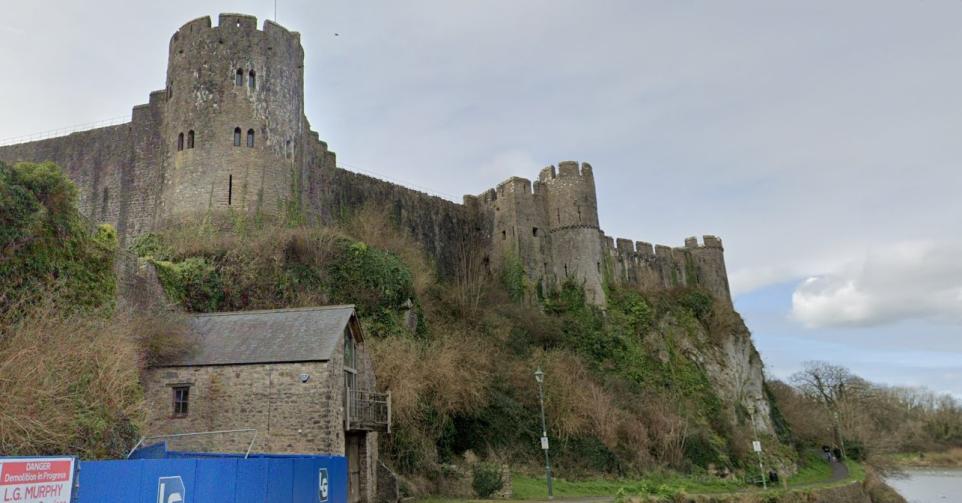
A PADDLEBOARDING and canoeing company’s call for an extension to a boat shed at Pembroke’s South Quay, below its historic castle, has been submitted to county planners.
In an application to Pembrokeshire County Council, G Booth of Paddle West CIC, through agent James Dwyer Associates, seeks permission for an extension to the stone-built boathouse, adjacent to the cliff on South Quay fronting the Mill Pond, Pembroke.
A supporting statement says: “It is intended to erect a single storey ‘lean-to’ building, or ‘shed’ for the storage of boats, such as canoes and kayaks, and related equipment, on a vacant space adjacent to the existing stone-built boathouse.”
It adds: “The boathouse and the intended adjacent boat storage shed is located, as is to be expected, in close proximity to water, the Mill Pond. The Mill Pond is the main area of activity for Paddle West, a Community Interest Company, providing boating activities, kayaking, canoeing and paddle boarding, frequently for young people and families.”
It goes on to say: “It is intended that the structure would be lightweight, erected on the exiting hard standing. The ‘shed’ would be used for the storage of boats and related equipment.”

With regard to the historic setting, it adds: “Although the stone-built boathouse appears not to be listed, it is recognised that the walls above are listed and together they are a piece.
“Accordingly, through form and external materials proposed, timber cladding and profile sheet roofing, the aim is to ensure that the structure would be subservient and muted and not detract or compete with the visual aesthetic of the boathouse or historic walls. In effect the addition would blend into the background.”
The application will be considered by county planners at a later date.
The boathouse is sited near to the new Henry Tudor Centre in South Quay, which is due to open in Spring 2027.

The centre, expected to receive around 30,000 visitors a year, will tell the story of Henry Tudor, son of Pembroke, his Welsh ancestry and his impact on our national story, Welsh culture and our wider British heritage.
The restored derelict South Quay buildings will also house a new library and community café, and a healthcare, social services and supported employment facility in the adjoining premises.

A WELSH Government-funded scheme to provide rates relief for hospitality businesses has been backed by senior Pembrokeshire councillors.
A report for members of Pembrokeshire County Council’s Cabinet at their March meeting said: “Welsh Government has introduced the Food and Drink Hospitality Rates Relief, this relief is aimed at eligible businesses in Wales in the food and drink hospitality sector for example, pubs, restaurants, cafes, bars and live music venues.
“The aim of the relief is to support eligible businesses to manage continued cost pressures. The relief will apply to all eligible occupied properties by offering a discount of 15 per cent on non-domestic rate bills for the period April 1 to March 31, 2027. The relief is capped at £110,000 per business across Wales.
“As this is a temporary measure, Welsh Government is providing the relief by reimbursing local authorities that use their discretionary relief powers under Section 47 of the Local Government Finance Act 1988.”
It concluded: “The food and drink hospitality rates relief 2026-27 requires the local authority to adopt a discretionary scheme [as outlined] and in accordance with the criteria and conditions specified in the guidance issued by Welsh Government.
“It is proposed that Cabinet resolve to adopt [the scheme] which can be applied to administer the relief. Welsh Government will reimburse local authorities for the relief provided in line with their guidance via a grant under section 31 of the Local Government Act 2003.”
Members backed the recommendation.
All eligible businesses must apply for this relief by the March 31, 2027, and an application form will be available on the council’s website from the April 1.
The maximum cash value of the rates relief allowed, across all properties in Wales occupied by the same business should not exceed £110,000. Businesses claiming the relief must declare that the amount being claimed does not exceed those limits.



Entertainment7 hours ago
Tenby steams up in spectacular style as crowds flock to festival
Colourful parade, towering creations and Victorian flair bring town centre to life TENBY was transformed into a vibrant Victorian fantasy...


Crime1 day ago
Publican jailed for six years for supplying cocaine and cannabis
Milford Haven man sentenced at Swansea Crown Court following drug dealing operation A MILFORD HAVEN publican has been jailed for...


Local Government1 day ago
Poverty summit highlights support efforts across Pembrokeshire
A SUMMIT bringing together key organisations from across Pembrokeshire has highlighted both the scale of local poverty and the work...


Education2 days ago
Milford Haven school plans unveiled but funding not yet secured
PLANS for a new £100 million school in Milford Haven have been unveiled, but the project has not yet secured...


News2 days ago
Council unveils plans for new state-of-the-art secondary school in Milford Haven
PEMBROKESHIRE COUNTY COUNCIL has revealed plans for a new state-of-the-art school in Milford Haven, promising modern, inspiring learning spaces for...


Health2 days ago
NHS waiting list falls — but cancer delays and diagnostic backlog worsen
Record progress claimed by Welsh Government as critics warn key targets are still being missed THE NHS in Wales has...


Crime3 days ago
Rapist jailed after ‘abhorrent’ attacks on woman and children
Haverfordwest man told police “women won’t have sex without force” A HAVERFORDWEST man who raped a woman and a young...


News4 days ago
Reform secures first Pembrokeshire councillor in Hakin by-election win
Late Reform candidate takes seat as independent surge and Labour withdrawal shape contest REFORM UK candidate Scott Thorley has won...


News4 days ago
Scott Thorley elected as Pembrokeshire’s first Reform councillor
REFORM UK candidate Scott Thorley has won the Hakin by-election after securing 179 votes. The full result is as follows:...


News4 days ago
Police confirm man has died after being recovered from River Cleddau
Major emergency response in town centre after concerns raised for man in water A MAN has died after being recovered...
-
 News7 days ago
Fishguard linked to allegations in Many Tears Animal Rescue investigation
-

 News4 days ago
Emergency services flood Haverfordwest after reports of person in river
-

 Crime3 days ago
Mother given community order after admitting child cruelty offence
-
Health2 days ago
NHS waiting list falls — but cancer delays and diagnostic backlog worsen
-

 News4 days ago
Senedd vote to ban greyhound racing hailed as ‘landmark moment’ by charities
-

 international news6 days ago
UK considers military options as pressure grows to secure Strait of Hormuz
-

 News4 days ago
Senedd votes to ban Greyhound racing in Wales to protect animal welfare
-

 Crime6 days ago
Man cleared of sexual assault allegation after magistrates rule no case to answer