

News
Met Office issues weather alert for Sunday

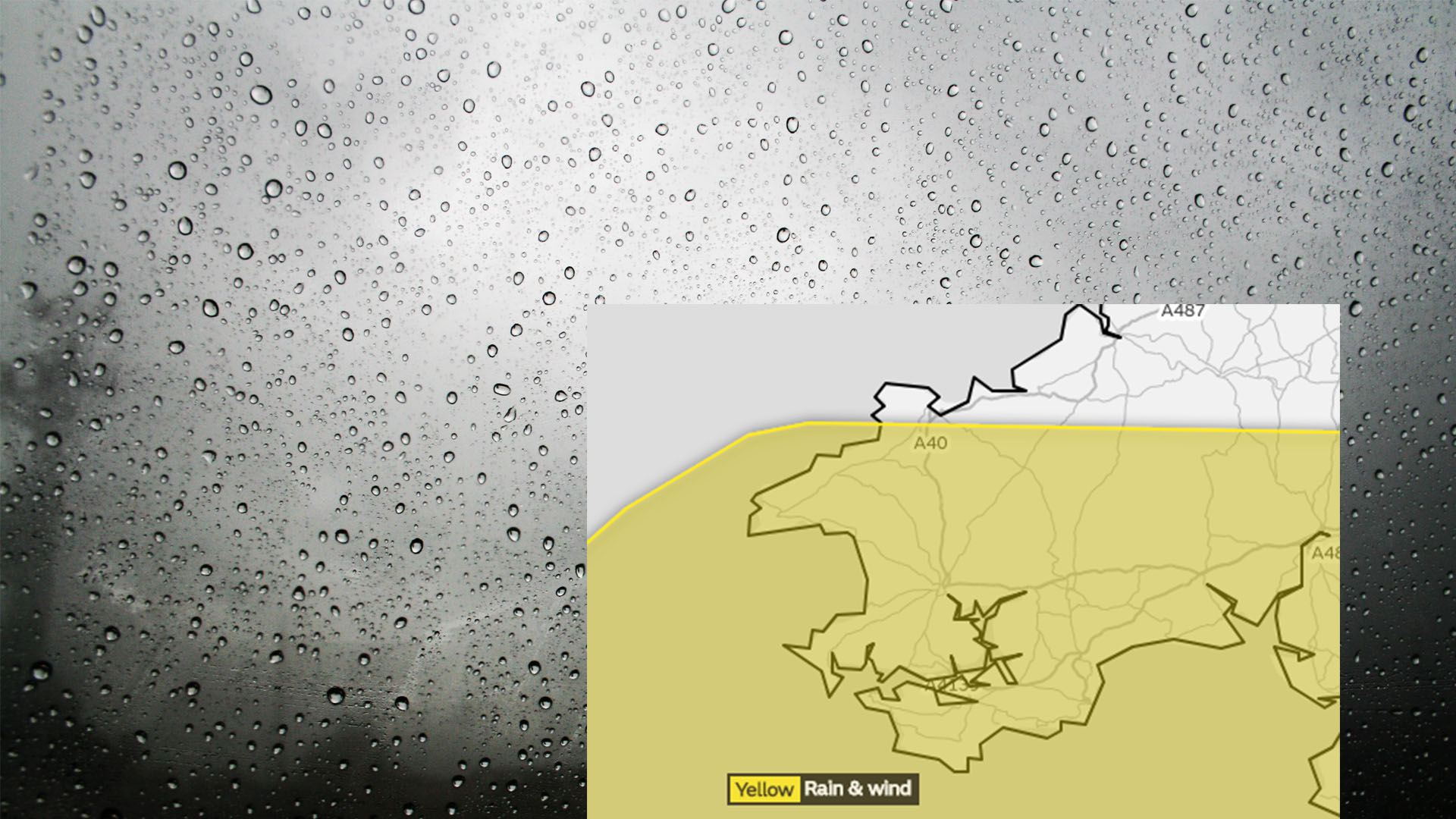
THE MET OFFICE has issued a yellow weather warning for Pembrokeshire on Sunday (Jul 29) as strong winds and heavy rain is forecast.
The weather alert will be in force for 12 hours between 3am and 3pm.
A band of stormy weather will move up from the English Channel across Cornwall, Devon and south Wales.
Gusts of up to 50mph and torrential downpours could cause disruption to roads, trains and ferry services.
Localised flooding is possible with spray and standing water creating hazardous driving conditions.

Strong south-westerlies could bring down tree branches and cause damage to homes and vehicles.
During bad weather, the Cleddau Bridge is routinely closed to motorbikes and high-sided vehicles if the bridge’s wind monitor detects speeds in excess of 50mph.
Drivers can check the operational status of the Cleddau Bridge by visiting www.pembrokeshire.gov.uk/














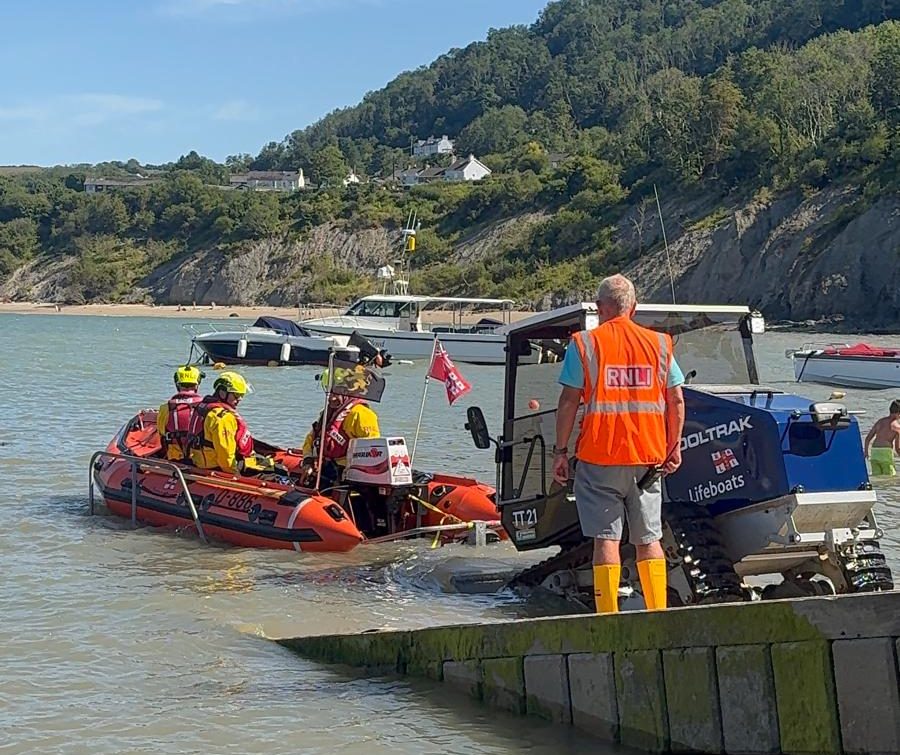
TWO kayakers were brought safely ashore after getting into difficulty off Llangrannog on Sunday afternoon.
New Quay RNLI was tasked by Milford Haven Coastguard at around 4:00pm on Sunday, July 12, following reports that two people in a double kayak were struggling in the prevailing conditions.
An RNLI lifeguard had already reached the casualties and was assisting them from a rescue board. However, strong conditions were pushing the group further offshore and making it difficult for them to return safely to the beach.
New Quay RNLI’s D-class inshore lifeboat, the Will Morgan, launched immediately with three volunteer crew members on board.
The crew made their way quickly to Llangrannog, where they located the two kayakers alongside the lifeguard.
All three people were taken aboard the lifeboat and brought safely back to Llangrannog beach. No casualty care was required.
The volunteer crew then returned to sea to recover the double kayak and the lifeguard’s rescue board, bringing both back to the beach before returning to New Quay Lifeboat Station.
The lifeboat was then refuelled and made ready for its next service.
Huw Williams, New Quay RNLI’s volunteer helm, said: “This was a great example of the RNLI working together to help people in difficulty.
“The lifeguard had already reached the casualties, but the conditions were making it challenging to return safely to shore. Our crew was able to bring everyone back safely and recover the equipment.
“Remember, if you see anyone in difficulty in the water or on the shore, call 999 and ask for the Coastguard.”

WELSH financial, legal and technology businesses could gain improved access to the Swiss market under a major new trade agreement announced by the UK and Switzerland.
The UK Government estimates the agreement could increase British services exports to Switzerland by £5.2 billion a year in the long term, although no separate estimate has been published for the potential benefit to Wales.
However, Wales already has an established services trading relationship with Switzerland.
UK Government analysis found that Welsh businesses exported £175 million of services to Switzerland in 2020, with financial and insurance services making up the largest category.
The new Free Trade Agreement is intended to make it easier for lawyers, accountants, architects, consultants and digital businesses to sell their expertise in Switzerland.
It will also reduce barriers for businesses transferring employees between the two countries and provide greater certainty for firms considering investment or expansion.
Cardiff-based Capital Law, which already works in Switzerland and advises Swiss clients, said the agreement could strengthen the Welsh capital’s position as a growing professional services centre.
Christopher Nott, senior partner at Capital Law, said: “This FTA is a terrific result for Capital Law, our clients and Cardiff’s growing reputation as a leading professional services hub.
“The agreement locks in legal market access, reduces unnecessary barriers and provides the certainty we need to pursue opportunities in Switzerland.
“As a firm that already works in Switzerland and advises Swiss clients, with one of our partners based there, we understand the value of a strong and predictable trading relationship.
“It’s exactly the kind of practical, modern trade deal that helps UK businesses compete and succeed internationally.”
The agreement could also create opportunities for Welsh businesses operating in life sciences, financial technology, cyber security, digital services and the creative industries.

Switzerland is the UK’s sixth-largest services export market, with bilateral services trade worth more than £30 billion during 2025.
Services account for around 81 per cent of UK economic output and 83 per cent of employment, making improved access particularly significant for regions seeking to grow professional and technology-based businesses.
Secretary of State for Wales Jo Stevens said the agreement would open new doors for businesses across Wales.
She said: “The UK-Switzerland trade deal shows how the UK Government is delivering real results for businesses in Wales and across the UK.
“Wales already has a thriving services sector. This landmark agreement supports further economic growth and encourages job creation by opening new doors for businesses and enhancing Wales’s reputation on the world stage.”
Under the agreement, UK services professionals will be able to travel visa-free to Switzerland for up to 90 days a year.
British businesses will also be able to transfer employees to work in Switzerland for periods of up to five years without being subjected to some of the economic needs tests currently applied to work permit applications.
The Government said this would make it easier for British professionals and graduates working in areas including finance, insurance and consultancy to obtain Swiss work permits.
The deal also aims to reduce paperwork, support digital payments and remove requirements for certain back-office functions to be physically based in Switzerland.
Provisions will lock in future liberalisation of Swiss services markets, meaning British companies would automatically benefit from further easing of trading rules.
British travellers are also expected to receive practical benefits.
Under a separate initiative announced alongside the agreement, UK passport holders will soon be able to use electronic passport gates at Swiss airports.
The UK and Switzerland also intend to remove international mobile roaming surcharges, allowing tourists and business travellers to use their phones as part of their normal contracts without additional charges.
Around 800,000 visits are made to Switzerland by UK residents each year.
Prime Minister Sir Keir Starmer said: “Whether you’re growing a business or travelling for work, this agreement is about making life easier and creating more opportunity for people across the UK.
“It means British firms will find it easier to sell their expertise in one of our most important markets in Europe, supporting jobs and investment here at home.
“British people will also be able to enjoy using their mobile in Switzerland without extra roaming charges and, alongside the FTA, they will soon also have quicker trips through Swiss airports.”
Trade Secretary Peter Kyle described it as the most significant services trade agreement negotiated by the UK.
He said: “This deal will mean faster journeys through the border, cheaper phone use for families and business travellers to Switzerland, and new opportunities for British firms selling their world-class services overseas.”
Government figures estimate that exports to Switzerland supported 171,400 UK jobs in 2022, including 144,800 linked to services exports.
Those employment figures are based on economic modelling and include people employed directly by exporters and those working for businesses within their supply chains.
While ministers have presented the agreement as a major opportunity for Welsh businesses, its precise economic value to Wales remains uncertain.
The £5.2 billion estimate applies to the whole of the UK and the Government has not yet published a Wales-specific assessment of the expected increase in trade, investment or employment.
The agreement will now move towards formal signature and implementation, subject to the usual parliamentary scrutiny.

HAVERFORDWEST VC HIGH SCHOOL has closed early today after extreme heat affected wall-mounted soundproofing boards around the building.
The school said several of the boards, including some positioned at height, could become unsafe and fall from the walls.
Pupils were initially moved to safe areas and placed under supervision while the situation was assessed by the school’s site management team and Pembrokeshire County Council maintenance officers.
Following discussions, a decision was made to close the school early so the boards could be removed safely.
School buses were due to arrive at 1.15pm to transport pupils who normally travel home by bus. Children attending a trip at Scolton Manor were expected to return to the school by 1pm.
Parents and carers who usually collect their children were asked to do so from 1.30pm.
Pupils who normally walk home were only permitted to leave after receiving parental permission. Parents could provide permission by sending their child a text message to show their form tutor or by contacting the school reception.
The school said it expected the affected boards to be removed today, allowing the school to reopen as normal tomorrow, Tuesday, July 14.
Parents will be updated through ParentMail if the work cannot be completed as planned.



Local Government14 hours ago
Calls grow for independent investigation into Manorbier school closure
Councillor alleges misleading figures, inadequate insurance and poor treatment of staff CALLS for an independent investigation into the controversial closure...


Community20 hours ago
Neyland Carnival hailed a huge success after streets fill with colour and crowds
NEYLAND CARNIVAL organisers have thanked the community, volunteers and local businesses who helped make this year’s event a memorable success....


Community24 hours ago
Tenby Summer Spectacular: Anger grows over ‘disaster waiting to happen’ warning
A growing backlash has followed police calls for the event’s licence to be revoked, with supporters questioning why authorities failed...

Charity2 days ago
RSPB secures ‘missing link’ to reconnect wildlife habitats in Carmarthenshire
RSPB CYMRU has purchased a 96-hectare upland site in Carmarthenshire, describing it as a vital step towards reconnecting one of...


Crime3 days ago
Ann Widdecombe: Welsh politicians pay tribute as murder probe launched
Prime Minister Sir Keir Starmer has praised the former minister’s “conviction and dedication”, while political figures in Wales remembered her...


News3 days ago
Solardo pulls out of Haverfordwest show as organisers offer full refunds
Headline act confirms non-appearance as Park House Series announces major event changes DANCE music duo Solardo will no longer perform...


Local Government3 days ago
Conservatives win Pembroke Dock seat as Reform stalls and Dowson polls just 11
Jamie Street takes Market ward with a 43-vote majority as Reform finishes fourth despite its major Senedd breakthrough two months...


Health3 days ago
Hospital ward closed after highly contagious scabies outbreak
Hywel Dda confirms wider rise in cases across Carmarthenshire, Pembrokeshire and Ceredigion as patients and staff are offered treatment A...


Crime4 days ago
Teacher stabbing trial: The first week of evidence
Jury hears accounts of alleged planned classroom attack, teacher’s fear she was dying, and boy’s words after leaving school A...


Community4 days ago
Haverfordwest Castle refurbishment reaches new heights as roof goes on
Major milestone reached in project to transform historic gaol building into flagship visitor attraction A MAJOR milestone has been reached...
-

 Farming6 days ago
Pembrokeshire slaughterhouse given urgent improvement rating after audit failure
-

 News6 days ago
From boccia to boxing: ALN multisport events give youngsters chance to try activities
-
 News7 days ago
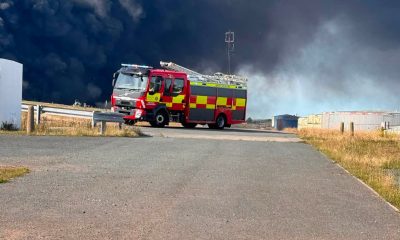
Large fire breaks out at Impala Terminal in Milford Haven
-

 Entertainment5 days ago
Swing and big band classics heading to Torch Theatre
-

 News6 days ago
Questions raised over Hamilton Accies finances after club’s Haverfordwest friendly
-

 Farming4 days ago
Working Carmarthenshire farm opens gates to visitors with new holiday cottages
-
 Community6 days ago
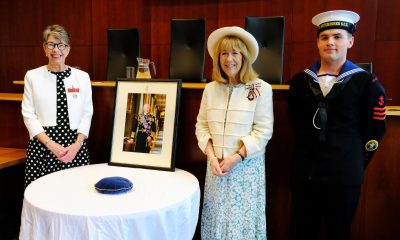
British Empire Medal ceremony held at County Hall
-

 Crime4 days ago
Greenacres confirms seized dogs are safe as investigation continues