


News
St Florence Council’s cash quiz


ST FLORENCE COMMUNITY COUNCIL has been criticised for it poor book keeping from 2009 to 2012.
On Tuesday evening Chairman Alan Eardley told a specially convened meeting that Dyfed Powys Police had been called in to investigate the poor record keeping of the previous clerk and Responsible Financial Officer (RFO) of the community council. The police were informed that the former clerk and RFO had not maintained adequate books and records of the council; not undertaken any bank reconciliations for some time; the internal auditor’s signature in 2010 was forged; and there was £400 of missing cash. The policed slammed the previous clerk and Responsible Financial Officer for their poor record keeping and lack of transparency, but concluded that there was no evidence to support the suggestion that their poor book keeping concealed criminal activity. Dyfed Powys Police had also reported that the forged audit signature was not a criminal offence, as there was no monetary gain possible from the deceit. The former clerk and RFO were absent from the meeting. Cllr Eardely described taking over responsibility for the accounts as “a poisoned chalice, but reported that the current Community Council has taken drastic steps to rectify the poor records. He told the meeting that the Council had gone above and beyond the recommendations set out by external consultants BDO Stoy Hayward. The Chairman told the meeting: “We as a council now follow the standards set out by the ‘Governance and Accountability for Local Councils in Wales’, which call for far stricter upkeep of the accounts than the recommendations laid out to us by the BDO.” Cllr Eardley added: “It was only when I was elected chairman that I realised that there were such problems with the accounts.”



A grassroots club brand that changed west Wales — and still echoes 25 years on
FOR many in west Wales, The Evolution Experience is more than just a name. It is a memory — of packed dancefloors, loud music, and the feeling that something different was happening locally.

Launched in 2000 by Tom Sinclair and his friend John Lee, Evolution began modestly but quickly grew into one of the most ambitious nightlife ventures Pembrokeshire had seen.
At a time when serious clubbing meant travelling to Swansea or Cardiff, a group of young people in Milford Haven decided to build something themselves.
What made The Evolution Experience different was not just the scale, but the people behind it. At a time when most 20-year-olds were either at university or in their first jobs, the team behind Evolution were organising large-scale events, managing budgets, dealing with authorities, and taking on responsibilities usually associated with far older operators.
Filling a gap
In the early 2000s, Pembrokeshire’s nightlife was limited. There were pubs, small venues, and occasional events — but nothing on a scale to rival city clubs.

Evolution changed that.
Early nights at the Kings Function Centre in Milford Haven drew hundreds, then close to a thousand people. The venue — a cricket club hall — was transformed with lighting rigs, powerful sound systems, and multiple arenas.
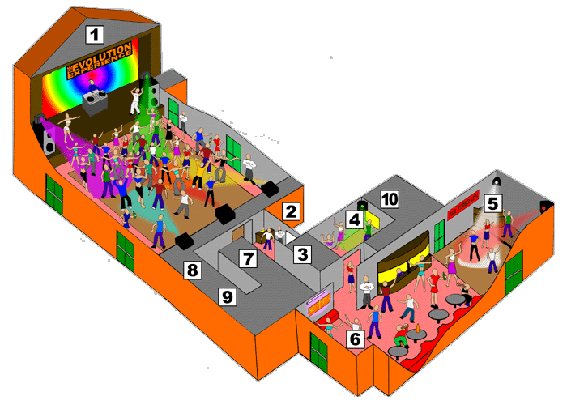
What emerged was not just a DJ night, but a full-scale experience.
As the brand grew, larger venues followed, including the Park House Exhibition Centre in Haverfordwest, where crowds of up to 2,500 attended — an unprecedented scale for the county.

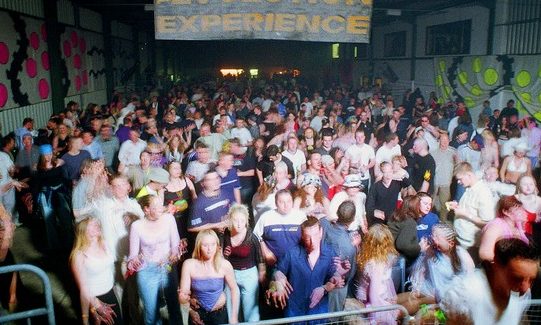
More than a club night
What set Evolution apart was not just its size, but how it was run.
Despite being organised by people in their late teens and early twenties, the operation was structured and professional. There were sponsorship deals, thousands of flyers distributed across the county, branded vehicles, trained security, and medical cover on site.
Promotion was hands-on, with mailing lists built manually and campaigns run across towns and villages.

The aim was clear: to deliver something that could stand alongside events in larger cities.
And it worked.
Big-name DJs and acts were brought to Pembrokeshire, while local talent was given a platform to perform in front of large crowds.
What made The Evolution Experience different was not just the scale, but the people behind it. At a time when most 20-year-olds were either at university or in their first jobs, the team behind Evolution were organising large-scale events, managing budgets, dealing with authorities, and taking on responsibilities usually associated with far older operators.

A platform for people
For many involved, Evolution was more than a night out.
It provided early experience in:
- event management
- sound and lighting
- marketing and promotion
- working under pressure
Participants went on to careers in a wide range of fields, including policing, design, IT, and the music industry.
For Sinclair, the experience would prove formative in a different way.

Expansion beyond west Wales
As Evolution grew, it began to move beyond its local roots.
Events were held in London, including a night at The Fridge in Brixton. The brand also reached overseas, with a tour in China and plans — later followed by smaller events — in Tokyo.
For a venture that began in a Milford Haven cricket club, the expansion was significant.
The Chequers turning point
In 2002–2003, plans were put forward to establish a permanent home for Evolution at Chequers nightclub in Penally, near Tenby.
The move represented a major step — from one-off events to a fixed venue.
However, the application faced strong opposition from residents, authorities, and other stakeholders, particularly around concerns over noise and location.
Following a lengthy licensing hearing, the application was refused.
Sinclair disputed aspects of the decision, but the project did not proceed.
That pressure brought its own rewards. At just 22 years old, Sinclair found himself standing alone in a packed licensing hearing, representing his case for over six hours without legal support.
It was an experience that would shape everything that followed. “After that,” he has said, “nothing ever really felt that daunting again.”
A short-lived attempt to operate the venue as a private members’ club followed, but this also faced enforcement action and was ultimately discontinued.
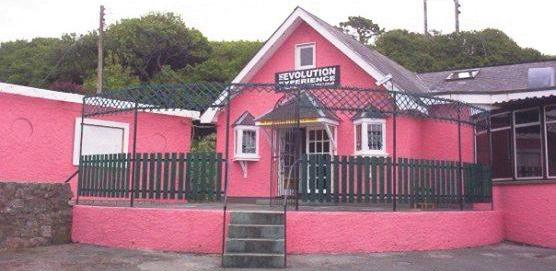
Lessons learned
The refusal of the Chequers application marked more than just the loss of a venue. It was a moment where ambition collided with the limits of what was possible at the time — in terms of regulation, location, and local sensitivities.
For those involved, it was a harsh but valuable lesson. It exposed the realities of navigating systems that were still evolving themselves, and forced a deeper understanding of how decisions were made — and how they could be challenged.
The episode marked a turning point.
For those involved, it provided first-hand experience of the complexities of licensing, regulation, and public scrutiny.
Sinclair has since reflected that the experience influenced his decision to study law — and later to establish The Pembrokeshire Herald, where scrutiny of authority and public accountability became central themes.
That experience would have lasting consequences. For Sinclair, it sparked a deeper interest in law, leading him to study the subject and later apply that knowledge in a different arena — journalism.
The confidence built through Evolution, and the lessons learned during its most difficult moments, would go on to shape the approach behind The Pembrokeshire Herald.
A return — and a legacy
Although Evolution’s early peak passed, it did not disappear.
The brand returned in later years with events including:
- “No Place Like Home” nights in 2008
- smaller club events in 2009
- a full-house event in Tenby featuring SASH!
- sell-out shows at the De Valence Pavilion, including Judge Jules
Each time, the response showed that the name still carried weight.

A shared cultural moment
Today, The Evolution Experience occupies a rare place in local memory.
For those who were there in the early 2000s, it represents:
- first nights out
- a sense of something new
- proof that large-scale events could happen locally
For younger audiences, it remains a recognised and credible brand.
Few nightlife ventures bridge generations in this way.
Perhaps the most enduring impact of The Evolution Experience is not found in the events themselves, but in what came after.
Those involved did not simply move on — they carried the experience with them. Skills learned under pressure translated into careers across a range of professions, from public service to technology and the creative industries.
In that sense, Evolution was not just a series of nights, but a starting point.
Should it return?
With renewed interest and upcoming anniversary events, the question arises: should The Evolution Experience return in a larger way?
There is no simple answer.
The demand appears to be there, and the brand still resonates. However, the landscape has changed — with stricter regulation, different audience expectations, and a very different nightlife culture.
What is clear is that the original conditions that created Evolution cannot be replicated exactly.
More than nostalgia
Perhaps the question is not whether Evolution should return as it was, but whether the spirit behind it can be carried forward.
Because what Evolution demonstrated — 25 years ago — still matters:
That it is possible to build something significant from nothing, even in a rural area.
That young people, given the opportunity, can create, organise, and deliver at scale.
And that sometimes, what begins as a small idea can leave a lasting impact.
Today, the name still carries weight. For one generation, it represents a time when something genuinely new arrived in west Wales. For another, it is a brand associated with more recent events and headline DJs.
Few local ventures manage to bridge that gap — to be remembered by those who were there at the start, while still recognised by those discovering it for the first time.
A lasting impression
What started as a birthday party in Milford Haven became something far bigger — not just a club night, but a moment where a group of young people proved they could build something of scale, ambition and lasting impact.
Twenty-five years on, The Evolution Experience is no longer just about what happened on those nights. It is about what grew out of them — the confidence, the careers, and the belief that, even in a rural corner of west Wales, you didn’t have to wait for opportunity.
You could create it.
Detective says “robust approach” will continue as dealer caught after drugs hidden in car sale
A TOP detective has warned that a Milford Haven drug dealer’s six-year prison sentence should serve as a stark warning to others involved in the supply of illegal drugs.
Daniel Booth, aged 35, was jailed at Swansea Crown Court on Friday (Mar 20) after pleading guilty to being concerned in the supply of cocaine and cannabis, as well as possession of cannabis.

The case came to light after a member of the public discovered drugs hidden inside a car they had purchased from Booth.
The buyer reported the find to police, triggering an investigation that led to Booth’s arrest on January 5.
Officers later uncovered further evidence linking him to the supply of Class A and Class B drugs.

Hidden drugs discovery
The discovery of drugs concealed within the vehicle proved to be a key breakthrough in the case.
Police said the incident highlighted both the risks to unsuspecting members of the public and the lengths some offenders will go to in order to conceal their activities.
Booth was subsequently charged and later admitted the offences in court.
‘Clear warning’ to others
Speaking after sentencing, DC Phillip Jones, of the Serious Organised Crime Unit in Pembrokeshire, said the case should send a strong message.

He said: “The supplying of drugs such as cannabis and cocaine in our communities has damaging consequences, and I hope that this result serves as a reminder of Dyfed-Powys Police’s commitment to remove them from our streets.
“Booth’s six-year sentence should serve as a warning to anyone involved in the supply of illegal drugs that we and our partners in the justice system will take a robust approach while bringing these types of offenders to justice.”
Ongoing crackdown
Dyfed-Powys Police say tackling drug supply remains a key priority across Pembrokeshire, with officers continuing to target those involved in organised criminal activity.

The force has urged members of the public to report any concerns about suspected drug dealing in their communities.

THE WELSH LIBERAL DEMOCRATS have criticised comments by Reform UK figures suggesting coal mining could be revived in Wales, describing the idea as unrealistic and warning it could damage both the environment and future investment.
The row follows comments by Reform candidate Ben Hodge-McKenna, who said reopening coal extraction using newer and “safer” technology could help meet Wales’ future energy needs. Reform leader Nigel Farage has also previously faced criticism over remarks about sending young Welsh people back down the mines.
Responding to the comments, the Welsh Liberal Democrats said Wales should focus instead on developing newer industries, including floating offshore wind in the Celtic Sea, tidal energy and green manufacturing.
The party also linked the issue to Reform’s previous support for fracking, arguing that both positions point to what it sees as an over-reliance on older fossil fuel industries rather than long-term economic planning.
Welsh Liberal Democrat leader Jane Dodds said: “Reform’s plan to reopen coal mines is pure fantasy politics. It won’t cut bills, it won’t deliver lasting jobs, and it won’t stand up to even the most basic economic scrutiny.

“The fact they also want to open Wales up to fracking tells you everything you need to know. Fracking would destroy our countryside, can cause earthquakes and risks contaminating local water supplies, yet Reform seems willing to ignore those dangers.
“This is a party doubling down on the failed energy policies of the past, with no serious plan for the future.
“Wales cannot build its future by trying to relive its past. Communities that once powered the industrial revolution deserve better than being sold false promises about industries in irreversible decline.
“Instead of chasing yesterday’s solutions, we should be investing in the industries of the future and giving Welsh workers the secure, well-paid jobs they deserve.”
The Welsh Lib Dems said former coalfield communities deserve serious economic plans for regeneration rather than what they described as headline-grabbing promises.
Reform has argued that Wales should be more willing to use domestic energy resources, including fossil fuels, as part of a wider push for energy security and lower costs.
I’d add a line at the end saying Reform was approached for comment, if you have asked them.




Crime13 hours ago
Driver spared jail after crash killed young couple
A PEMBROKE DOCK driver who caused the deaths of a young couple in a road crash has been given a...


Entertainment17 hours ago
BBC unveils major new Welsh dramas with Tenby set for prime-time spotlight
New crime series Old Town Murders and supernatural thriller The Witch Farm will both be filmed and set in Wales...


Health18 hours ago
No jobs for new paramedics in Wales as graduates told to apply for technician roles
Students trained at public expense urged to take lower-grade jobs as anger grows over NHS workforce planning NEWLY qualified paramedics...


News2 days ago
Health minister refuses to act on Withybush despite 15,000-signature petition
Senedd pressure grows as Welsh Government declines to intervene over surgery fears THE WELSH GOVERNMENT has refused to step in...


Business2 days ago
Fishguard to Wexford rail tunnel plan backed by Elon Musk firm
Six-hour London to Dublin service proposed in £32bn project ahead of Senedd election PLANS for a rail tunnel linking west...


Charity3 days ago
Milford Haven charity honoured with King’s Award for voluntary service
A PEMBROKESHIRE charity supporting vulnerable young people has received one of the highest honours in the UK for voluntary work....


News4 days ago
Plaid Cymru launches bid to lead next Welsh Government
Party positions itself as ‘government-in-waiting’ ahead of May election PLAID CYMRU has formally launched its campaign for the 2026 Senedd...


Crime4 days ago
Police appeal after attempted child abduction in Haverfordwest
DYFED-POWYS POLICE has launched an appeal for witnesses following a reported attempted abduction of a 12-year-old girl in Haverfordwest. The...


Crime5 days ago
Gunshot fired by police during incident in Milford Haven
A POLICE officer discharged a firearm during an incident in Milford Haven on Saturday evening (March 28), prompting an investigation...


Community6 days ago
Three Amigos Easter Run roars through Pembrokeshire
MOTORCYCLE enthusiasts turned out in force today (Saturday, March 28) as the popular Three Amigos Easter Run returned to the...
-

 Education7 days ago
Ysgol Henry Tudor reassures parents over Sikh ceremonial kirpan
-

 Crime7 days ago
Taylor wins appeal as Crown Court quashes ‘no insurance’ conviction
-

 Crime7 days ago
Appeal dismissed in blood sample case after court rejects PTSD defence
-

 Local Government7 days ago
Pembrokeshire Coast National Park members salaries to rise
-

 Business7 days ago
Popular extreme sport off Pembrokeshire coast to become licenced activity
-

 Crime7 days ago
Four men fined over illegal cockle gathering on the Burry Inlet
-

 Charity4 days ago
RSPCA calls for stronger animal welfare measures as Welsh Labour launches manifesto
-
 Charity7 days ago
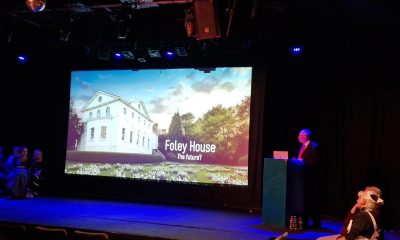
Foley House to become cancer support centre in memory of Adam Evans-Thomas
DavidTwera
March 13, 2026 at 10:12 am
Today’s consumers are uncovering that CBD [url=https://www.cornbreadhemp.com/pages/store-locator ]cbd gummies near me[/url] can effortlessly fit into a regular wellness regimen. Whether added into morning coffee or taken as an after-dark capsule, cannabidiol conforms to particular lifestyles. Its mild interaction with the endocannabinoid system assists the body preserve internal equilibrium. Millions worldwide now see it an essential part of their self-care toolkit.