


News
Silverdale residents ‘frightened for their lives’


A RESIDENT of The Silverdale Lodge, Johnston, has spoken exclusively to The Herald today (Jul 22) to vent his frustrations over the current spike in ‘undesirable’ residents within the lodge.
After becoming increasingly concerned with what he has witnessed at the Lodge, Mark Thornton has set up a committee which he hopes will benefit the residents of the Lodge and those in the wider Johnston community.
The Silverdale Lodge has been a centre of controversy for the local community since the beginning of the lockdown restrictions in March, where it has been used to facilitate the homeless in the county through the Covid-19 pandemic.
The Herald has previously reported on the increase of anti-social and criminal activity in the Johnston area, which the community believes is the doing of the residents of The Silverdale Lodge.
Mr Thornton previously gave an interview to The Herald, where he stated at the time he was not aware of any residents causing issues. He insists that this was true at the time, however now he says he has seen incidents himself.

Mr Thornton, who will now lead the group as the official representative of The Silverdale Lodge residents, hopes the Johnston community will band together with him to create a safer environment for them all to live.
Mr Thornton said “We don’t want anymore criminals here and we are going to do our hardest to get the troublemakers removed and ensure they do not return.
“The reason for doing this is to make both the decent residents of The Silverdale Lodge and the Johnston community safe again.
“I have spoken myself with the police today, who have advised me that this is the best way to deal with the issues. I am actively seeking to set up a meeting with the residents of the Lodge, the council, police and the Johnston community.

“Dyfed-Powys Police have assured me they will attend all of the meetings that I arrange.
“Silverdale residents currently feel as if they are in a jail because of the types of people that are being housed here, they need to feel safe and not trapped. We need it to be back to a facility to tackle homelessness within the county.”
Mr Thornton said that it has got to the point where some residents of the Lodge are ‘scared for their lives’, with police in attendance at the Lodge countless times a day to deal with multiple incidents.

Mr Thornton also believes he is being ‘starved into silence’ by Pembrokeshire County Council as punishment for speaking to this newspaper about the ongoing issues at the Lodge.
In the exclusive interview, Mark explains his frustrations about life at the Lodge, his on-going battle with the council and his struggle with receiving food parcels.
As a way to tackle the issues on site a 24-hour security team was placed at the Lodge, however Mr Thornton has told us that this service has now diminished to just a shift covering the evenings.
He added that he spoke to the security team, who have alleged that as of August their service will cease to exist at the lodge, which has infuriated residents who are fearful of the repercussions.
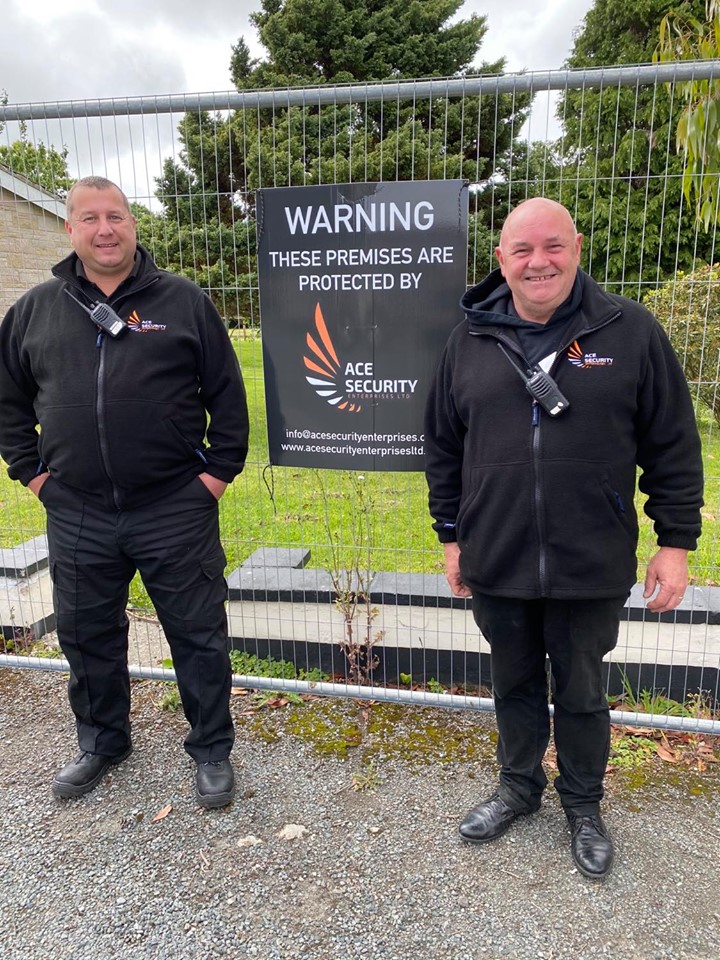
Security guards at Silverdale gave exclusive interview with The Herald
Mr Thornton told The Herald that the only support now available to the Lodge residents throughout the day, is an on-site support worker, which has resulted in residents relying solely on the police for their protection.
The Herald has received reports that on Tuesday (July 21) the police were in heavy presence on two separate incidents at the lodge.
We have contacted Dyfed-Powys Police for a statement, we are awaiting their reply.
The Herald contacted Pembrokeshire County Council with regards to the ongoing issues at the Lodge, a spokesperson said: “ In order to fulfil the Covid-19 guidance from Welsh Government, as a local authority we are required to assist through the provision of accommodation. This is to ensure that individuals are able to comply with social distancing and self-isolate should it become necessary.
“Pembrokeshire County Council is grateful to the Silverdale Lodge in Johnson for supporting the Authority with additional accommodation during the Covid-19 pandemic.
“The Silverdale has individual lodges that allow for social isolation precautions to be applied within individual rooms so we have moved some of our service to this site temporarily.
“We may at times also be working with people who no longer need to stay in hospital but who cannot go home as their property requires some adaptions and we may also have people who need to isolate themselves from vulnerable people they live with.
“The site offers the Council an additional alternative temporary accommodation for people who are in this position.
“It is not a bail hostel nor halfway house.
“At Silverdale we have support on site. Pobl and Goleudy Housing & Support Services are currently offering support for the residents in the Silverdale. The service is available seven days a week from 9 am to 7pm.
“The service is working with the residents to assist with practical,emotional and wellbeing support and to help people develop and maintain the skills and confidence necessary to secure and maintain sustainable housing for their longer term.
“In addition we have security on site to ensure the site is covered across a 24-hour period.
“We also continue to provide support from our experienced homelessness prevention team within the housing department.
“We are unable to comment on specific individual cases but we can confirm that, as a local authority, we do work closely with Dyfed Powys Police.
“We do not have a planned heavy police presence on the site but are grateful to them for their support if needed and for their proactive work to help residents across the county adhere to the current requirements in relation to social distancing and travel.”
Police were made aware of a gathering at Princess Royal Way in Haverfordwest at around 9pm on Tuesday, July 21.
Around 60 people had gathered peacefully to light candles and lay tributes following the tragic death of a two-year-old child.
Officers attended to ensure there was no community tension.
Later that night, eight people were spoken to by police following a gathering outside a property in Johnston.
Officers also spoke to a small group which had gathered outside Haverfordwest Police Station shortly after.
All gatherings passed without incident.
Superintendent Ross Evans said: “Pembrokeshire is a close-knit community, and we understand that the death of a child will be a cause for grief.
“However we would appeal to the public to refrain from any actions that could impact the ongoing investigation, including comments shared online and on social media.
“Officers will be more visible in the local area over the coming days as enquiries continue, and any concerns can be addressed through them.”



Council confirms advanced discussions as speculation grows over high street boost
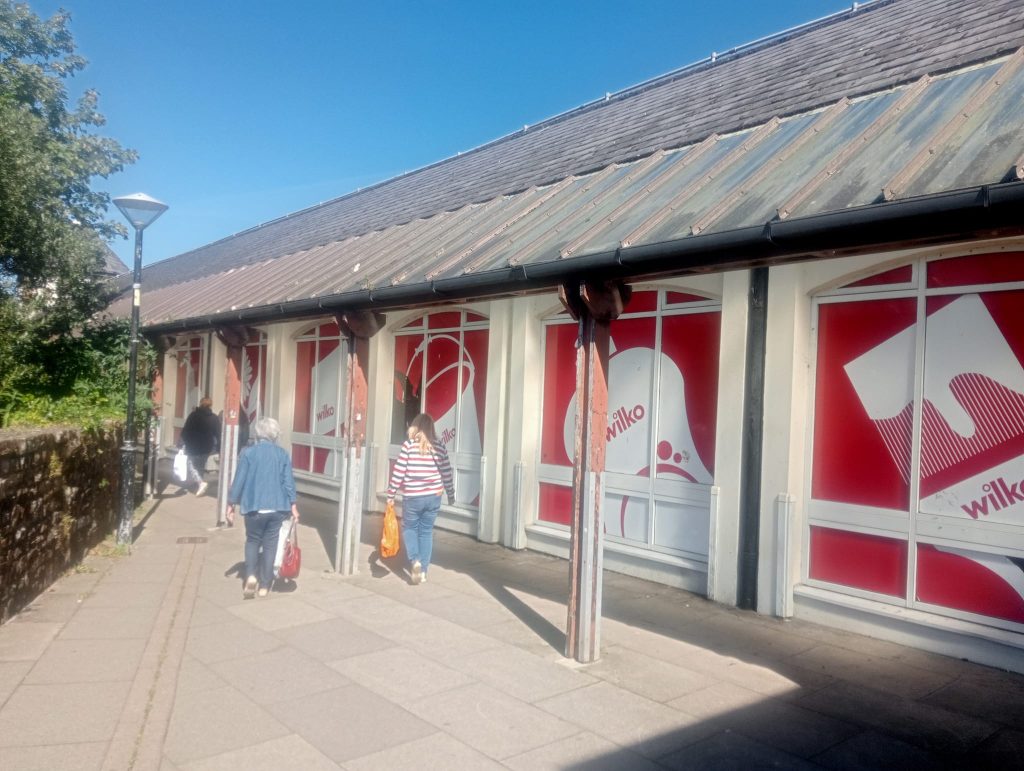
HAVERFORDWEST could soon see a major high street revival, with a national retailer in advanced talks to take over the former Wilko building in the town centre.

Pembrokeshire County Council has confirmed that negotiations are ongoing, with a deal potentially just weeks — or even days — away.
Speaking to The Herald, Deputy Leader Cllr Paul Miller said the authority is in “detailed discussions with a major national retailer” over the prominent vacant unit.
However, he declined to name the business involved, citing commercial confidentiality.
Speculation grows
Despite the secrecy, speculation has been mounting locally that clothing giant Primark could be the retailer preparing to move into the site.

The size of the former Wilko store — one of the largest retail units in the town — has led many to believe only a handful of national chains would be able to occupy the space.
When asked directly whether Primark was involved, Cllr Miller did not confirm the claim, but also did not deny it.

Work already underway
The council has taken steps to prepare the building for a new tenant following Wilko’s collapse into administration.
This includes carrying out essential structural repairs, particularly to the roof, funded through a combination of council investment and an interest-free Welsh Government town centre loan.

Cllr Miller said the aim is to deliver a “blank canvas” for a new retailer, who would then invest further in fitting out the store.
He added that any incoming tenant would likely spend “millions” preparing the unit before opening.
Boost for town centre
The arrival of a major national retailer would represent a significant boost for Haverfordwest, which has faced challenges in recent years with declining footfall and the loss of several well-known stores.

The Wilko closure left a large gap in the town centre, both physically and economically, and securing a new anchor tenant is seen as key to revitalising the high street.
If confirmed, the move could increase visitor numbers, support surrounding businesses, and help restore confidence in the town’s retail future.
Deal ‘close’
Cllr Miller indicated that negotiations are at an advanced stage.
He said: “I’d like to think we’re talking weeks, not months — maybe even days, but these things can change.”
While no formal agreement has yet been announced, the timeline suggests a decision could be imminent.
What happens next
Until a deal is formally signed, the identity of the retailer remains unconfirmed.
However, with negotiations progressing and work underway on the building, expectations are growing that a major announcement could soon follow.
For now, all eyes remain on Haverfordwest — and on whether one of the UK’s biggest retail names is about to arrive.
We have contacted Primark for a comment.


FAMILIES across Pembrokeshire are being invited to “hop into spring” as Easter egg trails return to National Trust sites across Wales.
The popular seasonal events will take place at thirteen locations nationwide, including Colby Woodland Garden near Amroth, offering a mix of outdoor adventure, nature exploration, and family-friendly challenges.
The National Trust Cymru says the trails are designed to keep children entertained during the Easter holidays while encouraging them to connect with nature, heritage, and the outdoors.
At Colby Woodland Garden, visitors can explore a wooded valley filled with winding paths, streams, and hidden corners while taking part in ten activity stations along the Easter trail.
Organisers say the site’s mix of natural play areas and historic features makes it an ideal location for families looking to enjoy the spring weather.

The Easter egg trail at Colby will run from Thursday (Apr 3) to Sunday (Apr 6), between 10:00am and 3:30pm.

Family-friendly activities
Across Wales, the trails include a wide range of themed activities, from wildlife spotting and creative challenges to physical games and imaginative play.
Each location features around ten activity points, with participants receiving a trail sheet, bunny ears, and a chocolate egg on completion. Vegan and allergy-friendly options are also available.
Normal admission charges apply, although National Trust members can enter for free. The Easter trail costs £3.50 per child.

Spring boost for tourism
The National Trust says the events are part of a wider effort to encourage families to make the most of outdoor spaces as the weather improves.
With gardens in bloom and longer daylight hours, organisers hope the trails will attract visitors from across west Wales and beyond.
A spokesperson said the programme offers “hours of fun, discovery and seasonal adventure for the whole family.”

More information and booking details are available via the National Trust website.

RNLI LIFEGUARDS have saved more than 300 lives in Wales since patrols were first introduced in Pembrokeshire in 2008, as the charity prepares to return to beaches for the Easter holidays.
The Royal National Lifeboat Institution said its lifeguards have saved 315 lives across Wales, aided more than 45,000 people, and responded to over 26,000 incidents. They have also carried out more than six million preventative actions to stop situations becoming emergencies.
The service, which marks its 25th anniversary this year, will see lifeguards return to key Welsh beaches from Saturday (Mar 28) as schools break up for Easter.
In Pembrokeshire, patrols will resume at Whitesands, St Davids, from March 28 to April 12, and at Tenby South from April 3 to April 6.
The RNLI said its lifeguards play a crucial role in keeping beachgoers safe, with around 95 per cent of their work focused on prevention, including advising swimmers, identifying hazards, and educating visitors.
Tom John, a Lifeguard Supervisor in Swansea who joined the service in 2009, said: “We’ve seen more people visiting our beaches each year. While the fundamentals remain the same, we are now a much more proactive service.
“Our training and equipment are excellent, and we have a brilliant team. This time of year is always special as lifeguards return with energy and enthusiasm for the season ahead.”
He added that lifeguards spend much of their time engaging with the public, offering safety advice, and helping people understand the risks before incidents occur.
Across Wales, more than 35 beaches are now patrolled by RNLI lifeguards, forming part of a wider UK network covering over 245 beaches.
The charity is urging anyone heading to the coast this Easter to choose a lifeguarded beach and to swim between the red and yellow flags.
Visitors are also advised to check weather and tide conditions, understand local hazards, and carry a means of calling for help when taking part in water activities.
The RNLI’s “Float to Live” advice remains central to its safety message. Anyone who gets into difficulty in the water is urged to float on their back, keeping their airway clear until help arrives.
In an emergency, people should call 999 and ask for the Coastguard.
The RNLI said its lifeguards will continue to play a vital role in protecting coastal communities and visitors as demand on beaches grows year on year.



Business25 minutes ago
Could Primark be coming to Haverfordwest? Major retailer in talks for former Wilko site
Council confirms advanced discussions as speculation grows over high street boost HAVERFORDWEST could soon see a major high street revival,...


Business1 hour ago
Rail investment ‘could unlock 40,000 jobs and £11bn for Wales’ says new report
RAILWAY stations across Wales could help unlock around 40,000 jobs and more than £11 billion for the economy by 2036,...


Local Government2 hours ago
Milford Haven set for £200m investment with schools, leisure centre and rail upgrade
Council outlines major plans for town with backing from Welsh Government MILFORD HAVEN is set for a major transformation with...

Community20 hours ago
Broad Haven volunteers secure ‘national asset’ status for nature reserve
A SMALL stretch of woodland and former opencast coal mine has been transformed into a nationally recognised biodiversity site, in...


Entertainment2 days ago
Tenby steams up in spectacular style as crowds flock to festival
Colourful parade, towering creations and Victorian flair bring town centre to life TENBY was transformed into a vibrant Victorian fantasy...


Crime3 days ago
Publican jailed for six years for supplying cocaine and cannabis
Milford Haven man sentenced at Swansea Crown Court following drug dealing operation A MILFORD HAVEN publican has been jailed for...


Local Government3 days ago
Poverty summit highlights support efforts across Pembrokeshire
A SUMMIT bringing together key organisations from across Pembrokeshire has highlighted both the scale of local poverty and the work...


Education4 days ago
Milford Haven school plans unveiled but funding not yet secured
PLANS for a new £100 million school in Milford Haven have been unveiled, but the project has not yet secured...


News4 days ago
Council unveils plans for new state-of-the-art secondary school in Milford Haven
PEMBROKESHIRE COUNTY COUNCIL has revealed plans for a new state-of-the-art school in Milford Haven, promising modern, inspiring learning spaces for...


Health4 days ago
NHS waiting list falls — but cancer delays and diagnostic backlog worsen
Record progress claimed by Welsh Government as critics warn key targets are still being missed THE NHS in Wales has...
-

 News6 days ago
Emergency services flood Haverfordwest after reports of person in river
-

 Crime5 days ago
Mother given community order after admitting child cruelty offence
-
Health4 days ago
NHS waiting list falls — but cancer delays and diagnostic backlog worsen
-

 News6 days ago
Senedd vote to ban greyhound racing hailed as ‘landmark moment’ by charities
-

 News6 days ago
Senedd votes to ban Greyhound racing in Wales to protect animal welfare
-

 News5 days ago
Reform secures first Pembrokeshire councillor in Hakin by-election win
-

 News6 days ago
Could Pembrokeshire hold the key to St Patrick’s lost birthplace?
-

 Crime5 days ago
Woman stole from pharmacy despite ban, court hears