


Farming
Agriculture Bill passes Commons


THE CONSERVATIVE Party used its Commons majority to ram through its Agriculture Bill on Monday, October 12.
Along the way, it voted down amendments which would have forced Boris Johnson’s government to uphold its manifesto promises on food production standards and animal welfare.
The Government’s actions, combined with its procedural manoeuvre to block an attempt to give a proposed trade watchdog teeth, have drawn universal condemnation from farming unions and organisations.
Fourteen Conservative MPs opposed the Government, including former DEFRA Secretary of State Theresa Villiers. Every Welsh Conservative MP voted against safeguarding farmingstandards.
The Wildlife Trusts of Wales and England described the vote as: “[T]he clearest signal yet that the Government do not intend to uphold their election manifesto commitment to maintain the UK’s high environmental protection, animal welfare and food standards in trade negotiations.”
Phil Stocker of the NSA commented: “There is now the very real risk, despite Government’s assurances, that the UK’s standards that our nation’s farmers are proud to work to, could be undermined by lower standard imports.”
‘DISAPPOINTMENT AN UNDERSTATEMENT’
Speaking to The Herald after the vote, TFA Chief Executive George Dunn said: “To say that the events which took place in the House of Commons last night were a disappointment, would be a major understatement. For the Government to whip its MPs to vote against an amendment entirely in line with its own policy has created a breach of trust in believing its rhetoric around protecting our high environmental, animal welfare and food safety standards in future international trade agreements.”
“It was also shocking that the Government used a procedural manoeuvre to deny MPs the opportunity of voting on a crucial House of Lords amendment that would have improved the operation of the newly appointed Trade and Agriculture Commission,” Mr Dunn told us.
He continued: “This was a shocking piece of political chicanery which prevented MPs from even debating this important piece of legislation. Over a million people signed a petition earlier in the year calling on the Government to ensure the strongest standards in trade and it is an issue for which there has been cross-party support. Expanding the role and remit of the Trade and Agriculture Commission would not, as the Government claimed, tie its hands but merely ensure that its future trade policy had proper scrutiny and support from an expert panel.”
Mr Dunn concluded by drawing attention to the erosion of trust between the Conservative Government and the agriculture industry: “Day after day we hear Government Ministers declare that they will not jeopardise our high environmental, animal welfare and consumer safety standards in trade. Sadly, their words say one thing, but their actions say another. Unless we have strong legislation in this area, the fine words are just empty promises.”
‘WARM WORDS WON’T WASH’
Carmarthen East & Dinefwr MP Jonathan Edwards told this newspaper: “The Agriculture Bill was a missed opportunity to safeguard in law food product standards and in particular food production standards.
“Warm words from the British Government that they won’t allow Welsh farmers to be undercut by lower standard food in trade deals won’t wash.
“The fact that the British Government have gone out of their way to stop democratic accountability over trade deals does not fill me with confidence.
“Wales should have a veto over trade deals negotiated by the British Government in the same way that every single member of the European Union could veto trade deals negotiated by the EU.
“The reality is that the future of Welsh farming is in the hands of a British Government who I fear will be conceding access to food markets in order to gain concessions for London banks.”

NFU DISMAY
NFU Cymru expressed dismay but vowed to continue lobbying for binding commitments to safeguard farming’s high standards in future trade deals
NFU Cymru Deputy President Aled Jones said: “It is a blow that the Grantchester amendment (on animal welfare) was not adopted by a majority of MPs, nor did MPs have the chance to vote on the Curry amendment (strengthening the Trade & Agriculture Commission). However, NFU Cymru remains steadfast in its belief that Welsh farmers must not be undermined by imported products produced to lower standards than those observed here in the UK.”
Adopting an upbeat approach which suggested NFU Cymru was prepared to take government promises and MPs’ words at face value, Mr Jones continued: “We were encouraged to hear so many MPs in last night’s debate expressing their support for those high standards – standards that consumers in this country have come to expect – and we thank those MPs who spoke up in favour of this important cause.
“This ongoing debate around food standards is matter of a huge importance for Britain’s farmers and Britain’s consumers, also. We simply cannot risk any trade scenario which could result in food imports coming into this country that would be illegal if produced here.”
Looking forward to the next stage of the Bill’s passage to the statute books, Aled Jones added: “With the Agriculture Bill set to return to the House of Lords, this gives peers another opportunity to put forward amendments that we hope will bring about the changes we want to see – UK farming’s high standards protected and enshrined in law, while also giving more power to the elbow of the Trade and Agriculture Commission.”
LACK OF COMMITMENT ‘SPEAKS VOLUMES’
Plaid Cymru’s Shadow Rural Affairs Minister, Llyr Gruffydd MS, told us: “Last night, Plaid Cymru supported amendments that would have protected food standards in future trade deals and strengthened parliamentary scrutiny of trade negotiations.
“Yet again, the Conservatives let down Welsh farmers when given the chance to protect their livelihoods. Despite all their promises and manifesto commitments, the Government defeated the amendments, exposing our farmers to cheap produce in future trade deals.
“Plaid Cymru will continue to put forward a positive vision for our food producers based on a greater say for our devolved governments and the protection of food standards. This is not because we not only believe them necessary now, but because they are fundamental to our farmers and food producers in the future.”
Lesley Griffiths, Wales’ Minister for Rural Affairs, said: “Although UK Ministers continue to insist they will maintain existing high standards of food safety and animal welfare in any new trade deals, their rejection of the opportunity to put this commitment into statute speaks volumes – especially given the fact that the amendments put forward by the Lords gave them a prime opportunity to do so.
“Food safety and welfare are devolved matters, and we have been clear that we would resist any clauses in the Internal Market Bill which would allow Westminster to start a race to the bottom in terms of standards – a move which would not just impact consumers, but also risk farm businesses across Wales as they face international competition from companies willing to forego the standards to which they adhere.”

WIDER REACTION
Prominent farmer and TV presenter Gareth Wyn Jones tweeted: ‘Very disappointed this morning after last night’s government defeated amendments to the #AgricultureBill which would have protected our #food & #farming standards. Don’t forget they’ve not only sold the farming community out but the health of our nation. @BorisJohnson’
Conservation groups and environmental campaigners also expressed their concern at the government’s unwillingness to commit to anything more than warm sentiment over environmental standards and welfare measures.
The RSPB said: “The UK Government must now say how it will meet its manifesto commitment to maintain standards in future trade deals, as confidence in them to do so is now at a chronically low ebb.”
RSPCA Chief Executive Chris Sherwood also underlined the Government’s failure to put meat on its manifesto promise.
Chris Sherwood said: “The Government once again failed to make good their manifesto promise that they will not sell out the UK’s animal welfare for a quick trade deal. The vote shows a disregard for the British public, 83% of whom said they did not want lower standard imports coming in from the US when we leave the EU.”
Nature Friendly Farming Network UK Chair, Martin Lines, observed: “Despite manifesto commitments and repeated assurances from successive governments not to lessen standards in trade, the government has instead passed on one of the final opportunities to enshrine our high-quality environmental and animal welfare standards in law and to protect the UK farmingindustry.”
James Russell, BVA President, said: “This result is a severe blow for animal welfare and a betrayal of the Government’s own manifesto commitment to maintain and improve on health and welfare standards.
“We have long argued that the UK cannot commit to raising the bar domestically while allowing in goods that don’t meet the high standards that British consumers rightly want and expect.
“If the government won’t legislate to protect our standards it is vital that the Trade and Agriculture Commission is given more powers and stature to safeguard them in future trade deals.”
CLA President Mark Bridgeman sounded a warning note: “Government Ministers have successfully convinced MPs they can be trusted to protect food production standards without the need for legislation.
“Time and again Ministers have promised to protect British farmers from a flood of cheap imports produced to animal welfare and environmental standards far below our own.
“Farmers across the country will be watching Government’s every move very closely from hereon in.”


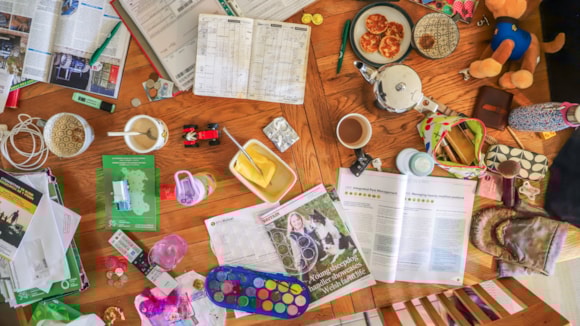
A PROGRAMME designed to support farming families in planning for the future is helping to break down one of agriculture’s most sensitive issues – succession.
Farm inheritance and succession planning returned to the spotlight in 2024 following UK Government reforms to inheritance tax (IHT), prompting renewed concern across the industry.
In response, Agrisgôp leader Elaine Rees Jones brought together farming families in the Welshpool area to take part in a structured programme aimed at addressing the issue head-on.
Agrisgôp, a fully funded management development initiative, encourages farmers to work collaboratively, building confidence and business skills through action learning.
Two distinct groups emerged: one made up of parents seeking to plan the future of their farms, and another of younger family members exploring how to take on responsibility and transfer knowledge from the previous generation.

A key theme identified early on was the importance of communication between generations.
Elaine said: “The meetings have offered the opportunity to gain professional and peer advice, time away from the farm to assess situations, and a safe, confidential space for discussion.
“Group members have shared concerns and apprehensions while getting to grips with the scale of the challenge, and have begun to develop action plans.
“The honesty and openness shown has been incredibly humbling.”
For many participants, the programme has provided the confidence to begin formal discussions with professional advisers.
One farming couple, currently working through the process of passing assets to their two sons, said the experience had been invaluable.
“It has made us tackle things properly. We had already started looking at succession before the Rachel Reeves budget, so this wasn’t a knee-jerk reaction.

“It’s a complicated process with no easy answers, and every farm is different. But Agrisgôp has helped us go into meetings with solicitors and accountants informed, rather than just accepting advice blindly.”
Another participant described succession planning as “mind-blowing” before joining the group, adding that expert input had highlighted the importance of early preparation.
The programme included a recent panel session in Welshpool, where professionals returned to answer questions from participants, alongside one-to-one sessions to clarify individual plans.
Specialist advice was provided on legal, financial, and land valuation matters, with a clear message emerging on the importance of having a valid will in place.
Angharad Hird, of Lanyon Bowdler Solicitors, warned that failing to make a will can have serious consequences, highlighting a case where a young farmer died unexpectedly. Under intestacy rules, his estate was divided between his wife and children in a way that may not have reflected the family’s wishes.
Financial planning was also a major focus. From April 2027, unused pension funds will be included within estates for IHT purposes, potentially attracting tax of up to 40%.
Emma Hall, a chartered financial planner, said some clients are already restructuring their finances to mitigate future liabilities, including placing assets into trusts or converting pension funds into income-generating annuities.
Land and property valuation was another key consideration. Richard Corbett, of Roger Parry & Partners, stressed that valuations must reflect current market conditions at the time of assessment, while also taking into account factors such as shared ownership or rights of way.
Accountant Sion Roberts highlighted the importance of setting emotion aside when making decisions.
“There is no one-size-fits-all solution,” he said. “Each farm is different, so it’s vital to understand your priorities and get the right advice.”
The issue of care fees and asset transfers was also raised, with warnings about the risks of deliberately reducing assets to avoid future costs.
Alongside Agrisgôp, Farming Connect’s Succession Pathway offers structured support for families navigating the process. This includes business reviews, facilitated family meetings, bespoke planning, and access to specialist legal services.
Organisers say early planning is crucial to securing both family relationships and the long-term future of farm businesses.
Farmers interested in accessing support can contact Farming Connect on 03456 000 813 or visit their website for further information.


A CALL to keep a holiday pod sited on a Pembrokeshire farm, as part of a wider holiday pod farm diversification over two areas which saw the larger part supported, has been submitted to county planners.
In an application to Pembrokeshire County Council, Bill Ridge of Vaynor Farm Ltd, Bethesda, through agent Gerald Blain Associates Limited, seeks retrospective permission to keep a self-catering pod at Broomley Farm, Sodston, Narberth, works having been completed in 2022.
The application is part of a wider scheme of holiday pods diversification encompassing two farms.
Back in December, Pembrokeshire County Council’s planning committee granted delegated retrospective permission to Vaynor Farm Ltd for the siting of two self-catering holiday accommodation pods at The Cart House, Vaynor Farm, Bethesda, near Narberth as part of a farm diversification enterprise.
A supporting statement accompanying the latest application says: “Vaynor farm is a 400-acre working dairy farm with a herd of 700 milking cows. The enterprise comprises of three self-catering pods. Two of the pods are situated at the Vaynor homestead and another at the opposite end of the holding at Broomley farm.

“The first unit was sited adjacent to Vaynor farm stead some four years ago and a further two added in subsequent years. The units have enjoyed successful occupancy rates over several years offering a unique secluded tourism offer on a working dairy farm, more detail of which is outlined within the supporting business plan.”
It says the Broomley farm application is a resubmission of a previously refused scheme, adding: “It should be noted that this application was originally part of [the application] which was recommended approval at planning committee in December 2025. This element however was separated due to its location on another part of Vaynor farm deeming it not possible to be considered under the same application.”
At the December meeting, an officer report said: “A business plan has been submitted with [that] application, which explains that due to uncertainties associated with dairy farming, the applicant has sought to diversify the farm enterprise to incorporate tourism accommodation.
“The application makes the case that the proposed development represents farm diversification. It is acknowledged that the development has resulted in the provision of an alternative type of holiday accommodation for which it has been demonstrated there is a demand, contributing to the diversity and quality of accommodation available within the county and supporting an existing farm business, with consequent economic and social benefits.

“Evidence has been provided that demonstrates the extent to which the pods have provided income which has been used to support the farm business.”
That application was conditionally approved; the latest part to be considered by planners at a later date.
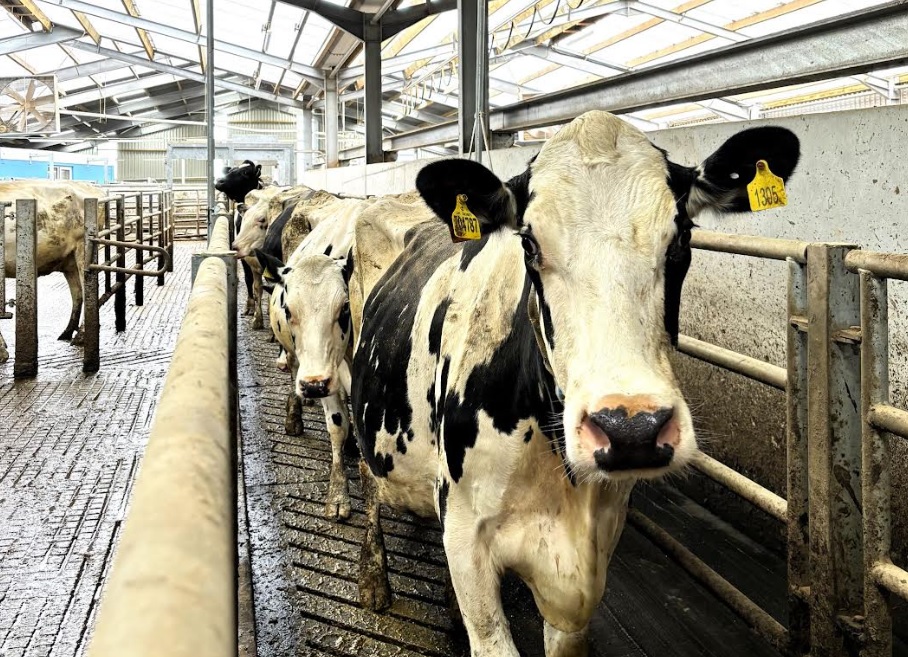
Fewer than five per cent of farms inspected as prosecutions remain rare
LEGAL experts have warned that animal welfare laws in Wales are being routinely ignored due to a “critical failure” in enforcement, with thousands of farms going uninspected and breaches rarely leading to action.
The stark warning came during an event at the Senedd on Tuesday (Mar 25), organised by the Animal Law Foundation and sponsored by Carolyn Thomas MS.
The meeting brought together legal specialists, enforcement bodies and Members of the Senedd to examine what campaigners describe as a growing gap between legislation and real-world enforcement.
Figures presented at the event paint a troubling picture. Just 4.67 per cent of Wales’ 34,777 farms are inspected, with only one inspector responsible for every 657 farms. Even when concerns are raised, only around 65 per cent of complaints result in an inspection.
More strikingly, where breaches are identified, prosecutions are launched in fewer than one per cent of cases.
The Animal Law Foundation described this as part of a wider “Enforcement Problem” — a term used to describe situations where laws exist but are not effectively applied.
Edie Bowles, Executive Director of the foundation, said: “These figures point to a system that is simply not working. When inspections are rare, complaints do not trigger investigations, and breaches do not lead to enforcement action, the legal safeguards risk becoming little more than words on paper.”
She added that meaningful enforcement is essential not only to protect animals, but to maintain public confidence in the law.
Carolyn Thomas MS said ensuring existing laws are properly enforced “should not be a controversial ask,” but acknowledged it remains a significant challenge.
Calls for stronger oversight were echoed by representatives of Animal Licensing Wales, who highlighted the need for greater resources and capacity within enforcement bodies.
The findings are backed by recent undercover investigations, including footage from a Wrexham slaughterhouse and a farm at Tafarn Y Bugail, which allegedly showed serious mistreatment of animals.
Abigail Penny, Executive Director of Animal Equality UK, said: “What we uncovered was an extraordinary failure of the systems meant to protect animals. That such cruelty could persist, undetected and unchallenged, shows the urgent need for stronger oversight and meaningful sanctions.”

Animal welfare on farms in Wales is governed by the Animal Welfare Act 2006 and a range of additional regulations covering farming, transport and slaughter. Enforcement responsibility lies primarily with local authorities, while the Food Standards Agency oversees welfare in slaughterhouses.
Campaigners say that without urgent reform, those protections risk being undermined by a lack of inspections, limited resources, and a reluctance to take enforcement action.



Crime1 day ago
Driver spared jail after crash killed young couple
A PEMBROKE DOCK driver who caused the deaths of a young couple in a road crash has been given a...


Entertainment1 day ago
BBC unveils major new Welsh dramas with Tenby set for prime-time spotlight
New crime series Old Town Murders and supernatural thriller The Witch Farm will both be filmed and set in Wales...


Health1 day ago
No jobs for new paramedics in Wales as graduates told to apply for technician roles
Students trained at public expense urged to take lower-grade jobs as anger grows over NHS workforce planning NEWLY qualified paramedics...


News2 days ago
Health minister refuses to act on Withybush despite 15,000-signature petition
Senedd pressure grows as Welsh Government declines to intervene over surgery fears THE WELSH GOVERNMENT has refused to step in...


Business3 days ago
Fishguard to Wexford rail tunnel plan backed by Elon Musk firm
Six-hour London to Dublin service proposed in £32bn project ahead of Senedd election PLANS for a rail tunnel linking west...


Charity3 days ago
Milford Haven charity honoured with King’s Award for voluntary service
A PEMBROKESHIRE charity supporting vulnerable young people has received one of the highest honours in the UK for voluntary work....


News4 days ago
Plaid Cymru launches bid to lead next Welsh Government
Party positions itself as ‘government-in-waiting’ ahead of May election PLAID CYMRU has formally launched its campaign for the 2026 Senedd...


Crime4 days ago
Police appeal after attempted child abduction in Haverfordwest
DYFED-POWYS POLICE has launched an appeal for witnesses following a reported attempted abduction of a 12-year-old girl in Haverfordwest. The...


Crime5 days ago
Gunshot fired by police during incident in Milford Haven
A POLICE officer discharged a firearm during an incident in Milford Haven on Saturday evening (March 28), prompting an investigation...


Community6 days ago
Three Amigos Easter Run roars through Pembrokeshire
MOTORCYCLE enthusiasts turned out in force today (Saturday, March 28) as the popular Three Amigos Easter Run returned to the...
-

 News9 hours ago
Accommodation providers in Wales will be required to register under new law
-
Business3 days ago
Fishguard to Wexford rail tunnel plan backed by Elon Musk firm
-

 Charity4 days ago
RSPCA calls for stronger animal welfare measures as Welsh Labour launches manifesto
-

 Entertainment22 hours ago
From Milford Haven to the world: The story of The Evolution Experience
-
Entertainment1 day ago
BBC unveils major new Welsh dramas with Tenby set for prime-time spotlight
-

 News6 days ago
West Wales man remanded in custody over serious sexual assault charge
-
Crime5 days ago
Gunshot fired by police during incident in Milford Haven
-

 Sport6 days ago
Lloyd and Reynolds take on France with Supra GT4 challenge