


Politics
Call to replace the Lords

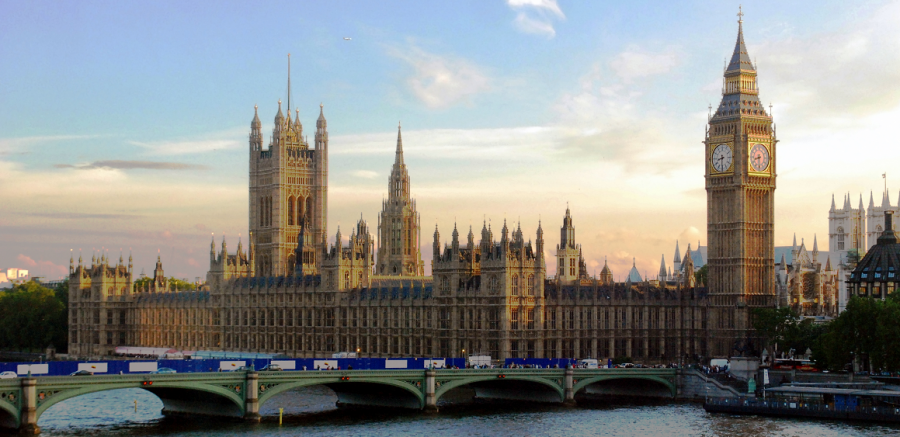
OVERHAULING Parliament’s London-dominated second chamber would help empower the UK’s nations and regions, writes Willie Sullivan a senior director at the Electoral Reform Society.
It’s been a year since Boris Johnson’s victory in the 2019 general election, an election won with a commitment to ‘level up’ those communities left behind.
Since then, our politics has been shaken by a pandemic that has put pressure on the already strained constitutional settlement that holds the nations and regions of the UK together.
We’ve seen attention turned to local and regional government as well as the devolved administrations. We’ve seen clearly how the over-centralising nature of Westminster can hamper and undermine public trust. The video of Andy Burnham first hearing news of Greater Manchester’s Covid funding settlement at a live press conference will go down as a low point in Britain’s patchwork devolution framework.
This is all set to the backdrop of declining faith in our politics. At the same time as the PM was returning to Number 10 last winter, polling for the Electoral Reform Society showed that just 16% of the public believe politics is working well in the UK – and only 2% feel they have a significant influence over decision-making.

For a government publicly committed to a levelling up agenda, this democratic malaise must serve as a warning: it will take more than economic investment or shiny new infrastructure to remedy the feeling of powerlessness that many feel outside of Westminster.
Tackling that will require some long-overdue reform. The calls for a clear framework for devolution in the UK have become impossible to ignore in recent months. Even areas of England with mayors felt sidelined this year, but the picture was even worse elsewhere – with zero guarantees that local people would be consulted on changes that would affect their lives immeasurably.
There’s a good way to start empowering the UK’s nations and regions: overhauling Parliament’s unelected second chamber.
Abolishing the outdated and unaccountable House of Lords offers a chance to rebalance politics away from Westminster – and create a representative Senate of the Nations and Regions.

Recent Electoral Reform Society analysis found that nearly a quarter of peers are based in London, compared to just 13% of the UK public. Over half – 56% of peers – live in the capital, or the east and south-east of England, while peers in the east and west Midlands make up just 6% between them – leaving many areas in which the Conservatives won seats in the so-called ‘red wall’ woefully underrepresented.
It should be said, this is only peers we know about: more than 300 refuse to state even the country they live in (some live overseas), and hundreds more do not even provide a direct email address for people to get in touch and stand up for their areas.
All this undermines the government’s stated intention to ‘level up’ the regions, when we have a chamber that is skewed towards one patch of England.

Reforming this London-dominated second chamber is a rare issue that is highly popular across all parties. 71% of the UK public back an overhaul of the House of Lords, research showed this year. The issue cuts across Britain’s divides, with an overhaul backed by a majority of those who voted Conservative or Labour in the 2019 general election, and those who voted Leave or Remain in the EU referendum.
As well as levelling up representation – with peers elected using a fair, proportional voting system – a genuinely accountable second chamber could establish a guaranteed voice for the regions of the UK, to speak as one, to scrutinise legislation and our constitutional settlement with clear communities in mind. The UK remains one of the most centralised countries in Europe – and the archaic, power-hoarding set-up in Westminster has a big role to play in why this is.
The pandemic has shown just how important it is for those outside the capital to be truly heard. There are many reasons why voters had more confidence in their governments’ Covid responses more in Wales and Scotland, but having a stake – being genuinely ‘in it together’ makes a big difference.
This is a challenge to all parties, from Boris Johnson as he tries to plot a path for recovery for the UK, to Keir Starmer as he begins to outline his own view of devolution.
One thing’s clear: the London-dominated House of Lords is undermining the voice of local communities. A Senate of the Nations and Regions could be the gamechanger we need.


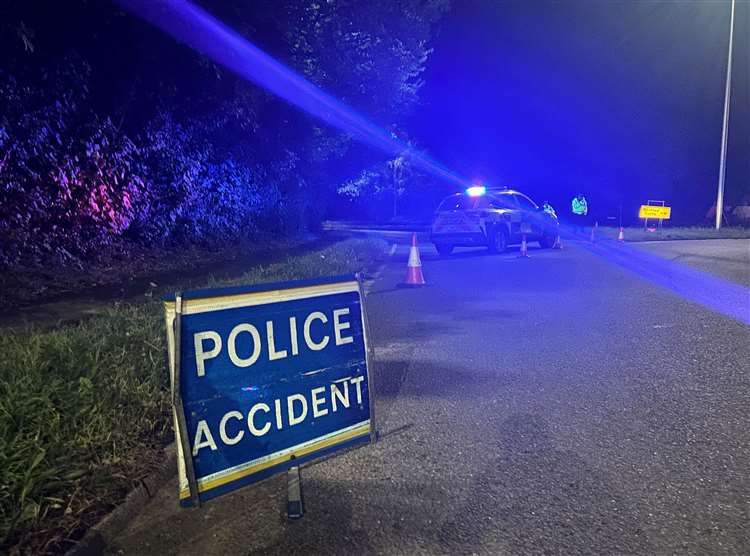
More than 1,200 lives lost each year as charity warns of growing public health crisis
ACCIDENTAL deaths in Wales have risen by 43% over the past decade, with more than 1,200 people now dying each year, prompting calls for urgent action from the next Welsh Government.
New figures released by the Royal Society for the Prevention of Accidents (RoSPA) show that Wales now has a death rate 22% higher than the UK average, with preventable harm placing increasing pressure on the NHS and disproportionately affecting poorer communities.
Falls remain the leading cause of accidental death, accounting for nearly half of all fatalities. People in Wales are around 24% more likely to die from a fall than those elsewhere in the UK.
RoSPA has warned that the situation represents a growing public health crisis, as it launches its Stronger, Safer Wales manifesto ahead of the next Senedd election.
The charity is urging ministers to treat accident prevention as a national priority, arguing that many deaths could be avoided through relatively simple and low-cost interventions.
Accidental harm is also linked to a range of other risks, including rural road collisions, accidental poisonings, machinery incidents, and dog-related injuries.
The wider impact is significant, with preventable accidents costing the NHS billions, reducing workforce participation, and deepening inequality across Wales.
RoSPA is calling for a range of measures, including improved home safety standards, compulsory water safety education in schools, and stronger road safety interventions.
Among its proposals are mandatory eyesight tests for drivers every three years, better road markings to protect motorcyclists, and tighter regulation of unsafe or counterfeit products sold online.
The charity also wants to see national home safety programmes introduced to support vulnerable households, along with clearer responsibilities for local authorities in managing water safety risks.
Becky Hickman, Chief Executive of RoSPA, said the figures should act as a wake-up call for policymakers.
She said: “Wales is facing a clear and escalating crisis of accidental deaths, and the evidence shows the situation is worsening year on year.
“Behind every statistic is a life that could have been saved with practical, proven interventions.
“We are calling on the next Welsh Government to make accident prevention a national priority, because coordinated action will save lives, reduce inequalities and relieve pressure on the NHS.”
She added: “Accidents are not inevitable. With strong leadership and consistent standards across Wales, we can significantly reduce preventable harm.”
RoSPA says tackling the issue will require coordinated action across government, emergency services, local authorities and industry, but insists that the solutions are both achievable and cost-effective.
The charity’s manifesto is intended to shape future policy in Wales, with a focus on reducing avoidable deaths while easing pressure on overstretched public services.
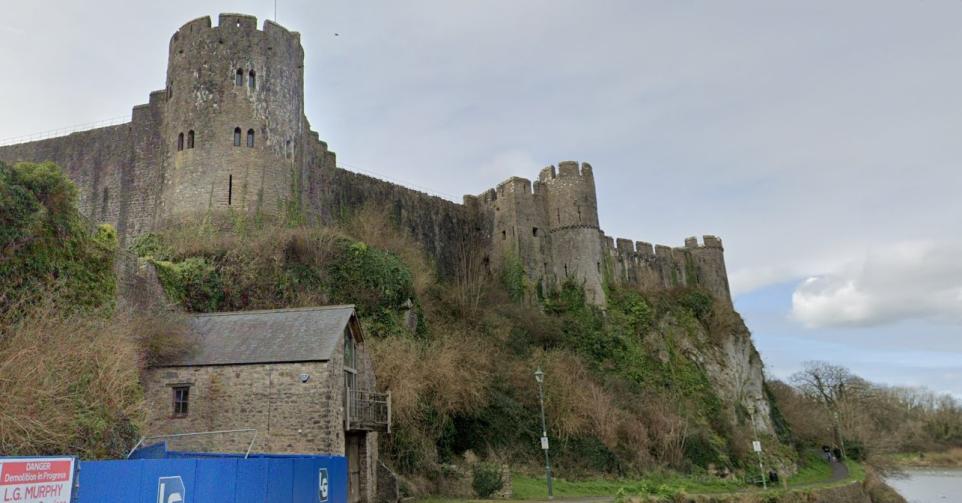
A PADDLEBOARDING and canoeing company’s call for an extension to a boat shed at Pembroke’s South Quay, below its historic castle, has been submitted to county planners.
In an application to Pembrokeshire County Council, G Booth of Paddle West CIC, through agent James Dwyer Associates, seeks permission for an extension to the stone-built boathouse, adjacent to the cliff on South Quay fronting the Mill Pond, Pembroke.
A supporting statement says: “It is intended to erect a single storey ‘lean-to’ building, or ‘shed’ for the storage of boats, such as canoes and kayaks, and related equipment, on a vacant space adjacent to the existing stone-built boathouse.”
It adds: “The boathouse and the intended adjacent boat storage shed is located, as is to be expected, in close proximity to water, the Mill Pond. The Mill Pond is the main area of activity for Paddle West, a Community Interest Company, providing boating activities, kayaking, canoeing and paddle boarding, frequently for young people and families.”
It goes on to say: “It is intended that the structure would be lightweight, erected on the exiting hard standing. The ‘shed’ would be used for the storage of boats and related equipment.”
With regard to the historic setting, it adds: “Although the stone-built boathouse appears not to be listed, it is recognised that the walls above are listed and together they are a piece.
“Accordingly, through form and external materials proposed, timber cladding and profile sheet roofing, the aim is to ensure that the structure would be subservient and muted and not detract or compete with the visual aesthetic of the boathouse or historic walls. In effect the addition would blend into the background.”
The application will be considered by county planners at a later date.
The boathouse is sited near to the new Henry Tudor Centre in South Quay, which is due to open in Spring 2027.

The centre, expected to receive around 30,000 visitors a year, will tell the story of Henry Tudor, son of Pembroke, his Welsh ancestry and his impact on our national story, Welsh culture and our wider British heritage.
The restored derelict South Quay buildings will also house a new library and community café, and a healthcare, social services and supported employment facility in the adjoining premises.
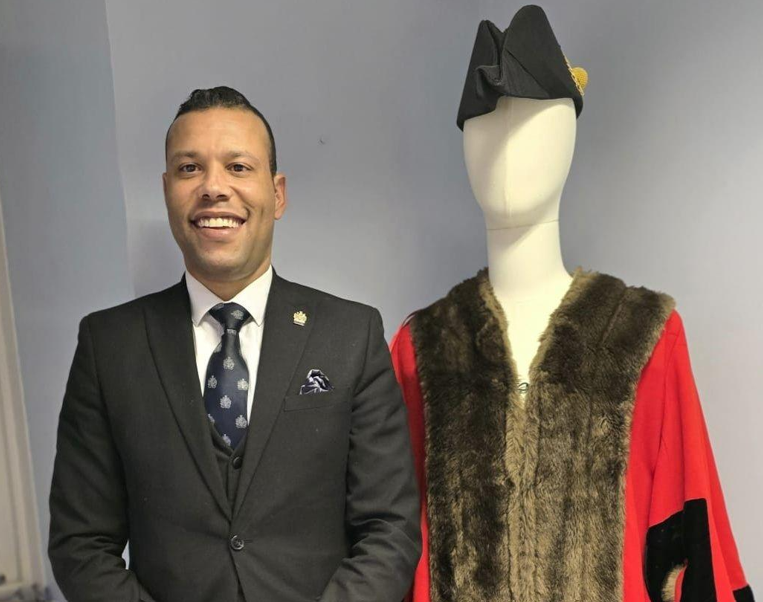
A PEMBROKESHIRE town council will soon have its first-ever person of colour as mayor, and its youngest mayor in a century.
Haverfordwest Town Councillor Randell Iziah Thomas-Turner, aged 37, is to become mayor this May.
Cllr Turner said: “Tonight [March 19], I had the honour of accepting the nomination as mayor-elect — a moment that will forever stay with me.
“In doing so, I am humbled to be making history as the first mayor of colour in Haverfordwest and the youngest mayor in a century. This is not just my achievement, it belongs to every person who believes in progress, representation, and the power of community. This is a new chapter for our town — one built on unity, opportunity, and hope.
“My mayor-making will take place this May, and I cannot wait to officially step into the role and begin serving the people of Haverfordwest with pride, passion, and purpose. Haverfordwest is the best in the West — and together, we are just getting started.
“Diversity is not a challenge to overcome, but a strength to embrace. When people from different backgrounds, experiences, and perspectives come together with respect and openness, we unlock new ideas, stronger solutions, and deeper understanding.”
It’s a double celebration for the Thomas-Turner family.
Wife, and fellow town councillor, Dani, has been voted as sheriff of the town for the second-year-running, the first woman to serve as sheriff for two consecutive years.
“The coming civic year will be one to watch as my husband Councillor Randell Izaiah Thomas-Turner is becoming the first mayor of colour in Haverfordwest’s history,” said Cllr Dani Thomas-Turner, adding: “It’s going to be a year of history and memory making for sure.”




Entertainment4 hours ago
Tenby steams up in spectacular style as crowds flock to festival
Colourful parade, towering creations and Victorian flair bring town centre to life TENBY was transformed into a vibrant Victorian fantasy...

Crime1 day ago
Publican jailed for six years for supplying cocaine and cannabis
Milford Haven man sentenced at Swansea Crown Court following drug dealing operation A MILFORD HAVEN publican has been jailed for...

Local Government1 day ago
Poverty summit highlights support efforts across Pembrokeshire
A SUMMIT bringing together key organisations from across Pembrokeshire has highlighted both the scale of local poverty and the work...

Education2 days ago
Milford Haven school plans unveiled but funding not yet secured
PLANS for a new £100 million school in Milford Haven have been unveiled, but the project has not yet secured...


News2 days ago
Council unveils plans for new state-of-the-art secondary school in Milford Haven
PEMBROKESHIRE COUNTY COUNCIL has revealed plans for a new state-of-the-art school in Milford Haven, promising modern, inspiring learning spaces for...

Health2 days ago
NHS waiting list falls — but cancer delays and diagnostic backlog worsen
Record progress claimed by Welsh Government as critics warn key targets are still being missed THE NHS in Wales has...


Crime3 days ago
Rapist jailed after ‘abhorrent’ attacks on woman and children
Haverfordwest man told police “women won’t have sex without force” A HAVERFORDWEST man who raped a woman and a young...


News3 days ago
Reform secures first Pembrokeshire councillor in Hakin by-election win
Late Reform candidate takes seat as independent surge and Labour withdrawal shape contest REFORM UK candidate Scott Thorley has won...


News4 days ago
Scott Thorley elected as Pembrokeshire’s first Reform councillor
REFORM UK candidate Scott Thorley has won the Hakin by-election after securing 179 votes. The full result is as follows:...


News4 days ago
Police confirm man has died after being recovered from River Cleddau
Major emergency response in town centre after concerns raised for man in water A MAN has died after being recovered...
-
 News6 days ago
Fishguard linked to allegations in Many Tears Animal Rescue investigation
-

 News4 days ago
Emergency services flood Haverfordwest after reports of person in river
-

 Crime3 days ago
Mother given community order after admitting child cruelty offence
-
Health2 days ago
NHS waiting list falls — but cancer delays and diagnostic backlog worsen
-

 Crime6 days ago
Man cleared of sexual assault allegation after magistrates rule no case to answer
-
 News4 days ago
Senedd votes to ban Greyhound racing in Wales to protect animal welfare
-

 News4 days ago
Senedd vote to ban greyhound racing hailed as ‘landmark moment’ by charities
-

 international news6 days ago
UK considers military options as pressure grows to secure Strait of Hormuz