


News
Simon Hart among MPs who got money from Pandora Papers company


- Simon Hart among MPs who got money from Pandora Papers company
- Alleged dirty money funding Conservative Party
- Sources of donors’ unexplained wealth are revealed
A LOCAL MP is one of 34 Conservative MPs who received financial support from a company named in the Pandora Papers as connected to a web of international fraud and tax dodging.
Simon Hart, MP for Carmarthen West and South Pembrokeshire and the Secretary of State for Wales, disclosed contributions from Aquind Ltd and an individual associated with Aquind, Alexander Temeko, in his register of interests.
In the twelve months before 2019’s General Election, Mr Hart declared he received a total of almost £25,000 from Aquind Ltd and its public face in the UK, Mr Temerko.
Although there is no wrongdoing alleged on Mr Hart’s part, we asked for his personal views on whether the current rules governing donations to political parties were robust enough.
He did not reply.
However, the Pandora Papers’ publication highlights the seamier side of some Soviet-born emigres who’ve supported the Conservatives.
A PIPELINE OF CASH
Aquind has donated more than £365,000 to the Conservative Party in recent years, despite never generating a penny in turnover.

Its former parent company donated almost £500,000 to the Conservative Party between 2012 and 2015.
Mr Termerko is alleged to have made further personal donations totalling around £700,000 to the Conservatives.
Aquind is behind a cross-channel energy and fibre optic infrastructure project valued at £1.24bn.
The Pandora Papers reveal that Aquind’s ultimate owner is Viktor Fedotov.
Both Mr Fedotov and Mr Temerko were closely linked to the former Russian Government under Boris Yeltsin, now widely acknowledged as institutionally and fundamentally corrupt.
Mr Temerko was a member of the defence ministry under former Russian premier Boris Yeltsin dealing with armaments. He later became Vice-President of the Russian oil giant Yukos.
Mr Fedotov is named in the Pandora Papers among individuals who allegedly made their fortunes through a massive contract fraud against the Russian state oil pipeline monopoly Transneft.

One claim puts the total involved in the alleged fraud as US$4bn.
The term ‘kleptocracy’ is often applied to how those linked with Yeltsin’s government managed to enrich themselves at the public expense.
Mr Temerko and Mr Fedotov strongly deny any allegations levelled against them about any involvement in alleged wrongdoing that might be connected to the source of their prodigious personal wealth.
THE BANKER’S MILLIONS
A further prominent Russian-born Conservative donor, Lubov Chernukhin, has donated around £1.8m to the Conservatives. Her husband, Vladimir, is a former finance minister in Vladimir Putin’s government and former head of the Russian National Bank.

Allegations, denied by Mr Chernukhin, claim he massively enriched himself by exploiting his position and links to power.
The Chernukhins have built up a significant property portfolio in the UK using a network of offshore trusts and opaque corporate structures that provided no clue about their fortunes’ origins until the Pandora Papers’ publication.
The stench of back-scratching cronyism surrounding Westminster’s handling of procurement processes during the pandemic – something the UK’s courts are examining in detail – adds to the pervading sense that there’s something rotten at the heart of British politics.
Whether as the beneficiaries of money allegedly obtained through massive corruption, the Conservatives want to address that situation is another matter altogether.
Although the Party has brushed aside concerns about the size of the donations it’s received from those allegedly connected to graft and corruption elsewhere, the Prime Minister’s blasé observation that the last Labour Government brought in the current rules (there hasn’t been a Labour Government for over eleven years, Prime Minister), does little to reassure.
As long as the gravy train runs, Mr Johnson seems eager to continue to feed on it.

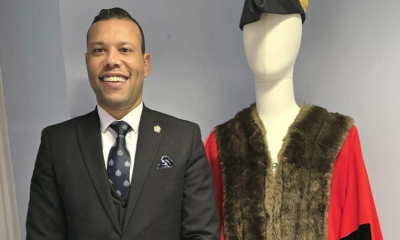









Defendant admitted using Xbox without informing police as required under court order
ANTHONY COOMBES, aged 26, of Sand Banks, Broad Haven, appeared before Llanelli Magistrates’ Court on Thursday (Mar 20) charged with breaching a sexual harm prevention order.
The court heard that between February 26 and March 19, 2026, at Haverfordwest, Coombes repeatedly breached the order by using an Xbox device without informing police within three days, as required.
The offences relate to a sexual harm prevention order imposed at Swansea Crown Court on October 20, 2021.
Coombes indicated guilty pleas to the offences at the first hearing.
Magistrates committed the case to Swansea Crown Court for sentence.

He was remanded in custody ahead of the next hearing, which is due to take place at 9:00am on Friday, April 3, at Swansea Crown Court.
The court refused bail on the grounds that he was likely to offend, citing the nature and seriousness of the offences and his previous record and character.
A pre-sentence report was ordered.


Police say death not suspicious as 46-year-old arrested over alleged Class A drug supply
A MAN has died following a medical emergency at a property in Haverfordwest, police have confirmed.
Emergency services were called at 3:18pm on Wednesday (March 18) after a report of a medical incident.
A man was pronounced dead at the scene.
Dyfed-Powys Police said the man’s next of kin have been informed and are being supported by officers.
The death is not being treated as suspicious at this time.
However, police confirmed that a man, aged 46, was arrested on suspicion of being concerned in the supply of Class A drugs.
He has since been released under investigation while enquiries continue.
No further details about the deceased have been formally released.

FOUR people from Mynyddygarreg, Kidwelly, have been ordered to pay more than £129,000 following a successful prosecution for illegal dog breeding.
At Swansea Crown Court on Tuesday (Mar 10), before His Honour Judge Thomas KC, Stacey May June Edwards, Peter John Edwards, Sian Eleri Thomas and David Malcolm James Thomas, all of Sea Breeze, Mynyddygarreg, pleaded guilty to offences under the Breeding of Dogs (Wales) Regulations 2014.
The court imposed confiscation orders totalling £129,873.41 under the Proceeds of Crime Act across the four defendants. They were also ordered to pay £8,000 in costs, while each defendant received a £2,000 fine.
The investigation began in April 2021 after Carmarthenshire County Council’s Animal Health team received an enquiry from Peter Edwards about obtaining a dog breeding licence. Although licensing guidance was provided and a partial application was submitted in February 2022, this was later withdrawn.
In March 2024, the council received a complaint that puppies were being advertised for sale without the required licence. Officers subsequently contacted online advertising platforms and issued data requests to assess the scale of activity.
Analysis of records from Pets4Homes, Freeads and Gumtree revealed multiple litters being advertised by members of the same household.
Correspondence under the Police and Criminal Evidence Act confirmed that up to 25 dogs were kept at the property, including between 16 and 19 breeding females.
While some defendants claimed joint ownership of the dogs, others attempted to minimise their involvement.
The Herald understands that numerous puppy advertisements were posted between July 2020 and April 2025, demonstrating a sustained pattern of unlicensed breeding.

Carmarthenshire County Council’s Cabinet Member for Climate Change, Decarbonisation and Sustainability, Cllr Aled Vaughan Owen, said: “This case demonstrates the council’s firm stance against unlicensed and illegal dog breeding.
“These regulations are in place to protect animal welfare and ensure that breeding activities are subject to proper oversight. The scale of activity uncovered at this property was entirely unacceptable, and we welcome the court’s decision to issue significant confiscation orders under POCA.”
He added: “We urge anyone with concerns about illegal dog breeding to report it. Our Animal Health officers will continue to investigate thoroughly and take action against those who disregard the law.”

Residents are reminded that anyone breeding and selling dogs must comply with licensing regulations designed to protect both animal welfare and consumers.


Crime16 hours ago
Publican jailed for six years for supplying cocaine and cannabis
Milford Haven man sentenced at Swansea Crown Court following drug dealing operation A MILFORD HAVEN publican has been jailed for...

Local Government18 hours ago
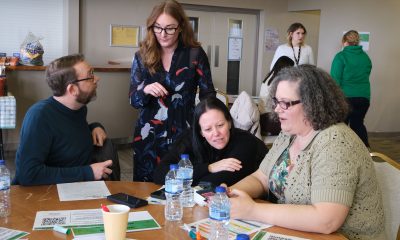
Poverty summit highlights support efforts across Pembrokeshire
A SUMMIT bringing together key organisations from across Pembrokeshire has highlighted both the scale of local poverty and the work...


Education2 days ago
Milford Haven school plans unveiled but funding not yet secured
PLANS for a new £100 million school in Milford Haven have been unveiled, but the project has not yet secured...


News2 days ago
Council unveils plans for new state-of-the-art secondary school in Milford Haven
PEMBROKESHIRE COUNTY COUNCIL has revealed plans for a new state-of-the-art school in Milford Haven, promising modern, inspiring learning spaces for...


Health2 days ago
NHS waiting list falls — but cancer delays and diagnostic backlog worsen
Record progress claimed by Welsh Government as critics warn key targets are still being missed THE NHS in Wales has...


Crime3 days ago
Rapist jailed after ‘abhorrent’ attacks on woman and children
Haverfordwest man told police “women won’t have sex without force” A HAVERFORDWEST man who raped a woman and a young...


News3 days ago
Reform secures first Pembrokeshire councillor in Hakin by-election win
Late Reform candidate takes seat as independent surge and Labour withdrawal shape contest REFORM UK candidate Scott Thorley has won...


News3 days ago
Scott Thorley elected as Pembrokeshire’s first Reform councillor
REFORM UK candidate Scott Thorley has won the Hakin by-election after securing 179 votes. The full result is as follows:...


News4 days ago
Police confirm man has died after being recovered from River Cleddau
Major emergency response in town centre after concerns raised for man in water A MAN has died after being recovered...

Community4 days ago
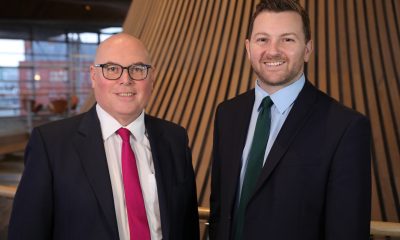
Davies and Kurtz urge groups to seek employability funding
Community organisations in Pembrokeshire encouraged to apply for new grants supporting skills and job access LOCAL Senedd Members Samuel Kurtz...
-

 News7 days ago
Rayner and Lammy visit Wales to discuss justice and community safety
-

 News6 days ago
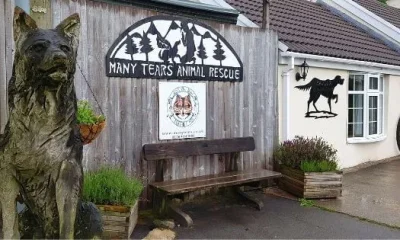
Fishguard linked to allegations in Many Tears Animal Rescue investigation
-

 News4 days ago
Emergency services flood Haverfordwest after reports of person in river
-
 Local Government7 days ago
Investigation confirmed after inspectors visit Many Tears Animal Rescue
-

 Crime3 days ago
Mother given community order after admitting child cruelty offence
-

 News3 days ago
Senedd vote to ban greyhound racing hailed as ‘landmark moment’ by charities
-

 Business7 days ago
Oil firm praised for putting customers first during price surge
-

 Community7 days ago
Town hall takeover plan questioned as cost figures conflict