


Farming
Need for more safety checks says risk expert, after rise in Welsh farm fatalities

A RISK management expert is urging the country’s farmers to improve their health and safety standards after official figures revealed a rise in the number of agricultural work-related fatal injuries across Wales.
Latest figures from the Health and Safety Executive (HSE)1 revealed that four people in the country’s agricultural sector were killed in 2022/23 – one more than in the previous 12 months.
Alex Cormack, of Lycetts Risk Management Services, said: “It’s tragic that the number of deaths in Wales has increased.
“Some fatalities can be attributed to freak accidents, but others could be avoided by adopting a more rigorous approach to safety.”
Across Britain, there were 21 fatalities in agriculture – two fewer than last year.

Cormack said: “The drop in the number of fatalities across Great Britain is encouraging, but I would urge those who work in the industry to remain vigilant, and to avoid becoming complacent.
“Agriculture is a dangerous industry to work in, coming second only to construction in the number of annual fatalities.”
A third of all fatal injuries in agriculture were caused by people coming into contact with cattle. This was followed by being struck by an object/falling from height, contact with machinery/contact with a stationary or fixed object, and contact with a moving vehicle/being trapped by something collapsing.
Three of the deaths in Wales were of self-employed farmers.

In Llandeilo, Carmarthenshire, a 58-year-old farmer was killed when he came into contact with cattle.
And a 63-year-old farmer in Carmarthen, and a 79-year-old farmer in Machynlleth, Powys, were both killed died after being struck by an object
Cormack said: “Over the last five years, 64 per cent of all fatalities in the sector involved the self-employed. This suggests that although employers may be conscientious about health and safety measures and training for their staff, they are not giving their own personal safety enough attention.

“The ‘cost-of-business’ crisis is putting a lot of pressure on the agricultural industry, and there could be a danger that in order to make savings, or to save time, some owners may be tempted to take risks. This could leave families devastated, and businesses ruined.
“To help prevent such tragedies occurring, risk assessments should be thorough, all appropriate training should be undertaken, and safety policies should be implemented.”


Rural communities urged to stay vigilant amid sharp increases in red diesel and heating oil costs
FARMERS and rural residents across Wales are being urged to remain vigilant against fuel theft following a sharp rise in fuel and heating oil prices linked to ongoing tensions in the Middle East.
FUW Insurance Services Ltd has issued the warning after recent data showed significant increases in fuel costs. Reports suggest the price of red diesel has climbed to around 109p per litre in mid-March, up from approximately 67p in February, representing an increase of more than 60%. Heating oil prices have also risen steeply, in some cases more than doubling from around 60p per litre to £1.30.
The increases are placing additional pressure on rural households, many of which remain heavily reliant on oil. In Powys, around 55% of homes are not connected to the gas grid, while in Ceredigion the figure rises to 74%, leaving communities particularly exposed to price fluctuations.
Concerns are also growing over the potential rise in rural crime. Historically, spikes in fuel costs have been linked to increased theft, with farms often targeted due to the presence of fuel tanks and machinery. Such incidents can lead not only to financial losses but also environmental damage where tanks are tampered with or fuel is spilled.
Farmers are being advised to take practical steps to protect their property, including regularly checking fuel levels, securing tanks and pumps with appropriate locks, and installing CCTV where possible. Reporting suspicious activity promptly is also seen as key to preventing theft.
The warning also applies to other rural premises, including churches, chapels, village halls and community buildings, which often rely on heating oil and may be left unattended for long periods.
Dafydd Peredur Jones, Senior Account Executive at FUW Insurance Services Ltd, said: “Rising fuel prices are placing additional pressure on rural communities, but they also increase the risk of theft. We are urging farmers and rural residents to take proactive steps to protect their fuel supplies and remain vigilant. Simple preventative measures can make a significant difference.”
FUW Insurance Services Ltd said it will continue to support customers during the current period and encouraged anyone with concerns about their insurance cover or security arrangements to seek advice.
Research across farms reveals 69 species, including threatened birds
WELSH farmland is playing a crucial role in supporting bird populations, according to a new study which could help reverse decades of decline.
The Farming Connect-led research, carried out across fourteen farms in Wales, recorded sixty-nine different bird species – including sixteen classified as threatened on the International Union for Conservation of Nature (IUCN) red list.
Populations of farmland birds have fallen sharply in recent decades, but the findings suggest that well-managed agricultural land can still provide important habitats for a wide range of species.
The study, conducted during the April to June breeding season in 2025, used specialist recording devices to capture birdsong during the dawn chorus. Two sensors were placed on each farm across a range of habitats, including dairy, beef and sheep systems.
Recordings were analysed using artificial intelligence software, allowing researchers to identify species and assess biodiversity levels across different landscapes.
The results varied significantly between farms, with one site recording as many as forty-six species.
Farming Connect biodiversity specialist Lynfa Davies, who oversaw the project, said the presence – or absence – of certain birds can reveal how well a habitat is functioning.
She said: “If insect-feeding birds are scarce, it suggests the land is not supporting enough insects. Measures such as planting flower-rich margins or allowing wet scrub to develop can make a real difference.”
Among the threatened species identified were linnet, tree pipit, curlew, greenfinch, ring ouzel and wood warbler.

“The presence of these birds highlights the importance of farmland and the role it plays in providing valuable habitats,” she added.
Researchers also examined “trophic niches” – the roles species play within the food chain. The study identified a range of groups including insect-eaters, omnivores and top predators such as birds of prey.
The presence of these predators, known as vertivores, suggests healthy ecosystems, as they rely on a strong chain of smaller species for food.

The findings could help shape future land management across Wales, with experts suggesting wider use of monitoring technology could support biodiversity on a larger scale.
The study also points towards the potential for farmers to play a central role in reversing wildlife decline by creating and maintaining habitats that support a broader range of species.
Farmers urged to act as magnesium levels in grazing ewes fall
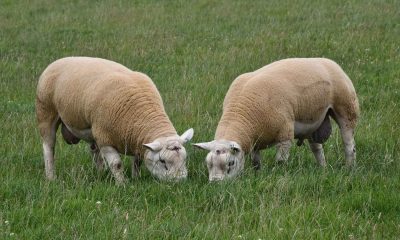
SHEEP farmers across Pembrokeshire are being warned of an increased risk of magnesium deficiency in lactating ewes this spring, following months of heavy winter rainfall.
The condition, known as grass tetany, can lead to reduced milk production and poor lamb performance if not addressed early.
Dr Alison Bond, Technical Services Manager at Rumenco, said wet conditions over the winter are likely to have depleted key minerals in grazing land.
She said: “Excessive rainfall can leach magnesium from soils, meaning levels in spring grass may be lower than usual. At the same time, fast-growing grass can dilute mineral content, increasing the risk of deficiency.”
Typical spring grazing may not provide enough magnesium to meet a ewe’s needs. A lactating ewe requires around 4g per day, but grass alone often supplies only half that amount.
Dr Bond warned that even before obvious symptoms appear, flocks may already be suffering hidden losses.
She said: “Reduced feed intake, lower milk yield, loss of condition and increased disease risk can all occur. By the time clinical signs are visible, the impact on productivity is already significant.”
Other seasonal factors, including late frosts and fertiliser use, can further limit magnesium uptake in grass.
Farmers are being advised to take preventative action by providing supplementary magnesium during high-risk periods.

Dr Bond said: “Routine supplementation is the most effective strategy. It helps prevent both sub-clinical losses and more serious cases of grass tetany.”
Magnesium can be provided through mineral blocks or buckets, which allow free access for grazing animals and require minimal labour.
With lambing season underway, farmers are being urged to monitor flocks closely and ensure nutritional needs are being met to protect both ewe health and lamb growth.




Crime6 hours ago
Police stop car in Pennar as three arrested in drugs investigation
Suspected drug driver report leads to major police response and multiple arrests DRAMATIC scenes were reported in Pennar on Monday...


Business11 hours ago
New pilot vessel Llanion arrives at Milford Haven
State-of-the-art 22-metre craft marks reset after £3.6m pilot boat controversy THE PORT OF MILFORD HAVEN has taken delivery of a...


Business1 day ago
Could Primark be coming to Haverfordwest? Major retailer in talks for former Wilko site
Council confirms advanced discussions as speculation grows over high street boost HAVERFORDWEST could soon see a major high street revival,...


Business1 day ago
Rail investment ‘could unlock 40,000 jobs and £11bn for Wales’ says new report
RAILWAY stations across Wales could help unlock around 40,000 jobs and more than £11 billion for the economy by 2036,...


Local Government1 day ago
Milford Haven set for £200m investment with schools, leisure centre and rail upgrade
Council outlines major plans for town with backing from Welsh Government MILFORD HAVEN is set for a major transformation with...

Community2 days ago
Broad Haven volunteers secure ‘national asset’ status for nature reserve
A SMALL stretch of woodland and former opencast coal mine has been transformed into a nationally recognised biodiversity site, in...


Entertainment3 days ago
Tenby steams up in spectacular style as crowds flock to festival
Colourful parade, towering creations and Victorian flair bring town centre to life TENBY was transformed into a vibrant Victorian fantasy...


Crime4 days ago
Publican jailed for six years for supplying cocaine and cannabis
Milford Haven man sentenced at Swansea Crown Court following drug dealing operation A MILFORD HAVEN publican has been jailed for...


Local Government4 days ago
Poverty summit highlights support efforts across Pembrokeshire
A SUMMIT bringing together key organisations from across Pembrokeshire has highlighted both the scale of local poverty and the work...


Education5 days ago
Milford Haven school plans unveiled but funding not yet secured
PLANS for a new £100 million school in Milford Haven have been unveiled, but the project has not yet secured...
-

 Crime6 days ago
Mother given community order after admitting child cruelty offence
-

 Health5 days ago
NHS waiting list falls — but cancer delays and diagnostic backlog worsen
-

 News7 days ago
Reform secures first Pembrokeshire councillor in Hakin by-election win
-

 Crime6 days ago
Woman stole from pharmacy despite ban, court hears
-

 Crime5 days ago
Illegal workers found at Cardigan takeaway after immigration raid
-

 Crime4 days ago
Pembroke man remanded in custody over knife threat, assault and damage allegations
-
 Crime6 days ago
Man pleads guilty in illegal ‘smokies’ food safety case
-

 Crime4 days ago
Broad Haven man remanded in custody over sexual harm prevention order breach