


News
Pembrokeshire Council Deputy Leader sets out green vision for region

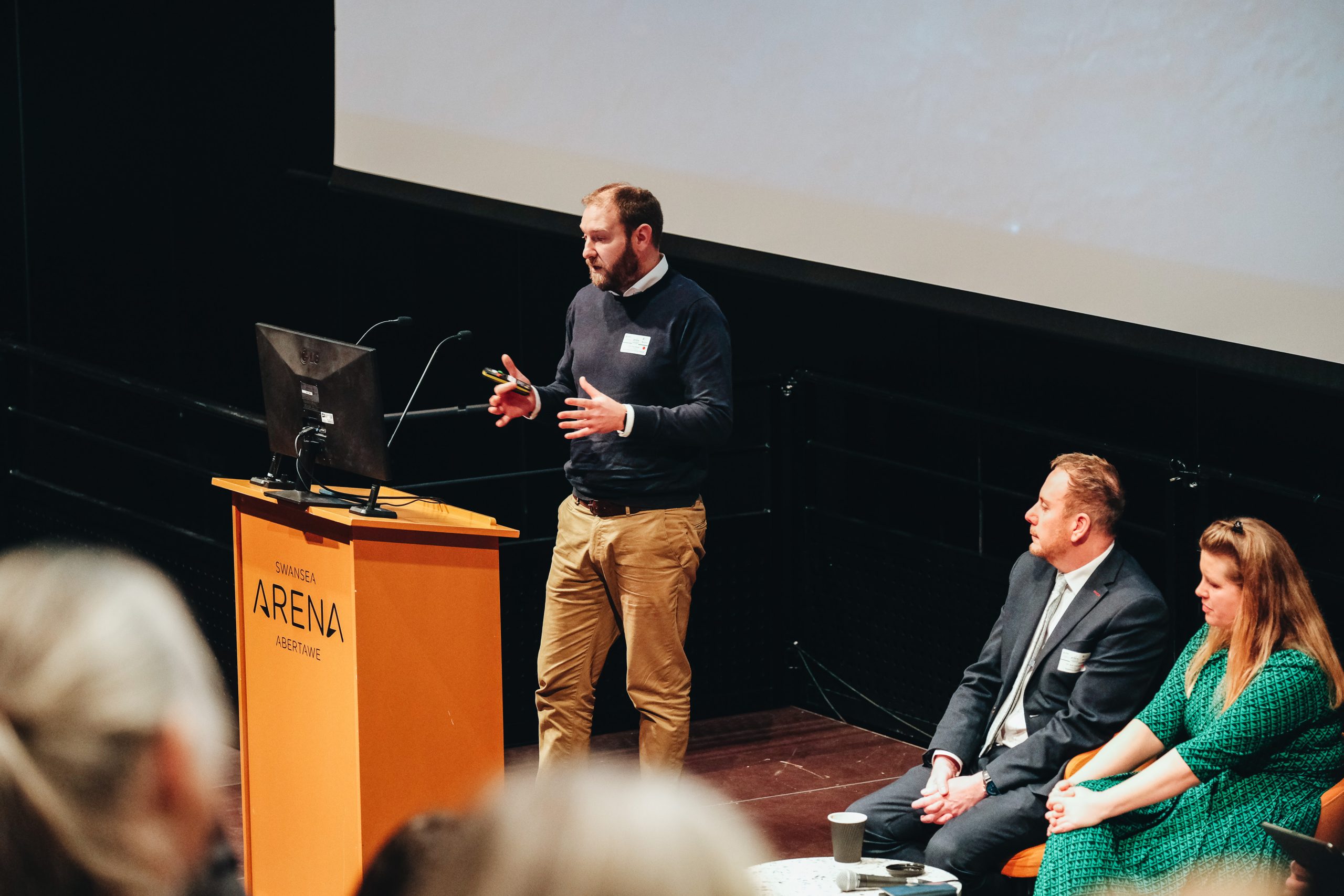
SPEAKING in the opening session at the inaugural Green Economy Conference in Swansea on Wednesday, Cllr Paul Miller, Deputy Leader and Cabinet Member for Place, the Region and Climate Change at Pembrokeshire County Council, highlighted the importance of the Milford Haven Waterway in helping to realise the vision of net zero industries in South Wales by 2040, delivering a 40% percent reduction of current Welsh CO2 emissions.
“If we get it right, it allows us to retain 130,000 jobs associated with industry in southwest Wales and unlock £30bn investment opportunities,” he said.
“The Crown Estate have set out their aspirations for floating offshore wind in the Celtic Seas, and they’re enormous. We need to get our region ready to harness the benefits of that opportunity and also to secure its delivery.

“It’s not just about floating offshore wind, it’s about what that green energy generation allows us to do onshore, and the additional opportunities that that presents. This year we are starting to talk about a potential hydrogen network across South West Wales: how can we create green hydrogen, use it to feed industry and southwest Wales, and use that as a product that decarbonises operations across the region?”
He said the possibilities spanned everything from producing green hydrogen for buses and transport as discussed by Cllr Stewart, through to examining how to use green hydrogen in industrial processes.

He added that it is important to recognise that some carbon will always be produced by our existing industries, so it is important to look to the future of carbon shipping, capture and storage as well.
“Milford Haven Energy Kingdom is allowing us to do some of that,” he said. This is a programme of work funded by UK Research and Innovation as part of their Industrial Strategy Challenge Fund, to explore the potential of zero carbon hydrogen alongside renewable electricity to meet future energy needs of buildings, power generation, and refuelling transport.
He also welcomed the major companies, including Norwegian Government owned Statkraft, which are investing in Pembrokeshire.
“Were competing globally for investment, and the fact that they’re here is a good start,” he said. “We need to create the right conditions for them to want to invest in this region ahead of some of the other opportunities that their key decision makers will be considering.”

He added that the Celtic Freeport, due to be formally designated by the Welsh and UK Governments in spring/summer 2024, will be key to this.
“It is part of that preparing our region for the opportunity and placing us to win those investment decisions,” he said.
“What it does, we hope, is create the right investment conditions, and allow us to see some of the benefits retained locally, which will then allow us to invest further in some of the infrastructure that we know is needed to support that industrial revolution.

“It’s game changing on its own, but taken together with a series of interventions working with our regional partners, it has the potential to really transform the regional economy.”
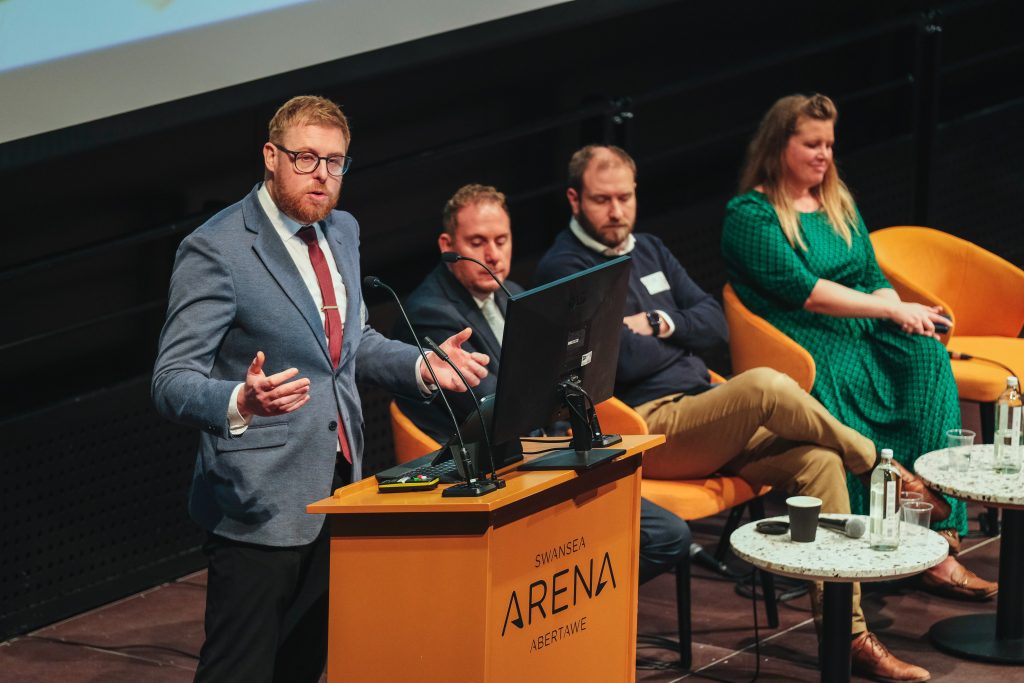
Over 1500 people attended the inaugural Green Economy Conference and Exhibition at Swansea Arena on Wednesday, which set out to strengthen communication and collaboration to build a green economy in South West Wales. Themes addressed included green jobs, greener transport, and how to decarbonise existing businesses.
The conference included a session on the circular economy in the region, which included input from the people behind several innovative businesses and initiatives including Rob Poyer of Nappicycle and Natural UK; James Dovey of Blueprint; Deborah Baldrey of Swanse University and Tata Steel; Ruth Marie Mackrodt of Wool Insulation Wales; and Gary Walpole of CEIC Wales. The discussion addressed how to make use of shared resources, creating networks to reduce, reuse and recycle materials across the region.
This was followed by a renewable energy panel discussion, featuring Abi Beck from RenewableUK Cymru, Tom Sawyer from Port of Milford Haven and Celtic Freepor, Andrew Hartson from ABP and Celtic Freeport, Kamal Rajput from Tata Steel, Joseph Kidd from Hiraeth Energy and Marine Energy Wales, and Arwyn Williams from Pembrokeshire College. The panel discussed why the Celtic Freeport will be transformational, and how to maximise the benefits of renewables projects for local communities and the regional economy.
The construction and buildings panel discussion brought together Elfed Roberts from Pobl Housing Group, Oonagh Gavigan from Neath Port Talbot Council, Darren Thomas from Morgan Sindall Construction, Paul Gwynn from Raven Delta Group, and Jane Lewis from Regional Learning and Skill to discuss innovations and sustainable approaches in the built environment.
The final session explored how to decarbonise your business, bringing together Chris Dhenin from the Development Bank of Wales, Matthew Jobes from Edmondson Electrical, Huw Watkins from BIC Innovation and Trac C, and Tanya Nash from Future Clarity to discuss how regional businesses can start (and continue) their journey of sustainability and what support and funding is available.
Following the conference, Dawn Lyle, chair of 4theRegion, which organised the event, said:
“It’s really been an honour for our small team at 4theRegion to have so many people interested in, and working in, the green economy, come together at Swansea Arena in just the way we had hoped. There have been some fantastic businesses and organisations exhibiting and from all accounts, some really great conversations and connections made.
“If we are to create a sustainable future, it’s imperative to strengthen communication and collaboration through discussions and meetings such as those which took place today. So much more can be achieved when ideas are exchanged, innovations discussed, and information shared. It’s about building an ecosystem to support our common aims.
“We intend to run this conference on an annual basis. We depend on our sponsors and exhibitors to show their support for the events that we run, and so we will go where the energy is, but our hope is to be back at Swansea Arena on Tuesday November 19 next year.”

Monkton councillor tops Pembrokeshire list as party confirms Carmarthenshire names and includes Haverfordwest councillor in unwinnable Swansea spot
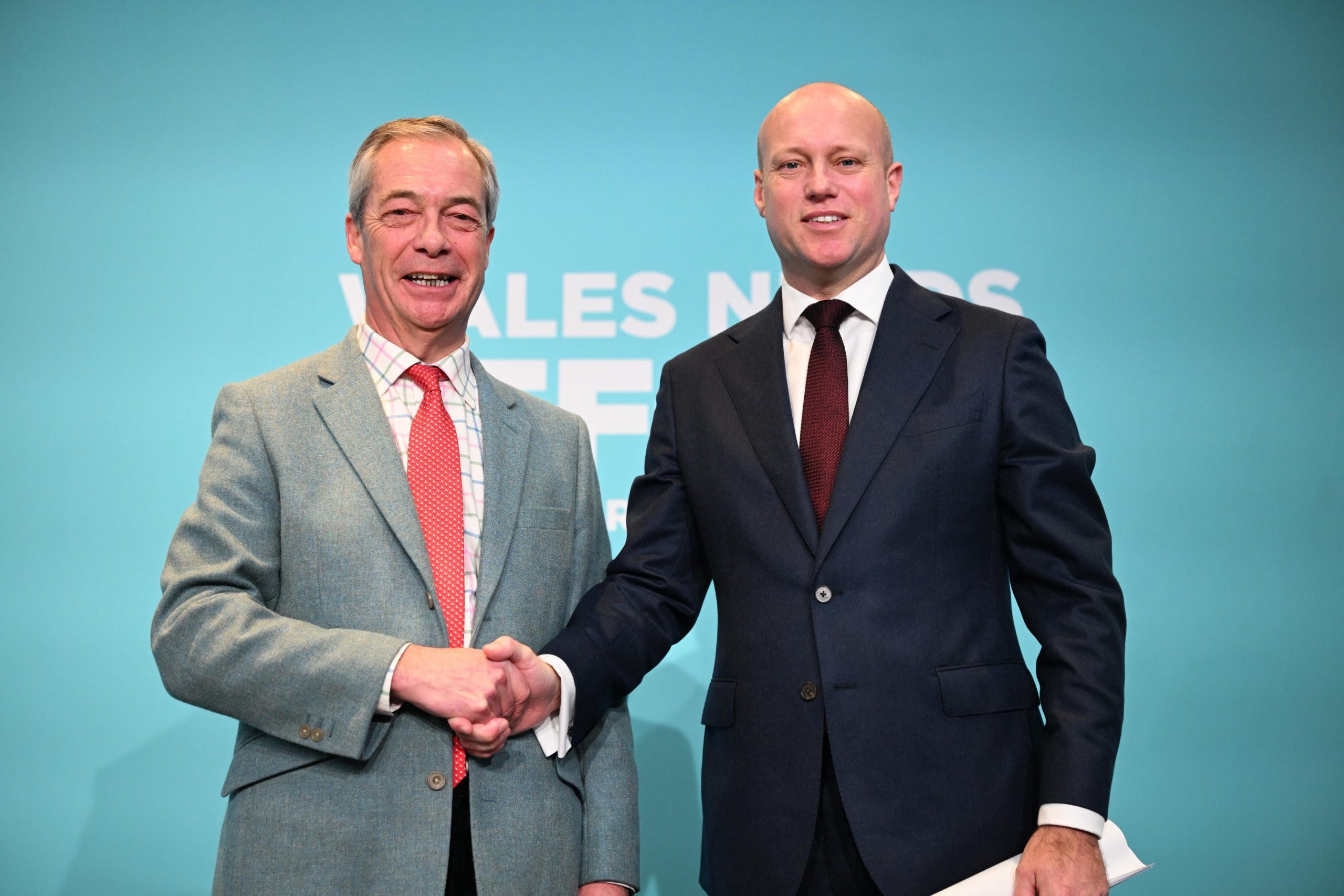
REFORM UK has unveiled its full list of candidates for the 2026 Senedd election, setting out its challenge across west Wales including Pembrokeshire and Carmarthenshire.
The party has named Susan Claire Archibald, a sitting councillor for Monkton on Pembroke Town Council, as its lead candidate for the Ceredigion Preseli, Mid and South Pembrokeshire regional list.
Speaking to The Herald, Archibald said: “I am honoured to represent Reform UK and Wales.” She added that a fuller statement outlining her priorities would be released in due course.
The remaining candidates on the Pembrokeshire regional list are Paul Marr, a former prison officer, Michael Allen, Elisa Randall, Peter John and Bernard Holton.
Carmarthenshire candidates named
Reform has also confirmed its list for the Caerfyrddin and Llanelli region, with Gareth Beer placed first, followed by Carmelo Colasanto, Sarah Edwards, Christopher Brooke, Alan Cole and Michelle Beer.
The announcement forms part of a nationwide rollout of candidates as the party seeks to establish itself as a credible electoral force ahead of the 2026 vote.
Thorley listed in Swansea region
Among the names included elsewhere is Scott Thorley, a Haverfordwest-based councillor and the first Reform representative elected to Pembrokeshire County Council.
Thorley appears on the party’s list for the Gower and Swansea West region, where he is placed sixth.
Under the Senedd’s proportional representation system, candidates placed lower on regional lists are significantly less likely to be elected, meaning his position is widely viewed as a paper candidacy to complete the slate.

Election framing
Reform Wales leader Dan Thomas said the party was offering voters a stark political choice.
He said: “After a hundred years of failure, Labour are finished in Wales. The choice at this election is what comes next — common sense and a fresh start with Reform, or independence by stealth with Plaid Cymru.”
The Herald understands that further announcements, including candidate profiles and policy details, are expected in the coming weeks as the campaign begins to take shape.


POLICE are appealing for witnesses following a serious assault in Fishguard that has left a man in hospital.
The incident happened on Main Street at around 11:00pm on Saturday (Mar 21), when the victim was reportedly punched, sustaining head injuries. He remains in hospital receiving treatment.
A 24-year-old man was arrested on suspicion of grievous bodily harm (GBH) and has since been released on bail while enquiries continue.
Dyfed-Powys Police are urging anyone who witnessed the incident, or who may have information that could assist the investigation, to come forward.
Anyone with information is asked to contact police quoting reference: 26*227686.

Information can be provided online via the Dyfed-Powys Police website, by emailing [email protected], by calling 101, or by sending a direct message on social media.
Alternatively, information can be given anonymously to Crimestoppers on 0800 555111 or via crimestoppers-uk.org.

Hourly rate to rise as costs increase
THE WELSH GOVERNMENT has confirmed an increase in the hourly rate paid to childcare providers under its Childcare Offer, following a review of funding levels.
The Minister for Children and Social Care, DAWN BOWDEN MS, announced that the rate will rise to £6.67 per hour from April 6, 2026. The increase of 4.18% comes after feedback from childcare providers and sector data gathered during 2025.
The Welsh Government said the change is designed to help providers cope with rising costs, including increases to the National Living Wage.
The Herald understands the review drew on responses from the Childcare Offer’s Annual Survey, as well as information from Care Inspectorate Wales’ Self-Assessment of Service Statement (SASS).
The move follows a policy shift announced last year to review the rate annually, rather than every three years, in a bid to make funding more responsive to pressures facing the sector.
As part of the update, the maximum charge for meals will also increase by 4.18%, which ministers say is intended to balance affordability for both providers and parents.
Dawn Boden said the Welsh Government remains committed to supporting the long-term sustainability of childcare services, adding that officials will continue working with the sector to explore further improvements.



News13 hours ago
Reform reveals west Wales candidates for Senedd battle
Monkton councillor tops Pembrokeshire list as party confirms Carmarthenshire names and includes Haverfordwest councillor in unwinnable Swansea spot REFORM UK...


Health20 hours ago
Clash over Withybush Hospital services as Paul Davies challenges First Minister
A HEATED exchange in the Senedd has laid bare growing tensions over the future of hospital services in west Wales....


Crime2 days ago
Police stop car in Pennar as three arrested in drugs investigation
Suspected drug driver report leads to major police response and multiple arrests DRAMATIC scenes were reported in Pennar on Monday...


Business2 days ago
New pilot vessel Llanion arrives at Milford Haven
State-of-the-art 22-metre craft marks reset after £3.6m pilot boat controversy THE PORT OF MILFORD HAVEN has taken delivery of a...


Community2 days ago
Sycamore Gap legacy tree to take root in Pembrokeshire landscapes
A SAPLING grown from the famous Sycamore Gap tree is set to become part of Wales’ protected landscapes — with...


Business3 days ago
Could Primark be coming to Haverfordwest? Major retailer in talks for former Wilko site
Council confirms advanced discussions as speculation grows over high street boost HAVERFORDWEST could soon see a major high street revival,...


Business3 days ago
Rail investment ‘could unlock 40,000 jobs and £11bn for Wales’ says new report
RAILWAY stations across Wales could help unlock around 40,000 jobs and more than £11 billion for the economy by 2036,...


Local Government3 days ago
Milford Haven set for £200m investment with schools, leisure centre and rail upgrade
Council outlines major plans for town with backing from Welsh Government MILFORD HAVEN is set for a major transformation with...


Community3 days ago
Broad Haven volunteers secure ‘national asset’ status for nature reserve
A SMALL stretch of woodland and former opencast coal mine has been transformed into a nationally recognised biodiversity site, in...


Entertainment5 days ago
Tenby steams up in spectacular style as crowds flock to festival
Colourful parade, towering creations and Victorian flair bring town centre to life TENBY was transformed into a vibrant Victorian fantasy...
-

 Health7 days ago
NHS waiting list falls — but cancer delays and diagnostic backlog worsen
-

 Crime6 days ago
Pembroke man remanded in custody over knife threat, assault and damage allegations
-

 Crime7 days ago
Illegal workers found at Cardigan takeaway after immigration raid
-

 Crime6 days ago
Broad Haven man remanded in custody over sexual harm prevention order breach
-

 News7 days ago
Council unveils plans for new state-of-the-art secondary school in Milford Haven
-

 Education7 days ago
Milford Haven school plans unveiled but funding not yet secured
-

 Farming7 days ago
£3 million secured to continue Welsh sheep genetics programme
-

 Crime6 days ago
Publican jailed for six years for supplying cocaine and cannabis