


News
Petition praised as Welsh Government agrees to Fingerpost junction changes


SENEDD members praised the friends of a man who died at the notorious Nash Fingerpost during a debate on Wednesday, November 22.
On Saturday, May 13, Ashley Rogers lost his life at the A477 “Fingerpost” junction while travelling towards Pembroke.
The 29-year-old from Kilgetty died at the scene, leaving behind a devastated fiancé, son and family.
His death marked the third fatality on that stretch of road within the last 12 years.
There have also been innumerable near misses on what is known locally as a “blackspot” for road traffic accidents.
One of Mr Rogers’s friends, Elliot Morrison, organised a petition to the Senedd seeking action to tackle safety. It collected over 10,300 signatures. Over 80 per cent of those signatures came from Pembrokeshire’s two Welsh parliamentary constituencies.

As a result, the Welsh Government has now agreed to carry out much-needed and long-delayed improvements to the dangerous junction.
Speaking in the Senedd, local MS Sam Kurtz said: “Sadly, this was not the first fatality at this junction. In memory of Ashley and to ensure that such a tragedy never happens again at this junction, his friend Elliott Morrison launched the petition stating, ‘Enough is enough’.
“My predecessor, Angela Burns, raised the issue of Nash Fingerpost on many occasions in this Chamber and was a strong advocate for improvements to be made. Simon Hart MP, too, has campaigned for changes to this junction for over a decade.
“Thanks must also be given to the local county councillor, Tessa Hodgson, for her support for much-needed improvements; to Yvette Weblin-Grimsley, who tirelessly campaigned, helping the petition reach 10,000 signatures; and to the wider countless other county, town and community councillors and the wider constituents, who lobbied, campaigned and petitioned on the matter and who have written to me to share their concerns.”

Sam Kurtz also praised Senedd Petitions Committee Chair Jack Sargeant, who visited the Nash Fingerpost to learn about its layout and safety issues.
Mr Sargeant told the Senedd: “Some members of the local community are afraid to use the junction in its current state because of the dangers.
On the CCTV the Welsh Government put into place, you could see large vehicles blocking roads. You could see u-turns taking place.”Mr Sargeant said that when he visited the junction with Sam Kurtz in October, he saw similarly dangerous incidents caused by the road’s layout and driver behaviour.

Plaid Regional MS Cefin Campbell reflected on alarming road traffic incident numbers across West Wales.
He said: “Last year alone, across Pembrokeshire, Dyfed-Powys Police recorded 231 accidents, with 99 people either killed or seriously injured.
“Only about half an hour away from Nash, on the A40 between Carmarthen and St Clears, 359 accidents occurred between 2010 and 2019, again resulting in deaths and life-changing injuries.”
Preseli MS Paul Davies said: “Some of you will have also seen the Motorcycle Action Group’s video, which shows just how dangerous the junction is.
“The video shows vehicles pulling out of the junction and waiting across the actual carriageway, which then forces the oncoming traffic to slow down or stop, and it also showed long queues of traffic waiting on the A4075 approach and cars in the central waiting area. Therefore, a permanent solution must be found to make the junction as safe as possible.”
Welsh Government Minister Julie James responded to the debate.
She said: “At this junction, we’ve already laid new road markings, which highlight ‘Araf’ or ‘Slow’. We’ve erected road safety signs and begun improvements to junction signage.
“We have informed local stakeholders that we’re implementing a temporary new 40 mph speed limit and a no u-turn order at this junction ahead of the permanent order process.
“Regarding the timescale for installing the traffic signals, we intend to start this financial year.
“It requires the laying of cabling induction before the main civil works. That depends on some third-party engagement with National Grid and land ownership issues, but we intend to get them in this financial year.”
On calls for a roundabout, the subject of another petition launched this month, the Minister said: “We will, of course, consider a roundabout. That will be subject to the outcome and review of the measures that have already been put in place.
“A roundabout would take a considerable amount of time to put in place – at least three years – even if the land was all within our highway boundary.”












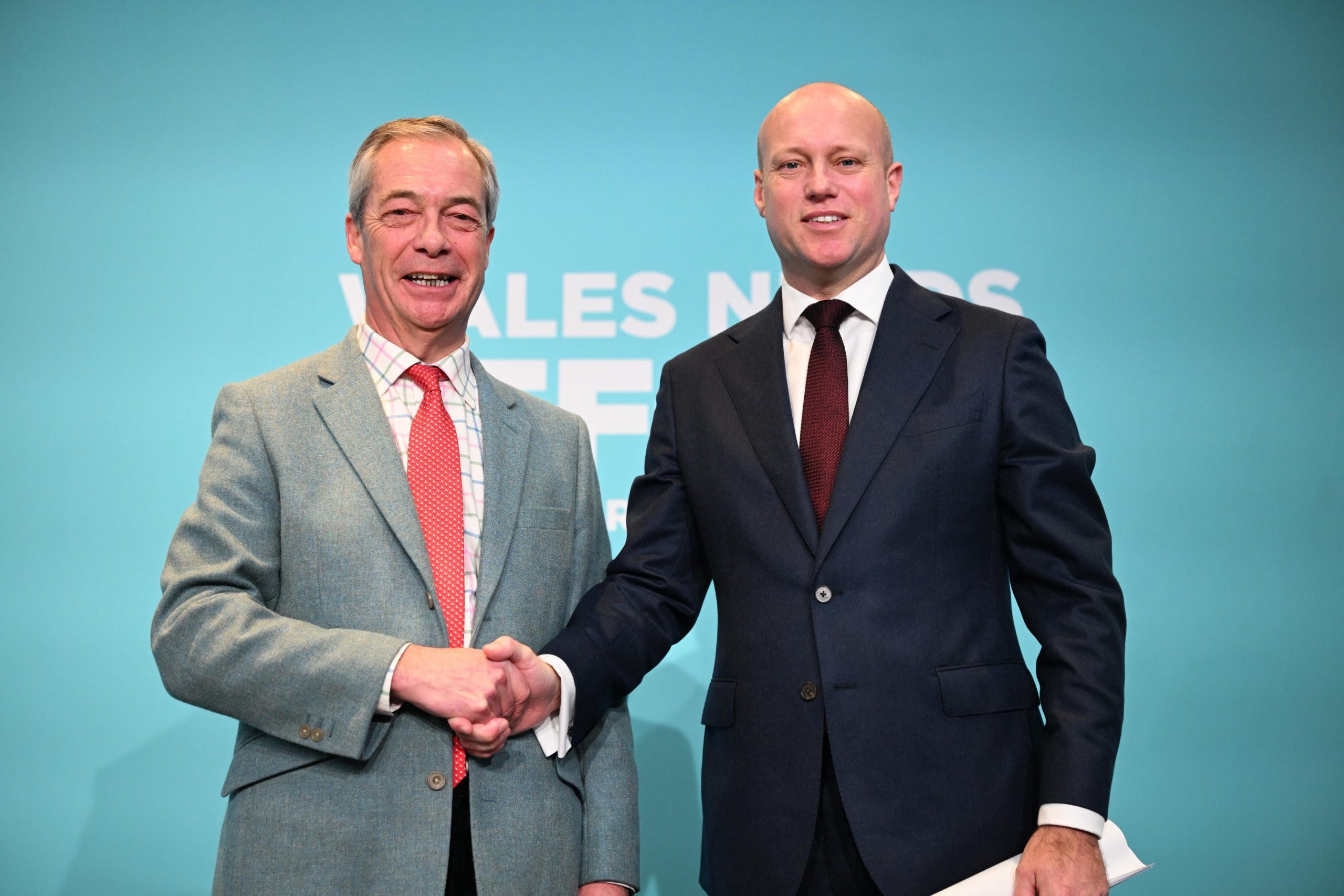
Monkton councillor tops Pembrokeshire list as party confirms Carmarthenshire names and includes Haverfordwest councillor in unwinnable Swansea spot
REFORM UK has unveiled its full list of candidates for the 2026 Senedd election, setting out its challenge across west Wales including Pembrokeshire and Carmarthenshire.
The party has named Susan Claire Archibald, a sitting councillor for Monkton on Pembroke Town Council, as its lead candidate for the Ceredigion Preseli, Mid and South Pembrokeshire regional list.
Speaking to The Herald, Archibald said: “I am honoured to represent Reform UK and Wales.” She added that a fuller statement outlining her priorities would be released in due course.
The remaining candidates on the Pembrokeshire regional list are Paul Marr, a former prison officer, Michael Allen, Elisa Randall, Peter John and Bernard Holton.
Carmarthenshire candidates named
Reform has also confirmed its list for the Caerfyrddin and Llanelli region, with Gareth Beer placed first, followed by Carmelo Colasanto, Sarah Edwards, Christopher Brooke, Alan Cole and Michelle Beer.

The announcement forms part of a nationwide rollout of candidates as the party seeks to establish itself as a credible electoral force ahead of the 2026 vote.
Thorley listed in Swansea region
Among the names included elsewhere is Scott Thorley, a Haverfordwest-based councillor and the first Reform representative elected to Pembrokeshire County Council.
Thorley appears on the party’s list for the Gower and Swansea West region, where he is placed sixth.
Under the Senedd’s proportional representation system, candidates placed lower on regional lists are significantly less likely to be elected, meaning his position is widely viewed as a paper candidacy to complete the slate.

Election framing
Reform Wales leader Dan Thomas said the party was offering voters a stark political choice.
He said: “After a hundred years of failure, Labour are finished in Wales. The choice at this election is what comes next — common sense and a fresh start with Reform, or independence by stealth with Plaid Cymru.”
The Herald understands that further announcements, including candidate profiles and policy details, are expected in the coming weeks as the campaign begins to take shape.


POLICE are appealing for witnesses following a serious assault in Fishguard that has left a man in hospital.
The incident happened on Main Street at around 11:00pm on Saturday (Mar 21), when the victim was reportedly punched, sustaining head injuries. He remains in hospital receiving treatment.
A 24-year-old man was arrested on suspicion of grievous bodily harm (GBH) and has since been released on bail while enquiries continue.
Dyfed-Powys Police are urging anyone who witnessed the incident, or who may have information that could assist the investigation, to come forward.
Anyone with information is asked to contact police quoting reference: 26*227686.
Information can be provided online via the Dyfed-Powys Police website, by emailing [email protected], by calling 101, or by sending a direct message on social media.
Alternatively, information can be given anonymously to Crimestoppers on 0800 555111 or via crimestoppers-uk.org.

Hourly rate to rise as costs increase
THE WELSH GOVERNMENT has confirmed an increase in the hourly rate paid to childcare providers under its Childcare Offer, following a review of funding levels.
The Minister for Children and Social Care, DAWN BOWDEN MS, announced that the rate will rise to £6.67 per hour from April 6, 2026. The increase of 4.18% comes after feedback from childcare providers and sector data gathered during 2025.
The Welsh Government said the change is designed to help providers cope with rising costs, including increases to the National Living Wage.
The Herald understands the review drew on responses from the Childcare Offer’s Annual Survey, as well as information from Care Inspectorate Wales’ Self-Assessment of Service Statement (SASS).
The move follows a policy shift announced last year to review the rate annually, rather than every three years, in a bid to make funding more responsive to pressures facing the sector.
As part of the update, the maximum charge for meals will also increase by 4.18%, which ministers say is intended to balance affordability for both providers and parents.
Dawn Boden said the Welsh Government remains committed to supporting the long-term sustainability of childcare services, adding that officials will continue working with the sector to explore further improvements.



News7 hours ago
Reform reveals west Wales candidates for Senedd battle
Monkton councillor tops Pembrokeshire list as party confirms Carmarthenshire names and includes Haverfordwest councillor in unwinnable Swansea spot REFORM UK...


Health14 hours ago
Clash over Withybush Hospital services as Paul Davies challenges First Minister
A HEATED exchange in the Senedd has laid bare growing tensions over the future of hospital services in west Wales....


Crime1 day ago
Police stop car in Pennar as three arrested in drugs investigation
Suspected drug driver report leads to major police response and multiple arrests DRAMATIC scenes were reported in Pennar on Monday...


Business2 days ago
New pilot vessel Llanion arrives at Milford Haven
State-of-the-art 22-metre craft marks reset after £3.6m pilot boat controversy THE PORT OF MILFORD HAVEN has taken delivery of a...


Community2 days ago
Sycamore Gap legacy tree to take root in Pembrokeshire landscapes
A SAPLING grown from the famous Sycamore Gap tree is set to become part of Wales’ protected landscapes — with...


Business2 days ago
Could Primark be coming to Haverfordwest? Major retailer in talks for former Wilko site
Council confirms advanced discussions as speculation grows over high street boost HAVERFORDWEST could soon see a major high street revival,...


Business3 days ago
Rail investment ‘could unlock 40,000 jobs and £11bn for Wales’ says new report
RAILWAY stations across Wales could help unlock around 40,000 jobs and more than £11 billion for the economy by 2036,...


Local Government3 days ago
Milford Haven set for £200m investment with schools, leisure centre and rail upgrade
Council outlines major plans for town with backing from Welsh Government MILFORD HAVEN is set for a major transformation with...


Community3 days ago
Broad Haven volunteers secure ‘national asset’ status for nature reserve
A SMALL stretch of woodland and former opencast coal mine has been transformed into a nationally recognised biodiversity site, in...


Entertainment4 days ago
Tenby steams up in spectacular style as crowds flock to festival
Colourful parade, towering creations and Victorian flair bring town centre to life TENBY was transformed into a vibrant Victorian fantasy...
-

 Health7 days ago
NHS waiting list falls — but cancer delays and diagnostic backlog worsen
-

 Crime7 days ago
Illegal workers found at Cardigan takeaway after immigration raid
-

 Crime6 days ago
Pembroke man remanded in custody over knife threat, assault and damage allegations
-

 Crime5 days ago
Broad Haven man remanded in custody over sexual harm prevention order breach
-

 Education6 days ago
Milford Haven school plans unveiled but funding not yet secured
-

 News6 days ago
Council unveils plans for new state-of-the-art secondary school in Milford Haven
-

 Community6 days ago
Former Neyland police officer Louis Knight dies aged 83
-

 Crime5 days ago
Publican jailed for six years for supplying cocaine and cannabis