


News
Farmer’s suspended jail sentence for horse cruelty

 A PEMBROKESHIRE farmer has narrowly avoided a custodial sentence after admitting cruelty to animals.
Gwilym Gilmour Thomas, 42, of Lodor Fach, Maenclochog, sat with his head bowed, as the three charges of causing unnecessary suffering under the Animal Welfare Act 2006 were read out.
Thomas pleaded guilty at the first opportunity to failing to adequately care for a Palomino Stallion, a Strawberry Roan mare and a Strawberry Roan horse.
There were emotional scenes in the court room as the defendant, from the dock, and his wife, from the public gallery, sobbed uncontrollably throughout the proceedings. His wife was comforted by a member of court staff.
Prosecutor Jon Tarrant told Haverfordwest Magistrates that this was the worst case of neglect of horses that the informing RSPCA officer, Mr. Abbott, had ever come across in all his years of experience.
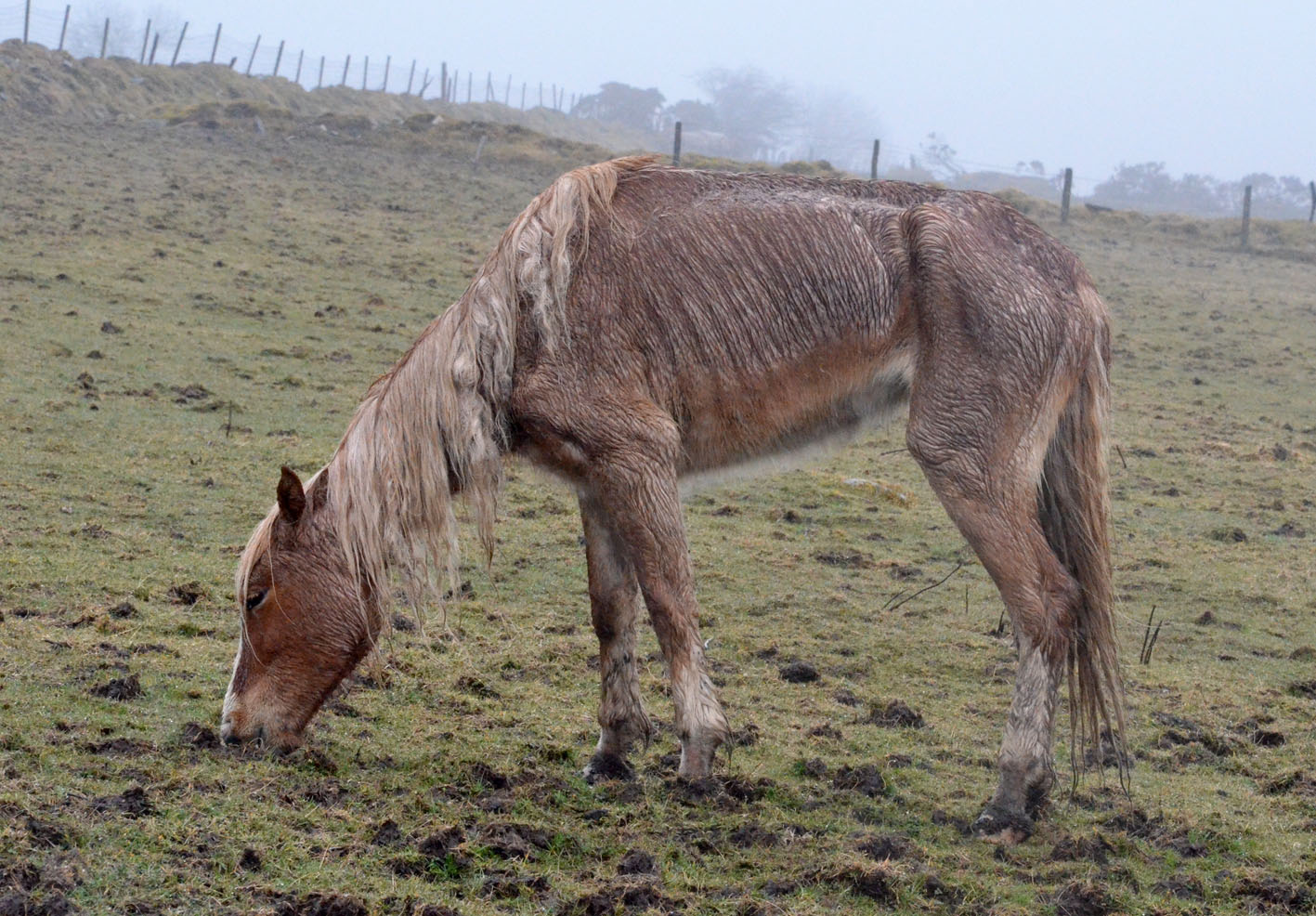
Jon Tarrant told the court: “On April 11 the RSPCA visited a parcel of land in the vicinity of Rosebush, south of the Preseli’s. An officer photographed and videoed three horses, and a pony.”
“One animal had already died, while another was close to death, and the other two were severely malnourished; being 50-60% underweight” he added.
John Tarrant continued: “The first field the officer entered was extremely bare, and there appeared to be an area where a bail of hay had been put out previously. In that field the officer saw one horse which was struggling to lift its head and looking disorientated”
“He also found an empty bath tub which had barbed wire in the bottom of it, which had previously been used for water for the animals” he said.
John Tarrant continued: “On attempts to recover the surviving animals, one of those horses tried to evade capture – but it had to stop every so often as a result of its poor condition.”
“The fourth horse, found in another field, was estimated to have died 24 to 48 hours previously.
In a recorded interview with RSPCA officers, Thomas simply said: “I’ve failed them, I can’t forgive myself – I never realised they were struggling, I failed them.”
Defence solicitor Richard Griffiths asked “whose responsibility is it in the main to look after the horses?”
Mr Thomas’ father owns the field and the horses but generally asks his son to feed the animals.
In interview, Thomas senior said: “If I had any idea they were going down, I would have done something”.
Defending, Richard Griffiths, told the court: “My client has admitted his guilt. In interviews he was extremely sorry for what had happened to the horses.
“However, whilst admitting responsibility, you will notice from the bundle that there were two people interviewed under caution,” he said.
Mr Griffiths continued: “The defendant’s father also admitted he was at fault, but because of his age and ill health, it was decided not to be in the public interest to prosecute him.”
Mr Griffiths read out extracts of the interview between the RSPCA and the defendant’s father, Thomas senior. Mr Griffiths told the court: “It seems that the defendant’s duty was to bring food to the horses on an ‘as and when’ basis, on the instructions of his father.”
“His father suffered from chest pains and was unable to walk the length of the paddocks,” he added.
“A lady, who also had horses in the paddock, had been helping as well with the care of the animals,” he said.
“Once the lady had taken her horses away Thomas senior had forgotten to inform anyone including the defendant. This is the reason why the animals became malnourished,” Mr Griffiths explained.
“Despite viewing the animals daily, Thomas senior could only do so from a distance because he was unable to walk far. It seems that the majority of the responsibility rests with someone who is not before the court, and the defendant only played a minor role,” he said.
Mr Griffiths went on to say: “In fact, the defendant is in charge of a thousand livestock and has an excellent record.
“Last winter, one of the worst on record, he did not lose a single animal. This is testament to his attention and care of the animals he is fully responsible for.
‘’My client lives in a static caravan with his wife on the farm,” he said.
“He shares the facilities of the main house, but only receives £25 per week allowance from the business, despite working up to 17-hour days,” he told the court.
The clerk of the court told the magistrates: “This is an offence where you have to impose a custodial sentence. You have to follow your guidelines, you have no option
“However, it is within your powers to suspend the sentence,” he added.
Thomas was given a one year suspended jail sentence, ordered to undertake 300 hours of unpaid work and was disqualified from keeping horses for five years. He was ordered to pay prosecution costs of £1102.60.
Speaking after the hearing Richard Abbot said “The decision to prosecute Gwilym Thomas was one which was made by a case management officer at RSPCA headquarters.”
“It is my view that he should not have been prosecuted without his father being before the court as well.”
“Animals have suffered over a long period of time. Usually in cases like this people deserve to go to prison.
I was however, worried in court that William Thomas would get a prison sentence as this is not what he deserves.”
Speaking to The Herald, John Tarrant said: “The RSPCA is stuck between a rock and a hard place. They would be criticised for prosecuting and they would have been criticised for not prosecuting this case.”
CAPTION: One of the surviving horses, two died. Some of the photos are too shocking to publish.


PHARMACIES across Wales carried out more than 600,000 clinical consultations for a wide range of common health issues over the last twelve months, according to the latest community pharmacy services statistics.
Almost 346,000 people used the Common Ailments Service, which offers free advice and treatment for twenty-seven common conditions and is available in ninety-nine per cent of pharmacies across Wales.
Figures covering April 2024 to March 2025 show that more than 462,000 Common Ailments Service consultations took place during the period – the highest number ever recorded.
The most frequent reasons people sought help from their local pharmacy included sore throats, hay fever, conjunctivitis and dermatitis.
Pharmacies also carried out more than 53,000 consultations specifically for sore throat treatment, around 33,000 consultations for contraception advice and treatment, and over 121,000 consultations to provide emergency supplies of medicines.

During those emergency consultations pharmacists issued more than 189,000 prescription-only medicines to patients who had run out of medication and were unable to obtain a new prescription in time.
In addition to these consultations, pharmacies across Wales dispensed more than eighty million prescription items over the same twelve-month period.
The Common Ailments Service allows people to receive treatment closer to home while helping free up GP appointments for patients with more complex or urgent medical needs.
Health Secretary Jeremy Miles said: “Community pharmacies play a vital role in providing healthcare across Wales.

“Nearly half a million consultations in a single year shows just how much people value being able to walk into their local pharmacy and get the help they need quickly, without having to wait for a GP appointment.
“We are working to ensure more people can receive convenient care closer to home, and expanding access to these services is a key part of that.
“The right care, in the right place, at the right time — that is what people in Wales want, and what our pharmacies are delivering.”


A NEW report has urged the Welsh Government to work more closely with voluntary organisations to ensure communities are better prepared for future emergencies.
The call comes from the Senedd’s Public Accounts and Public Administration Committee, which examined how lessons from the COVID-19 pandemic have shaped Wales’ current emergency planning.
The report highlights the crucial role played by voluntary groups during the pandemic, particularly in supporting vulnerable people and responding quickly to rising community needs.
Clair Swales, Chief Executive of the Powys Association of Voluntary Organisations (PAVO), welcomed the committee’s findings and its recommendation that government bodies strengthen collaboration with the voluntary sector and commissioning organisations.
The recommendation includes making greater use of long-term funding arrangements to support infrastructure investment and improve the sector’s ability to respond to sudden surges in demand during emergencies.
Giving evidence to the committee last November, Swales warned that continued financial pressures across the sector could weaken its ability to respond effectively in future crises.
She said: “If I was asked to bring the third sector together to respond to an emergency at this moment, I could. However, future involvement may become more challenging as the sector continues to face significant financial and capacity pressures.”
The committee’s report, published on Tuesday (Mar 11), explored how the Welsh Government and public bodies responded to the pandemic and what improvements have been made since.
It also considered findings from Module 1 of the UK COVID-19 Inquiry, which examined resilience and preparedness across the UK.

Swales said the report recognises that the work carried out by voluntary organisations during the pandemic came at a significant cost to the sector.
She added: “Evidence from a number of voluntary organisations shows the sector is facing considerable funding and resource challenges.
“We will continue to work with commissioners and the Powys third sector to maximise opportunities, represent the sector’s voice in policy and investment discussions, and ensure rural communities are considered when funding and commissioning services.”

The report has been submitted to the Welsh Government and will be debated by Members of the Senedd during a plenary session on Wednesday (Mar 18).
Powys Association of Voluntary Organisations is the County Voluntary Council for Powys and operates offices in Newtown and Llandrindod Wells.
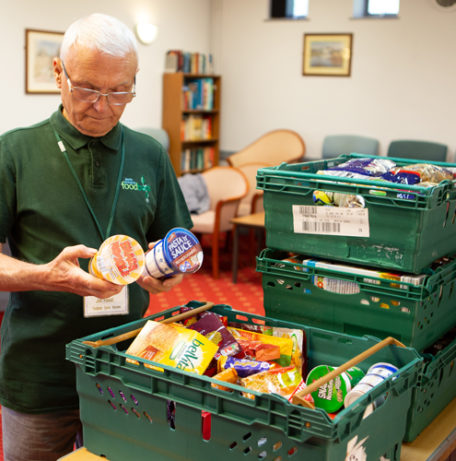
COMMUNITY food organisations and food banks across Wales are to receive an additional £1 million in emergency funding from the Welsh Government to help support families struggling with the rising cost of living.
The funding increases the Welsh Government’s total investment in emergency food aid this year to £3.44 million.
Ministers say the money will help charities and community groups buy, store and distribute food, including surplus food that might otherwise go to waste. The aim is to boost their capacity to meet increasing demand while ensuring households facing financial hardship can still access nutritious food.
The announcement comes as economic uncertainty linked to the ongoing conflict in the Middle East raises concerns that global market pressures could push up the cost of everyday essentials.
The Welsh Government says the funding forms part of wider support measures aimed at helping households cope with financial pressures. Between 2022 and 2026, ministers say more than £7 billion has been invested through a range of programmes designed to reduce household costs, maximise income and provide financial support.

Through the Claim What’s Yours campaign, which directs people to Advicelink Cymru for free and confidential advice, more than £10.5 million in unclaimed financial support has been secured for people across Wales since 2020. The service helps residents access benefits, pensions, council tax reductions and support with care costs.
The Welsh Government also provides more than £30 million each year to the Warm Homes Nest scheme, which offers free energy efficiency improvements to low-income households. Since 2022, a further £7.4 million has been allocated to the Fuel Bank Foundation to run a national fuel voucher and emergency heat fund in Wales, supporting more than 230,000 people with energy top-ups and fuel deliveries, particularly those living off the gas grid.
In addition, eligible households receiving both the Council Tax Reduction Scheme and Disabled Band Reduction are receiving a £100 winter payment through their local authority.
The Cabinet Secretary for Social Justice, Jane Hutt, said the funding was intended to help people facing ongoing financial pressures.
She said: “The cost of living continues to put pressure on many households across Wales, and the war in the Middle East may drive up prices, adding to the anxiety many people already feel about putting food on the table, paying their bills and heating their homes.
“Supporting people through these pressures is a priority for us and we are doing all we can to help those who need support. This additional £1 million will help community organisations and food banks reach more people as part of our wider work to tackle poverty.”
People seeking financial advice or support can contact Advicelink Cymru on 0800 702 2020 for free and confidential guidance.




Business21 minutes ago
Work set to begin on £50m hydrogen plant in Milford Haven
A MAJOR new hydrogen production facility worth around £50 million is expected to begin construction in Milford Haven later this...


Education1 day ago
Manorbier school closure approved while insurance claim still unresolved
Council confirms negotiations with insurer ongoing following 2022 fire PEMBROKESHIRE COUNTY COUNCIL has confirmed that negotiations with its insurer over...


Crime2 days ago
‘Knife attack’ at Spittal property leaves man in hospital
POLICE have arrested a woman following what is being described as a ‘knife attack’ at a property in Spittal on...


Community2 days ago
Pembrokeshire to receive its first banking hub in Pembroke Dock
LINK, the UK’s Cash Access and ATM network, has today announced local people and businesses in Pembroke Dock will benefit from a new banking...


Health3 days ago
Future of Withybush Hospital petition sparks urgent call for Senedd debate
CALLS have been made for an urgent debate in the Senedd over the future of services at Withybush Hospital as...


Crime4 days ago
Man jailed after threatening to chop teen’s ears off in drunken phone call
17-year-old victim said she feared for her life after a series of threats A MAN who threatened a teenage girl...


Sport4 days ago
Sean Bowen set for historic Welsh clash at Cheltenham Gold Cup
PEMBROKESHIRE jockey Sean Bowen could be part of a historic all-Welsh showdown when he lines up in the Cheltenham Gold...


Community4 days ago
Tenby still waiting as Wales hits 50 rural mobile mast upgrades
Seaside town plagued by signal congestion again absent from latest government-backed coverage improvements A NEW milestone in the UK Government’s...


Crime5 days ago
Man raped 15-year-old girl in caravan while she was on family holiday in west Wales
Jury convicts Pendine man after court hears he raped intoxicated teenager in caravan during family holiday A MAN who raped...


Community5 days ago
Crash sparks fresh questions over future of former Haverfordwest library
CONCERNS have been raised about the future of a distinctive Haverfordwest building after a car crashed into it last week,...
-

 Local Government2 days ago
Register now to vote in May’s Senedd election
-

 Health5 days ago
Women’s health services ‘expanding’ across mid and west Wales says Health Board
-
 Community6 days ago
Councillors vote to close Ysgol Clydau despite community concerns
-

 Comment6 days ago
Manorbier deserved honesty — not false hope
-

 Crime4 days ago
Former Pembrokeshire Army officer stripped of MBE after fraud conviction
-

 News7 days ago
Mother’s Day treats by the coast at Milk Wood House
-

 Cymraeg5 days ago
Commissioner’s five-year report highlights key opportunities to strengthen Welsh language
-

 Community6 days ago
Farm matriarch who built family poultry business dies aged 90