


Charity
Memories of inspirational Paul Sartori captured for generations to come

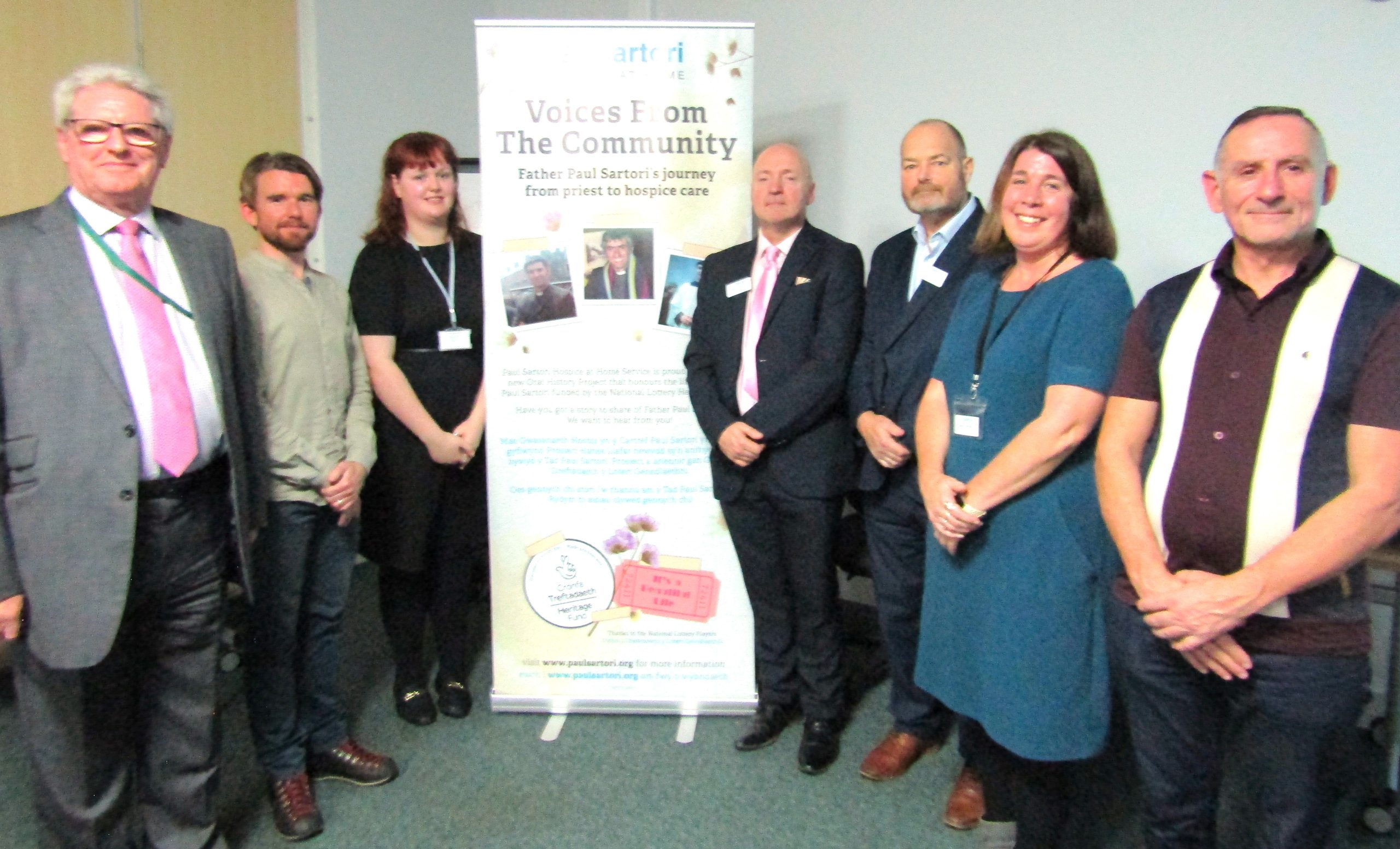
THE PAUL SARTORI HOSPICE at Home charity held a celebration at Pembrokeshire Archive following its 19-month long oral history project which captured precious memories of the man who inspired it.
The charity’s history project officer, Simon Hancock said he was thrilled to welcome staff, trustees, volunteers, interviewees and supporters on such a special occasion.
The official title of the project was ‘Voices from the Community – Father Paul Sartori’s journey from priest to hospice care’ and was the brainchild of the charity’s grant development officer Judith Williams.
Father Sartori was a Haverfordwest-based parish priest who identified a need for hospice care in Pembrokeshire but died of cancer at the age of 39 before his dream could be realised. Inspired by his vision, parishioners and friends formed the Paul Sartori Foundation 40 years ago.
Speaking to a packed room, Simon explained: “This has been an extraordinary journey of discovery over the past 19 months. It’s a matter of no small regret that we contemplate the end of the road. We were keen to identify people who had personal memories of Father Paul Sartori – this young, dynamic, charismatic Catholic priest who inspired the charity which bears his name today.
“We wanted to record those precious memories, and record them as a permanent record for future generations. These memories were so varied. Some people might have known Father Sartori from a one chance conversation, others might have been associates of him – we spoke to them for a full 45 minutes.
“This was enabled thanks to the generous funding of the Heritage Lottery Fund. I want to publicly thank them for seeing the value and virtue of this project, and for being so supportive along the way.”
Simon said the project had exceeded all expectations. “To date we’ve identified and interviewed 64 people who knew Father Sartori either as a family member, as a school friend, a parishioner, or somebody involved with one of the organisations in Haverfordwest – or in the field of social care in which Father Sartori was a compassionate and energetic activist.

“The work of the project was carried out largely by 16 gallant volunteers, including a small cohort of students at Pembrokeshire College.
“It was technically demanding, and I’d like to publicly thank Kiara Quimby, the project assistant, for carrying out a lot of this work herself and liaising with the volunteers involved in the tasks.”
Volunteers carried out interviews, transcriptions, proofreading and Welsh translation. The project aimed to be fully bilingual. The recorded interviews, along with associated material like photographs and ephemera, have been uploaded to the People’s Collection of Wales. Its website provides access to the rich history and heritage of Wales.
Simon thanked Berian Elias of the People’s Collection of Wales for providing invaluable training for the volunteers, and for attending the celebration. There were laptops and earphones available on the day so people could go onto the website and sample some of the interviews.

Simon pointed out that one day there would be nobody left who would have known Father Sartori and that thanks to ‘Voices from the Community’ “the danger of these memories disappearing into an endless void that no historian could penetrate” had been averted.
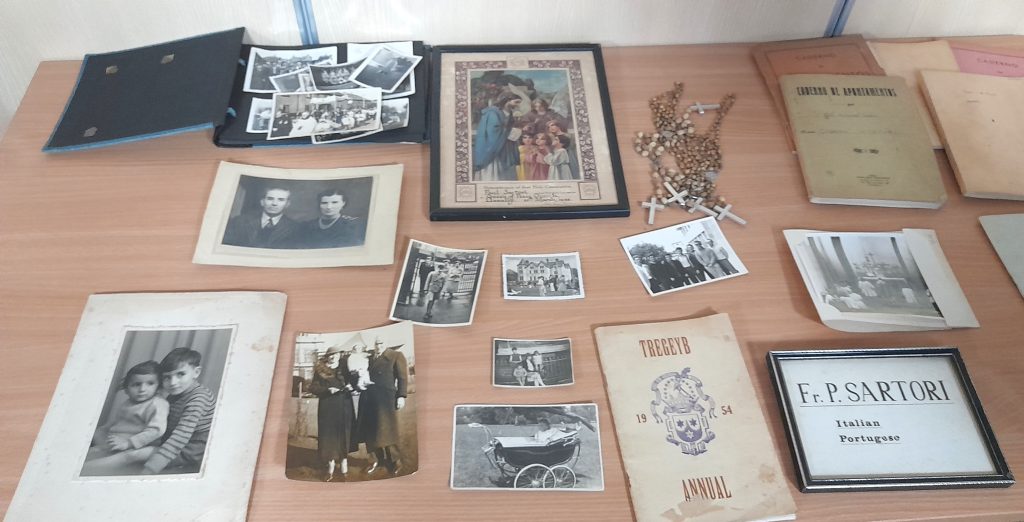
A number of Father Sartori’s personal possessions have been gifted to the charity including his Bible, photographs, study books, rosaries, trophies, membership badges, even a bottle of holy water acquired on a pilgrimage to Lourdes, and they will be on display at Haverfordwest Museum when it reopens in 2025-26.
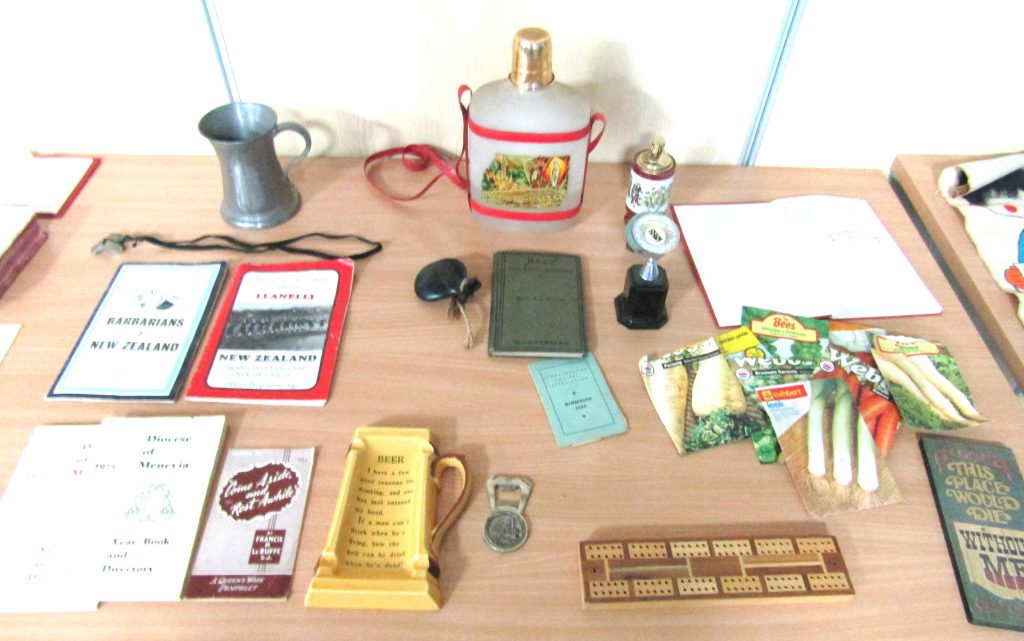
All the research and items gathered provide an initial deposit into the new ‘Paul Sartori Archive’ in Pembrokeshire Archive.

Simon said he had been involved in other oral history projects in the past and that the current one had been a model of its kind – “Great scope, great volunteers, insightful interviews which captured a range of emotions and feelings…and outcomes that will stand the test of time”.
Berian Elias told the audience: “I’d like to say a big ‘thank you’ for the invitation to come here today and it’s lovely to see so many faces celebrating the fantastic achievement of this project. It’s bitter sweet, I’m sure, seeing this project coming to an end. The achievement of the project is to safeguard and capture those memories for future generations.”
David Evans, Chair of Trustees, Paul Sartori, thanked the research team for their work, and pointed out that in an average year in which 1,600 people might pass away in Pembrokeshire, up to 400 people are likely to have received help and support from the charity.
Father Sartori died on April 16, 1980, and is buried beside his parents in his home town of Llanelli

Pembrokeshire singers raise funds for Wales Air Ambulance during 25th anniversary year
A PEMBROKESHIRE a cappella group has been praised for supporting a lifesaving service during a landmark year for the charity.
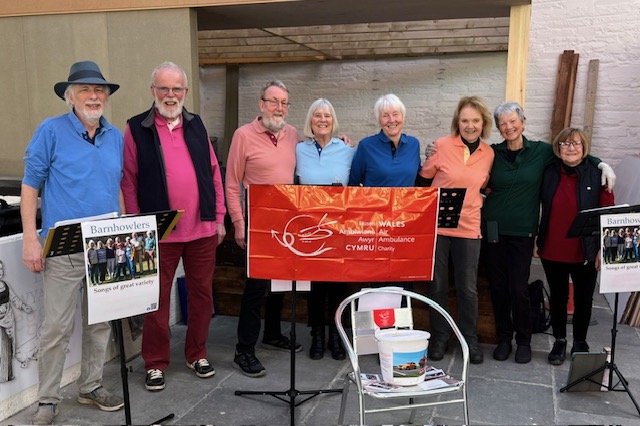
The “Barnhowlers” recently busked at Cardigan Guildhall Market, raising funds for Wales Air Ambulance as it marks its 25th anniversary.
Since its first flight on March 1, 2001, the service has carried out more than 56,000 missions across Wales, delivering critical care to patients wherever it is needed.
Pam Jones, 74, who lives near Fishguard, said the cause was close to many people’s hearts.
“Most people know someone who has needed the Wales Air Ambulance,” she said.

“I know two people who are thankfully still with us because they received critical care from the service. It makes an incredible difference to patient outcomes.”
The Wales Air Ambulance is a consultant-led service, bringing hospital-standard treatment directly to patients at the scene. If required, crews can transfer patients straight to the most appropriate hospital for their condition.
The service operates through a partnership between the public and third sectors, relying on public donations to raise the £13 million needed each year to keep helicopters in the air and rapid response vehicles on the road.
Highly skilled NHS consultants and critical care practitioners are provided by the Emergency Medical Retrieval and Transfer Service (EMRTS), enabling advanced treatments such as anaesthesia, blood transfusions and even minor operations to be carried out at the scene.

As a pan-Wales service, its crews travel the length and breadth of the country to deliver emergency care, regardless of where they are based.
Pam said the Barnhowlers take pride in performing for causes that make a real difference.
“There is nothing quite like coming together to sing some of our favourite songs, knowing that we are also making a difference,” she said.

Formed in 2011, the group began as a barbershop ensemble and has since evolved into a versatile a cappella group performing a wide range of music.
“We like to mix it up, performing songs from The Beatles and Duke Ellington to Thomas Tallis and Disney,” Pam added. “We want to entertain people, and we love it when the audience joins in.”
The group performs regularly at community events, including the Friendship Circle, gardening clubs, Parkinson’s support groups and the Fishguard Folk Festival. They have also supported local food banks and other health-related charities.
“Local nursing homes seem to like us too,” Pam said. “We bring a bit of cheer and take people down memory lane.”
Barnhowlers have several performances lined up throughout the spring and summer, including a concert in aid of the Eisteddfod in Pembrokeshire.
Wales Air Ambulance Regional Fundraising Manager Mike May thanked the group for their support.
“We are so grateful to the Barnhowlers for using the power of music to shine a light on local causes,” he said.
“They entertained the crowds at Cardigan Guildhall Market in aid of Wales Air Ambulance. Every pound raised will help save lives. Diolch yn fawr.”

THE NSPCC has called for mandatory technology to block child sexual abuse images in real time after new figures revealed more than 1,200 offences were recorded by police forces in Wales in the past year.
Data obtained by the children’s charity shows that 1,287 offences involving indecent images of children were logged by Dyfed-Powys, Gwent and North Wales Police between April 1, 2024 and March 31, 2025.
The figure represents a 3% increase on the previous year, when 1,244 offences were recorded.
Across the UK, almost 37,000 offences involving child sexual abuse images were recorded by police during the same period, according to the NSPCC.
The charity said the figures demonstrate the urgent need for technology companies to introduce stronger protections for children using smartphones and social media.
It is calling on tech firms to install systems on children’s devices that would automatically block nude images from being created, shared or viewed, stopping abuse before it happens.
If companies fail to act, the NSPCC says the UK Government should make such safeguards mandatory.
Chris Sherwood, Chief Executive of the NSPCC, said: “It is utterly indefensible that we are still seeing around 100 child sexual abuse image offences recorded every single day.
“Children across the UK are being completely failed by tech companies that should be protecting them online.

“Behind every one of these offences is a child who has been groomed, abused and manipulated. They are left to carry the trauma while tech companies continue to profit.”
The NSPCC said many of these crimes take place on social media platforms.
Of the 10,811 offences where police recorded the platform used, Snapchat accounted for the largest share at 43% of cases, followed by Instagram, WhatsApp and Facebook.

The charity warned that end-to-end encryption used by some platforms may hide the true scale of abuse, making it harder for authorities to detect crimes.
Young people contacting Childline have described the devastating consequences of images being shared online.
One teenager told counsellors he was forced to move schools after a nude image he shared was leaked and used to blackmail him.
The NSPCC said 685 Childline counselling sessions last year involved concerns about online sexual abuse or exploitation, including threats to share intimate images.
The charity is urging ministers to go further in protecting children online, arguing that stronger safeguards are needed beyond proposals such as banning children from social media.
South Wales Police did not provide complete data for the latest figures, meaning the total number of offences recorded across Wales may be higher.

STAFF at OC Davies used pedal power to cycle an incredible 453 miles as part of a fundraising event marking two major anniversaries.
The Cardigan-based dealership is celebrating 40 years as a Renault dealer in 2026, while the Wales Air Ambulance marked its 25th anniversary on St David’s Day (Mar 1).
To celebrate the milestones – and the launch of the new vehicle registration plate – the dealership held a community open day at its Cardigan site, raising £2,102 for the lifesaving charity.

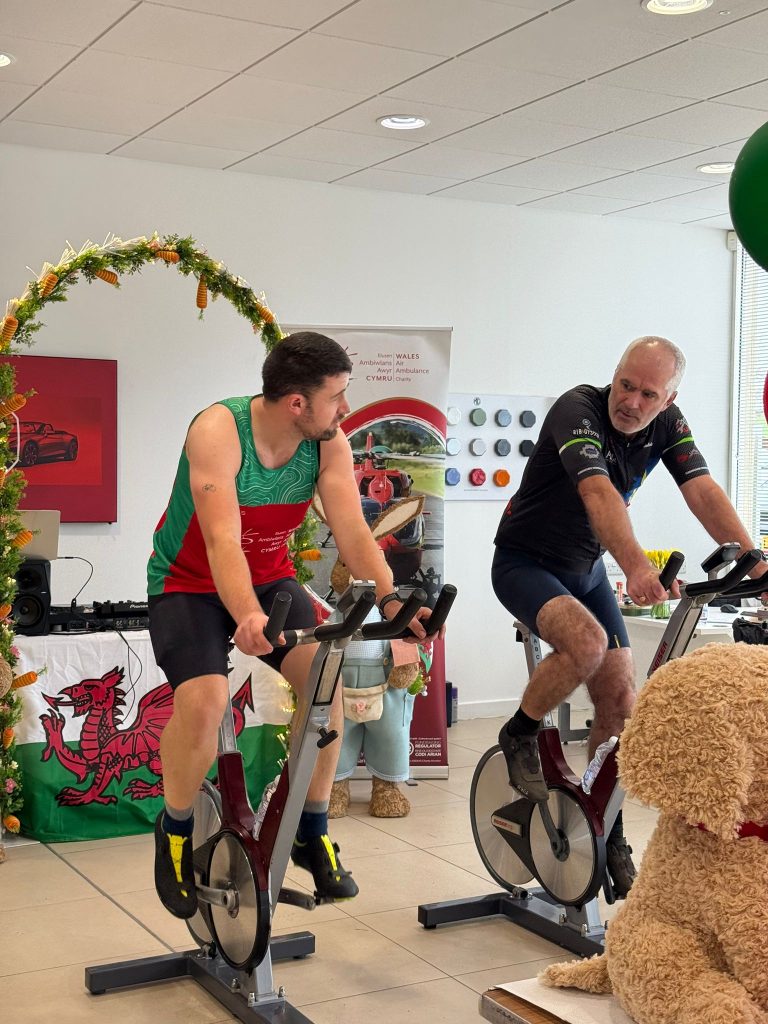
As part of the event, staff and supporters took on a spin bike challenge to cycle the equivalent of 104 miles – the distance between OC Davies’ three dealerships in Cardigan, Neyland and Carmarthen.
However, the participants far exceeded expectations.
During the 12-hour challenge, which ran from 8:00am to 8:00pm, a total of 37 people took part and collectively cycled an impressive 453 miles.
Over the years, OC Davies has now raised more than £6,600 for the Wales Air Ambulance Charity.
Nicola Lewis from OC Davies said: “We are incredibly proud to have raised £2,102. This fantastic amount exceeded all our expectations and shows just how supportive our community has been.
“The success of the event has inspired us to keep the momentum going and continue raising money for Wales Air Ambulance throughout the rest of the year.

“We currently have an Easter egg lucky dip running in the dealership and we’re also planning to raise further funds later in the summer at some outdoor events we’ll be taking part in.”
More than 200 visitors attended the open day and around 900 tickets were sold for a grand raffle.
Prizes were donated by local businesses including The Cliff Hotel & Spa, Tom Samways Butchers, U Melt Me, Tonnau, Theatr Mwldan, Folly Farm Adventure Park and Zoo, and The Queen’s Hall.

Additional prizes were also donated by the Scarlets and Swansea City FC.
Nicola added: “The open day was wonderfully supported by local businesses and members of the community, which helped make the event so special.
“We were overwhelmed by the generosity and support from businesses in Cardigan and beyond who kindly donated prizes for our grand raffle.”
The spin bikes used during the challenge were loaned by Neil Fulstow Fitness Coaching, with additional support from Clive Evans and Clive Davies.
The charity’s mascot Biggles also made an appearance during the day – even taking a turn on the DJ decks.
Emily Bell, Wales Air Ambulance’s Regional Fundraising Co-ordinator, said: “A huge congratulations to the staff at OC Davies, who smashed their original target while raising an incredible amount for our charity.
“It was a lovely open day which I was delighted to attend. OC Davies found a wonderful way to mark both anniversaries.
“Wales Air Ambulance needs to raise £13 million every year to keep our helicopters flying and our rapid response vehicles on the road. Fundraisers like this help ensure we can continue to be there for the people of Wales when they need us most.”
Wales Air Ambulance is a consultant-led service delivering hospital-standard treatment at the scene of an incident.
Through its partnership with the Emergency Medical Retrieval and Transfer Service (EMRTS), NHS consultants and critical care practitioners can provide advanced treatment including anaesthesia, blood transfusions and minor surgical procedures before transporting patients to the most appropriate hospital.
As a pan-Wales service, its crews travel across the country to deliver lifesaving emergency care wherever it is needed.
For more information visit www.ocdavies.com.


Crime1 hour ago
Publican jailed for six years for supplying cocaine and cannabis
Milford Haven man sentenced at Swansea Crown Court following drug dealing operation A MILFORD HAVEN publican has been jailed for...

Local Government4 hours ago
Poverty summit highlights support efforts across Pembrokeshire
A SUMMIT bringing together key organisations from across Pembrokeshire has highlighted both the scale of local poverty and the work...


Education1 day ago
Milford Haven school plans unveiled but funding not yet secured
PLANS for a new £100 million school in Milford Haven have been unveiled, but the project has not yet secured...


News1 day ago
Council unveils plans for new state-of-the-art secondary school in Milford Haven
PEMBROKESHIRE COUNTY COUNCIL has revealed plans for a new state-of-the-art school in Milford Haven, promising modern, inspiring learning spaces for...


Health1 day ago
NHS waiting list falls — but cancer delays and diagnostic backlog worsen
Record progress claimed by Welsh Government as critics warn key targets are still being missed THE NHS in Wales has...


Crime2 days ago
Rapist jailed after ‘abhorrent’ attacks on woman and children
Haverfordwest man told police “women won’t have sex without force” A HAVERFORDWEST man who raped a woman and a young...


News2 days ago
Reform secures first Pembrokeshire councillor in Hakin by-election win
Late Reform candidate takes seat as independent surge and Labour withdrawal shape contest REFORM UK candidate Scott Thorley has won...


News3 days ago
Scott Thorley elected as Pembrokeshire’s first Reform councillor
REFORM UK candidate Scott Thorley has won the Hakin by-election after securing 179 votes. The full result is as follows:...


News3 days ago
Police confirm man has died after being recovered from River Cleddau
Major emergency response in town centre after concerns raised for man in water A MAN has died after being recovered...


Community3 days ago
Davies and Kurtz urge groups to seek employability funding
Community organisations in Pembrokeshire encouraged to apply for new grants supporting skills and job access LOCAL Senedd Members Samuel Kurtz...
-

 News6 days ago
Rayner and Lammy visit Wales to discuss justice and community safety
-

 News5 days ago
Fishguard linked to allegations in Many Tears Animal Rescue investigation
-

 News3 days ago
Emergency services flood Haverfordwest after reports of person in river
-
 Local Government6 days ago
Investigation confirmed after inspectors visit Many Tears Animal Rescue
-

 Business7 days ago
Tesco B&Q Haverfordwest click and collect pod approved
-

 Crime2 days ago
Mother given community order after admitting child cruelty offence
-

 Community6 days ago
Town hall takeover plan questioned as cost figures conflict
-
Health1 day ago
NHS waiting list falls — but cancer delays and diagnostic backlog worsen