


News
Plans advance for introduction of automatic voter registration in Wales


PLANS to introduce automatic voter registration in Wales moved a step closer as proposed legislation cleared its first hurdle in the Senedd.
Mick Antoniw said the Elections and Elected Bodies bill is an important step in reducing the democratic deficit in Wales and developing an electoral system fit for the 21st century.
If the bill becomes law, Welsh ministers will use the new powers to pilot adding eligible voters to the electoral register without the need to submit an application.
Mr Antoniw – who is counsel general, the Welsh Government’s chief legal adviser – stressed the importance of protecting vulnerable voters through anonymous registration.
He confirmed voters would be given 45 days’ notice to opt out or request to be registered anonymously, adding that a communications campaign would accompany any rollout.

He said implementation would coincide with the removal of the current open register.
The bill would create an electoral management board to oversee elections and a new online voter information programme which may include candidate statements.
It also proposes measures to increase diversity in Senedd and council elections, including resettlement payments for councillors who are voted out by the public.
John Griffiths, who chairs the Senedd’s local government committee, called for amendments to ensure the independence of the new electoral management board.

The board would sit under the soon-to-be renamed and repurposed Local Democracy and Boundary Commission, a Welsh Government-sponsored body.
Mr Griffiths said evidence to the committee, which produced a stage-one report on the bill, overwhelmingly supported the principle of automatic registration.
Calling for more safeguards, he said: “We feel strongly that, ultimately, automatic registration should only be implemented if the safety of vulnerable electors is guaranteed.”

The Labour MS for Newport East raised concerns that people who want to register anonymously will be required to provide evidence and review their application every year.
Mr Griffiths said: “Providing such evidence could be difficult for vulnerable people as it could be a reminder of traumatic experiences.”
He warned that if the process is too onerous, people could choose to opt out.
Sam Rowlands, the Tories’ shadow local government minister, said his party would back the bill at this stage but that support could be withdrawn if concerns are not addressed.
Raising the importance of choice, he pointed out that a majority of people in Wales have opted not to take part in every Senedd election since the dawn of devolution.
Mr Rowlands highlighted concerns from the Women’s Equality Network which has warned that even a closed register could pose a danger to the survivors of domestic abuse.
The former Conwy council leader said: “There is a risk that needs to be handled with the utmost sensitivity and this needs to be a core consideration of this bill.”
He also flagged RNIB Cymru’s concerns about the removal of existing provisions that ensure polling stations enable blind and partially sighted people to vote independently.
Plaid Cymru’s Sioned Williams and Labour’s Carolyn Thomas called for more financial support to enable those with caring responsibilities to stand for election.
Adam Price argued the bill – one of a trio of election-related bills to be considered by the Senedd this year – will strengthen Wales’ democracy.
“It’s very timely as it is 25 years since the creation of this Senedd,” said the former Plaid Cymru leader. “And in a year when the highest-ever percentage of the population of the globe, 40%, will be voting in elections – that’s four billion people.”
Mr Price, who represents Carmarthen East and Dinefwr, said the automatic registration will hopefully get more people to participate in Wales’ democratic processes.
He welcomed the bill’s provisions on under-represented groups, saying: “We can’t do our work of representing the people unless all people are represented.”
The ex-MP suggested Plaid Cymru could introduce amendments to tackle other challenges to democracy such as misinformation and the abuse of women in politics.
MSs unanimously agreed to the bill’s general principles and financial resolution, dispensing with the need for a vote following the debate on February 6.
The bill now moves to stage two which will see members consider detailed amendments.


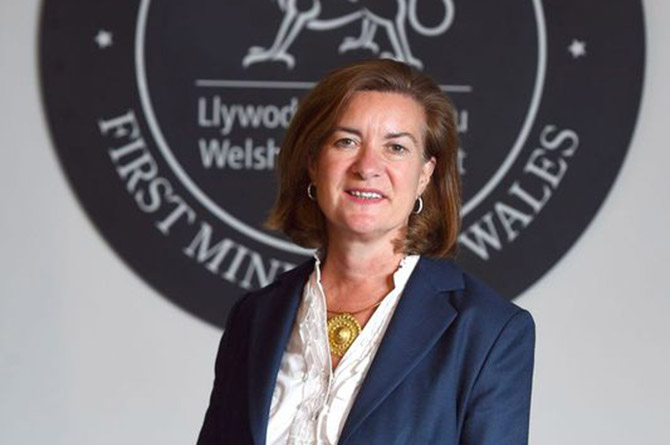
CONTROL of a £547m Local Growth Fund has been returned to the Welsh Government, with ministers setting out plans to use the money to boost the nation’s economy over the next three years.
During a visit to Ebbw Vale on Friday (Mar 20), First Minister Eluned Morgan is expected to outline details of a new Investment Plan, endorsed by both the Welsh and UK governments. The plan sets out how funding will be allocated across priority areas and within Wales’ four economic regions.
The fund will focus on three key areas: supporting productive and competitive businesses, improving skills and helping people into work, and investing in infrastructure.
Ministers say the programme is designed to empower regional decision-making while targeting areas with the greatest economic need. The aim is to increase productivity, support business growth and create better-paid jobs across Wales.
Funding will be distributed based on tailored regional plans, reflecting local strengths and opportunities, including sectors such as advanced manufacturing and clean energy.
The First Minister, Eluned Morgan said: “I’m really pleased decisions on this post-EU funding, which is so important in supporting regional and local economic growth in Wales, are being returned to the Welsh Government.
“We want to use all the levers we have to stimulate economic growth, especially in parts of Wales where economic inactivity and unemployment are higher and wages are lower.”
The Cabinet Secretary for Economy, Energy and Planning, Rebecca Evans added: “The Local Growth Fund for Wales will help create and secure jobs in key industries, providing exciting opportunities for people to develop high-quality, long-term careers.
“We will work with local government and other partners to ensure the fund is used effectively to create jobs, unlock growth and deliver for Wales.”

Secretary of State for Wales, Jo Stevens said: “This transformational funding will create jobs, boost productivity and support economic growth across all parts of Wales.
“Decisions about how funding is used in Wales are best made in Wales, and this agreement delivers our commitment to return control of post-EU funding to Wales.
“It is another example of the UK and Welsh governments working together to deliver for our communities.”

A WELL-KNOWN Welsh weather presenter was spotted in Pembrokeshire as he filmed scenes for a new series celebrating the county’s coastline.
Derek Brockway, who has been a familiar face on BBC Wales since 1995, was in St Davids recently working on another instalment of his popular walking series along the Pembrokeshire Coast.
Local resident Thomas Tudor said it was “lovely” to meet the broadcaster during filming, posing for a photograph alongside his mother, Beryl Tudor, and sister, Bethan Thomas Price.
Brockway, who is based at BBC Cymru Wales in Cardiff, is widely known not only for his weather forecasts across television, radio and online, but also for his programmes showcasing Wales’ landscapes and coastal paths.
The latest filming in St Davids is expected to form part of an upcoming series highlighting the natural beauty and walking routes of Pembrokeshire, an area long regarded as one of the jewels in Wales’ tourism crown.


A MAJOR new childcare support scheme for Armed Forces families will be rolled out across Wales from September 2026, the UK Government has announced.
The initiative is expected to save eligible families up to £6,000 per child each year, providing a significant boost to household finances amid ongoing cost-of-living pressures.
The scheme will be delivered through the Ministry of Defence’s existing Early Years childcare reimbursement system and will bring Wales in line with the level of support already available to forces families in England.

Ministers say the move is part of a wider effort to improve recruitment and retention in the Armed Forces, with childcare costs identified as a key pressure affecting morale.
The new support will cover children from nine months old until they reach three years of age in Wales and Scotland, and up to four years old in Northern Ireland.
Defence Secretary John Healey MP announced the scheme during a visit to Dreghorn Barracks in Edinburgh.
He said: “Our Armed Forces families are at the heart of our nation’s security. As the demands on defence increase, it is right that we step up our support for those who serve.
“This offer will ensure more military families get the childcare support they need, wherever they are posted.”
Secretary of State for Wales Jo Stevens added: “Service families in Wales make huge sacrifices and deserve the best possible support.

“They contribute not only to our national security but also to the Welsh economy. This scheme delivers meaningful help with the cost of childcare.”
The scheme will reimburse the difference in early years childcare costs for eligible working families. To qualify, both parents must be in employment and meet the income thresholds required for a Tax-Free Childcare account.
Hundreds of families across Wales are expected to benefit.

The announcement forms part of a broader package of support introduced since July 2024, including improved military housing, the largest Armed Forces pay rise in two decades, and plans to strengthen the Armed Forces Covenant in law.
Further details will be provided in the coming months, with families encouraged to begin considering childcare arrangements ahead of the scheme’s launch.



Community17 hours ago
Broad Haven volunteers secure ‘national asset’ status for nature reserve
A SMALL stretch of woodland and former opencast coal mine has been transformed into a nationally recognised biodiversity site, in...


Entertainment2 days ago
Tenby steams up in spectacular style as crowds flock to festival
Colourful parade, towering creations and Victorian flair bring town centre to life TENBY was transformed into a vibrant Victorian fantasy...


Crime3 days ago
Publican jailed for six years for supplying cocaine and cannabis
Milford Haven man sentenced at Swansea Crown Court following drug dealing operation A MILFORD HAVEN publican has been jailed for...

Local Government3 days ago
Poverty summit highlights support efforts across Pembrokeshire
A SUMMIT bringing together key organisations from across Pembrokeshire has highlighted both the scale of local poverty and the work...


Education4 days ago
Milford Haven school plans unveiled but funding not yet secured
PLANS for a new £100 million school in Milford Haven have been unveiled, but the project has not yet secured...


News4 days ago
Council unveils plans for new state-of-the-art secondary school in Milford Haven
PEMBROKESHIRE COUNTY COUNCIL has revealed plans for a new state-of-the-art school in Milford Haven, promising modern, inspiring learning spaces for...


Health4 days ago
NHS waiting list falls — but cancer delays and diagnostic backlog worsen
Record progress claimed by Welsh Government as critics warn key targets are still being missed THE NHS in Wales has...


Crime5 days ago
Rapist jailed after ‘abhorrent’ attacks on woman and children
Haverfordwest man told police “women won’t have sex without force” A HAVERFORDWEST man who raped a woman and a young...


News5 days ago
Reform secures first Pembrokeshire councillor in Hakin by-election win
Late Reform candidate takes seat as independent surge and Labour withdrawal shape contest REFORM UK candidate Scott Thorley has won...


News6 days ago
Scott Thorley elected as Pembrokeshire’s first Reform councillor
REFORM UK candidate Scott Thorley has won the Hakin by-election after securing 179 votes. The full result is as follows:...
-

 News6 days ago
Emergency services flood Haverfordwest after reports of person in river
-

 Crime5 days ago
Mother given community order after admitting child cruelty offence
-
Health4 days ago
NHS waiting list falls — but cancer delays and diagnostic backlog worsen
-
 News6 days ago
Senedd votes to ban Greyhound racing in Wales to protect animal welfare
-

 News6 days ago
Senedd vote to ban greyhound racing hailed as ‘landmark moment’ by charities
-
News5 days ago
Reform secures first Pembrokeshire councillor in Hakin by-election win
-

 News7 days ago
£3.8m to help Welsh families struggling with soaring heating oil costs
-

 Crime5 days ago
Woman stole from pharmacy despite ban, court hears