


Health
Two-fifths of adults’ sex lives impacted by health problems in Wales


TWO in five (40%) people aged 18 and over in Wales say their sex life has at some point been affected by illness, injury, a health condition or disability. And around one in three (32%) say health problems have affected their relationship. That’s according to a new survey by the Royal College of Occupational Therapists (RCOT). In the lead up to Valentine’s Day, the findings support expert advice on improving your sex life, intimacy and relationship from occupational therapists.
According to the poll, around one in seven (14%) adults in Wales say their or their partner’s lack of understanding of the other person’s health condition has caused problems in their relationship. And more than one in five (22%) said the impact of their or their partner’s health condition has caused relationship problems.
With around half (48%) of adults in the UK affected by long-standing health problem1, there is a clear need for more support for people with health challenges to be able to maintain healthy connections and stable relationships. For many, improving communication could help.
The poll found that almost one in three (28%) people in Wales would break up with someone if they thought the sex was bad. The top causes of problems in a relationship in Wales are: stress (23%), poor communication and financial pressures (both 22%), and not sharing chores (19%).
Lauren Walker, Professional Advisor at the Royal College of Occupational Therapists, says:

‘There’s more to a relationship than sex, and – as our survey shows – communication is absolutely key. While, for many of us, sex is an important part of a relationship, there are many other components to a stable and healthy relationship.
‘It’s surprising to see just how many adults’ relationships and sex lives have been affected by long-term illness, injury, health condition or disability in Wales. And it’s a concern that so many of these people feel their relationship is affected by a lack of understanding or simply the impact of a health problem. This is where occupational therapists come in. We work with people to address both physical and psychological challenges around sex and intimacy. We help them to overcome barriers that they’re facing in their romantic and sexual relationships.
‘Ahead of Valentine’s Day, the best place to start is by having a conversation with your partner about your relationship and your sex life. It can be difficult and uncomfortable, so make sure you’re in a relaxed environment. If you need to, ask a friend if you can role play the conversation beforehand, or practice in a mirror, so you have an idea of what you want to say.’
Occupational therapists work with people of all ages who have a wide range of conditions, helping them overcome challenges completing everyday occupations, also known tasks or activities. This can include intimacy and sex, within the context of long-term health conditions, illness, injury or disability. They work with the person as an individual, look at their environment, and may suggest equipment, lifestyle changes, stress management or communication techniques and resources to help someone improve their relationship, intimacy and sex life.

RCOT has released expert advice from occupational therapists for improving your sex life, intimacy and relationship as part of its ongoing Lift Up Your Everyday campaign. It provides examples of the type of advice an occupational therapist would give as part of a personal, realistic and practical plan for an individual. The advice is available at rcot.co.uk/relationships
To find out more about what an occupational therapist does, or to find a registered occupational therapist, visit rcot.co.uk



“HARROWING” levels of distress have become the norm for unpaid carers in Wales, a committee has heard, with charities warning of a support system “set up to fail”.
Kate Cubbage, director of Carers Trust Wales, told the Senedd’s health scrutiny committee: “There are too many carers who are reaching crisis point without any support.”
Ms Cubbage explained that most councils are supporting fewer than 500 carers, warning: “There are really, really high levels of unmet need within our communities.”
She told Senedd Members that staff are receiving trauma training to support their mental health due to the levels of distress they are seeing among carers.
Ms Cubbage pointed to a University of Birmingham study which found an increased suicide risk among unpaid carers akin to that of veterans who have seen active service.
“One in eight carers has made a plan to end their own life,” she said, calling for carers to be specifically considered in the Welsh Government’s suicide prevention strategy.
“One in ten has made an attempt… at a time when the average local authority has support plans for less than 0.5% of the caring population.”
Warning of deepening poverty in Wales, the witness expressed concerns about a 31% poverty rate among carers – “far higher” than the 22% in the wider population.
Ms Cubbage added that young carers miss more than six full school weeks each year, compared with pupils without caring responsibilities who miss nearer two weeks.

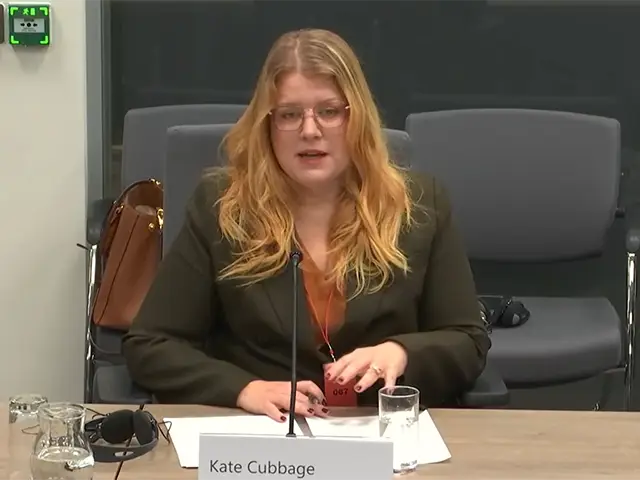
She told the health committee: “It’s no wonder young carers are achieving less at school. They are less likely to go on into further and higher education.
“And if they do make it to university, they’re less likely than their peers to actually graduate.”
Reflecting on a personal note, Ms Cubbage, a parent carer, said her autistic son has accessed services from ophthalmology to audiology over the past 16 years.

“I have never once been signposted to anything that would suggest that I am an unpaid carer or that I can access support… That kind of lived experience is really important.”
Rob Simkins, head of policy at Carers Wales, added: “Things are getting worse: anecdotally, we see that through our services but also that’s what the research tells us.”
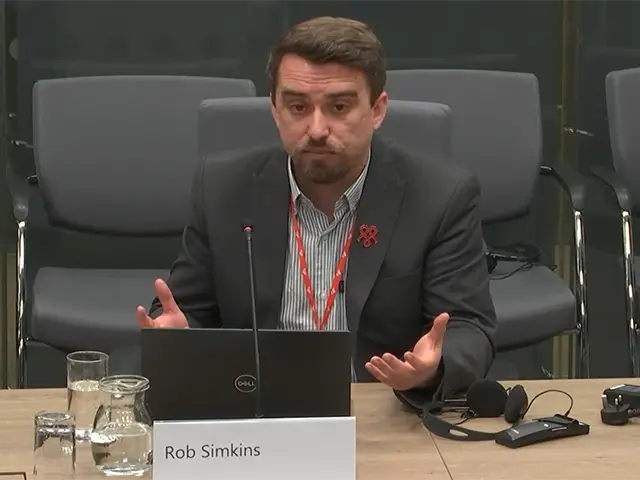
He pointed to a Carers Wales survey which has shown a “shocking” 53% increase in the number of carers cutting back on food and heating.
Giving evidence on Wednesday December 17, Mr Simkins warned of a 39% increase in the number of carers reporting “bad” or “very bad” mental health since 2023.
“All the evidence that we’re collecting shows that this is going in one direction,” he told the committee, adding: “And that’s the wrong direction. It’s a bleak context.”
Mr Simkins said census data shows about 310,000 unpaid carers in Wales but research indicates the number could be nearer 500,000 – roughly 15% of the population.
He cautioned that charities across the country, including Carers Wales, are seeing real-terms cuts in funding from the Welsh Government every single year.
Mr Simkins warned of a “shocking” lack of data and a system “set up to fail” more than a decade on from the then-Assembly passing the Social Services and Wellbeing (Wales) Act.
Warning some councils cannot quantify how many carers’ assessments they could carry out over 12 months, he asked: “How on earth are you meant to collect data from unpaid carers and plan services if you can’t even figure out how many you can assess?”
Asked about carers’ assessments, he highlighted a lack of capacity within councils as he warned a “pitifully low number of carers go on to get any support at all”.
Greg Thomas, chief executive of Neath Port Talbot Carers Centre, told Senedd Members the voluntary sector is being increasingly asked to plug gaps without necessary funding.
He warned the jam is having to be spread “ever-more thinly”, creating a tension between reaching as many people as possible and not wanting to compromise quality of support.
“We’re not quite saying ‘no’ to people,” he said. “But we’re having to say a qualified ‘yes’ about what we’re able to offer… We’re massively overstretched, massively oversubscribed.”
Mr Thomas told the committee the carers’ centre has the required reach and expertise, concluding: “It’s almost give us the tools and we can do the job.”
If you have been affected by anything in this story, the Samaritans can be contacted for free, 24/7, on 116 123, or by email at [email protected].

Public feedback to inform Hywel Dda’s long-term strategy for healthcare delivery
NEARLY 2,000 people across Carmarthenshire, Ceredigion and Pembrokeshire have shared their views on what matters most for living a healthy life, as part of a major public engagement exercise by Hywel Dda University Health Board.
Over a nine-week period, residents were invited to respond to eleven key questions exploring how people stay well, how they access healthcare, and what improvements they would like to see in services, buildings and digital provision. The questions were shaped around feedback gathered from community members earlier in the summer.
The engagement focused on four main themes: a social model for health and wellbeing, digital healthcare support, balancing hospital care with community-based services, and priorities for clinical services and hospital redevelopment.
The feedback will be shared in January and used to inform a refreshed long-term strategy for the Health Board, setting out how safe, sustainable and accessible services will be delivered over the next fifteen years. While the strategy will be updated to reflect changes in clinical practice, technology and how people use health services, the Health Board says its overall ambitions remain unchanged from those set out in the original Healthier Mid and West Wales strategy in 2018.
Lee Davies, Executive Director of Strategy and Planning at Hywel Dda, said the process was about refinement rather than a change in direction.
He said: “Thank you to everyone who has taken the time to share their views. The direction of travel remains as per our 2018 strategy, so we want to reassure people that this is not a radical change of direction but rather a refinement in how we deliver the strategy. Your feedback is helping us reshape our strategy so that it continues to reflect the priorities of the people we serve, and the changes in clinical practice.”
During the engagement, many respondents highlighted the importance of strong communities, with families, friends and local support networks seen as key to helping people stay well and connected. Timely access to GP services was also raised as a priority, alongside concerns about travel to appointments, particularly in rural areas where public transport options can be limited.
Digital healthcare was another recurring theme, with people calling for online services to be simple, inclusive and accessible, while recognising that not everyone has access to technology or the same digital skills.
At its public Board meeting in November, Hywel Dda University Health Board considered progress on refreshing the strategy and received updates on the development of a new Primary and Community Care Strategic Plan. That plan, which has been shaped through further public engagement including in-person and online events and an online questionnaire, is due to be presented to the Board in January 2026.
The Primary and Community Care plan will set the overall direction for services delivered outside hospital settings and support locally-led plans for how care is provided in individual communities.
The Board also discussed a request from the Welsh Government for an addendum to the Health Board’s 2022 Programme Business Case. This will explore additional options for improving healthcare estates, including whether new facilities could help address existing infrastructure problems. It will also consider how local plans align with the national strategy, A Healthier Wales, which aims to shift more care into community settings and closer to people’s homes.
A draft version of the refreshed strategy is expected to be presented to the Board in January 2026 for approval. Once agreed, it will be published in accessible formats, with the Health Board saying communities will continue to be involved as plans move forward.

Further information about the engagement process and updates on the strategy are available through the Health Board’s public consultation platform.

RESIDENT doctors across Wales have voted to accept a new contract, with 83% of those who took part in a referendum backing the agreement, according to BMA Cymru Wales.
The contract includes a four per cent additional investment in the resident doctor workforce and introduces a range of reforms aimed at improving training conditions, wellbeing and long-term workforce sustainability within NHS Wales. The BMA says the deal also supports progress towards pay restoration, which remains a central issue for doctors.
Key changes include new safeguards to limit the most fatiguing working patterns, measures intended to address medical unemployment and career progression concerns, and reforms to study budgets and study leave to improve access to training opportunities.
Negotiations between the BMA’s Welsh Resident Doctors Committee, NHS Wales Employers and the Welsh Government concluded earlier this year. Following a consultation period, a referendum of resident doctors and final-year medical students in Wales was held, resulting in a clear majority in favour of the proposals.
Welsh Resident Doctors Committee chair Dr Oba Babs Osibodu said the agreement marked a significant step forward for doctors working in Wales.
He said: “We’re proud to have negotiated this contract, which offers our colleagues and the future generation of doctors safer terms of service, fairer pay, and better prospects so that they can grow and develop their careers in Wales.
“This contract will help to retain the doctors already in training, and also attract more doctors to work in Wales, where they can offer their expertise and benefit patients.”
Dr Osibodu added that the BMA remains committed to achieving full pay restoration and acknowledged that challenges remain for some doctors.
“Whilst this contract sets the foundations for a brighter future for resident doctors in Wales, we recognise that there are still doctors who are struggling to develop their careers and secure permanent work,” he said. “We need to work with the Welsh Government and NHS employers to address training bottlenecks and underemployment.”
The Welsh Government has previously said it recognises the pressures facing resident doctors and the importance of improving recruitment and retention across NHS Wales, while also highlighting the need to balance pay agreements with wider NHS funding pressures and patient demand.
The new contract is expected to be phased in from August 2026. It will initially apply to doctors in foundation programmes, those in specialty training with unbanded rotas, and new starters, before being rolled out to all resident doctors across Wales.



Cowboy builders jailed after years of bullying and fraud against homeowners
A FATHER and son who preyed on homeowners across south and west Wales — many of them elderly or in...


Crowds line streets as tractor run hailed a festive success
CROWDS lined streets and pavements across Pembrokeshire on Saturday evening (Dec 20) as Clarbeston Road AFC’s illuminated Christmas tractor run...


Ex-Gwent police officer now living in Pembrokeshire cleared of corruption
A FORMER police officer from Pembrokeshire has been found not guilty of corruption following a trial at Cardiff Crown Court....


Pembroke Dock restaurant to close on Christmas Day after £23,000 rates rise
A PEMBROKE DOCK restaurant owner has said she is “devastated” after being forced to close her business on Christmas Day...


Milford Haven man denies child sex charges as trial date set
A MAN originally from Milford Haven has pleaded not guilty to a series of sexual offences involving a child after...


Bail revoked for teenager charged with rape following Sands Nightclub allegation
A TEENAGER charged with rape following an alleged incident at a Saundersfoot nightclub has been remanded into custody after bail...
Former police officer accused of making sexual remarks to women while on duty
Court hears allegations of inappropriate behaviour during official police visits A FORMER police officer has appeared in court accused of...


Community gathers to remember Corrina Baker
Lanterns and balloons released in emotional acts of remembrance FAMILY, friends and members of the local community came together to...


Teenager charged following rape allegation at Saundersfoot nightclub
Incident reported at Sands Nightclub in early hours of Sunday DYFED-POWYS POLICE is investigating an allegation of rape following an...


Milford Haven man jailed after drunken attack on partner and police officers
A MILFORD HAVEN man who launched a violent drunken assault on his partner before attacking two police officers has been...
-
Crime4 days ago
Milford Haven man jailed after drunken attack on partner and police officers
-

 News7 days ago
Dyfed-Powys Police launch major investigation after triple fatal crash
-
Crime4 days ago
Teenager charged following rape allegation at Saundersfoot nightclub
-
Crime4 days ago
Man charged with months of coercive control and assaults
-

 Crime5 days ago
Man sent to Crown Court over historic indecent assault allegations
-

 Crime5 days ago
Milford Haven man admits multiple offences after A477 incident
-

 Crime7 days ago
Trefin dog case ends in forfeiture order after protection notice breach
-

 Crime4 days ago
Woman ‘terrified in own home’ after ex breaches court order