


Business
‘We want to work’: Tata Steel workers protest over proposed cuts


HUNDREDS of people have taken part demonstrations against the anticipated elimination of numerous positions within the steel sector.
Tata Steel has announced that 2,423 jobs throughout the United Kingdom are in jeopardy, with the largest impact felt in Port Talbot, where 1,929 jobs are threatened out of a workforce of 3,859.
A senior executive at Tata said that a significant portion of the operations at Port Talbot are nearing obsolescence, resulting in daily financial losses amounting to £1.7 million.
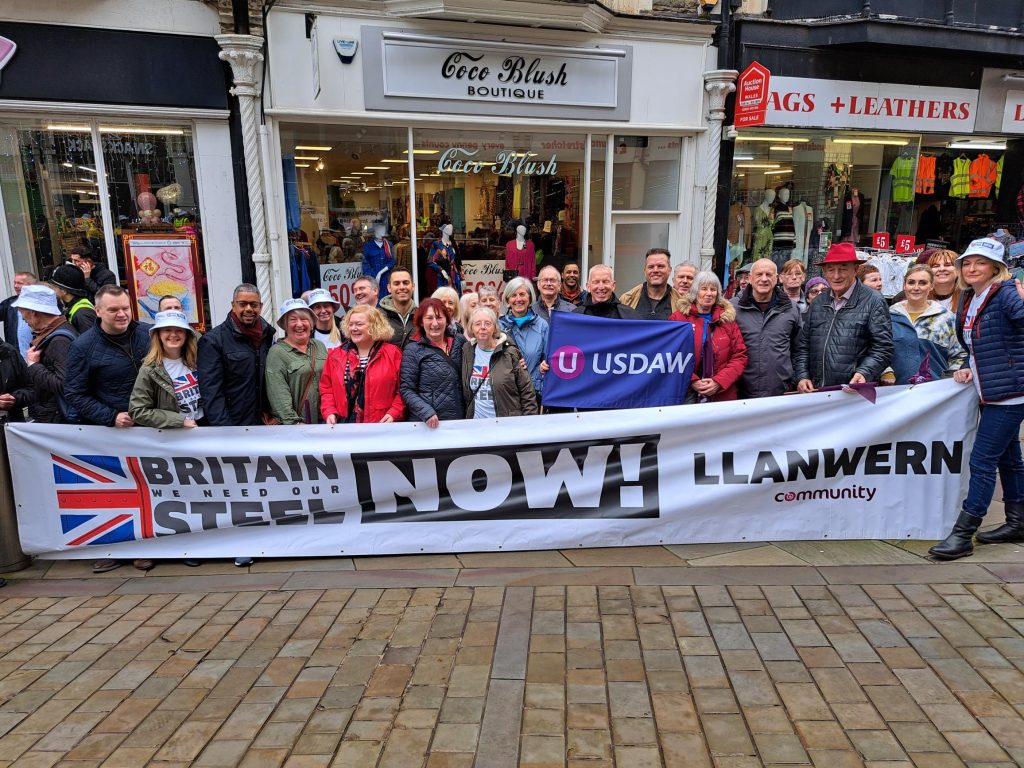
In anticipation of a rally in Port Talbot, employees from the Llanwern facility organised a march through the heart of Newport on Saturday (Feb 17).
Tata Steel’s Llanwern site employs 917 individuals, with 113 positions facing potential cuts. Approximately 500 participants joined the march, signaling widespread concern over the job losses.

Community General Secretary Roy Rickhuss said: “Today showed that Port Talbot, Newport and South Wales – steelworkers, politicians, local businesses and community groups – are united in opposing Tata’s bad deal for steel, which would be disastrous not just for communities here which have been built on steel, but for the UK as a whole. Make no mistake about it, what the company are proposing is bad for jobs, bad for our economy, bad for our environment and bad for national security. As the steelworkers’ union, we’ll do everything we can in our power to stand up against Tata and the UK Government’s plan, including the last resort of industrial action as we set out yesterday.

“This could all be avoided if the company showed some willingness to get back around the table, and to look again at the credible Multi Union Plan which is supported by industry experts, the Labour Party and MSs across the political divide in the Senedd. It sets out a pathway to decarbonise our industry in a just, sustainable way – not just opting for the cheapest option on the table and offshoring carbon emissions as the Tata plan does. It also avoids compulsory redundancies, and ensures the UK keeps its primary steelmaking capacity which, in an increasingly uncertain world, has never been more important.”
“Today’s rallies in Port Talbot and Newport showed that the people of South Wales value and support our steelworkers. Now we need the government and Tata to show the same commitment before it is too late. There is so much at stake here, and the weeks and months ahead are absolutely critical for our industry, our steel communities, and the country as a whole. We need our steel.”
Alan Coombs, Chair of the Multi-Union Committee at Port Talbot steelworks, said: “Steelworkers at Port Talbot are proud of our industry, and we are proud of our community which has come out in such a strong show of support for us today. These are uncertain times, and many of us are anxious about what lies ahead for Port Talbot. One thing is certain though – steelworkers will fight tooth and nail for the future of our industry and our livelihoods.

“And when we fight, it isn’t just for workers like myself who have enjoyed long careers at the works: we are thinking just as much about the many apprentices and young workers who are just starting out on their own path and learning a skilled trade in a sector which should be at the cutting edge of innovation. Tata’s half-baked plan is taking away their futures, and completely undermining the future of an industry which will be absolutely essential if we want to transition to a greener economy.
“Today was a reminder to the company that we won’t stand for it, and neither will our steel communities. This is just the beginning for us, and all options are on the table going forward as set out by Community steel reps yesterday. Tata need to change course now and get behind the Multi-Union Plan to save our industry before it is too late.”
Reg Gutteridge, Chair of the Multi-Union Committee at Llanwern steelworks, said: “Wherever you go in Gwent you will meet someone with a connection to the steel industry – from those who worked or had loved ones employed at sites like Pontymister, Ebbw Vale, Tredegar or Orb which are sadly no longer with us, or those with a connection to the proud workforce at Llanwern today. Llanwern has always been a hub for skilled and well-paid local employment in our area, and is still at the cutting edge of steel technology.

“For example our Zodiac line is one of the best processors of high-quality automotive steel anywhere in the world. Under Tata’s bad deal for steel, the Zodiac line – and ultimately, our entire steel industry – would be reliant on imports from heavy-polluting countries overseas. That shows clearly that the company aren’t thinking about the environment at all. This is all about cutting costs and opting for the cheapest possible option available to them, and it’s shameful that the Conservative Government are propping up this agenda with taxpayer money.
“Today’s march in Newport was our way of sending a message to Tata and the government – we won’t back down when it comes to protecting our jobs, our industry, and our steel communities. It was great to have so much support and encouragement from the public today, and we know that the people of South Wales will stand with us in these challenging times. We need our steel, and it’s high-time that Tata reconsidered their destructive, discredited plans and backed the Multi-Union Plan.”
A UK Government spokesperson said: “We recognise that this is a concerning time for Tata’s employees at Port Talbot and we will continue to support staff affected by the transition.
“The UK Government has put in place one of the biggest support packages in history, with a £500 million grant as part of the £1.25 billion commitment by Tata to secure the future of the Welsh steel industry.
“Additionally, £100 million has been put towards the creation of a Transition Board – £80 million from the UK government and £20 million from Tata Steel. The Board is chaired by the Secretary of State for Wales, to directly support those affected.
“This record level of support shows just how much the UK Government values the Welsh steel industry and the people and communities whose livelihoods depend on it.”












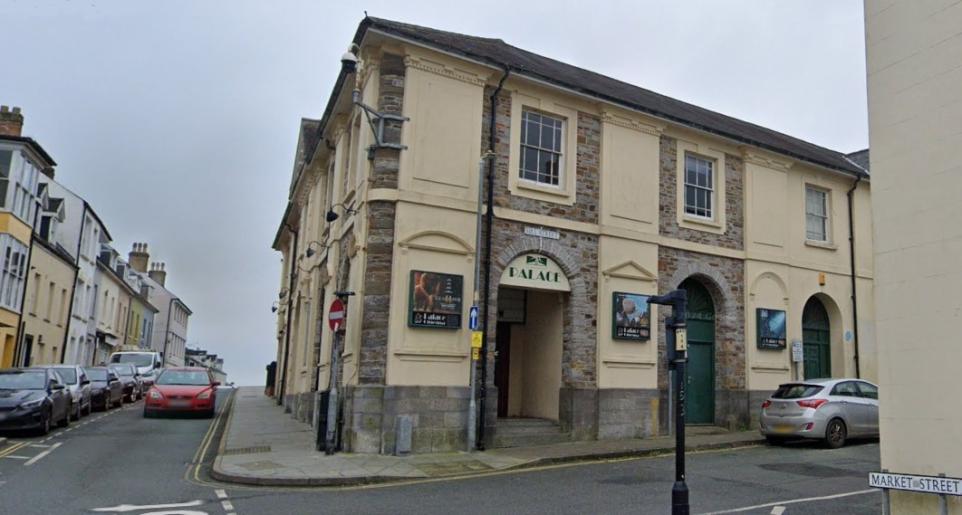
SIX COUNCIL-owned properties in Pembrokeshire, including Haverfordwest’s Palace Cinema, a boatyard, and a former social services premises in Tenby, are to be put up for sale following a decision by senior councillors.
At the March 16 meeting of Pembrokeshire County Council’s Cabinet, members were asked to back the disposal of six properties in the county’s portfolio as well the earmarking of four properties for other purposes.
A report for members said: “The Property Department has recently undertaken a review of the council’s estate to identify underused or vacant properties that are no longer required for service delivery and could be transferred internally or disposed of to generate capital receipts.”
The report listed six assets which members were asked to declare surplus for disposal by freehold sale.
Those assets were: Iveston Farm, Maidenwells; land east of Cleddau Reach School, Llangwm; Palace Cinema, Haverfordwest; St Asaph, Trafalgar Road, Tenby – social services premises; land at East Llanion Marine, Pembroke Dock – boat yard area; and land at Maidenwells – development plot.
For those six properties, it said of Iveston Farm: “Farm homestead in need of extensive renovation. An approach to local agents will begin to market the homestead and surrounding land. The remainder of the land areas are to be re-let as part of the County Farm Estate.”
For the land east of Cleddau Reach School, it said: “Areas of land parcels that no longer form part of the school demise and offer no opportunity to the authority and is therefore to be declared surplus for disposal.”
For Palace Cinema, it said: “Freehold of property to be sold. The property is listed and requires significant investment.”
For St Asaph, Trafalgar Road, Tenby, it said: “The property is not required or suitable for other internal services and is therefore to be declared surplus for disposal.”
For East Llanion Marine, it said: “Freehold of the property to be sold. This is an area of land (0.29 acres) adjacent to Port owned land. Both parcels are leased to East Llanion Marine. The property is not required or suitable for other internal services and is therefore to be declared surplus for disposal.”
For the land at Maidenwells, it said: “The property is not required or suitable for other internal services and is therefore to be declared surplus for disposal.”
It also listed three assets in which cabinet was asked to declared surplus to the requirements of one council department and appropriated to another use within the council.

Those were: Portfield Social Activity Centre, Haverfordwest – for future education project; Eastgate Centre, Pembroke – for future re-development project; and land west of Cleddau Reach School, Llangwm – for future education project.
Members were also asked to remove one property declared surplus to council requirements, appropriated for a particular use within the council: Pembroke Dock Watersports Centre – Watersports centre in occupation.
Members backed the 10 recommendations.

Community-backed contest highlights vital role of Pembrokeshire pubs
THE BEST Local Pub Competition is closing in on a major milestone, with nearly 1,000 nominations submitted by residents across Pembrokeshire celebrating their favourite local venues.
The competition, launched last year by Member of the Senedd Samuel Kurtz, aims to recognise the importance of local pubs and support them during the quieter winter months.
Now in its second year, the initiative continues to shine a spotlight on the vital role pubs play in bringing communities together.
The competition is sponsored by Templeton Beer, Wine & Spirit Co., a well-known local supplier supporting hospitality businesses across the region.
Last year, The Ivybush in Narberth was crowned the inaugural winner after receiving strong backing from the local community. The award recognised the pub’s welcoming atmosphere and its role as a hub for both residents and visitors.

Samuel Kurtz MS said: “Local pubs are at the heart of our communities, providing places for people to meet, celebrate and support one another. I launched this competition to give something back to these fantastic businesses, particularly during the quieter months when trade can be more challenging.
“Changes to Business Rates have had a real impact on the sector, alongside rising costs such as staffing and electricity, which are threatening the survival of many pubs. That is why this competition is such an important reminder of how much we value them.
“It’s brilliant to see nearly 1,000 nominations, with a few days still to go before the competition closes on Friday (Mar 20).”
Residents are invited to nominate pubs that stand out for their community spirit, service, and contribution to local life. The winning venue will receive a free barrel of standard beer and be crowned Best Local Pub 2026.

Samuel added: “If you haven’t nominated your local yet, there is still time.”
To take part, visit www.samuelkurtz.wales and search ‘campaigns’ to nominate your Best Local Pub.

A TRAVELLING jewellery and antiques roadshow is in Pembrokeshire today (Tuesday, Mar 17), offering free valuations and on-the-spot cash offers for a wide range of items.
The event is being held at the Best Western Lamphey Court Hotel & Spa and is open until 6:00pm this evening.
Organisers say they are looking to buy “all items of interest”, including gold, silver, rings, watches, coins, military memorabilia and diamond jewellery. Broken jewellery is also accepted, along with items in any condition.
The promotional material states there are no fees, no commissions and no obligation to sell, with free appraisals available to anyone who brings items along.
They are also advertising interest in vintage items such as old watches, scientific instruments, medal groups and even classic cars and motorbikes.
A follow-up event will take place tomorrow (Wednesday, Mar 18) at Hotel Mariners in Haverfordwest, running from 10:00am until 9:00pm, with late appointments available.
A third and final stop is scheduled for Thursday (Mar 19) at Wolfscastle Country Hotel, open from 10:00am until 6:00pm.
Organisers can be contacted on 07544 074 549, and also invite people to send photos via WhatsApp for a preliminary valuation.

Top prices paid: The jewellery and antiques roadshow is in Lamphey today before moving on to Haverfordwest and Wolfscastle (Pic: supplied).




Health26 minutes ago
NHS waiting list falls — but cancer delays and diagnostic backlog worsen
Record progress claimed by Welsh Government as critics warn key targets are still being missed THE NHS in Wales has...


Crime24 hours ago
Rapist jailed after ‘abhorrent’ attacks on woman and children
Haverfordwest man told police “women won’t have sex without force” A HAVERFORDWEST man who raped a woman and a young...


News1 day ago
Reform secures first Pembrokeshire councillor in Hakin by-election win
Late Reform candidate takes seat as independent surge and Labour withdrawal shape contest REFORM UK candidate Scott Thorley has won...


News2 days ago
Scott Thorley elected as Pembrokeshire’s first Reform councillor
REFORM UK candidate Scott Thorley has won the Hakin by-election after securing 179 votes. The full result is as follows:...


News2 days ago
Police confirm man has died after being recovered from River Cleddau
Major emergency response in town centre after concerns raised for man in water A MAN has died after being recovered...


Community2 days ago
Davies and Kurtz urge groups to seek employability funding
Community organisations in Pembrokeshire encouraged to apply for new grants supporting skills and job access LOCAL Senedd Members Samuel Kurtz...


News2 days ago
Emergency services flood Haverfordwest after reports of person in river
Town centre sealed off as multi-agency response continues A MAJOR emergency response is underway in the centre of Haverfordwest after...


News2 days ago
Detectives receive surge of new information in bid to identify man found at Powys reservoir
Public response follows release of facial image as officers pursue fresh lines of enquiry DETECTIVES investigating the identity of a...


News2 days ago
Senedd committee urges next Welsh Government to prioritise Wales–Ireland links
A SENEDD committee has called on the next Welsh Government to continue prioritising Wales’s relationship with Ireland, describing it as...


Education3 days ago
New facilities open at Portfield School as redevelopment reaches key milestone
THE FIRST phase of a major redevelopment programme at Portfield School in Haverfordwest has been completed, marking a significant step...
-

 Health6 days ago
Welsh Ambulance Service to host bi-monthly Board meeting
-

 News5 days ago
Rayner and Lammy visit Wales to discuss justice and community safety
-

 News4 days ago
Fishguard linked to allegations in Many Tears Animal Rescue investigation
-
News2 days ago
Emergency services flood Haverfordwest after reports of person in river
-

 Charity7 days ago
Many Tears Animal Rescue visited by inspectors as police attend in support role
-

 Farming7 days ago
Farmers’ Union warns proposed lamb welfare changes risk unintended consequences
-

 Community7 days ago
Choir performs for residents at Kensington Court
-
 Local Government5 days ago
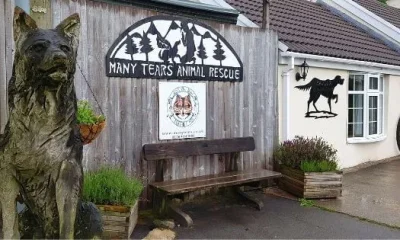
Investigation confirmed after inspectors visit Many Tears Animal Rescue