
Business
Uniswap Unearthed: The Revolution in Decentralized Finance


Decentralized Finance, or DeFi, has emerged as a groundbreaking force in the world of finance. At the forefront of this revolution stands Uniswap, a decentralized exchange (DEX) that has reshaped the way users swap and provide liquidity for cryptocurrencies. Gaining more knowledge about these advancements is essential, visiting and explore the site of an Investment Education Firm is a valuable resource in this journey. In this article, we delve deep into the mechanics, impact, challenges, innovations, and future prospects of Uniswap.
Understanding Uniswap
What is Uniswap?
Uniswap is an automated market maker (AMM) protocol built on the Ethereum blockchain. Unlike traditional exchanges, Uniswap operates without intermediaries, allowing users to trade cryptocurrencies directly from their wallets. Uniswap’s core innovation is its use of liquidity pools and smart contracts to facilitate trading.
How Uniswap Works
Liquidity Pools and Swapping Mechanisms
Uniswap relies on liquidity pools, where users deposit pairs of tokens to enable trading. These pools determine the exchange rates without order books. Swapping tokens on Uniswap is seamless and doesn’t require order matching; users simply execute trades directly.
Decentralized Nature of Uniswap
Uniswap’s smart contracts ensure the platform’s decentralization. This eliminates the need for trust in centralized entities, making it censorship-resistant and tamper-proof.
The UNI Token
Governance and Utility
UNI is Uniswap’s governance token, empowering users to participate in protocol decisions. Holders can vote on proposals that impact the platform’s parameters, upgrades, and fee structures.
UNI Tokenomics
UNI tokens are distributed to liquidity providers and users who interact with the platform. This distribution incentivizes users to engage with Uniswap and participate in its ecosystem.
Uniswap’s Impact on DeFi
Liquidity Provision Revolution
Enabling Decentralized Liquidity Provision
Uniswap has democratized liquidity provision. Anyone can contribute to liquidity pools, earning fees and a share of the trading volume.
Earning Yield with LP Tokens
Liquidity providers receive LP tokens, representing their stake in a pool. These tokens can be staked elsewhere or used as collateral in DeFi protocols, unlocking additional income opportunities.
Lowering Barriers to Entry
Accessibility for Users and Liquidity Providers
Uniswap’s user-friendly interface has made DeFi accessible to a broader audience. The simple swapping process attracts both experienced and novice users.
Reduced Dependence on Centralized Exchanges
Uniswap’s growth has reduced reliance on centralized exchanges, which often face regulatory hurdles and security risks. Users now have a reliable decentralized alternative.
Paving the Way for DeFi Projects
Uniswap as a Launchpad for DeFi Tokens
Many DeFi tokens launch on Uniswap before being listed on centralized exchanges, providing immediate access to liquidity and fostering community support.
The Rise of Initial DeFi Offerings (IDOs)
Uniswap has popularized IDOs, allowing projects to raise funds directly from the DeFi community. This innovation challenges traditional fundraising methods.
Challenges and Controversies
Impermanent Loss
Understanding the Concept
Impermanent loss occurs when the value of assets in a liquidity pool diverges from the initial deposit. This can impact returns for liquidity providers.
Mitigating Impermanent Loss Risks
Strategies such as impermanent loss insurance and careful selection of pool pairs can help minimize the impact of impermanent loss.
Regulatory Scrutiny
Uniswap and the Regulatory Landscape
Regulatory authorities are closely monitoring DeFi platforms like Uniswap. Uncertainty surrounds the classification of tokens and potential regulatory requirements.
Compliance and Potential Challenges
Users and liquidity providers must stay informed about regulatory developments to ensure compliance while participating in the Uniswap ecosystem.
Uniswap’s Ecosystem and Innovations
The Growth of DeFi Tokens
Tokens Built on Uniswap
A multitude of DeFi tokens have found their home on Uniswap, offering users diverse trading opportunities and fostering innovation within the space.
Yield Farming and Decentralized Exchanges (DEXs)
Yield farming strategies and the proliferation of DEXs have been driven by Uniswap’s open ecosystem and liquidity provision incentives.
Layer 2 Scaling Solutions
Optimism and Arbitrum
To address high gas fees and scalability concerns on Ethereum, Uniswap has explored Layer 2 solutions, making trading more efficient and cost-effective.
Addressing High Gas Fees and Scalability
Layer 2 solutions like Optimism and Arbitrum reduce transaction costs, enhance speed, and enable more users to participate in DeFi.
Uniswap V3 and Beyond
Concentrated Liquidity and Dynamic Fee Model
Uniswap V3 introduced concentrated liquidity, allowing liquidity providers to specify price ranges. The dynamic fee model optimizes fee generation.
Future Developments and Improvements
Uniswap continues to innovate, with ongoing upgrades and improvements aimed at providing a superior trading experience.
Risks and Security
Smart Contract Vulnerabilities
Notable Security Incidents
Despite its decentralized nature, Uniswap is not immune to smart contract vulnerabilities. Notable incidents serve as reminders of the importance of security audits.
Audits and Precautions
Users and developers must prioritize security by conducting thorough audits and implementing best practices to safeguard against vulnerabilities.
Regulatory and Compliance Risks
How Uniswap Users Can Protect Themselves
Users should stay informed about evolving regulations and consider the potential implications of interacting with DeFi platforms like Uniswap.
Staying Informed About Regulatory Changes
Regulatory compliance in the DeFi space requires vigilance and adaptation to evolving legal frameworks.
Conclusion
Uniswap has played a pivotal role in revolutionizing DeFi, offering decentralized liquidity provision, reducing barriers to entry, and fostering innovation. While it faces challenges and regulatory scrutiny, its continuous innovation and dedication to security make it a driving force in the future of finance. Responsible participation and awareness of risks are crucial as we navigate the ever-evolving landscape of decentralized finance.


CALLS to allow the permanent siting of an award-winning Pembrokeshire seaside village outdoor sauna, which has been featured in the national press, have been submitted to the national park.
Back in June 2024, a temporary two-year permission for a mobile wood-fired sauna at Saundersfoot harbour was granted by Pembrokeshire Coast National Park’s development management committee.
Since then, a further application by Kerry Evans of Hwyl Outdoor Sauna to make the siting permanent has been submitted to national park planners.
A supporting statement says, since its introduction the sauna has “become a popular and valued amenity for both residents and visitors, offering a space focussed on health, wellbeing and community connection”.
It went on to say: “The overall sentiment within the village has been strongly supportive, with many residents recognising the sauna as a valuable asset that enhances the amenities in Saundersfoot,” adding: “Hwyl Outdoor Sauna has received positive attention in regional and national press helping to promote Saundersfoot as a destination for coastal wellbeing and outdoor experiences.
“Media coverage has highlighted the sauna as an example of the increasing popularity of sea swimming and sauna culture around the UK coastline.
“Hwyl Outdoor Sauna has been featured in two books on the best saunas in the UK.
“The business has also been recognised through tourism and hospitality awards, further demonstrating the quality of the experience provided and the positive contribution it makes to the local visitor offer.”
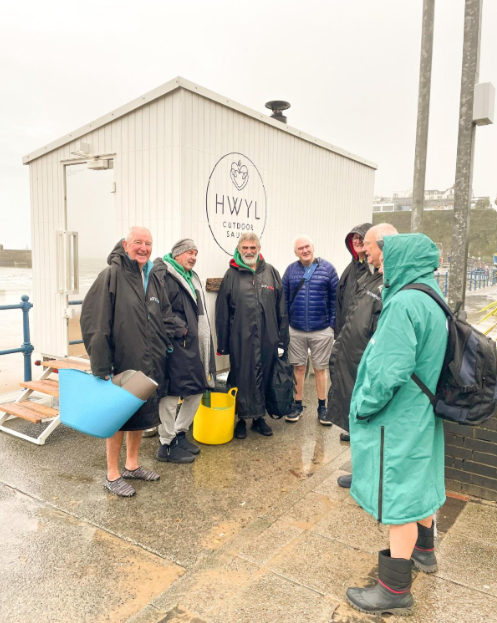
Back in February, the business, set up by former superyacht worker and mum-of-two Kerry won Sauna of the Year 2026/27 at the Wales Prestige Awards.
At the time Kerry said: “I could not be more proud of what I have achieved with Hwyl. I am so grateful to my wonderful team, who have made this journey not only possible but genuinely so much fun.”
Kerry ploughed a legacy from her beloved late father into the venture of a Pembrokeshire seafront sauna.
The application for allowing the sauna to be permanent added: “Through the Welsh Government I have been able to secure the funds to install a cold-water shower on Saundersfoot Harbour, which will be open year-round. This will be achieved via Hywel Outdoor Sauna and a weather proofing fund, from the Welsh Government. This facility has also a GoFundMe to raise the remaining costs.”
It concludes: “Hwyl Outdoor Sauna has established itself as a valued wellbeing facility that benefits both residents and visitors. It enhances the amenities available in Saundersfoot, supports the local economy by encouraging additional visitor activity, and contributes positively to the community through charitable support and engagement.
“The permanent siting of the sauna would allow this successful local small business to continue operating and provide these benefits to the village in a stable and sustainable way.”
The application for a permanent facility will be considered by park planners at a later date.


FIONA and Vince Malone, owners of Tenby Stores, in Pembrokeshire, West Wales, and members of the Federation of Independent Retailers (the Fed), met with Marc Tierney, Welsh Labour candidate for Ceredigion Penfro and Pembrokeshire County Councillor in the upcoming Senedd elections on May 7.
The meeting on Saturday, February 28, focused on the critical challenges facing independent retailers and followed the publication of the Fed’s manifesto for the Welsh election.
Key issues addressed during the meeting included the impact of rising business rates bills on small shops, as well as the significant social and economic value that post offices and convenience stores offer to their neighbourhoods. The Malones highlighted the rising costs resulting from above-inflation increases in the national minimum wage and higher National Insurance Contributions (NICs) that have placed further financial strain on independent businesses such as theirs, and others across Wales and the rest of the UK.
The importance of post offices in providing essential banking facilities was emphasised, underscoring their role in sustaining local economies through their range of services including postal and banking as well as government services such as vehicle tax renewal and passport applications.
Additionally, the conversation touched on the pressing issue of retail crime. The Malones showed how they had taken steps to reduce this problem, including the implementation of extensive CCTV coverage and the utilisation of AI technology, but that the threat remained.
With the introduction of the deposit return scheme (DRS) in Wales on the horizon, the Malones expressed their support for initiatives aimed at improving recycling rates. However, they raised concerns regarding the inclusion of glass in the scheme in Wales, highlighting that it would be difficult for small shops to implement because of the dangers associated with broken glass and weight involved in moving it.
Vince Malone said: “I want to thank Marc again for his visit and discussing these important issues and for his clear interest. Fiona and I remain committed to advocating for the interests of small shops – as members of the Federation of Independent Retailers – working with all parties at the Senedd ahead of May’s election and beyond.”
Marc Tierney said: “Vince and Fiona are active retailers, who go the extra mile for their community and are well known for their advocacy for the independent retail sector, not just in Wales but across the UK. My visit highlighted the importance of their postal service, banking hub and convenience shop. Providing these services under one roof is exactly the type of model that can sustain services in our rural, coastal communities. I look forward to working with them in the run-up to the election and beyond.”

THE WELSH brewing industry is set for a major boost after funding was secured to roll out a new Level 4 Brewing Diploma across Wales.
The Welsh Government Drinks Cluster, working in partnership with FDQ and Medr Cymru, has backed the advanced qualification, which is aimed at developing highly skilled brewers and strengthening the industry’s long-term competitiveness.
Welcoming the move, Deputy First Minister and Cabinet Secretary for Climate Change and Rural Affairs Huw Irranca-Davies said the qualification would help secure the future of the sector.
He said: “The brewing sector forms an important part of Wales’ food and drink landscape, contributing to local economies, skills and innovation. Welsh breweries continue to demonstrate ambition, innovation and a commitment to quality, and this new qualification will give them the tools they need to keep building on that success.
“By supporting the introduction of the Level 4 Brewing Diploma, we are investing directly in the future of the industry, ensuring brewers can access the high-level technical training required to thrive in an increasingly competitive market.
“This training will help secure long-term growth, enhance skills across the sector, and further strengthen Wales’ reputation for producing exceptional beer. It is a significant and very welcome step forward for brewing in Wales.”
The diploma has been developed by FDQ, a specialist awarding organisation for the food and drink industry. The body provides accredited qualifications, apprenticeship assessments and training solutions, and is the only organisation in the UK with dedicated brewing apprenticeship expertise.
The Level 4 Brewing Diploma is the first advanced brewing qualification of its kind to be delivered through an awarding organisation operating in both Wales and England.
It has been designed to give learners a deeper understanding of brewing operations, quality control, process optimisation and technical decision-making. The course is intended for those already working in the brewing sector, as well as learners seeking advanced professional skills that meet industry standards and employer expectations.
To make sure the qualification reflected the needs of the Welsh brewing industry, a working group was formed involving five breweries of different sizes and production styles. Those involved were Felinfoel Brewery, Monty’s Brewery, Magic Dragon Brewery, Purple Moose Brewery and Wild Horse Brewing Co.
The group brought together a broad range of experience, from long-established family breweries to fast-growing modern craft producers.
Monty’s Brewery, a mid Wales craft brewery known for its award-winning ales, was among those involved in shaping the diploma.
Director Pamela Honeyman said: “We’re proud to have contributed to the development of this diploma. Access to advanced technical training is essential for driving quality, efficiency and innovation, and the Level 4 Brewing Diploma will give our team the opportunity to develop new skills and progress within the industry. It’s a hugely positive development for Welsh brewing.”
Llandudno-based Wild Horse Brewing Co, known for its modern and flavour-driven beers, also took part in the working group.
Managing director Dave Faragher said: “Being part of the working group has ensured the diploma reflects the realities of modern brewing. The opportunity for Welsh brewers to benefit from industry-led, practical and technical training is incredibly valuable. We’re delighted to have helped shape it and look forward to seeing the impact across the sector.”
The new qualification is intended to help tackle skills gaps and support employers looking to develop talent from within their businesses.
The diploma is now live, and Welsh brewers can apply immediately. The programme is open to breweries across Wales, with applicants able to apply for both a place on the diploma and funding support.
Matthew Bell, Head of Engagement at FDQ, said: “The launch of the Level 4 Brewing Diploma represents a significant advancement for skills development within the Welsh brewing industry. It has been designed by the industry to equip learners with the higher-level technical knowledge and practical competence required for roles such as head brewer and production lead, integrating comprehensive brewing science, operations management and sustainability principles into a regulated, workplace-focused framework.
“This diploma supports apprentices at a pivotal stage in their career, fostering both industry expertise and long-term professional progression.”
If you want, I can also turn this into a more Herald-style version with a stronger intro and tighter quotes.


Driver spared jail after crash killed young couple
A PEMBROKE DOCK driver who caused the deaths of a young couple in a road crash has been given a...


BBC unveils major new Welsh dramas with Tenby set for prime-time spotlight
New crime series Old Town Murders and supernatural thriller The Witch Farm will both be filmed and set in Wales...


No jobs for new paramedics in Wales as graduates told to apply for technician roles
Students trained at public expense urged to take lower-grade jobs as anger grows over NHS workforce planning NEWLY qualified paramedics...


Health minister refuses to act on Withybush despite 15,000-signature petition
Senedd pressure grows as Welsh Government declines to intervene over surgery fears THE WELSH GOVERNMENT has refused to step in...


Fishguard to Wexford rail tunnel plan backed by Elon Musk firm
Six-hour London to Dublin service proposed in £32bn project ahead of Senedd election PLANS for a rail tunnel linking west...


Milford Haven charity honoured with King’s Award for voluntary service
A PEMBROKESHIRE charity supporting vulnerable young people has received one of the highest honours in the UK for voluntary work....


Plaid Cymru launches bid to lead next Welsh Government
Party positions itself as ‘government-in-waiting’ ahead of May election PLAID CYMRU has formally launched its campaign for the 2026 Senedd...


Police appeal after attempted child abduction in Haverfordwest
DYFED-POWYS POLICE has launched an appeal for witnesses following a reported attempted abduction of a 12-year-old girl in Haverfordwest. The...


Gunshot fired by police during incident in Milford Haven
A POLICE officer discharged a firearm during an incident in Milford Haven on Saturday evening (March 28), prompting an investigation...


Three Amigos Easter Run roars through Pembrokeshire
MOTORCYCLE enthusiasts turned out in force today (Saturday, March 28) as the popular Three Amigos Easter Run returned to the...
-

 News17 hours ago
Accommodation providers in Wales will be required to register under new law
-
Business3 days ago
Fishguard to Wexford rail tunnel plan backed by Elon Musk firm
-

 Charity5 days ago
RSPCA calls for stronger animal welfare measures as Welsh Labour launches manifesto
-

 Entertainment1 day ago
From Milford Haven to the world: The story of The Evolution Experience
-
Entertainment2 days ago
BBC unveils major new Welsh dramas with Tenby set for prime-time spotlight
-
Crime6 days ago
Gunshot fired by police during incident in Milford Haven
-

 Sport7 days ago
Lloyd and Reynolds take on France with Supra GT4 challenge
-

 Community6 days ago
Residents return home after major Carmarthenshire fire as probe continues