
News
VeChain’s Vanguard: Setting New Standards in Blockchain


In the world of blockchain technology, VeChain has emerged as a formidable force, setting new standards and redefining the way we think about blockchain’s potential. This article provides a comprehensive examination of VeChain’s innovative solutions, covering its history, technology, real-world applications, sustainability efforts, governance, and future prospects, all with the valuable information available at this link.
Understanding VeChain
History and Background of VeChain
VeChain, founded in 2015 by Sunny Lu, started as a supply chain management solution. Over the years, it has evolved into a comprehensive blockchain platform known as VeChainThor. It has gained recognition for its commitment to solving real-world problems through blockchain technology.
The VeChainThor Blockchain Platform
VeChainThor, the heart of the VeChain ecosystem, operates on a unique consensus mechanism known as Proof of Authority (PoA). PoA prioritizes efficiency and scalability, making it a preferred choice for enterprise-grade applications.
Notable Partnerships and Collaborations
VeChain has forged strategic partnerships with industry giants like PwC, Deloitte, BMW, and Walmart China. These partnerships have allowed VeChain to expand its reach and explore various use cases across diverse sectors.
VeChain’s Innovative Technology
Proof of Authority (PoA) Consensus Mechanism
PoA ensures that only trusted validators participate in block creation, enhancing security and reducing the risk of malicious activities. It is particularly well-suited for enterprises and businesses seeking a secure and efficient blockchain solution.
The VeChain Token (VET) and VeThor Token (VTHO)
VeChain utilizes a dual-token system to power its platform. VET, the native cryptocurrency, serves as a store of value, while VTHO is used for executing smart contracts and transactions, making it cost-effective for businesses.
Smart Contracts and dApps on VeChainThor
VeChainThor supports the development of decentralized applications (dApps) and smart contracts. This functionality enables businesses to automate processes, create tamper-proof records, and improve operational efficiency.
IoT Integration and Data Management
VeChain has a strong focus on the Internet of Things (IoT). It allows the integration of IoT devices with the blockchain, enabling real-time data collection and management, which is particularly valuable in supply chain tracking and verification.
Real-World Applications
VeChain’s Role in Supply Chain Management
VeChain’s roots lie in supply chain management, and it excels in this domain. It offers end-to-end transparency, enabling businesses to track the journey of products from manufacturer to consumer, reducing fraud, and ensuring authenticity.
Counterfeit Prevention and Authenticity Verification
VeChain’s blockchain-based solution helps combat counterfeiting by providing consumers with easy access to product authenticity information. This fosters trust and confidence in brands.
Food Safety and Traceability
In the food industry, VeChain ensures food safety by tracking the origin and journey of food products. This technology can quickly identify and contain outbreaks, preventing foodborne illnesses.
Healthcare and Pharmaceutical Applications
VeChainThor is also making strides in healthcare by ensuring the integrity of pharmaceutical products and medical records, enhancing patient safety and data security.
Sustainability and Environmental Initiatives
VeChain’s Focus on Sustainability
VeChain has taken a proactive stance on sustainability, acknowledging the environmental concerns associated with blockchain technology.
Carbon Reduction and ESG Initiatives
VeChain is committed to reducing its carbon footprint and has initiated Environmental, Social, Governance (ESG) programs to minimize the environmental impact of blockchain operations.
Case Studies of Sustainable Projects Powered by VeChain
Highlighting successful sustainability projects, such as carbon tracking and green energy initiatives, that leverage VeChain technology.
Regulatory Compliance and Governance
VeChain’s Approach to Regulatory Compliance
VeChain places a strong emphasis on regulatory compliance, working with authorities to ensure adherence to legal and ethical standards.
Governance Structure and Community Involvement
An overview of VeChain’s governance model and how the community actively participates in decision-making processes.
Security Measures and Audits
VeChain’s commitment to security, including regular audits and robust security protocols, to maintain the integrity of its blockchain platform.
Future Prospects and Challenges
Predictions for VeChain’s Growth and Evolution
Examining the potential growth avenues for VeChain, including expansion into new sectors and regions.
Potential Challenges and Obstacles
Identifying challenges such as regulatory changes, competition, and technology advancements that VeChain may face.
How VeChain Plans to Overcome These Challenges
A look at VeChain’s strategies and initiatives to overcome challenges and continue its trajectory of innovation.
Conclusion
In conclusion, VeChain stands as a pioneer in the blockchain industry, setting new standards with its innovative technology and real-world applications. Its commitment to sustainability, regulatory compliance, and governance positions it as a vanguard in the blockchain space. As we look ahead, the future seems promising for VeChain, as it continues to evolve and address the challenges of tomorrow. Stay tuned for the next chapter in VeChain’s journey.



PLANS to deliver a new Banking Hub in Pembroke Dock are moving forward, following a key meeting between local representatives and Cash Access UK.
Samuel Kurtz MS met with Cash Access UK Regional Manager Debbie Crow on Wednesday (Mar 19), alongside community representatives, to discuss the next steps after confirmation last week that the campaign for a hub had been successful.
The new facility is expected to be up and running within 12 weeks, providing vital access to banking services for residents, businesses and community groups across Pembroke Dock and the wider South Pembrokeshire area.

Banking Hubs offer a shared space where customers can carry out everyday transactions such as cash withdrawals and deposits, as well as access face-to-face support from individual banks on designated days.
The development follows the closure of the last bank branch in Pembroke Dock, which had raised concerns about access to essential financial services in the area. Samuel Kurtz has been working with LINK, local businesses and community groups to secure the new hub.
Discussions at the meeting focused on identifying a suitable location and ensuring the service meets the needs of those who continue to rely heavily on cash.
Following strong public interest in the project, Mr Kurtz has confirmed he will hold a series of drop-in sessions in Pembroke and Pembroke Dock to update residents and answer questions.
Samuel Kurtz MS said: “Last week’s news that the campaign for a Banking Hub in Pembroke Dock had been successful was incredibly welcome for our community.
“Access to cash and face-to-face banking services remains vital for many residents, charities and local businesses across the area. I have already been inundated with questions from people wanting to know what happens next.
“That’s why I will be holding drop-in sessions in both Pembroke and Pembroke Dock so residents and businesses can come along, ask questions and hear the latest updates.
“I was pleased to meet with Cash Access UK’s Regional Manager to discuss the next steps, and I will continue working closely with local stakeholders to help ensure the hub is delivered as quickly as possible.”
Further details about the drop-in sessions are expected to be announced shortly.

HYWEL DDA University Health Board will decide next week whether to make changes to the GP referral pathway for routine adult mental health services permanent.
The decision will be taken at a public Board meeting on Thursday (Mar 26).
Board members will consider a proposal to formalise changes already introduced in Ceredigion and, if approved, roll out the revised pathway across Pembrokeshire and Carmarthenshire.
Since March 2025, adults in Ceredigion seeking routine mental health support have been advised by their GP to contact the NHS 111 Wales ‘Press 2’ service, rather than being referred directly to the county’s Community Mental Health Team.
The temporary change was introduced in response to ongoing staffing shortages. Health Board officials say the approach has helped maintain timely access to face-to-face assessments for those who need them, while directing initial contact through a single access point.
The 111 ‘Press 2’ service provides telephone assessments by local wellbeing practitioners, supervised by registered mental health nurses, offering advice, support and onward referrals where required.
At its November 2025 meeting, the Board agreed to extend the temporary pathway until the end of March 2026. A nine-week engagement exercise followed, running from December 8 to February 9, to gather feedback from patients, professionals and stakeholders on the potential long-term impact.
Andrew Carruthers, Chief Operating Officer at Hywel Dda University Health Board, said: “I would like to thank everyone who took the time to share their views and experiences.
“I would also like to thank West Wales Action for Mental Health for supporting engagement with patients, including those with lived experience, alongside GPs, primary care teams, mental health staff and third sector partners.
“Our priority is to ensure mental health services remain accessible, fair and sustainable. The temporary changes in Ceredigion have shown some positive benefits, and the feedback we have received from across the three counties will play an important role in shaping the Board’s decision.”
The Board will review all evidence and feedback before making a final decision on the future of the adult mental health referral pathway.
GPs will continue to refer patients with urgent or complex needs directly to community mental health teams where appropriate, and have access to a dedicated NHS 111 professional line for additional clinical advice.
Further details, including the full Board papers, are available here:
https://biphdd.gig.cymru/amdanom-ni/eich-bwrdd-iechyd/cyfarfodydd-y-bwrdd-2026/agenda-a-phapuraur-bwrdd-26-mawrth-2026/
The meeting will be streamed live from 9:30am on Thursday (Mar 26) via:
www.youtube.com/hywelddahealthboard1
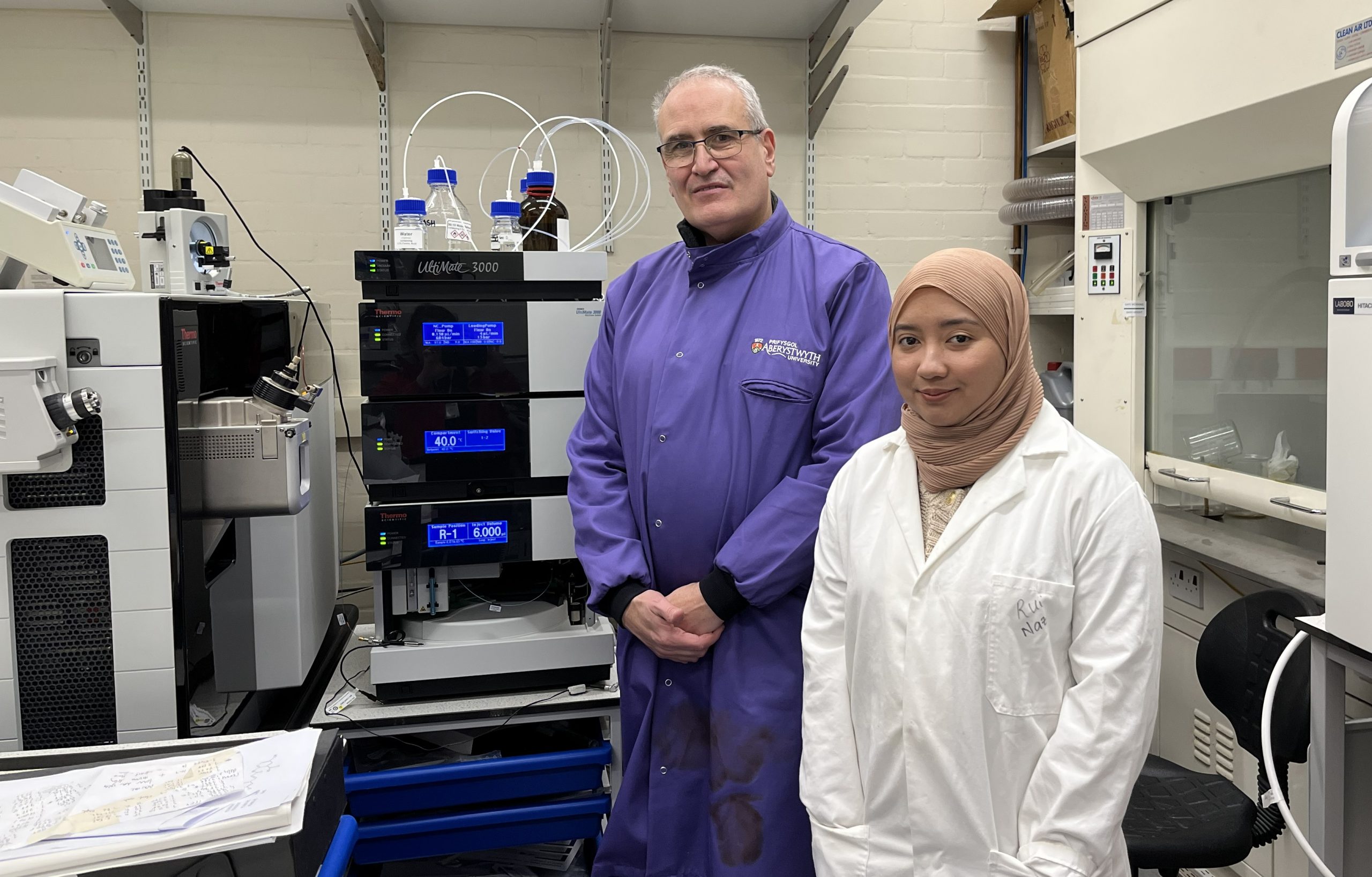
Simple home urine test being developed at Aberystwyth University with NHS backing
A GROUNDBREAKING new home test for early breast cancer detection is being developed in Wales, with scientists at Aberystwyth University leading research that could transform diagnosis for women across rural communities including Pembrokeshire and Carmarthenshire.
Backed by Welsh Government funding and supported by Hywel Dda University Health Board, the pioneering work aims to deliver a simple urine-based test that could ease pressure on NHS Wales services while improving early detection rates in areas where access to specialist diagnostics remains a challenge.
The prototype test, currently under development, is designed as a lateral flow device—similar to a pregnancy or COVID-19 test—that could detect early biochemical signs of breast cancer from a single urine sample.
Researchers say the innovation could support faster diagnosis, reduce reliance on invasive procedures, and ultimately improve survival rates by identifying the disease at its earliest and most treatable stage.
Breast cancer remains the most commonly diagnosed cancer among women globally and is a leading cause of cancer-related deaths in more than 100 countries. While mammograms, MRI scans and biopsies are essential tools, there is growing demand for simpler, more accessible methods of detection.
Rural impact significant
For patients in West Wales, where travel to major hospitals can be time-consuming and access to specialist services limited, the development could prove particularly significant.
A reliable home testing kit could reduce the need for repeated hospital visits and help identify cases earlier, easing pressure on already stretched NHS diagnostic services.
The Herald understands that improved early detection could also play a role in reducing waiting times across NHS Wales, where diagnostic backlogs remain a persistent concern.
Welsh research leading the way
The study at Aberystwyth University is focusing on identifying metabolic changes linked to breast cancer that are excreted in urine, enabling earlier and less invasive detection.
Professor Luis Mur, who is leading the research, said: “Our work is revealing a distinct biochemical ‘signature’ associated with the earliest stages of breast cancer—one that can be detected in a simple urine sample.
“By translating these findings into a lateral flow test, we hope to create a diagnostic tool that is affordable, easy to use at home, and capable of detecting cancer earlier than many current methods.
“Early diagnosis saves lives, and our aim is to make that crucial first step accessible to as many women as possible.”
Professor Mur and breast cancer study manager Dr Aimi Zainurin are working closely with NHS colleagues to ensure the research can move quickly from laboratory discovery to real-world clinical use.
This approach is designed to shorten the time it takes for new medical innovations to reach patients—currently estimated at around 17 years.
Backed by Welsh Government
The project is supported through the Welsh Government’s SMART Award programme, which aims to accelerate innovation and strengthen collaboration between academia and industry in Wales.
It is also co-sponsored by Dynamic Extractions Ltd, whose expertise in separation technologies supports the development of the diagnostic tool.
Dr Helen Munro, National Clinical Lead for Women’s Health based at Hywel Dda University Health Board, said: “This funding has the potential to significantly shorten the time it takes for vital women’s health research to reach real-world clinical practice.
“We’re working closely with our academic partners and health boards to close that gap and ensure innovations—such as the work underway at Aberystwyth University—benefit patients far more quickly.”
Wider women’s health benefits
Alongside breast cancer, the research team is also exploring urine-based diagnostics for conditions including endometriosis and polycystic ovary syndrome (PCOS), both of which are often under-diagnosed.
Scientists hope the wider programme could help tackle long-standing delays in women’s healthcare by providing faster, more accessible diagnostic tools.
If successful, the Welsh-led innovation could place the country at the forefront of a new generation of non-invasive cancer screening—offering hope to thousands of women across Wales and beyond.
Caption:
Top team: Professor Luis Mur and Dr Aimi Zainurin, Aberystwyth University


NHS waiting list falls — but cancer delays and diagnostic backlog worsen
Record progress claimed by Welsh Government as critics warn key targets are still being missed THE NHS in Wales has...


Rapist jailed after ‘abhorrent’ attacks on woman and children
Haverfordwest man told police “women won’t have sex without force” A HAVERFORDWEST man who raped a woman and a young...


Reform secures first Pembrokeshire councillor in Hakin by-election win
Late Reform candidate takes seat as independent surge and Labour withdrawal shape contest REFORM UK candidate Scott Thorley has won...


Scott Thorley elected as Pembrokeshire’s first Reform councillor
REFORM UK candidate Scott Thorley has won the Hakin by-election after securing 179 votes. The full result is as follows:...


Police confirm man has died after being recovered from River Cleddau
Major emergency response in town centre after concerns raised for man in water A MAN has died after being recovered...


Davies and Kurtz urge groups to seek employability funding
Community organisations in Pembrokeshire encouraged to apply for new grants supporting skills and job access LOCAL Senedd Members Samuel Kurtz...


Emergency services flood Haverfordwest after reports of person in river
Town centre sealed off as multi-agency response continues A MAJOR emergency response is underway in the centre of Haverfordwest after...


Detectives receive surge of new information in bid to identify man found at Powys reservoir
Public response follows release of facial image as officers pursue fresh lines of enquiry DETECTIVES investigating the identity of a...


Senedd committee urges next Welsh Government to prioritise Wales–Ireland links
A SENEDD committee has called on the next Welsh Government to continue prioritising Wales’s relationship with Ireland, describing it as...


New facilities open at Portfield School as redevelopment reaches key milestone
THE FIRST phase of a major redevelopment programme at Portfield School in Haverfordwest has been completed, marking a significant step...
-

 Health6 days ago
Welsh Ambulance Service to host bi-monthly Board meeting
-

 News5 days ago
Rayner and Lammy visit Wales to discuss justice and community safety
-

 News4 days ago
Fishguard linked to allegations in Many Tears Animal Rescue investigation
-
News2 days ago
Emergency services flood Haverfordwest after reports of person in river
-

 Charity7 days ago
Many Tears Animal Rescue visited by inspectors as police attend in support role
-

 Local Government5 days ago
Investigation confirmed after inspectors visit Many Tears Animal Rescue
-

 Crime6 days ago
Dangerous driver sentenced following a police chase through Carmarthenshire streets
-

 Farming7 days ago
Farming Unions set out key Senedd election priorities