
Business
Dream, Believe, Achieve: Mastering Your Financial Goals


Introduction
Financial goals are the backbone of a secure and prosperous future. They give direction to your financial decisions, help you prioritize your spending and saving, and ultimately lead you towards financial freedom. The Dream-Believe-Achieve framework emphasizes the power of envisioning your financial dreams, believing in your ability to achieve them, and taking concrete steps towards turning them into reality. This site is an Investment education firm that provides valuable resources and guidance to help individuals master their financial goals. Go https://chrominator.io for cutting-edge tools and strategies to optimize your investment approach.
Defining Your Financial Dreams
Before you can begin working towards your financial goals, you need to clearly define what those goals are. This involves identifying both short-term and long-term financial aspirations. Short-term goals could include things like building an emergency fund, paying off debt, or saving for a vacation. Long-term goals might include buying a home, saving for retirement, or funding your children’s education.
Visualizing your ideal financial future is a powerful tool for motivation. Imagine what your life will be like when you’ve achieved your financial goals. How will it feel to be debt-free, to have a substantial retirement fund, or to live in your dream home? This visualization can help keep you focused and motivated.
Setting SMART goals is a practical approach to goal-setting that ensures your goals are Specific, Measurable, Achievable, Relevant, and Time-bound. For example, instead of saying “I want to save money,” a SMART goal would be “I want to save $10,000 for a down payment on a house within the next two years.”
Believing in Your Ability to Achieve
Believing in yourself and your ability to achieve your financial goals is crucial. Many people hold limiting beliefs about money that can sabotage their efforts. These beliefs might include thoughts like “I’ll never be able to save enough” or “I’m not good with money.” Recognizing and challenging these beliefs is the first step towards changing them.
Cultivating a positive money mindset is key to believing in your ability to achieve your goals. Instead of focusing on scarcity and lack, focus on abundance and possibility. Practice gratitude for what you have and trust that you have the ability to create the financial future you desire.
Visualization and affirmations are powerful tools for building belief in your financial goals. Visualize yourself achieving your goals in vivid detail, imagining how it will feel and what it will look like. Repeat affirmations to yourself daily, such as “I am financially secure and abundant,” to reinforce your belief in your ability to achieve your goals.
Building a Solid Financial Plan
Once you’ve defined your financial dreams and believe in your ability to achieve them, it’s time to build a solid financial plan to make them a reality. Start by assessing your current financial situation. This includes calculating your income, expenses, assets, and liabilities.
Creating a budget is an essential part of any financial plan. A budget helps you understand where your money is going and where you can make adjustments to reach your goals. Track your expenses carefully to ensure you’re staying within your budget.
Developing strategies for saving and investing is another key component of a financial plan. Determine how much you need to save each month to reach your goals and explore different investment options to help your money grow.
Managing debt effectively is also important when working towards your financial goals. Create a plan for paying off your debt, starting with high-interest debt first. Consider consolidating your debt or negotiating with creditors to lower your interest rates.
Executing Your Plan and Overcoming Challenges
Taking action is the next step towards achieving your financial goals. Implement your financial strategy consistently, making adjustments as needed. Stay motivated during setbacks by reminding yourself of your goals and the reasons why you want to achieve them.
Challenges are inevitable when working towards your financial goals. Stay resilient and adapt to changes in your circumstances. If you face unexpected expenses or setbacks, adjust your plan accordingly and stay focused on your long-term goals.
Leveraging Resources and Seeking Support
Utilize technology and tools to help you manage your finances more effectively. There are many apps and software programs available that can help you track your expenses, create a budget, and monitor your progress towards your goals.
Seeking professional guidance can also be beneficial when working towards your financial goals. Financial advisors, accountants, and other professionals can provide valuable advice and expertise to help you make informed financial decisions.
Tap into community and online resources for support and accountability. Joining a financial community or support group can provide encouragement and motivation as you work towards your goals. Sharing your progress and challenges with others can help you stay on track and stay accountable.
Celebrating Milestones and Sustaining Success
As you progress towards your financial goals, it’s important to celebrate your achievements along the way. Recognize and reward yourself for reaching milestones, whether it’s paying off a debt, reaching a savings goal, or achieving a financial milestone.
Revisit and revise your financial goals as your circumstances change. Life is unpredictable, and your financial goals may need to be adjusted over time. Be flexible and willing to adapt your plan to ensure it remains relevant to your current situation.
Cultivate financial resilience to sustain your success over the long term. Financial resilience means being able to withstand financial shocks and setbacks. Build an emergency fund, maintain insurance coverage, and continue to save and invest wisely to protect yourself against unforeseen circumstances.
Conclusion
Dreaming, believing, and achieving are the pillars of mastering your financial goals. By clearly defining your dreams, believing in your ability to achieve them, and taking concrete steps towards turning them into reality, you can create a secure and prosperous financial future for yourself and your family. Start today by setting your financial goals and taking the first steps towards achieving them.

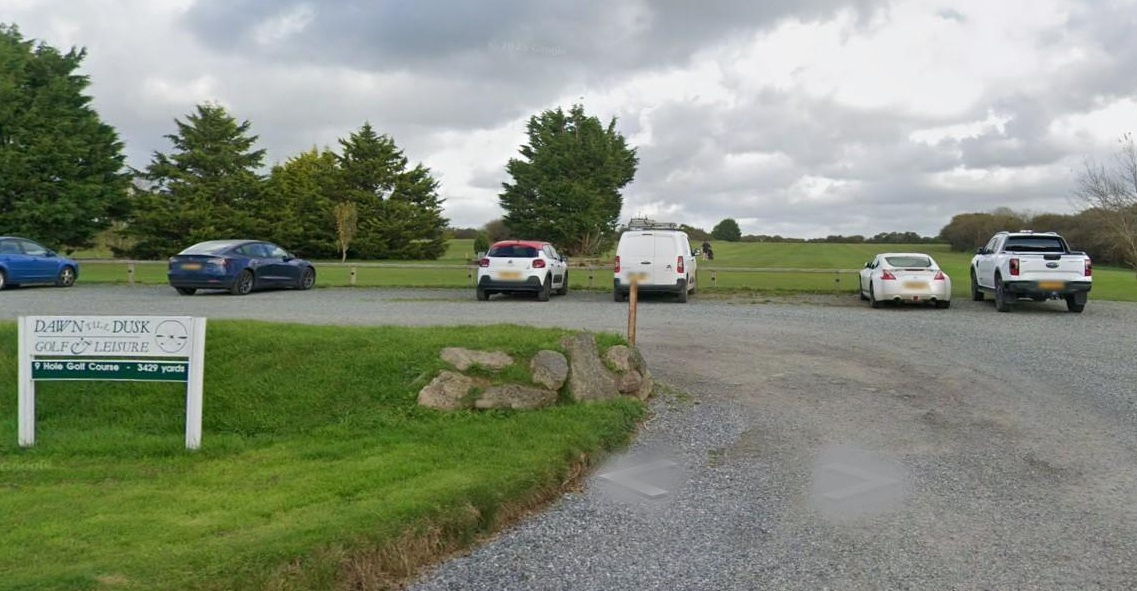
A CALL to extend a long-established Pembrokeshire golf club, bringing it up to a full 18 holes, has been submitted to county planners.
In the application, Mr and Mrs Young, through agent Preseli Planning Ltd, seek a change of use of land adjoining the Dawn Till Dusk Golf Club, Furze Hill Farm, Bastleford Road, Rosemarket, to form an extension to the existing golf course, along with landscaping and associated works.
A supporting statement through the agent says: “The application seeks full planning permission for the enlargement of the existing golf course to provide an additional six holes, to provide a total of 18 holes.
“The proposal would involve minor landscaping works to the fields and boundaries and the creation of a small number of ponds and bunkers. The extension would be located on land to the west of Furze Hill Farm and on the opposite side of the road to the existing golf course and clubhouse.
“An altered access to the land parcel is proposed as part of this application, which would provide an improved route for users crossing the public highway to avoid conflict with movements at the main entrance.
“The application site exceeds 1ha and therefore the proposal is considered major development necessitating a Pre-Application Consultation prior to formally submitting the planning application to the Local Planning Authority.”
It adds: “The existing golf course has operated in excess of 30 years and is popular with both visitors and locals. Club membership currently stands at approximately 350 and there is demand for enhancing the provisions of the course.
“The applicants’ sons have recently increased their involvement in the enterprise and in recent years wet winter months have necessitated the closure of the course, or parts of it, due to the ground becoming waterlogged, primarily due to the flat nature of the existing course.
“The extension would provide variation to the terrain, providing, dryer conditions, as well as the ability to alternate between the existing and proposed to maintain use, enhancing the viability of the enterprise.”
The application will be considered by Pembrokeshire County Council planners at a later date.

A CALL to rebuild a fire-damaged Pembrokeshire farm building, as a family home to help manage one of the largest sheep flocks in Wales, has been submitted to the national park.
In the application to Pembrokeshire Coast National Park, D B Davies and Sons through agent Harries Planning Design Management, with a supporting statement by Reading Agricultural Consultants Ltd, seek permission to renovate an existing fire-damaged dwelling, together with the conversion and extension of outbuildings to form an agricultural worker’s dwelling at Mynydd Du, Rosebush.
The supporting statement through Reading Agricultural Consultants Ltd says Mynydd Du is part of a wider holding which includes Eisteddfa Fawr and land around the village of Brynberian, the farms approximately six km apart, with land under control of the applicant amounting to some 1,500 acres, with a further 3,000 acres of Preseli mountain common land also used; the land accommodating a 5,000-ewe flock with 10 suckler cows and followers.
It says DB Davies & Sons Unlimited, has five partners: the two Davies brothers, Berian and Ken; their wives; and Berian’s son, Dyfed.
Berian and Ken are in their late 70s, with most of the heavy work on the farm is undertaken by Dyfed.
Dyfed and his wife Megan are first language Welsh speakers, living some 10 km away in Nevern, while Berian and Ken, and their wives, live at Eisteddfa Fawr, Brynberian.
The dwelling at Mynydd Du, where most sheep are now wintered, is structurally sound and repairable but has been unoccupied since 1990, and was subject to arson circa 2013, the statement says.
It says Dyfed works full-time on the farm, alone with increasing frequency as the older business members are above retirement age, working “long hours out of necessity to undertake all the work associated with one of the largest flocks of sheep in Wales”.
“His working hours are extended further due to the fact that he lives remote (6kms) from the main block of land at Tyllosg, where Mynydd Du is situated in the centre of the farm. Travelling back and forth several times each day during lambing and other times during poor weather, to check on flock welfare is an arduous task and can be dangerous, particularly if driving when tired during inclement conditions.”
The statement adds: “The application seeks permission to repair the fire damaged dwelling at Mynydd Du and bring it back to serve a useful purpose to enable Dyfed to closely monitor the ewes, not only at lambing, but throughout the year when the flock is grazing on the adjacent common land.
“It will also enable Dyfed to be with his partner and young child on a more regular basis than simply at the end of a long day when he is away from their current home, tending the sheep at Mynydd Du.”
The application will be considered by park planners at a later date.

THE PEMBROKEHIRE HERALD is launching a recruitment drive to bring in two new sales executives as the newspaper continues to grow its commercial operations across the county.
The move comes as the Herald strengthens its position as the leading independent news platform in West Wales, with increasing demand from local businesses looking to advertise both in print and online.
The expansion is being driven in part by the rapid growth of Milford Haven and the wider energy sector, with major investment in green energy projects, port activity and associated industries creating new opportunities for local businesses.
As the area continues to develop as a key energy hub, more companies are seeking to reach customers, partners and the wider community through trusted local media.
The successful candidates will work directly with Pembrokeshire businesses, helping them promote their services to a growing audience through the Herald’s expanding digital reach and established print readership.
Editor Tom Sinclair said the recruitment reflects both the changing local economy and the Herald’s increasing audience.
He said: “Milford Haven is expanding rapidly, particularly with new energy and green projects coming forward, and that’s creating real opportunities for local businesses.
“At the same time, our audience continues to grow across both our website and social media platforms, meaning we can now offer advertisers a much bigger and more effective platform than ever before.”
The new roles will focus on building relationships with local firms, developing advertising campaigns, and identifying new opportunities across sectors including tourism, retail, trades, energy and professional services.
The Herald has continued to invest in its digital platforms, including Herald.Wales, alongside its well-established print edition, offering advertisers a multi-platform approach to reaching customers.
The recruitment drive also comes at a time when many local businesses are looking for cost-effective ways to promote themselves amid ongoing economic pressures.
Mr Sinclair added: “Local advertising matters. When businesses advertise locally, that money stays in the local economy. It helps create jobs, supports families and helps communities grow alongside the businesses within them.”
The roles are expected to appeal to motivated, target-driven individuals with strong communication skills and an interest in media, sales or marketing.
Both positions are based in Pembrokeshire, with opportunities for training and career progression within the Herald’s growing media group.
Anyone interested in applying is encouraged to email [email protected] with a CV and covering letter before Tuesday (Apr 1, 2026).


Milford Haven school plans unveiled but funding not yet secured
PLANS for a new £100 million school in Milford Haven have been unveiled, but the project has not yet secured...


Council unveils plans for new state-of-the-art secondary school in Milford Haven
PEMBROKESHIRE COUNTY COUNCIL has revealed plans for a new state-of-the-art school in Milford Haven, promising modern, inspiring learning spaces for...


NHS waiting list falls — but cancer delays and diagnostic backlog worsen
Record progress claimed by Welsh Government as critics warn key targets are still being missed THE NHS in Wales has...


Rapist jailed after ‘abhorrent’ attacks on woman and children
Haverfordwest man told police “women won’t have sex without force” A HAVERFORDWEST man who raped a woman and a young...


Reform secures first Pembrokeshire councillor in Hakin by-election win
Late Reform candidate takes seat as independent surge and Labour withdrawal shape contest REFORM UK candidate Scott Thorley has won...


Scott Thorley elected as Pembrokeshire’s first Reform councillor
REFORM UK candidate Scott Thorley has won the Hakin by-election after securing 179 votes. The full result is as follows:...


Police confirm man has died after being recovered from River Cleddau
Major emergency response in town centre after concerns raised for man in water A MAN has died after being recovered...


Davies and Kurtz urge groups to seek employability funding
Community organisations in Pembrokeshire encouraged to apply for new grants supporting skills and job access LOCAL Senedd Members Samuel Kurtz...


Emergency services flood Haverfordwest after reports of person in river
Town centre sealed off as multi-agency response continues A MAJOR emergency response is underway in the centre of Haverfordwest after...


Detectives receive surge of new information in bid to identify man found at Powys reservoir
Public response follows release of facial image as officers pursue fresh lines of enquiry DETECTIVES investigating the identity of a...
-

 Health7 days ago
Welsh Ambulance Service to host bi-monthly Board meeting
-

 News6 days ago
Rayner and Lammy visit Wales to discuss justice and community safety
-

 News5 days ago
Fishguard linked to allegations in Many Tears Animal Rescue investigation
-
News3 days ago
Emergency services flood Haverfordwest after reports of person in river
-

 Local Government6 days ago
Investigation confirmed after inspectors visit Many Tears Animal Rescue
-

 Community7 days ago
Local charity hosts cancer awareness event in Cardigan
-

 Farming7 days ago
Plea to remove decades old ‘unviable’ planning conditions from property
-

 Business7 days ago
Work set to begin on £50m hydrogen plant in Milford Haven