
Business
A Comprehensive Comparison: Bitcoin Versus Traditional Investments


Investing has long been a cornerstone of wealth accumulation and monetary planning, with traditional belongings like shares, bonds, and real estate dominating portfolios. However, the emergence of Bitcoin, a decentralized digital currency, has opened a new frontier in funding opportunities. Millennials exploring opportunities in Bitcoin investments can benefit from insights offered by BGX Ai, an investment education firm connecting traders with educational experts. Accessing expert analysis can help millennials navigate the complexities of Bitcoin investing and make informed decisions aligned with their financial goals.
Understanding Bitcoin as an Investment Option
Bitcoin, introduced in 2009 by Satoshi Nakamoto, operates on a decentralized blockchain community without the need for intermediaries like banks or governments. As a digital currency, Bitcoin has numerous specific characteristics that distinguish it from traditional investments:Key Characteristics of Bitcoin:
Decentralization: Bitcoin operates in a peer-to-peer community, enabling direct transactions between users without centralized oversight. This decentralization reduces dependency on conventional economic institutions and offers greater financial inclusivity.
Limited Supply: The general supply of Bitcoin is capped at 21 million coins, making it inherently scarce like precious metals together with gold. This shortage is designed to protect against inflationary pressures and has contributed to Bitcoin’s fee proposition as a shop of costs.
Volatility: Bitcoin’s charge is thought of for its volatility, characterized by rapid rate fluctuations within brief intervals. Factors including marketplace sentiment, regulatory developments, and macroeconomic events can influence its rate dynamics.
Global Accessibility: Bitcoin transactions may be performed globally, offering accessibility to all and sundry with a web connection and a virtual wallet. This international attainment has contributed to Bitcoin’s adoption as a borderless and inclusive monetary asset.
Comparing Bitcoin with Traditional Investments
Risk and Return Profile:
Bitcoin:
Bitcoin is frequently perceived as a high-threat, high-priced investment because of its charge volatility and speculative nature. While Bitcoin has proven tremendous fee appreciation over the years, it additionally experiences sharp fee corrections and marketplace fluctuations. Investors can probably reap vast returns, but they ought to be organized for improved risk publicity.
Traditional Investments:
Traditional assets like stocks, bonds, and actual estate typically offer more stable returns over a long period of time. These properties are inspired by economic elements, business enterprise overall performance, hobby prices, and market situations. While they’ll offer lower volatility compared to Bitcoin, they also provide greater predictable profit streams and the capability for capital appreciation.
Market Regulation and Oversight:
Bitcoin:
Bitcoin operates in a regulatory gray area in lots of jurisdictions, with various levels of reputation and regulatory frameworks. Regulatory uncertainty can affect Bitcoin’s liquidity, investor self-belief, and market stability. Compliance with anti-money laundering (AML) and recognize your purchaser (KYC) rules is increasingly critical for Bitcoin exchanges and provider carriers.
Traditional Investments:
Traditional financial markets are subject to comprehensive regulatory oversight through authorities agencies together with the Securities and Exchange Commission (SEC), Financial Conduct Authority (FCA), and different regulatory bodies. Regulations aim to protect investors, ensure market transparency, and preserve financial stability.
Diversification and Portfolio Allocation:
Bitcoin:
Bitcoin is regularly considered a diversification device in investment portfolios, imparting a low correlation with conventional assets like shares and bonds. Including Bitcoin in a varied portfolio can doubtlessly lessen the normal portfolio hazard and decorate returns throughout periods of financial uncertainty or marketplace volatility.
Traditional Investments:
Traditional funding options, which include stocks, bonds, and real property, provide a number of diversification possibilities based on asset training, sectors, and geographical regions. Diversifying across different asset classes can help buyers spread risk and optimize portfolio performance over the years.
Liquidity and Market Accessibility:
Bitcoin:
Bitcoin markets function 24/7, permitting buyers to buy, sell, and trade cryptocurrencies at any time. The international nature of Bitcoin markets provides liquidity and accessibility, allowing buyers to enter and exit positions with relative ease compared to conventional economic markets.
Traditional Investments:
Traditional economic markets operate during specific hours, usually on weekdays, with buying and selling hours varying by way of asset magnificence and geographical area. Liquidity ranges can vary based totally on market situations and asset reputation, influencing transaction fees and execution pace.
Conclusion
Bitcoin provides a unique investment opportunity characterized by decentralization, limited delivery, and worldwide accessibility. While Bitcoin offers capability blessings consisting of portfolio diversification and high returns, it also includes inherent risks because of price volatility and regulatory uncertainties. Comparing Bitcoin with conventional funding options like stocks, bonds, and actual property highlights the significance of expert danger profiles, regulatory environments, and funding objectives. By incorporating Bitcoin into a different investment strategy and staying informed about marketplace developments, traders can navigate the complexities of digital property while pursuing their monetary desires correctly.



Employment down by 124 year-on-year with further monthly decline recorded in February
EMPLOYMENT in Pembrokeshire has fallen over the past year, with new figures showing a drop of 124 jobs compared with the same period in 2025.
Data for February 2026 reveals that 47,801 people were on payroll across the county, representing a 0.3% decrease year-on-year.
The latest monthly figures also show continued pressure on local businesses, with payroll numbers falling by 82 compared to January — a 0.2% drop.
The data, based on analysis of Office for National Statistics payroll figures by employment app WageSight, paints a mixed picture for the county’s labour market.
Compared with other Welsh local authorities, Pembrokeshire ranks 12th out of 22 for employment change, placing it in the lower half of performers.
The Herald understands that while some parts of Wales have seen modest job growth, others — including Pembrokeshire — continue to experience a squeeze on employment levels.
Paul Hebden, Director at WageSight said: “The latest figures underline the continued pressure on employment in Pembrokeshire. Payroll remains down compared with last year, and recent month-on-month data suggests employers are still cutting back.”
Nationally, employment trends remain uncertain, with fluctuations across different regions and sectors creating an unpredictable backdrop for businesses.
It remains unclear whether the recent decline marks the beginning of a longer-term trend or simply a short-term dip, but the figures suggest that employers in Pembrokeshire are continuing to act cautiously in the current economic climate.
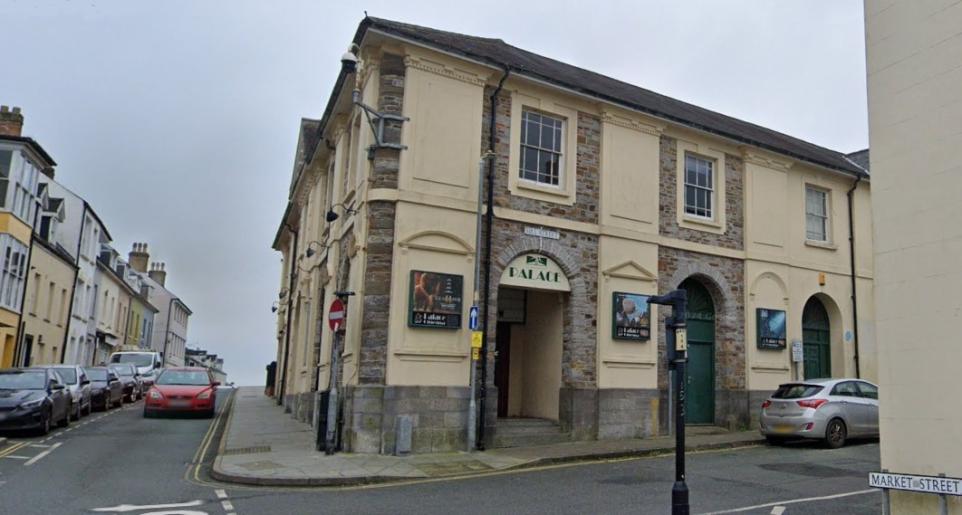
SIX COUNCIL-owned properties in Pembrokeshire, including Haverfordwest’s Palace Cinema, a boatyard, and a former social services premises in Tenby, are to be put up for sale following a decision by senior councillors.
At the March 16 meeting of Pembrokeshire County Council’s Cabinet, members were asked to back the disposal of six properties in the county’s portfolio as well the earmarking of four properties for other purposes.
A report for members said: “The Property Department has recently undertaken a review of the council’s estate to identify underused or vacant properties that are no longer required for service delivery and could be transferred internally or disposed of to generate capital receipts.”
The report listed six assets which members were asked to declare surplus for disposal by freehold sale.
Those assets were: Iveston Farm, Maidenwells; land east of Cleddau Reach School, Llangwm; Palace Cinema, Haverfordwest; St Asaph, Trafalgar Road, Tenby – social services premises; land at East Llanion Marine, Pembroke Dock – boat yard area; and land at Maidenwells – development plot.
For those six properties, it said of Iveston Farm: “Farm homestead in need of extensive renovation. An approach to local agents will begin to market the homestead and surrounding land. The remainder of the land areas are to be re-let as part of the County Farm Estate.”
For the land east of Cleddau Reach School, it said: “Areas of land parcels that no longer form part of the school demise and offer no opportunity to the authority and is therefore to be declared surplus for disposal.”
For Palace Cinema, it said: “Freehold of property to be sold. The property is listed and requires significant investment.”
For St Asaph, Trafalgar Road, Tenby, it said: “The property is not required or suitable for other internal services and is therefore to be declared surplus for disposal.”
For East Llanion Marine, it said: “Freehold of the property to be sold. This is an area of land (0.29 acres) adjacent to Port owned land. Both parcels are leased to East Llanion Marine. The property is not required or suitable for other internal services and is therefore to be declared surplus for disposal.”
For the land at Maidenwells, it said: “The property is not required or suitable for other internal services and is therefore to be declared surplus for disposal.”
It also listed three assets in which cabinet was asked to declared surplus to the requirements of one council department and appropriated to another use within the council.
Those were: Portfield Social Activity Centre, Haverfordwest – for future education project; Eastgate Centre, Pembroke – for future re-development project; and land west of Cleddau Reach School, Llangwm – for future education project.
Members were also asked to remove one property declared surplus to council requirements, appropriated for a particular use within the council: Pembroke Dock Watersports Centre – Watersports centre in occupation.
Members backed the 10 recommendations.

Community-backed contest highlights vital role of Pembrokeshire pubs
THE BEST Local Pub Competition is closing in on a major milestone, with nearly 1,000 nominations submitted by residents across Pembrokeshire celebrating their favourite local venues.
The competition, launched last year by Member of the Senedd Samuel Kurtz, aims to recognise the importance of local pubs and support them during the quieter winter months.
Now in its second year, the initiative continues to shine a spotlight on the vital role pubs play in bringing communities together.
The competition is sponsored by Templeton Beer, Wine & Spirit Co., a well-known local supplier supporting hospitality businesses across the region.
Last year, The Ivybush in Narberth was crowned the inaugural winner after receiving strong backing from the local community. The award recognised the pub’s welcoming atmosphere and its role as a hub for both residents and visitors.
Samuel Kurtz MS said: “Local pubs are at the heart of our communities, providing places for people to meet, celebrate and support one another. I launched this competition to give something back to these fantastic businesses, particularly during the quieter months when trade can be more challenging.
“Changes to Business Rates have had a real impact on the sector, alongside rising costs such as staffing and electricity, which are threatening the survival of many pubs. That is why this competition is such an important reminder of how much we value them.
“It’s brilliant to see nearly 1,000 nominations, with a few days still to go before the competition closes on Friday (Mar 20).”
Residents are invited to nominate pubs that stand out for their community spirit, service, and contribution to local life. The winning venue will receive a free barrel of standard beer and be crowned Best Local Pub 2026.
Samuel added: “If you haven’t nominated your local yet, there is still time.”
To take part, visit www.samuelkurtz.wales and search ‘campaigns’ to nominate your Best Local Pub.


Council unveils plans for new state-of-the-art secondary school in Milford Haven
PEMBROKESHIRE COUNTY COUNCIL has revealed plans for a new state-of-the-art school in Milford Haven, promising modern, inspiring learning spaces for...


NHS waiting list falls — but cancer delays and diagnostic backlog worsen
Record progress claimed by Welsh Government as critics warn key targets are still being missed THE NHS in Wales has...


Rapist jailed after ‘abhorrent’ attacks on woman and children
Haverfordwest man told police “women won’t have sex without force” A HAVERFORDWEST man who raped a woman and a young...


Reform secures first Pembrokeshire councillor in Hakin by-election win
Late Reform candidate takes seat as independent surge and Labour withdrawal shape contest REFORM UK candidate Scott Thorley has won...


Scott Thorley elected as Pembrokeshire’s first Reform councillor
REFORM UK candidate Scott Thorley has won the Hakin by-election after securing 179 votes. The full result is as follows:...


Police confirm man has died after being recovered from River Cleddau
Major emergency response in town centre after concerns raised for man in water A MAN has died after being recovered...


Davies and Kurtz urge groups to seek employability funding
Community organisations in Pembrokeshire encouraged to apply for new grants supporting skills and job access LOCAL Senedd Members Samuel Kurtz...


Emergency services flood Haverfordwest after reports of person in river
Town centre sealed off as multi-agency response continues A MAJOR emergency response is underway in the centre of Haverfordwest after...


Detectives receive surge of new information in bid to identify man found at Powys reservoir
Public response follows release of facial image as officers pursue fresh lines of enquiry DETECTIVES investigating the identity of a...


Senedd committee urges next Welsh Government to prioritise Wales–Ireland links
A SENEDD committee has called on the next Welsh Government to continue prioritising Wales’s relationship with Ireland, describing it as...
-

 Health6 days ago
Welsh Ambulance Service to host bi-monthly Board meeting
-

 News5 days ago
Rayner and Lammy visit Wales to discuss justice and community safety
-

 News4 days ago
Fishguard linked to allegations in Many Tears Animal Rescue investigation
-
News2 days ago
Emergency services flood Haverfordwest after reports of person in river
-

 Charity7 days ago
Many Tears Animal Rescue visited by inspectors as police attend in support role
-

 Local Government5 days ago
Investigation confirmed after inspectors visit Many Tears Animal Rescue
-

 Farming6 days ago
Plea to remove decades old ‘unviable’ planning conditions from property
-

 Crime6 days ago
Dangerous driver sentenced following a police chase through Carmarthenshire streets