


Politics
Supreme Court looms as gender quotas bill progresses


PLANS to introduce gender quotas in Senedd elections moved a step closer amid concerns the bill is “highly likely” to be challenged in the Supreme Court.
Senedd members agreed the general principles of the gender quotas bill, which would require at least half of a political party’s candidates to be women.
Jane Hutt reiterated her position Wales has the necessary powers to pass the bill but confirmed implementation would be delayed until the 2030 election.
She said the plans were pushed back due to concerns about the potential impact of legal challenges on the conduct and outcome of the 2026 election.
Ms Hutt, who is in charge of the bill, said the landmark legislation would make the Senedd more effective as well as more reflective of the people it serves.

Adam Price, who represents Carmarthen East and Dinefwr, urged the Welsh Government to work with Labour colleagues in Westminster to grant Wales the required powers.
The former Plaid Cymru leader said an order – under section 109 of the 2006 Government of Wales Act – could bring the bill within the Welsh Parliament’s scope.
Mr Price argued a section 109 order would take the reasons the Welsh Government has given for delaying implementation to 2030 off the table completely.
He asked: “Why couldn’t we apply for that order in council today, from a Labour government at Westminster, so that we can have a gender-balanced parliament in 2026?”
Ms Hutt replied that a section 109 order would not put the question of whether the Senedd has powers beyond doubt, nor remove the risk of referral to the Supreme Court.
David Rees, who chaired the Senedd reform committee tasked with scrutinising the bill, raised witnesses’ concerns that gender quotas could be susceptible to abuse.
He reiterated calls for any false statement on nomination forms to be an electoral offence, a committee recommendation that was rejected by the Welsh Government.

The Labour backbencher said the committee heard conflicting views on whether the Senedd has the necessary powers but most evidence from legal advisers suggested it does not.
In a letter to MSs when the bill was introduced in March, Elin Jones explained her position that the bill relates to a reserved matter and is not within the Senedd’s powers.
The Senedd’s speaker or Llywydd said her view was based on legal tests and advice as she stressed that the question can only be definitely answered by the Supreme Court.
Mike Hedges, chair of the Senedd legislation committee, warned the bill could give the Welsh Government a “blank cheque” to legislate on some electoral matters.
Outlining his committee’s recommendations, he raised concern about the balance between the details in the bill itself and those that will be left to subordinate legislation.
Mr Hedges, a Labour backbencher who represents Swansea East, was disappointed by a decision to curtail scrutiny of the bill – only for the “stage-one” debate to be delayed.
Peredur Owen Griffiths, who chairs the finance committee, raised concerns about the unquantified cost of the bill being referred to the Supreme Court.
The Plaid Cymru politician pointed out that this is the first time the Llywydd has issued a statement that a bill would not be within powers.
Darren Millar, for the Conservatives, opposed the bill and the principle of gender quotas, arguing the proposed system is neither proportionate nor appropriate.
He said the reform committee heard the bill is highly likely to be challenged in the courts.
The Tory told the Senedd the bill bears little resemblance to the initial plan for gender-zipped lists which was “hatched” in a Labour-Plaid Cymru agreement.
He said the system would allow political parties to put forward lists of candidates that could be 100% female but only a maximum of up to 50% male.
Mr Millar, who represents Clwyd West, warned the bill pits one aspect of diversity, gender, against others “which are completely ignored” such as disability, age, faith and race.
Heledd Fychan, for Plaid Cymru, told the chamber gender equality is vital for a healthy and functioning democracy, expressing disappointment at the delay.
Picking up on comments from Mr Millar about people being elected on merit, the South Wales Central representative said: “We are not in an equal society; there are so many barriers that stop women from being able to be appointed to a myriad of different roles.”
Ms Fychan said the problem is not unique to Wales, with only six countries having a 50% or higher proportion of women in their parliaments.
“At the current rate … gender parity won’t be achieved globally until 2063 at the earliest,” she said, adding that female politicians face terrifying levels of hate, sexism and harassment.
Ms Fychan called on the Welsh Government to unequivocally demand the relevant powers.
Carolyn Thomas, a Labour backbencher who represents North Wales, said she once believed in meritocracy but she has experienced unconscious bias “time and time again”.
Rhys ab Owen, an ex-barrister who sits as an independent, raised concerns about “weak” wording, such as the use of “may” rather than “must” in section 71 of the bill.
Ms Hutt, who is chief whip and Trefnydd, the Welsh Government’s business manager, said ministers are considering the section 109 route but she stressed it is not straightforward.
Following the July 16 debate, MSs voted 39-14 in favour of the general principles of the bill, which now moves to the first amending phase in the Senedd’s four-stage legislative process.
If passed, the counsel general or attorney general – the Welsh and UK Government’s chief legal advisers, respectively – have four weeks to refer the bill to the Supreme Court.



CONCERNS over the future of skilled industrial jobs in Pembrokeshire have been raised following a meeting between two Senedd Members and Valero.
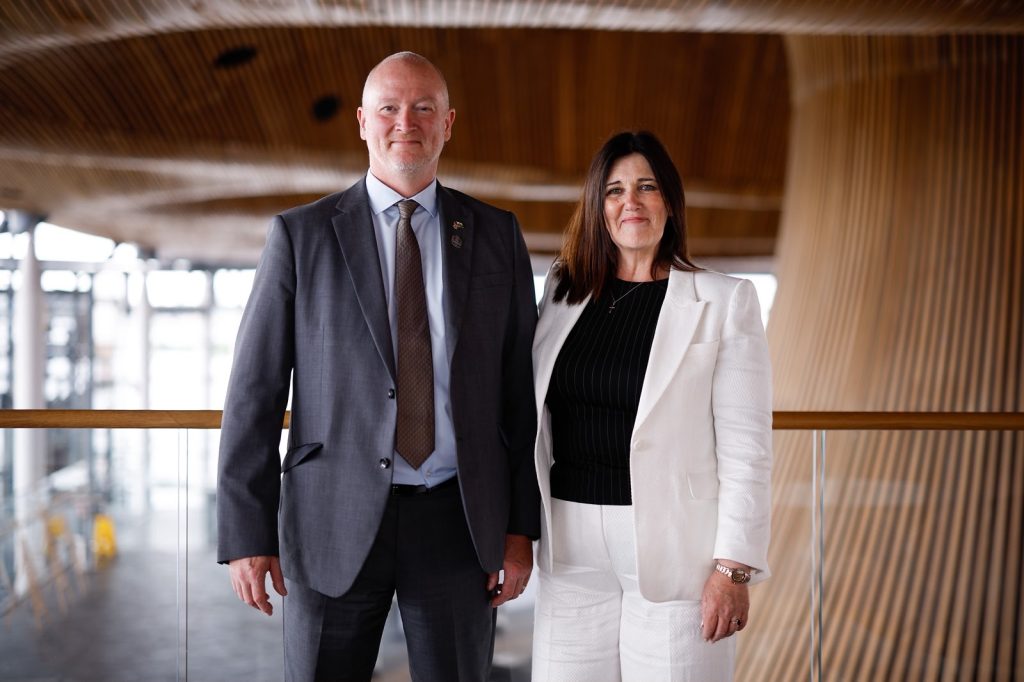
Claire Archibald MS and Paul Marr MS met with a senior representative from Valero to discuss the future of Pembroke Refinery, apprenticeships, and the pressures facing the UK refining industry.
Pembroke Refinery is one of the most important industrial sites in Wales, supporting hundreds of direct jobs as well as many more through contractors, suppliers and local businesses.
Speaking after the meeting, Claire Archibald MS said the refinery was “hugely important” to Pembrokeshire.

She said: “It supports skilled jobs, apprenticeships, contractors, local businesses, and families across the county. These are exactly the kind of well-paid, long-term jobs we should be protecting in west Wales.
“Valero raised serious concerns about the pressure being placed on UK refining, particularly through carbon costs and the UK Emissions Trading Scheme.
“If we make it too expensive to produce fuel here, we risk pushing jobs, investment, and production overseas. That would be bad for Pembrokeshire, bad for UK fuel security, and would not help the environment if the same fuel is simply imported from elsewhere.”
Ms Archibald said the Welsh Government had a role to play in supporting major industrial employers.
She added: “Ministers cannot just stand back and say this is nothing to do with them. They have responsibilities around economic development, skills, planning, regulation and infrastructure, and they are also part of the UK ETS framework.
“I will be pressing the Welsh Government to engage properly with Valero, listen to the concerns being raised, and treat Pembroke Refinery as the strategically important site it is.
“Pembrokeshire has already lost too much industry over the years. We should be doing everything sensible to protect skilled jobs, support apprenticeships and keep major employers investing here for the long term.”
Paul Marr MS said Pembroke Refinery remained a vital part of the local economy.

He said: “The message from Valero was clear: if we want to keep major industry in Wales, we have to make sure the policy environment allows businesses to invest, compete and plan for the future.
“We cannot afford to take sites like Pembroke Refinery for granted.”
Ms Archibald said she will now raise the concerns with the Welsh Government and ask what action ministers are taking to support Pembroke Refinery, protect skilled jobs and secure future investment in Pembrokeshire.
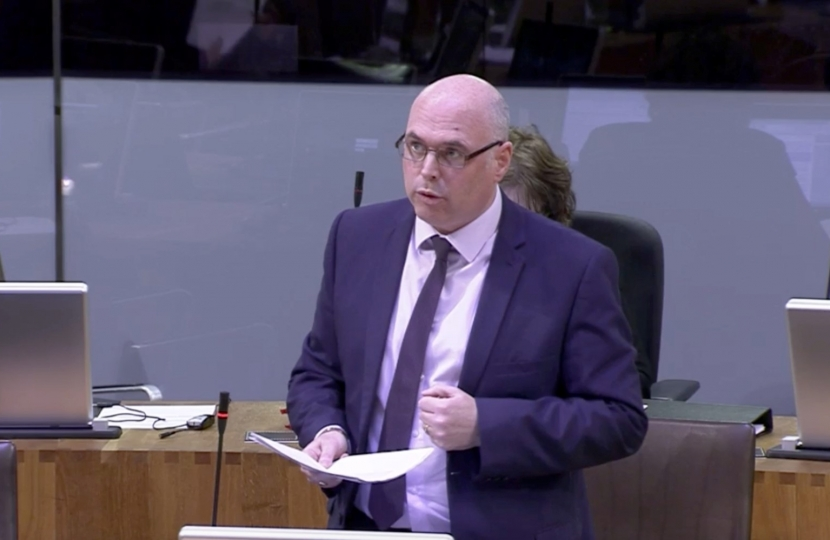
PAUL DAVIES MS has called on the Welsh Government to set out whether it will consider introducing a national screening programme for prostate cancer in Wales.
Mr Davies said he had requested a formal statement from ministers on prostate cancer services, including whether screening could be introduced to help improve early diagnosis.
He has also asked for an update on whether Stereotactic Ablative Radiotherapy, known as SABR, will be made available to patients in Wales. The treatment is already available to some patients in England.
Mr Davies said: “Prostate cancer is the most common cancer in men in Wales, and it is vital that patients have access to the very best treatments to improve outcomes.
“We need to understand whether the Welsh Government will consider a national screening programme, and whether Welsh patients will be given access to treatments that are already available across the border.”
The call comes amid continuing concern about cancer waiting times and access to specialist treatment in Wales.

Union says Welsh Government has funded repairs, meals and swimming lessons but failed to address one of the biggest pressures facing schools
SCHOOL leaders have welcomed extra Welsh Government funding for repairs, free school meals and swimming lessons — but warned that pupils with additional learning needs have been overlooked.
The criticism came after the Welsh Government set out its supplementary budget for 2026-27, including £40m for school buildings and repairs, £15m to expand free school meals in secondary schools, and £2m for swimming lessons.
Laura Doel, national secretary of school leaders’ union NAHT Cymru, said the extra capital funding for school buildings was welcome and would “go some way to plugging the gap”.
She also welcomed the expansion of free school meals, saying no child should go hungry because of their parents’ financial circumstances.
But Ms Doel said the “significant omission” was the lack of additional funding for ALN provision.
She said: “It beggars belief that of money that has come to Wales thanks to investment into additional needs in England, not a penny has gone to support pupils with ALN in Wales.
“We have seen local authorities, directors of education and the profession united on the need for significant investment in supporting our most vulnerable learners, but this government has chosen to ignore the pleas for support.
“It calls into question whether education is a key priority for this government.”
ALN pressure
Additional learning needs provision has become one of the major pressures facing schools and councils across Wales, with rising demand for specialist support, assessments, staffing and placements.
School leaders argue that without dedicated funding, already stretched school budgets are being forced to absorb costs which can affect support for both ALN pupils and the wider school community.
The Welsh Government says the supplementary budget is designed to support key priorities, including public services, schools, health and the cost of living.
But NAHT Cymru said the absence of new ALN money was difficult to justify at a time when schools are repeatedly warning that vulnerable learners need more support.

The Herald has asked the Welsh Government how much of the school buildings funding will come to west Wales and why no specific additional allocation has been made for ALN provision.



Community6 hours ago
Manorbier fire scandal: Council’s payout just £63,777 after school destroyed
PEMBROKESHIRE COUNTY COUNCIL has accepted an insurance settlement which leaves it with just £63,777.07 after the catastrophic fire which destroyed...


News14 hours ago
Bus overturns in major incident near Kidwelly
All passengers rescued as emergency services remain at scene A BUS overturned on the A484 between Kidwelly and Ferryside on...


Community1 day ago
Tenby Summer Spectacular cancelled amid council row over harbour access
Organisers say popular charity events cannot safely go ahead without clear powers to control crowds TENBY ROUND TABLE has announced...


News2 days ago
Motorcyclist dies after four-vehicle crash on A40 in Carmarthenshire
A MOTORCYCLIST has died following a four-vehicle collision on the A40 between St Clears and Whitland. Dyfed-Powys Police said the...


News2 days ago
Rhun ap Iorwerth urges new deal for Wales after Starmer quits
First Minister says next Prime Minister must focus on greater powers, fair funding and respect for Wales’ democratic mandate FIRST...


News2 days ago
How Labour’s landslide victory unravelled in just two years
Prime Minister announces resignation after losing support within his own party as Andy Burnham emerges as overwhelming favourite to take...


News2 days ago
Long Course Weekend set to bring thousands to Pembrokeshire
Three days of swimming, cycling and running will once again transform Tenby into one of the UK’s biggest endurance sporting...


Community3 days ago
The gentle giant behind the tattoos
Pembrokeshire security worker Josh Davies praised for professionalism, kindness and proving first impressions can be wrong JOSH Davies is hard...


Charity4 days ago
Toy Story fans fill charity toy box at Haverfordwest cinema
Donations pour in for SNAP Specialist Play as families embrace Toy Story 5 launch A TOY STORY-themed charity appeal at...


Community4 days ago
Lord Rhys emerges from the mist in St Davids
Giant puppet begins historic journey marking 850 years since the first Eisteddfod MIST swirled around St Davids Cathedral on Friday...
-

 Crime6 days ago
Milford Haven man jailed for breaching domestic violence protection order
-

 News6 days ago
Crash on Freeman’s Way causes school-run chaos across Haverfordwest
-

 Health4 days ago
Woman jailed assaults on police, harassment and XL Bully possession
-

 Crime4 days ago
Milford Haven woman spared jail despite string of shop thefts
-

 Crime6 days ago
Portfield Gate man faces careless driving allegation after Tufton crash
-
Community3 days ago
The gentle giant behind the tattoos
-

 Local Government5 days ago
Pembrokeshire faces accessible housing shortage as 403 people wait for homes
-

 News6 days ago
Brexit at 10: How Britain was sold a dream that cost us dearly