


Politics
Welsh Government updates 20mph guidance

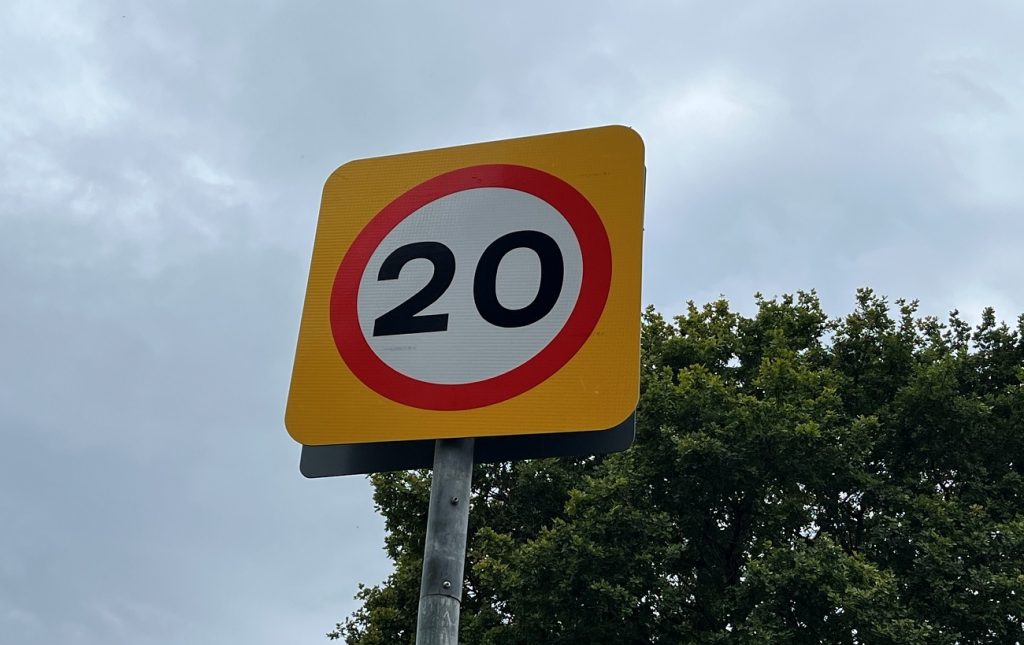
THE WELSH Government published guidance on reverting 20mph roads back to 30mph, announcing an extra £5m for councils to make speed limit changes.
Ken Skates, Wales’ transport secretary, told the Senedd more than 7,000 people have had their say after he launched a “national listening programme” on reversing speed limits.
The new guidance says the Welsh Government expects most speed limit changes from 20 to 30 mph will be made on A or B roads, which are typically main or strategic routes.
Mr Skates accepted 20mph “simply makes no sense” on some roads as he recognised the strength of feeling which saw a record 460,000 people sign a petition against the policy.
He said: “I do think that showing humility and patience can dissolve anger and vexation. We’ve been trying to show humility over 20mph and we’ve been patient.”

In a statement to the Senedd on July 16, he said the refreshed guidance will help councils make the right decisions for local roads, particularly when such calls are finely balanced.
He told the debating chamber or Siambr that 30mph could be considered on strategic roads outside urban centres and rural residential roads with no nearby facilities.
Mr Skates said 30mph could also be considered for strategic transport routes, such as important bus corridors with limited pedestrian and cyclist traffic.
The minister said councils will begin to act on feedback from September and will be able to bid for funding to make speed limit changes in line with the new guidance.
But he stressed that 20mph is the right speed limit near schools, hospitals, nurseries, community centres, play areas and built-up residential areas.
Calling for 20mph to be scrapped and replaced with targeted measures, Natasha Asghar claimed the £33m policy is set to deal a £9bn blow to the Welsh economy.
The Conservatives’ shadow transport secretary raised concerns about all the emphasis being “shifted away from the government and onto local authorities”.

She asked: “Isn’t this just a case of the Welsh Government almost washing its hands of this contentious scheme and forcing councils to deal with the flak instead?”
Ms Asghar warned that people across Wales complained of difficulty in submitting feedback via council websites to have their say on speed limits.
The South Wales East MS said: “Some were saying that entering road by road was an arduous task. Some said that the council was not taking feedback. And others were saying that they were told to contact the Welsh Government directly.”
Peredur Owen Griffiths, who also represents South Wales East, recognised the economy secretary’s acknowledgement that mistakes were made in the roll-out of 20mph.
Plaid Cymru’s shadow transport secretary welcomed the “partial u-turn” on the policy, saying the government was too slow to empower councils which led to the loss of goodwill.
Mr Owen Griffiths stressed his party remains committed to the principle of 20mph as he pointed to statistics showing a fall in the number of casualties.
But he said much more needs to be done to ensure a local voice in deciding 20mph zones as he warned that engagement cannot become “another unfunded burden” on councils.
He said: “It’s all well and good to invite people to make representations but how much encouragement and publicity was given to this?”
Swansea East MS Mike Hedges welcomed the guidelines which set out that 30mph limits can be considered on strategic transport routes, particularly A and B roads.
He said: “That’s why they’re called A and B roads – I’ve been saving that to your predecessor continually, who looked at me blank most of the time.”
John Griffiths, a fellow Labour backbencher, said his constituents in Newport East are largely supportive of 20mph but people want certain roads changed.
He raised the example of stretches of the B4245, where the speed limit frequently changes, with Mr Skates recognising the route needs to revert to 30mph.
But Mr Griffiths stressed the benefits of 20mph, saying: “Every single child’s life that’s saved is absolutely invaluable and we need to look at this policy in that context.”


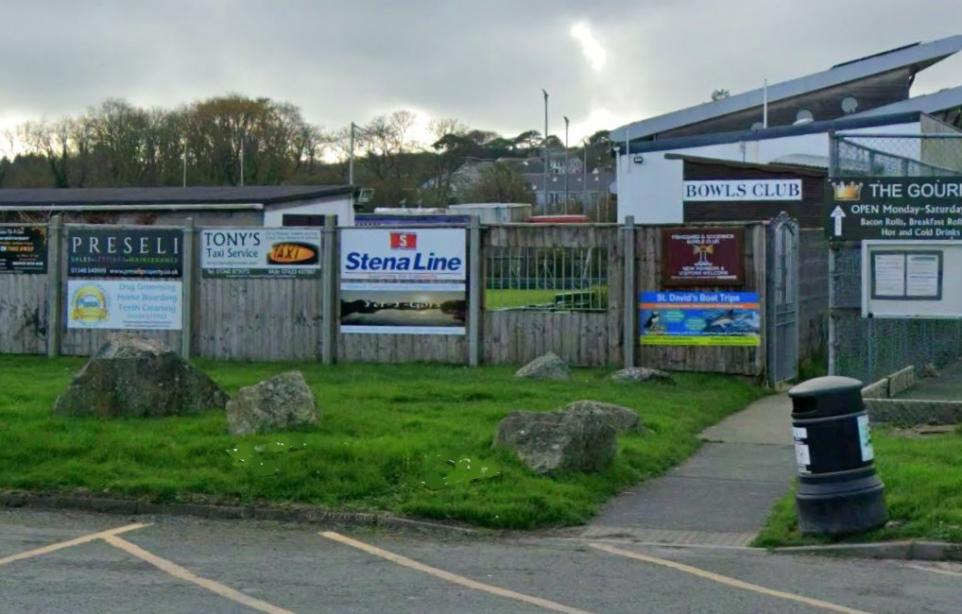
A Pembrokeshire sports club, which was recently refused permission by the council to keep advertising signs which support its activities, is looking to fight that decision.
Earlier this month, in an application refused by Pembrokeshire County Council on the grounds of visual impact, Fishguard & Goodwick Bowls Club sought retrospective permission for up to 36 signs on land close to the town’s Phoenix Centre.
The signs, which the applicants said provide “an important source of revenue for the Fishguard and Goodwick Bowls Club, supporting the ongoing operation and maintenance of local community sporting facilities,” had been in place for some 18 months, being removed ahead of the formal planning application.
Speaking after the refusal, Richard Brind, club captain of Fishguard & Goodwick Bowls Club, said the club had discussed challenging the decision, and had been taking advice from local county councillors about the best potential route, with options including a direct appeal through the Welsh Government’s PEDW (Planning and Environment Decisions Wales).
“We acted in good faith as we believed we had permission from a PCC department to install the signs.
“The irony in all of this is we actually paid PCC to have the signs made by their sign making department (who were the department that told us it would be OK to install the signs on our fence).
“The landlord of the grounds which is PCC have told us that they had no objection to us installing the signs, providing planning is granted.”
Mr Brind added: “I’m disappointed with the way the planning department have handled the process, not the decision, but I do think that was wrong; other sports clubs have signs up in the area, it doesn’t seem right.”
On the financial implication, he said: “Unfortunately, the costs of everything goes up, the costs to maintain the green are not covered by our membership, this year we’re probably going to spend £5,000. The money from the signs was certainly helping to keep the club viable, if we don’t get that money from somewhere, maybe through increased fees; membership would have to go up by a half, from £80 to £120.
“The funding we receive from the ads, it’s not vital but it’s a definite help, losing it would be ‘death from 1,000 cuts,’ money slowly trickling out.”
He finished: “I could understand it if it was an area of outstanding natural beauty rather than a car park, where we are we’ve got Jewsons and a petrol station.”
A spokesman for Pembrokeshire County Council said: “The Local Planning Authority has considered the application in accordance with the Town and Country Planning (Control of Advertisements) Regulations 1992 (as amended), which require due consideration of the impact signage would have on visual amenity and public safety.

“While comments regarding advice the applicant received from other council departments and landowner consent are noted, each application must be determined on its own merits with regard to relevant policy and legislation.
“The Authority recognises the club’s valuable role in the community; however, financial considerations are not material to the assessment of advertisement consent.
“Whilst there is a right of appeal to Planning and Environment Decisions Wales (PEDW), the Local Planning Authority remains willing to engage with the applicant regarding any revised proposals they may wish to present.”


CONCERNS over the future of skilled industrial jobs in Pembrokeshire have been raised following a meeting between two Senedd Members and Valero.
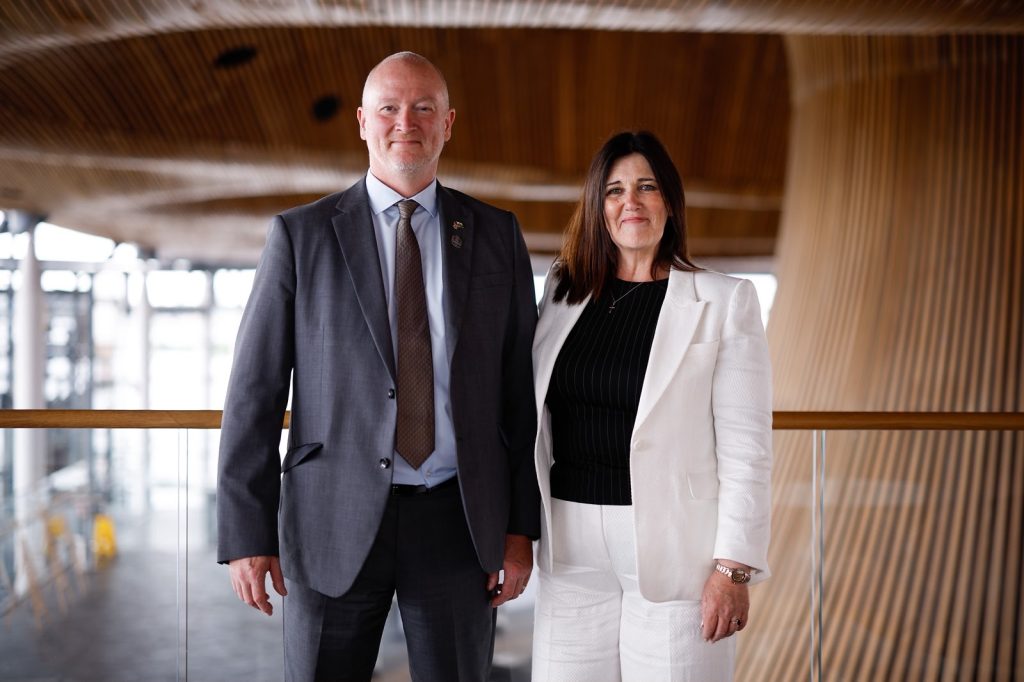
Claire Archibald MS and Paul Marr MS met with a senior representative from Valero to discuss the future of Pembroke Refinery, apprenticeships, and the pressures facing the UK refining industry.
Pembroke Refinery is one of the most important industrial sites in Wales, supporting hundreds of direct jobs as well as many more through contractors, suppliers and local businesses.
Speaking after the meeting, Claire Archibald MS said the refinery was “hugely important” to Pembrokeshire.

She said: “It supports skilled jobs, apprenticeships, contractors, local businesses, and families across the county. These are exactly the kind of well-paid, long-term jobs we should be protecting in west Wales.
“Valero raised serious concerns about the pressure being placed on UK refining, particularly through carbon costs and the UK Emissions Trading Scheme.
“If we make it too expensive to produce fuel here, we risk pushing jobs, investment, and production overseas. That would be bad for Pembrokeshire, bad for UK fuel security, and would not help the environment if the same fuel is simply imported from elsewhere.”
Ms Archibald said the Welsh Government had a role to play in supporting major industrial employers.
She added: “Ministers cannot just stand back and say this is nothing to do with them. They have responsibilities around economic development, skills, planning, regulation and infrastructure, and they are also part of the UK ETS framework.
“I will be pressing the Welsh Government to engage properly with Valero, listen to the concerns being raised, and treat Pembroke Refinery as the strategically important site it is.
“Pembrokeshire has already lost too much industry over the years. We should be doing everything sensible to protect skilled jobs, support apprenticeships and keep major employers investing here for the long term.”
Paul Marr MS said Pembroke Refinery remained a vital part of the local economy.

He said: “The message from Valero was clear: if we want to keep major industry in Wales, we have to make sure the policy environment allows businesses to invest, compete and plan for the future.
“We cannot afford to take sites like Pembroke Refinery for granted.”
Ms Archibald said she will now raise the concerns with the Welsh Government and ask what action ministers are taking to support Pembroke Refinery, protect skilled jobs and secure future investment in Pembrokeshire.
PAUL DAVIES MS has called on the Welsh Government to set out whether it will consider introducing a national screening programme for prostate cancer in Wales.
Mr Davies said he had requested a formal statement from ministers on prostate cancer services, including whether screening could be introduced to help improve early diagnosis.
He has also asked for an update on whether Stereotactic Ablative Radiotherapy, known as SABR, will be made available to patients in Wales. The treatment is already available to some patients in England.
Mr Davies said: “Prostate cancer is the most common cancer in men in Wales, and it is vital that patients have access to the very best treatments to improve outcomes.
“We need to understand whether the Welsh Government will consider a national screening programme, and whether Welsh patients will be given access to treatments that are already available across the border.”
The call comes amid continuing concern about cancer waiting times and access to specialist treatment in Wales.



Local Government38 minutes ago
Tenby Spectacular row continues as organisers say key question remains unanswered
Round Table says legal clarity over pedestrian access is still holding up event plan TENBY ROUND TABLE has welcomed Pembrokeshire...


Community19 hours ago
Manorbier fire scandal: Council’s payout just £63,777 after school destroyed
PEMBROKESHIRE COUNTY COUNCIL has accepted an insurance settlement which leaves it with just £63,777.07 after the catastrophic fire which destroyed...


News1 day ago
Bus overturns in major incident near Kidwelly
All passengers rescued as emergency services remain at scene A BUS overturned on the A484 between Kidwelly and Ferryside on...


Community2 days ago
Tenby Summer Spectacular cancelled amid council row over harbour access
Organisers say popular charity events cannot safely go ahead without clear powers to control crowds TENBY ROUND TABLE has announced...


News2 days ago
Motorcyclist dies after four-vehicle crash on A40 in Carmarthenshire
A MOTORCYCLIST has died following a four-vehicle collision on the A40 between St Clears and Whitland. Dyfed-Powys Police said the...


News2 days ago
Rhun ap Iorwerth urges new deal for Wales after Starmer quits
First Minister says next Prime Minister must focus on greater powers, fair funding and respect for Wales’ democratic mandate FIRST...


News2 days ago
How Labour’s landslide victory unravelled in just two years
Prime Minister announces resignation after losing support within his own party as Andy Burnham emerges as overwhelming favourite to take...


News3 days ago
Long Course Weekend set to bring thousands to Pembrokeshire
Three days of swimming, cycling and running will once again transform Tenby into one of the UK’s biggest endurance sporting...


Community3 days ago
The gentle giant behind the tattoos
Pembrokeshire security worker Josh Davies praised for professionalism, kindness and proving first impressions can be wrong JOSH Davies is hard...


Charity4 days ago
Toy Story fans fill charity toy box at Haverfordwest cinema
Donations pour in for SNAP Specialist Play as families embrace Toy Story 5 launch A TOY STORY-themed charity appeal at...
-

 Crime6 days ago
Milford Haven man jailed for breaching domestic violence protection order
-

 News6 days ago
Crash on Freeman’s Way causes school-run chaos across Haverfordwest
-

 Health4 days ago
Woman jailed assaults on police, harassment and XL Bully possession
-

 Crime4 days ago
Milford Haven woman spared jail despite string of shop thefts
-

 Crime6 days ago
Portfield Gate man faces careless driving allegation after Tufton crash
-
Community3 days ago
The gentle giant behind the tattoos
-

 Local Government6 days ago
Pembrokeshire faces accessible housing shortage as 403 people wait for homes
-

 News7 days ago
Brexit at 10: How Britain was sold a dream that cost us dearly