


Crime
Pembrokeshire fisherman strangled partner’s mother in front of child


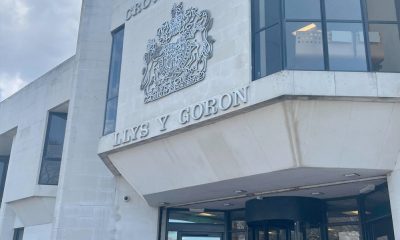
A PEMBROKESHIRE fisherman, Jake Bowman-Davies, 26, of Lighthouse Drive, Llanstadwell, has been handed a suspended prison sentence after strangling his partner’s mother in a terrifying incident witnessed by a young child, Swansea Crown Court heard on Wednesday (Jul 24).
The court was told that the incident occurred on December 17 last year. The victim had been asleep when she received a frantic phone call from her daughter around 1am. She could hear her daughter shouting and screaming, with Bowman-Davies audibly in the background. Concerned, she went to the nearby property to intervene, only to find the front door ajar and Bowman-Davies in a heated argument with her daughter inside.
Prosecution barrister Georgia Donohue described Bowman-Davies’s behaviour as “erratic and loud.” When the victim asked him to leave, he screamed in her face before grabbing her throat and restricting her ability to breathe. Miss Donohue added that the victim “felt genuine fear that he was not going to let go.”
Bowman-Davies’s partner and a young child were present during the assault. After releasing his grip, Bowman-Davies was ushered out of the house but retaliated by spraying alcohol over the victim and remained outside for another 10 minutes before police arrived and arrested him.
In a statement read in court, the victim expressed fear for her daughter and family following the incident.

Defence barrister David Singh argued that Bowman-Davies, who works at sea and tends to “binge-drink” when off work, is “a young man who clearly needs intervention.”
Judge Huw Rees addressed Bowman-Davies, emphasizing the lasting impact of such violence on children. “No child should see violence between adults of this kind. It’s seared into their subconscious and that could damage them irreparably,” he said. The judge warned Bowman-Davies of severe consequences for any future breaches of court orders.
Bowman-Davies, who pleaded guilty to intentional strangulation, received a 16-month prison sentence, suspended for 18 months. He is required to complete a 25-day rehabilitation activity and 120 hours of unpaid work. Additionally, he was issued a restraining order, prohibiting contact with his victim for three years.



ELIZABETH COURT SCENE STOOD DOWN AFTER DOMESTIC INCIDENT
A FOUR-HOUR police standoff in Pembroke Dock has ended with a 21-year-old man arrested on suspicion of inflicting grievous bodily harm.
Dyfed-Powys Police said the incident at Elizabeth Court has now been stood down and the scene released.
The man has been taken to hospital to receive medical attention.
Chief Inspector Dominic Jones said: “I want to thank local residents for their patience while we dealt with this incident. I understand that such a large police presence in a residential street is concerning to see, and I’m grateful to everyone who co-operated with our officers at the scene.
“I’d like to offer my reassurance that our units responded to an isolated domestic incident, and there was no further threat posed to the wider community. The scene has now been released, and we will investigate the full circumstances of this morning’s incident.”

Officers were called to the address this morning (Saturday, May 9), with a large police presence remaining in the area for several hours.
Eyewitnesses told The Herald that police were asking a man upstairs to come down, with tasers drawn during the incident.
Police dogs, specialist officers and what appeared to be a negotiator were also seen at the scene.
The incident lasted from around 11:00am until about 3:10pm.



TEENAGER REMANDED AHEAD OF JULY TRIAL
A 15-YEAR-old boy has denied attempting to murder a teacher during a stabbing incident at Milford Haven School.
The teenager, who cannot be identified for legal reasons, appeared at Swansea Crown Court on Friday (May 8).
He pleaded not guilty to attempted murder, causing grievous bodily harm with intent, and unlawful wounding with a knife.
The charges relate to an incident at Milford Haven School on Thursday, February 5, when emergency services were called after reports that a teacher had been assaulted by a pupil carrying a weapon.
The school was placed into lockdown and pupils were later safely evacuated.
The injured teacher was taken to hospital with stab wounds, but was discharged later the same day.
Police said at the time that specialist officers were supporting the victim and the wider school community.
The teenager was remanded in custody following Friday’s hearing.
A trial is due to begin on July 6.

ARMED police were called to a supported accommodation building in Johnston after a man allegedly barricaded himself inside a room while behaving aggressively and racially abusing staff.
Dyfed-Powys Police confirmed officers were called to Silverdale Lodge at around 8:55am on Saturday (May 2) following reports of disorder involving a resident.
According to police, the man allegedly acted aggressively towards staff members and made racially abusive comments before barricading himself inside a room at the property.
The force said armed officers were deployed to ensure the safety of staff, other occupants and the man himself.

A spokesperson for Dyfed-Powys Police said: “Dyfed-Powys Police was called to Silverdale Lodge in Johnston at approximately 8.55am on May 2 following a report of a male behaving in an aggressive manner and being racially abusive towards a member of staff.
“Officers attended the scene and the male had barricaded himself in a room.
“In order to ensure the safety of the male, staff members and other occupants of the building, armed officers attended the scene.
“The man was detained and arrested. There were no injuries to members of staff or officers reported. There is currently no ongoing threat to the public.”
Police confirmed Billy Pitman, aged 29, has been charged with racially aggravated public order offences, criminal damage and threats to cause criminal damage in connection with the incident.
Pitman was remanded into custody and appeared before Swansea Magistrates’ Court on Monday (May 4).
We will bring you the court result as we receive it.



News3 hours ago
Plaid Cymru celebrates historic victory as Rhun ap Iorwerth arrives at Cardiff Bay
CROWDS gathered outside the Senedd as Plaid Cymru leader Rhun ap Iorwerth arrived in Cardiff Bay following his party’s historic...


Crime4 hours ago
Police standoff ends after four-hour incident in Pembroke Dock
ELIZABETH COURT SCENE STOOD DOWN AFTER DOMESTIC INCIDENT A FOUR-HOUR police standoff in Pembroke Dock has ended with a 21-year-old...


Crime7 hours ago
Teen denies attempted murder of Milford Haven teacher
TEENAGER REMANDED AHEAD OF JULY TRIAL A 15-YEAR-old boy has denied attempting to murder a teacher during a stabbing incident...


News24 hours ago
Catastrophe for Labour as Plaid and Reform reshape Welsh politics
ELUNED MORGAN LOSES SEAT AS OLD CERTAINTIES ARE SWEPT AWAY THE VOTERS of Wales have delivered one of the most...


News1 day ago
Labour wiped out in Ceredigion Penfro as Plaid tops poll and First Minister loses seat
Shock result sends political shockwaves across Wales as Reform also surges in historic Senedd count LABOUR suffered one of the...


News1 day ago
Labour deputy says party ‘will not form next Welsh Government’
LABOUR FACES HISTORIC DEFEAT AS COUNTING CONTINUES ACROSS WALES LABOUR’S Deputy Leader in Wales has effectively conceded the Senedd election,...


News1 day ago
Counts underway in historic Senedd election
Wales waits for results as first election under new voting system reaches count stage COUNTING is underway across Wales today...


Charity2 days ago
Chief’s Tour honours fallen officers with 75-mile Pembrokeshire ride
Dyfed-Powys Police team raises thousands for bereaved police families charity A TEAM of officers and staff from Dyfed-Powys Police cycled...


Crime2 days ago
Racial abuse suspect barricaded himself inside Johnston lodge
ARMED police were called to a supported accommodation building in Johnston after a man allegedly barricaded himself inside a room...

Crime2 days ago
Milford Haven woman denies causing suffering to cat
Jury hears evidence over alleged failure to seek treatment for tumour A MILFORD HAVEN woman has denied causing unnecessary suffering...
-

 News4 days ago
Baby in critical condition after Fishguard emergency
-

 News3 days ago
Former housing officer admits drink-driving in Pembrokeshire retail park
-

 Crime3 days ago
Job loss threat for convicted Pembrokeshire drug-driver
-

 Crime3 days ago
Milford motorist disqualified for drug-driving
-

 Crime3 days ago
Police tip-off leads to driving ban for Milford motorist
-
Crime2 days ago
Racial abuse suspect barricaded himself inside Johnston lodge
-

 Community3 days ago
Sixth-former firefighter balances schoolwork with saving lives
-

 Crime3 days ago
Delivery driver caught twice over legal drink-drive limit