


Entertainment
Mary Poppins star Glynis Johns laid to rest in West Wales

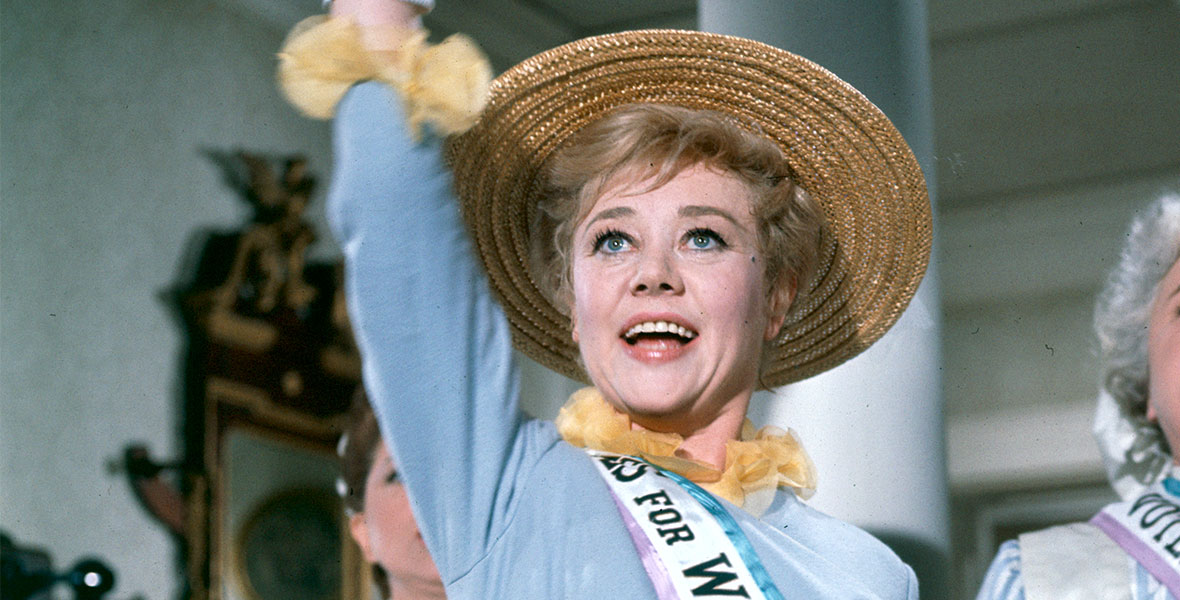
ONE of the final stars from Hollywood’s golden era has been interred in a Carmarthenshire town she frequented during her rise to fame, a local church minister has confirmed.
British actress Glynis Johns, best known for her portrayal of the suffragette mother Winifred Banks in Mary Poppins, passed away in Los Angeles in January at the age of 100.
In April, her ashes were brought to the Jerusalem Independent Chapel in Burry Port, Carmarthenshire, to be laid to rest alongside those of her Welsh father, the actor Mervyn Johns.
A “lovely” and “solemn” ceremony preceded the burial, during which Send In The Clowns—a song composed specifically for Johns by the renowned Stephen Sondheim—was played, according to Chris Owen, the minister of the chapel.

Mr Owen disclosed that he was approached by Johns’ goddaughter in the United States, who sought to locate the burial site of the actress’s father.

“It was quite a surprise—I hadn’t realised she had any connection to Burry Port,” he remarked, noting that her will had specified her ashes be interred in the family grave.
“It’s really touching. I remember her films from my youth, back in the black and white days,” said Mr Owen, 72.
“While she may be less well-known today, she was quite a celebrated actress in her time.
“Her father had a stronger link to Burry Port, and I’ve been told she used to visit occasionally, to find some respite from the pressures of fame.”

Among those present at the ceremony was Rachael Nicholson, whose grandmother was a cousin of Johns.
“They were close in age and enjoyed spending time together—when she visited—taking dancing and ballet lessons in Pembrey,” Ms Nicholson recalled.
She described the service as “small”.

“Small, considering her stature as one of Hollywood’s greats, but it’s clear that this is where she felt her roots were, and she wanted to return to her family.”
Glynis Johns, a star of stage and screen, died in Los Angeles in January at the age of 100.
Born into a showbusiness family in October 1923 in South Africa, where her parents were performing, Johns was destined for the spotlight.
Her father, originally from Wales, toured with a drama company before returning to Britain, where he acted in several films following World War Two, including The Captive Heart and Scrooge. He passed away in 1992, aged 93.
Glynis Johns followed in her father’s footsteps, making her big screen debut in 1948 as the mermaid Miranda. Her performance in the comedy catapulted her to stardom in the UK.
She later earned an Academy Award nomination for Best Supporting Actress for her role in the 1960 film The Sundowners, and starred alongside Dame Julie Andrews in the 1964 Disney classic Mary Poppins, a film that went on to win five Oscars.
In 1973, she won a Tony Award for her portrayal of Desiree Armfeldt in Sondheim’s Broadway musical A Little Night Music, where she performed Send In The Clowns—a song she once described as “the greatest gift I’ve ever been given”.


GET ready to celebrate St Patrick’s Day in style this Friday at the Giraldus Centre in Manorbier.
The community venue is hosting a lively evening of music, dancing and Irish-themed fun, with entertainment from popular local group The Slipway Ukes.
Doors open at 7:00pm on Friday (Mar 20), with free entry for all. A fully licensed bar will be open throughout the evening, serving drinks and snacks with an Irish twist.
Organisers are encouraging everyone to “unleash their inner leprechaun” and enjoy a night on the dance floor.
There is no need to book—just turn up and join in.

Donations on the night will be gratefully received in support of the Paul Sartori Foundation.
The event takes place at the Giraldus Centre, Manorbier, SA70 7TN.
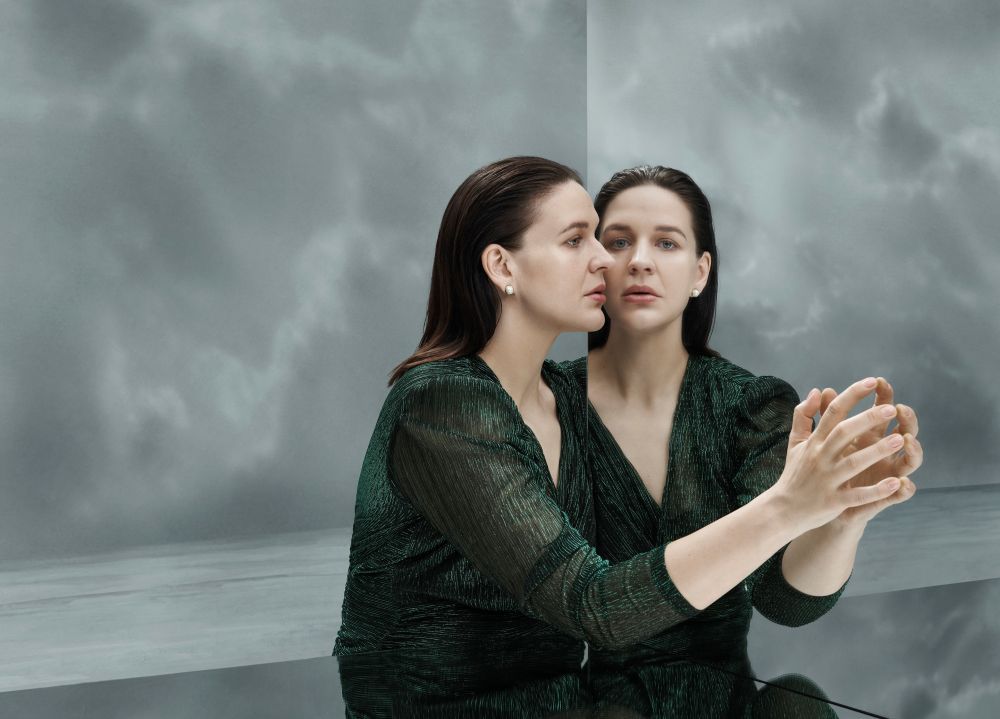
Lise Davidsen leads star cast in Wagner’s epic tale of love and death in special cinema broadcast on Sunday (Mar 22)
AFTER years of anticipation, a truly unmissable event arrives in cinemas worldwide as the electrifying Lise Davidsen takes on one of the ultimate roles for dramatic soprano – the Irish princess Isolde – in Wagner’s transcendent meditation on love and death, Tristan und Isolde.
Heroic tenor Michael Spyres stars opposite Davidsen as the love-struck Tristan in what promises to be a powerful and emotionally charged performance.
The production also marks the arrival of a new staging at the Metropolitan Opera by Yuval Sharon, making his Met debut. Sharon has been hailed by The New York Times as “the most visionary opera director of his generation” and was the first American to direct an opera at the famous Wagner festival in Bayreuth.
Music Director Yannick Nézet-Séguin also leads Tristan und Isolde at the Met for the first time in this landmark production.
The cast includes mezzo-soprano Ekaterina Gubanova reprising her acclaimed portrayal of Brangäne, alongside bass-baritone Tomasz Konieczny as Kurwenal following his celebrated Met appearances in Wagner’s Der Fliegende Holländerand the Ring cycle. Bass-baritone Ryan Speedo Green makes an important role debut as King Marke.
Reviewing the production for The Observer, Fiona Maddocks described it as a “glorious production” and “well worth catching”, adding: “This was one of those rare and blissful nights when dropped jaws silenced noisy opinion in the queue for coats afterwards.”
The recorded broadcast of Tristan und Isolde will be screened at the Torch Theatre on Sunday (Mar 22) at 4:00pm.
For further information visit www.torchtheatre.co.uk or contact the Box Office on (01646) 695267.
ENDS

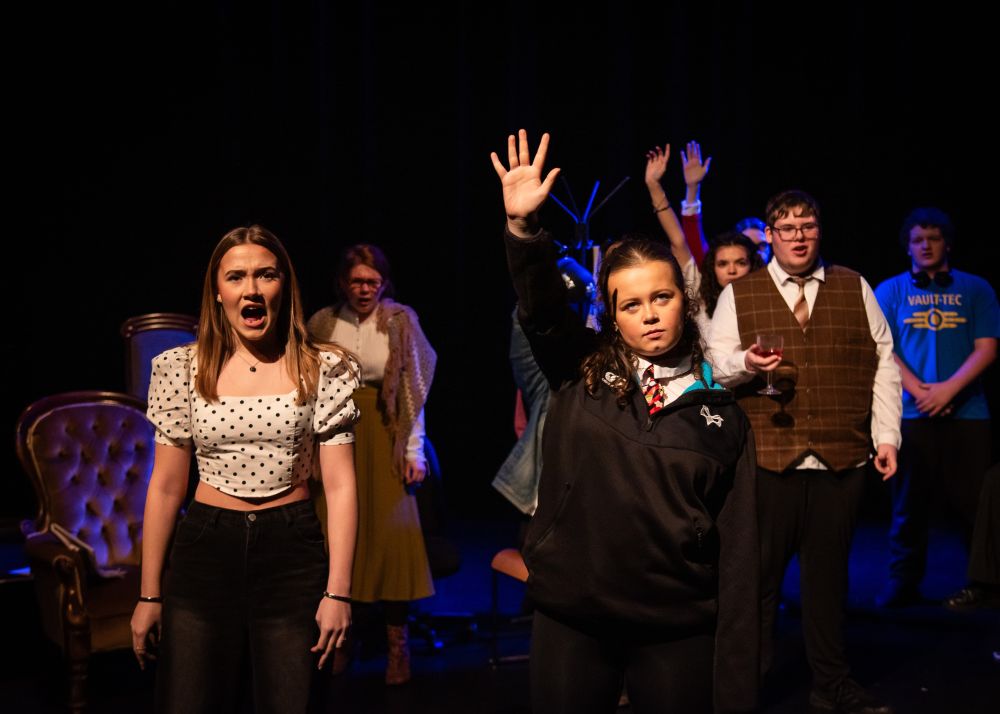
Young performers wow audiences as Sycamore Gap sells out
THREE nights of outstanding performances from the Torch Youth Theatre culminated in a sell-out final night, with young performers from across Pembrokeshire dazzling audiences in their production of Sycamore Gap.
The show proved hugely popular, with 96% of tickets sold across the run at the Torch Theatre in Milford Haven. The production also received glowing praise from the theatre’s community and junior reviewers.
Director Tim Howe said the success of the show reflected the dedication and hard work of the young cast.
“We are so incredibly proud of our young people and everything they have achieved with this production,” he said.
“While breaking box office records with 96% of tickets sold is an incredible milestone, the greater triumph is seeing these performers gain the essential life skills that will define their future success.

“Sycamore Gap demonstrates what we at the Torch believe makes youth theatre so special. It provides a safe and creative space where young people can build friendships, grow in confidence and explore the issues that matter most to them.”
Freya, one of the Torch Theatre’s junior reviewers, said she was impressed by the standard of the performance.
“I was impressed with the singing at the beginning of the show. What a voice!” she said.
“Every actor delivered their lines as if it were a normal conversation. I didn’t even hear a single stutter or notice if anyone made an error. The skill it must take! I’d be shaking in my boots.”

The success of Sycamore Gap will be followed by one final performance at Aberystwyth Arts Centre as part of the National Theatre Connections tour.
However, the young performers will have little time to rest as preparations are already under way for their next major production.
Mr Howe explained that the Torch Youth Theatre will soon begin work on a brand-new summer show.

“Following our Aberystwyth Arts Centre performance, we move straight into our spectacular summer production, Robin Hood and the Legend of the Black Knight,” he said.
“Written specifically for our Youth Theatre, the production will see more than fifty young people take to the main house stage for a fresh retelling of the classic tale. It’s an incredibly exciting time for our performers, and we invite everyone to come along and support them.”
The story picks up ten years after Robin Hood fled into the forest. Now he has returned in search of adventure, leading audiences deep into Sherwood Forest alongside Maid Marian and a host of familiar characters.
With daring escapes, a legendary archery contest and the appearance of the mysterious Black Knight, the production promises a thrilling new take on the well-known legend as Robin and his allies stand against the tyranny of Queen Eleanor and the ruthless Sheriff of Nottingham.
Robin Hood and the Legend of the Black Knight will be performed at the Torch Theatre from Monday (July 20) to Wednesday (July 22).
Tickets are available from the Torch Theatre Box Office on 01646 695267 or online at torchtheatre.co.uk. Prices are £10, with concessions available for £8.
Image: Jasper Photography



Education12 hours ago
Milford Haven school plans unveiled but funding not yet secured
PLANS for a new £100 million school in Milford Haven have been unveiled, but the project has not yet secured...


News13 hours ago
Council unveils plans for new state-of-the-art secondary school in Milford Haven
PEMBROKESHIRE COUNTY COUNCIL has revealed plans for a new state-of-the-art school in Milford Haven, promising modern, inspiring learning spaces for...


Health16 hours ago
NHS waiting list falls — but cancer delays and diagnostic backlog worsen
Record progress claimed by Welsh Government as critics warn key targets are still being missed THE NHS in Wales has...


Crime2 days ago
Rapist jailed after ‘abhorrent’ attacks on woman and children
Haverfordwest man told police “women won’t have sex without force” A HAVERFORDWEST man who raped a woman and a young...


News2 days ago
Reform secures first Pembrokeshire councillor in Hakin by-election win
Late Reform candidate takes seat as independent surge and Labour withdrawal shape contest REFORM UK candidate Scott Thorley has won...


News2 days ago
Scott Thorley elected as Pembrokeshire’s first Reform councillor
REFORM UK candidate Scott Thorley has won the Hakin by-election after securing 179 votes. The full result is as follows:...


News2 days ago
Police confirm man has died after being recovered from River Cleddau
Major emergency response in town centre after concerns raised for man in water A MAN has died after being recovered...


Community2 days ago
Davies and Kurtz urge groups to seek employability funding
Community organisations in Pembrokeshire encouraged to apply for new grants supporting skills and job access LOCAL Senedd Members Samuel Kurtz...


News3 days ago
Emergency services flood Haverfordwest after reports of person in river
Town centre sealed off as multi-agency response continues A MAJOR emergency response is underway in the centre of Haverfordwest after...


News3 days ago
Detectives receive surge of new information in bid to identify man found at Powys reservoir
Public response follows release of facial image as officers pursue fresh lines of enquiry DETECTIVES investigating the identity of a...
-

 Health7 days ago
Welsh Ambulance Service to host bi-monthly Board meeting
-

 News6 days ago
Rayner and Lammy visit Wales to discuss justice and community safety
-

 News5 days ago
Fishguard linked to allegations in Many Tears Animal Rescue investigation
-
News3 days ago
Emergency services flood Haverfordwest after reports of person in river
-

 Local Government6 days ago
Investigation confirmed after inspectors visit Many Tears Animal Rescue
-

 Community7 days ago
Local charity hosts cancer awareness event in Cardigan
-

 Business7 days ago
Work set to begin on £50m hydrogen plant in Milford Haven
-

 Farming7 days ago
Plea to remove decades old ‘unviable’ planning conditions from property