

Education
Alarm over 44% fall in additional learning needs numbers

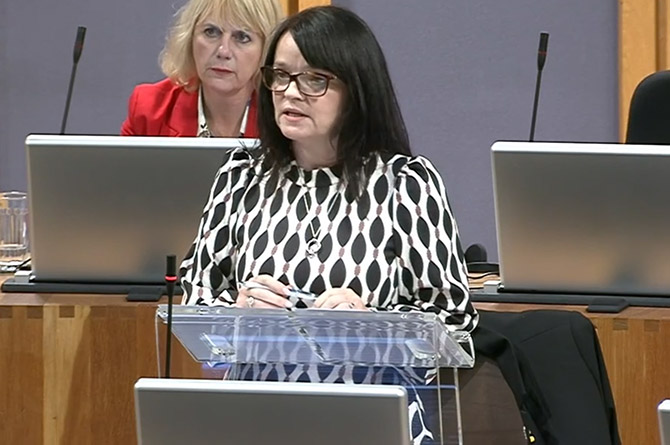
THE NUMBER of children recorded as having additional learning needs has almost halved under Welsh Government reforms due to “systematic underfunding”, a committee warned.
Buffy Williams led a debate on the education committee’s interim report amid a Senedd-long inquiry investigating the Welsh Government’s sweeping changes to educational support.
The additional learning needs (ALN) reforms have been replacing the old special educational needs (SEN) system in phases over four school years from 2021.
Ms Williams, who chairs the committee, said: “So, what have we found? To be blunt, the additional learning needs reforms are not going as planned.”
She raised concerns about a 44% fall in the number of pupils recorded as having SEN or ALN during the transition which is entering its final year.

She told the Senedd: “This reduction appears to be driven by a decrease in the number of pupils identified as having low to moderate SEN or ALN.
“At no point during the passing of the ALN bill did the Welsh Government anticipate that the reforms would almost halve the numbers of children identified as having additional needs.
“In fact, the Welsh Government repeatedly asserted that it would have no impact on the total numbers of children identified as having ALN or SEN.”
Ms Williams said the committee struggled to believe arguments that SEN was previously over-reported or that “universal” provision is sufficiently inclusive.
The reason committee members found most convincing was schools and councils lacking the required resources to give every child an individual development plan.
Ms Williams told the debating chamber or Siambr: “This resourcing shortage is the result of years of systematic underfunding of SEN and ALN provision in schools.”
Tom Giffard, the Conservatives’ shadow education secretary, echoed the Labour committee chair’s comments, warning that too many learners are being left behind.

He said: “In 2016/17, there were 92,000 children recognised as having SEN with low to moderate learning difficulties or disabilities. In 2022/23, that’s nearly halved.
“Now, I can’t realistically believe that there are fewer young people today with additional learning needs than there were less than a decade ago.”
Mr Giffard, a former teaching assistant in a Welsh-language primary school, added: “It’s clear that there are huge elements of the system that are not working.
“And that causes frustration for parents, for pupils, for teachers and others who care about these young people who are not getting the support they need.”
Cefin Campbell, Plaid Cymru’s shadow education secretary, was similarly greatly concerned by the fall in the number of children receiving support.
Calling for adequate funding, he said: “We can’t let these children and young people down.”
Labour’s Hefin David, who is stepping down from the committee for personal reasons, said he had nothing but praise for the ALN support his daughter has received.
“This system has worked for her,” he said while acknowledging that some parents feel they face a “constant battle” for support for their children.
Dr David, who represents Caerphilly, suggested the difficulty is children in a grey area of diagnosis who sit just outside the statutory support that is available.
He told the Senedd: “Giving them the support is the challenge because their needs are very different and diverse.”
Warning that children are falling under the radar, Laura Anne Jones said the reforms are not clear enough, with Wales’ councils interpreting them in 22 different ways.
She raised the impact on parents, saying: “Many felt very isolated and helpless that they didn’t know how to get the support their children needed, and it’s quite heartbreaking.”
Plaid Cymru’s Heledd Fychan said the committee heard children have been traumatised by a lack of support, leading to high absence levels among some pupils with ALN.
Responding to the debate on October 16, Lynne Neagle, who formally accepted most of the committee recommendations, recognised the challenges.
Wales’ education secretary told the Senedd she has listened to feedback that parts of the legislation, which was passed in 2018, are overly complex and unclear.
Ms Neagle said improving collaboration between health and education is a key priority.
The minister pointed to £107m invested in day-to-day revenue support since 2020, with more than £170m in longer-term capital to improve facilities for pupils with ALN.
She said her officials are reviewing how councils fund mainstream schools, with the aim of identifying how much each delegates for ALN.
Ms Neagle highlighted an extra £5m invested in a pay award for schools’ ALN coordinators.
In closing, she said: “I am determined that meeting the needs of learners with ALN remains at the heart of our education reforms.”



A CALL to replace a Pembrokeshire village school classroom that had reached the end of its life with a modern facility has been given the go-ahead by county planners.
In an application to Pembrokeshire County Council, the local authority itself, through agent Williams-Architects Ltd, sought permission for the erection of a new modular classroom building at the site of Llandissilio’s Ysgol Brynconin Welsh Medium 3-11 school, along with the demolition of the existing modular classroom building.
A supporting statement said: “In addition to the main school building, some classroom and library facilities are located in a prefabricated hut within the school grounds constructed under the historical HORSA programme.
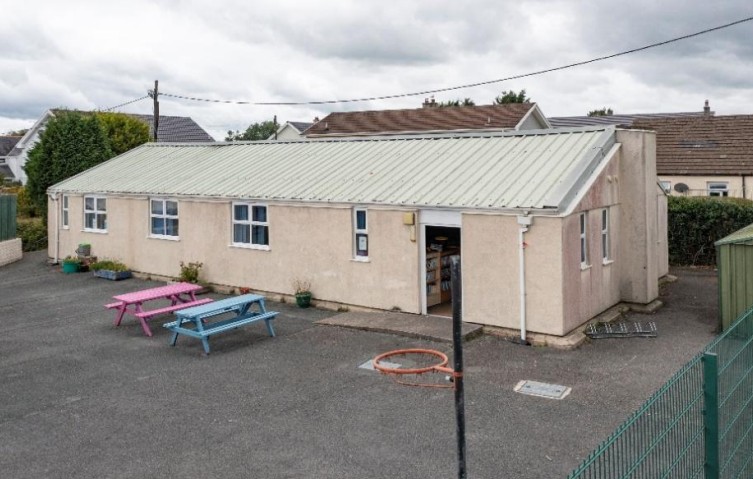
“Despite various upgrades over its lifespan including insulation and new windows, the building is no longer fit for purpose, and a replacement is required to ensure the school can continue to provide its pupils with modern, suitably equipped and compliant facilities that enable high quality education.”
HORSA buildings were originally designed as temporary structures, typically constructed using prefabricated concrete, timber, and steel to facilitate rapid assembly.
Although intended for short-term use, many HORSA buildings have remained in operation for decades. Over time, these structures have surpassed their intended lifespan, leading to significant structural issues, such as weakened frames, deteriorating roofs and external facades.
The statement added: “The primary use of the replacement building will remain as currently; it will include a single classroom alongside a multifunctional space which will be used as a library, staff and group room as required. It will also include an additional toilet, new accessible toilet, a cleaners’ store and formal classroom storage.

“The intention of the proposed building is to replace an existing classroom facility which is no longer fit for purpose, and whilst a simple replacement will significantly improve the day-to-day experience of the staff and pupils who currently use this building.”
An officer report recommending approval said that, while the proposed replacement building would not result in any greater impact on the visual amenity in terms of its design, scale and overall appearance, the proposal includes the demolition of an existing building which could have an impact on the local amenity during the demolition process.
It said that, since local concerns were raised, a Demolition and Construction statement has set out the proposed demolition methodology and construction process, including details of the sequence of works, hours, and anticipated timeframe, and it is considered that the proposed demolition and construction “will have no significant detrimental impact upon the locality amenity”.
The application was conditionally approved.
Back in July 2025, members of the council’s Cabinet backed approval for a new modular building at Ysgol Brynconin, members hearing that “the external structure has rapidly declined, with the render board failing and allowing water ingress into the areas of external wall insulation”.


HAVERFORDWEST VC HIGH SCHOOL has closed early today after extreme heat affected wall-mounted soundproofing boards around the building.
The school said several of the boards, including some positioned at height, could become unsafe and fall from the walls.
Pupils were initially moved to safe areas and placed under supervision while the situation was assessed by the school’s site management team and Pembrokeshire County Council maintenance officers.
Following discussions, a decision was made to close the school early so the boards could be removed safely.
School buses were due to arrive at 1.15pm to transport pupils who normally travel home by bus. Children attending a trip at Scolton Manor were expected to return to the school by 1pm.
Parents and carers who usually collect their children were asked to do so from 1.30pm.
Pupils who normally walk home were only permitted to leave after receiving parental permission. Parents could provide permission by sending their child a text message to show their form tutor or by contacting the school reception.
The school said it expected the affected boards to be removed today, allowing the school to reopen as normal tomorrow, Tuesday, July 14.
Parents will be updated through ParentMail if the work cannot be completed as planned.

SCHOOL leaders in Wales could consider industrial action after the Welsh Government rejected an independent recommendation for teachers and headteachers to receive a 4.25% pay rise.
NAHT Cymru condemned the decision as “fundamentally wrong-headed” after Education Minister Anna Brychan announced that ministers would instead consult on a 3.5% increase from September 2026.
The union said it would now consult its members over its next steps and would take “whatever action is appropriate” to defend school leaders, teachers and pupils.
Unqualified teachers would receive a larger 5% increase under the Welsh Government’s proposals.
Additional funding has been promised to councils and schools to support the award, although the government has not yet published details of how much money will be provided or whether it will cover the full cost.
The Independent Welsh Pay Review Body had recommended that all teachers’ salaries and allowances rise by 4.25%.
However, Ms Brychan said the recommendation was not affordable within existing budgets and that the government had been forced to balance financial constraints against the need to recognise and reward the education workforce.
NAHT Cymru said the rejection raised fundamental questions about the purpose and credibility of the independent review process.
Rob Kelsall, the union’s assistant general secretary, said: “The Welsh Government’s decision to depart from the recommendation of the Independent Welsh Pay Review Body is deeply disappointing and fundamentally wrong-headed.
“The review body was established to provide independent, expert advice based on the evidence presented to it about recruitment, retention, workload and the wider challenges facing the education workforce.
“If ministers are prepared to disregard that advice when it becomes inconvenient, then it is entirely reasonable to ask what the purpose of the process is.”
Mr Kelsall said ministers could not claim to value independent scrutiny while ignoring the conclusions of the body established to advise them.

He added: “Doing so undermines confidence in the integrity of the system and risks reducing the entire process to little more than a political exercise.”
The union said teachers and school leaders had submitted evidence to the review body in the expectation that its conclusions would carry genuine weight.
It argued that the Welsh Government should provide a detailed explanation if it believed the independent recommendation was incorrect.
Mr Kelsall said: “Simply setting aside its recommendation damages trust and raises serious questions about the credibility of future pay reviews.
“At a time when schools are facing significant recruitment and retention difficulties, this is precisely the wrong signal to send to the profession.”
‘Perfect storm’ facing Welsh schools
NAHT Cymru also warned that the pay dispute came as schools faced growing pressure from staff shortages, rising workloads and what it described as a crisis in additional learning needs provision.
The union said demand for ALN support was increasing, while the needs of children entering the system were becoming more complex.
It claimed years of underfunding had left schools struggling to provide adequate support for some of Wales’s most vulnerable pupils.
Mr Kelsall said: “The reality facing schools is that we are experiencing a perfect storm.
“Demand for ALN support continues to grow, the complexity of need is increasing, schools are facing workforce pressures, and years of chronic underfunding have left provision stretched to breaking point.”
He said teachers and school leaders remained committed to supporting every child, but warned that goodwill could not compensate for insufficient funding.
NAHT Cymru has called for at least £100m in additional investment to begin addressing pressures within the ALN system.
It also expressed concern about proposals to divide additional funding equally between councils and schools, arguing that money intended for frontline provision did not always reach the pupils it was meant to support.
Mr Kelsall said any additional investment should be transparent, accountable and directed towards the areas of greatest need.
He said: “Schools are best placed to identify need and provide support quickly and effectively.”
Union to consult members
Paul Whiteman, NAHT’s general secretary, accused the Welsh Government of treating education as a peripheral concern.
He said: “Consistently diverting funds earmarked for education away from schools and now deliberately underpaying the very professionals that equip and inspire the next generation for the challenges of the future is a reckless recipe for disaster.
“We will now consult members on next actions and the NAHT will do whatever is appropriate to defend the education of young people and the rights of those that deliver it.”
The union has not yet said what form any action could take.
The Welsh Government’s proposal remains subject to consultation, which is expected to begin when schools return in September.
Ministers have also announced plans to consult on a single pay scale for classroom teachers, which would allow annual progression, and changes intended to protect the weekends and holiday periods of school leaders.
Funding will also be offered to support a doubling of the period during which teachers receive full maternity pay, provided councils and unions agree to amend employment contracts.
Ms Brychan said: “I am mindful of the difficult financial circumstances affecting schools and colleges and the implications that unfunded pay awards would have on budgets and staff numbers.
“In coming to my decision, I have had to balance the available budget with the need to recognise and reward our workforce.”


Local Government17 minutes ago
Catapult attacks suspected after wildlife deaths at Pembroke Mill Pond
Wildlife Crime Officers are investigating after the town council said around five animals showed signs of deliberate injury WILDLIFE found...


Crime3 hours ago
Narberth retailer speaks of shoplifting toll after ‘collectable bear’ stolen
Independent shop owner said rising costs meant businesses could not afford to absorb losses caused by theft A NARBERTH retailer...


Crime3 hours ago
Teen accused of attempting to murder teacher says she lied about stabbing
Defendant accepts teacher was terrified and that a knife wound to the head could kill, but denies deliberately attacking her...


Local Government2 days ago
Calls grow for independent investigation into Manorbier school closure
Councillor alleges misleading figures, inadequate insurance and poor treatment of staff CALLS for an independent investigation into the controversial closure...


Community2 days ago
Neyland Carnival hailed a huge success after streets fill with colour and crowds
NEYLAND CARNIVAL organisers have thanked the community, volunteers and local businesses who helped make this year’s event a memorable success....


Community2 days ago
Tenby Summer Spectacular: Anger grows over ‘disaster waiting to happen’ warning
A growing backlash has followed police calls for the event’s licence to be revoked, with supporters questioning why authorities failed...


Charity3 days ago
RSPB secures ‘missing link’ to reconnect wildlife habitats in Carmarthenshire
RSPB CYMRU has purchased a 96-hectare upland site in Carmarthenshire, describing it as a vital step towards reconnecting one of...


Crime4 days ago
Ann Widdecombe: Welsh politicians pay tribute as murder probe launched
Prime Minister Sir Keir Starmer has praised the former minister’s “conviction and dedication”, while political figures in Wales remembered her...


News4 days ago
Solardo pulls out of Haverfordwest show as organisers offer full refunds
Headline act confirms non-appearance as Park House Series announces major event changes DANCE music duo Solardo will no longer perform...


Local Government4 days ago
Conservatives win Pembroke Dock seat as Reform stalls and Dowson polls just 11
Jamie Street takes Market ward with a 43-vote majority as Reform finishes fourth despite its major Senedd breakthrough two months...
-

 News7 days ago
Questions raised over Hamilton Accies finances after club’s Haverfordwest friendly
-

 Farming5 days ago
Working Carmarthenshire farm opens gates to visitors with new holiday cottages
-

 Entertainment6 days ago
Swing and big band classics heading to Torch Theatre
-

 Sport5 days ago
Rising rally star claims maiden Mini Rally Challenge victory
-

 Farming5 days ago
Outer Hebrides stickmaker to make final Royal Welsh Show appearance
-

 Crime5 days ago
Greenacres confirms seized dogs are safe as investigation continues
-

 Sport5 days ago
Bluebirds give new home strip first run-out
-

 Crime7 days ago
Carmarthenshire rapist jailed for 22 years for child sex offences