


Climate
Wales eyes £47 billion in renewable energy investment by 2035


WALES is on the cusp of a £47 billion renewable energy investment wave that could transform its economy, create thousands of jobs, and breathe new life into communities. This promising outlook was unveiled today at the Future Energy Wales 2024 conference at Newport’s ICC, showcasing preliminary analysis by BiGGAR Economics on the economic potential of renewable energy across the nation.
Commissioned by RenewableUK Cymru, in partnership with Solar Energy UK and Marine Energy Wales, the study highlights the substantial economic gains Wales could achieve by meeting its renewable energy targets across onshore wind, offshore wind, solar, and tidal power.

The research projects an average annual investment of nearly £4 billion, reaching a peak of £7 billion by 2028. Offshore wind alone is expected to attract £32.4 billion, forming the foundation of Wales’ economic growth through 2035. However, capturing this opportunity requires an effective industrial strategy and substantial port infrastructure upgrades to support thousands of new, high-quality jobs.
While offshore wind presents long-term growth, onshore wind offers Wales a rapid boost, with a potential £4.5 billion in investments enabling an increase to over 3 GW capacity by 2035, contingent on addressing planning and grid capacity challenges.
The NESO 2030 Clean Power report underscores the need for grid reform to expedite renewable energy across the UK, but Wales remains hampered by immediate planning resource shortages.

The latest data from the 2024 Welsh wind power report shows a surge in renewable project interest, with Wales’ pipeline expanding by 18% this year, from 9 GW in 2023 to over 10.5 GW in November 2024, largely due to new onshore wind projects. However, with current deployment rates, Wales is forecast to contribute only 5% of the UK’s total wind capacity by 2035—well behind Scotland’s 64 GW target.
RenewableUK Cymru’s Call for Strategic Support
Jess Hooper, Director of RenewableUK Cymru, said:
“Wales stands at the threshold of a historic opportunity. By harnessing this renewable investment potential, we can secure Welsh jobs and build a robust, long-term local economy. But achieving this vision requires strong, immediate support from both the UK and Welsh governments.

“We urge a coordinated, four-nations approach to accelerate wind deployment and grid upgrades. With strategic investment in grid capacity and planning, wind energy can become central to Wales’ clean energy future—delivering real benefits for our climate, economy, and communities.”
£47 Billion Equals 208 Principality Stadiums
Nikki Keddie, Director at BiGGAR Economics, added:

“The scale of Wales’ renewables potential is extraordinary. The £47 billion needed to reach our targets is equivalent to building 208 Principality Stadiums. Investment in renewables will boost energy security, employment, industrial growth, and rural development.
“To maximise economic benefits, it’s crucial to dismantle barriers to project delivery and create opportunities for local businesses to capture value. We look forward to the next phase of this report, where we will detail the economic share Wales can secure.”



A MAJOR construction materials company has signed a long-term deal to use renewable energy from Welsh windfarms as part of efforts to cut carbon emissions.
Energy firm RWE has agreed a 15-year contract to supply electricity to Breedon Group plc, which operates sites across Great Britain producing materials including concrete, asphalt and cement.
Under the agreement, RWE will provide around 70 gigawatt hours of renewable electricity each year from its windfarm portfolio.
The power will initially come from the Gwynt y Môr offshore windfarm, about 24km off the coast of North Wales in the Irish Sea. From 2033, supply will switch to the Brechfa Forest West onshore windfarm in Wales.
The electricity will support the production of key building materials, helping Breedon reduce emissions linked to its energy use in a sector widely regarded as difficult to decarbonise.
RWE said the agreement highlighted the role renewable energy can play in helping heavy industry move towards lower-carbon operations.
Olaf Lubenow, head of commodity solutions at RWE, said: “This agreement underlines our commitment to supporting the construction materials sector on its journey towards a more sustainable future.
“By supplying renewable electricity from our wind portfolio, we are helping to reduce the carbon footprint of Breedon’s operations.”
Breedon said the deal would also provide long-term energy stability while supporting its wider sustainability plans.

Donna Hunt, the company’s sustainability director, said the agreement marked “a meaningful step forward”.
She said: “It secures long-term energy supply and helps accelerate the reduction of emissions from our operations.”
The company has set targets to cut emissions across its business by more than 20% by 2030 and to reach net zero by 2050.
The agreement reflects a growing trend of major industrial firms turning to renewable energy to help meet climate targets while managing rising energy costs.

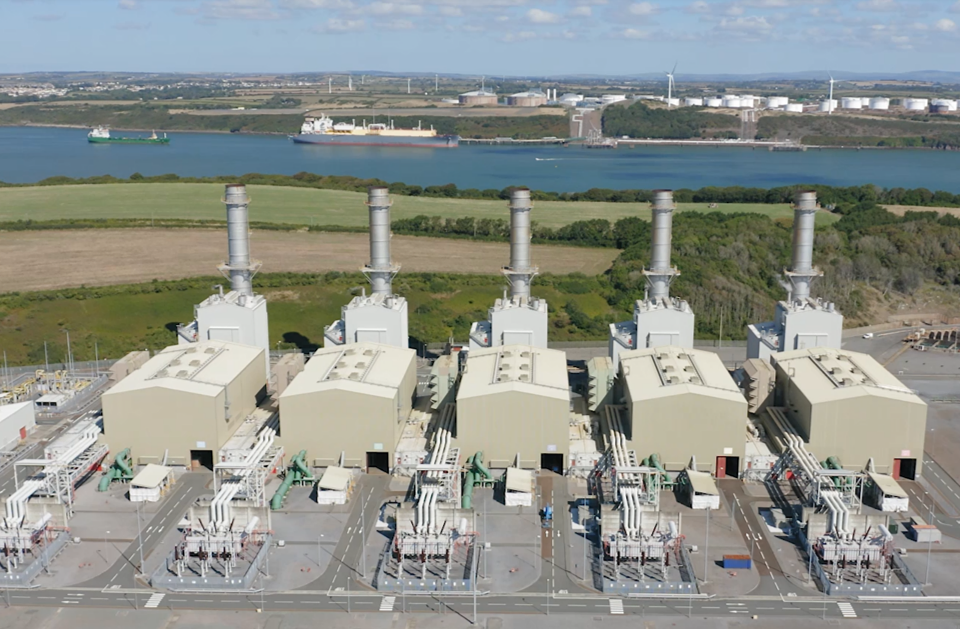
A CALL to site specialist diesel generators at Pembroke Power Station to help keep the lights on in the event of a National Grid shutdown has been lodged with county planners.
In a screening application to Pembrokeshire County Council, RWE Generation UK PLC, through Ove Arup & Partners Ltd, wants to site up to six containerised diesel generators, diesel storage tank(s) and electrical connections at Pembroke Power Station, Pwllcrochan, near Pembroke.
The application site is within the site of the existing Pembroke Power Station, a combined-cycle gas turbine (CCGT) station which began commercial operation in September 2012, with a gross consented capacity of about 2,199 megawatts electric (MWe), replacing the previous oil-fired power station which operated for almost 30 years and was decommissioned in 1999.
A supporting statement says, subject to confirmation, it is considered to comprise permitted development, the scheme “a standalone plant, with its own fuel supply, capable of starting up, operating and shutting down independently from the power station”.
It adds: “It is required only in an emergency to maintain plant status and keep the power station operationally ‘ready’ in the event of a total or partial shutdown of the National Grid system. It is not required for the normal operation of the power station and does not extend its capacity, which remains as already consented, therefore it is not considered a change or extension.”
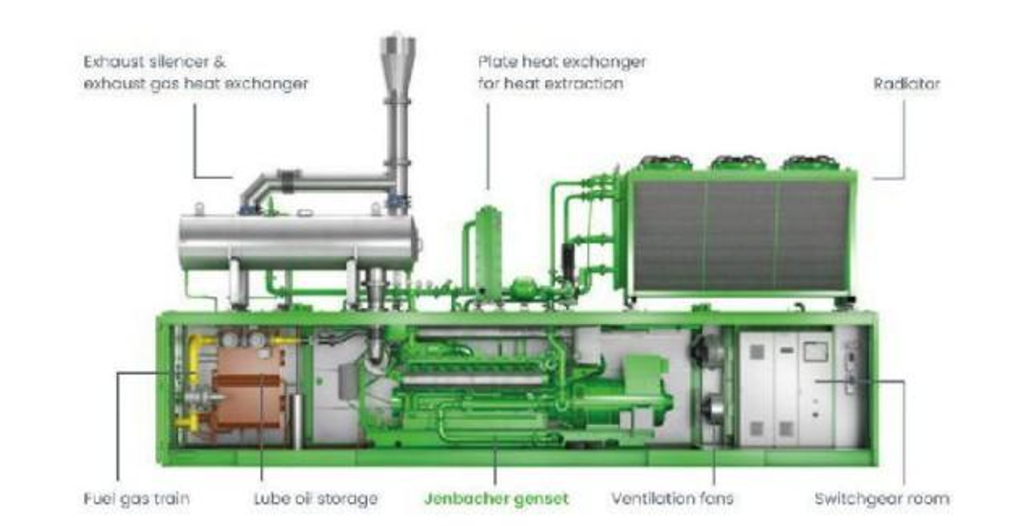
On need, it says it is mandatory that all electricity generators of over a megawatt have to adopt a new minimum standard of asset resilience; power stations “must be capable of restoring demand on the National Grid electricity transmission system in the event of a total or partial shutdown of the National Grid system”.
“The Power Station does not currently meet this new asset resilience standard, therefore new back-up power, control philosophy and on-site services that support site critical systems enabling the power station to remain ready to operate must be implemented.
“RWE is required to install a new enhanced emergency site auxiliary solution (diesel generators and diesel storage tanks) at the power station for resilience against the failure of the interconnected electricity distribution network into which it is normally connected in order to satisfy the Grid Code requirements by the mandated implementation deadline of December 31, 2026.
“RWE will make operational and fuelling provision, within its new resilience design at Pembroke power station of up to 120 hours, in order to provide capability to a slightly enhanced standard known to be valued by the National Energy System Operator (‘NESO’) in certain emergency network scenarios.”

It says construction is hoped to start in July 2026, lasting approximately nine to 12 months, the main part across the summer months.
The call will be considered by county planners at a later date.

PLANS for a green energy scheme at a Pembrokeshire former country house which is now holiday apartments have been given the go-ahead.
In an application to Pembrokeshire Coast National Park, HPB Ltd, through agent Acanthus Holden Architects, sought permission for a biomass boiler plant and installation of 16 rows of solar panels to the south of the tennis courts, St Brides Castle, St Brides, along with the removal of two tennis courts, two polytunnels, two sheds and relocation of a container.
Marloes and St Brides Community Council: Supporting
An officer report recommending approval said: “St Brides Castle. Listed Grade II* is a former country house (now holiday apartments) just south-west of the small settlement of St Brides.
“The house and its listed ancillary buildings stand prominently within a large grade-II-registered park and garden. The development site lies immediately south of the registered asset, outside of its boundary.”

It added: “Although in a sensitive location, the proposed scheme is well-screened, utilising an existing hedged enclosure. The proposed panels do not protrude over the hedge line, the proposed extra planting to the south and west providing further screening. The proposed building, also well-screened, is of traditional design, proportions and materials.”
The application was conditionally approved by park planners.



Crime16 hours ago
Farming company fined £19,000 for damaging protected wildlife site
A CARDIGAN farming company has been ordered to pay almost £20,000 after recklessly damaging a Site of Special Scientific Interest....


News19 hours ago
Baby in critical condition after Fishguard emergency
Teenagers arrested as police investigate circumstances A BABY remains in hospital in a critical but stable condition after being taken...


Community2 days ago
Tenby phone signal crisis goes national as businesses warn of summer disruption
TRADERS SAY CARD PAYMENTS, TAXIS AND VISITOR SAFETY ARE BEING HIT BY ‘DEAD ZONE’ COVERAGE TENBY’S long-running mobile phone signal...


News2 days ago
Final poll puts Plaid and Reform level ahead of Senedd vote
Labour faces historic setback as new modelling points to a hung Senedd PLAID CYMRU and Reform UK are projected to...


News3 days ago
West Wales coracle fishermen raise alarm over suspected sewage pollution
A CENTURIES-old fishing tradition on the River Towy could be under threat after coracle fishermen reported suspected sewage pollution entering...


Community4 days ago
Scooter rally brings colour and nostalgia to Tenby
TENBY is buzzing with the sights and sounds of classic scooters this Bank Holiday weekend as the Welsh National Scooter...


Entertainment4 days ago
Haverfoodfest returns to Haverfordwest town centre today
HAVERFORDWEST town centre is expected to be busy today as Haverfoodfest 2026 returns for a full day of food, drink,...


Crime5 days ago
70-year-old denies assault and restraining order breach
A PENSIONER from Pembroke Dock has denied breaching a restraining order and assaulting another man. Henry Howlett, 70, of Market...


News6 days ago
Conservatives target two seats in new Ceredigion Penfro constituency
Paul Davies and Sam Kurtz say health, farming and transport are key as they seek return to the Senedd CONSERVATIVE...


Community6 days ago
Milford Haven Beer Fest returns to waterfront this May
EVENT WILL FEATURE 34 DRINKS, LIVE MUSIC AND STREET FOOD MILFORD HAVEN is preparing to raise a glass as Beer...
-
News19 hours ago
Baby in critical condition after Fishguard emergency
-

 Community6 days ago
Dogs removed after welfare concerns at Milford Haven property
-

 Crime7 days ago
Pembrokeshire hairdresser avoids prison after pub assault
-

 Crime7 days ago
Pembrokeshire man charged with making hundreds of indecent images of children
-

 Business7 days ago
Handcrafted garden furniture built to last across Pembrokeshire
-

 Charity7 days ago
Row erupts at Spitfire museum after Reform poster displayed at charity premises
-

 Community7 days ago
Cancer patients targeted with parking fines outside Haverfordwest support centre
-
Community2 days ago
Tenby phone signal crisis goes national as businesses warn of summer disruption