

Community
Milford Haven remembers Royal Navy tragedy shrouded in wartime silence


LANDING CRAFT DISASTER CLAIMED 79 LIVES AS PORT REFUSED ENTRY IN STORM
A SOLEMN memorial service was held at Milford Haven Cemetery on Wednesday (April 23) to remember the victims of one of the Royal Navy’s most tragic and little-known disasters—an incident in April 1943 which claimed the lives of at least 79 men, many of whom are buried in the town.
Officiated by Reverend Father Andrew Johnson of St Katharine and St Peter’s Church, the annual service drew a respectful gathering of veterans, civic leaders, cadets, and members of the public, all committed to ensuring the men lost that night are never forgotten.
The Mayor of Milford Haven, Councillor William Elliott, laid a wreath at the memorial alongside cadets Leading Cadet Sophie Jarrett of the Milford Haven Sea Cadets & Royal Marines Cadets, and Patrol Leader Joshua Evans of the 2nd Milford Haven Sea Scouts.

The forgotten disaster of April 1943
On the night of April 25–26, 1943, two Royal Navy vessels—Landing Craft Gun (Large) 15 and 16, known as LCG(L) 15 and LCG(L) 16—found themselves in peril off the Pembrokeshire coast during a fierce Atlantic gale.
Originally built as tank landing craft by Harland & Wolff in Belfast, they had recently been refitted with heavy guns for the Allied invasion of Sicily. Flat-bottomed and top-heavy, they were not designed for rough seas, and their decks quickly flooded as waves battered them in the night.


Seeking shelter, both vessels requested permission to enter Fishguard harbour—but were inexplicably refused. They then attempted to make safe haven in Milford Haven. Once again, entry was denied.
By the time the vessels reached the waters off Freshwater West, both were in critical danger. LCG 15 was the first to go down, around 11:00pm. LCG 16 remained afloat slightly longer, but was lost soon after midnight. Men were thrown into the freezing, raging sea. Survivors were few.
Witnesses at the Angle Aerodrome and from the nearby Angle lifeboat station watched helplessly. Tragically, the lifeboat could not be launched—it was undergoing repairs.
HMS Rosemary’s doomed rescue attempt
The old sloop HMS Rosemary was returning from convoy escort duties when she encountered the unfolding tragedy. The crew attempted to rescue those on LCG 16, firing lines in a desperate effort to reach the sinking vessel. When those failed, six sailors volunteered to take out the small whaler boat to make the perilous crossing by hand.
The whaler capsized in the storm. All six men drowned.
In total, at least 79 Royal Navy and Royal Marine personnel perished in the disaster. A Board of Enquiry was convened, but no public explanation was ever given as to why safe harbour was denied. No one was held accountable.
A tragedy long kept quiet
The scale of the loss was not made public until weeks later, when the issue was raised in Parliament. The First Lord of the Admiralty at the time confirmed that a Board of Enquiry was examining the incident, but a full report was never released. Wartime censorship meant families received limited information, and the public remained unaware of the tragedy for decades.

Some of the fallen were laid to rest in their hometowns. Others were buried in Milford Haven Cemetery. Many are still listed as “missing, presumed killed” and commemorated on the naval memorials at Portsmouth, Plymouth and Chatham.
Among the local burials are:
- Marine Leslie V. Brackley (CH/X 2851)
- Lieutenant Douglas A. Burgass (RNVR)
- Marine Peter Campbell (CH/X 2848)
- Marine Frederick W.C. Derrick (PO/X 114089)
- Ordinary Telegraphist James McArdle (C/JX 358916)
- Able Seaman Geoffrey Lambert (P/JX 143261)
- Marine Percy W.J. Howard (CH/X 111751)
- Marine James Sigley (PLY/X 109057)
- Marine Charles W. Gordon (CH/X 109418)
A full list of casualties and their burial or commemoration locations has been compiled by naval historians and volunteers, with the assistance of the Commonwealth War Graves Commission.
Local remembrance and national silence
Wednesday’s service was organised by Milford Haven Town Council. Among those in attendance were Sir Francis Newing, County Councillor Terry Davies, Carys and Siân from Milford Haven Town Band, and representatives from Tom Newing & Sons Ltd Funeral Directors. The Yellow Rose Florist Gift Shop provided a floral wreath.
Speaking at the service, Councillor William Elliott said: “It is a source of pride and sorrow that Milford Haven bears the memory of these lost men. We gather not only to remember them but to remind the world of a tragedy that should never have happened.”
Father Andrew Johnson offered prayers and a reflection on lives lost at sea, calling on all present to “carry the memory of the brave with dignity and purpose.”
Commemoration continues
Freshwater West is now home to a memorial above the beach, not far from where the ships went down. The cemetery in Milford Haven also bears a permanent tribute. However, historians and relatives continue to call for greater recognition.
The Herald understands that efforts are underway to campaign for a formal apology from the Ministry of Defence for the denial of harbour access and lack of accountability. A special event is also being considered to mark the 85th anniversary of the disaster in 2028.
Photo caption:
We will remember them: A wreath is laid at the Milford Haven Cemetery during Wednesday’s memorial service (Pic: MHTC)


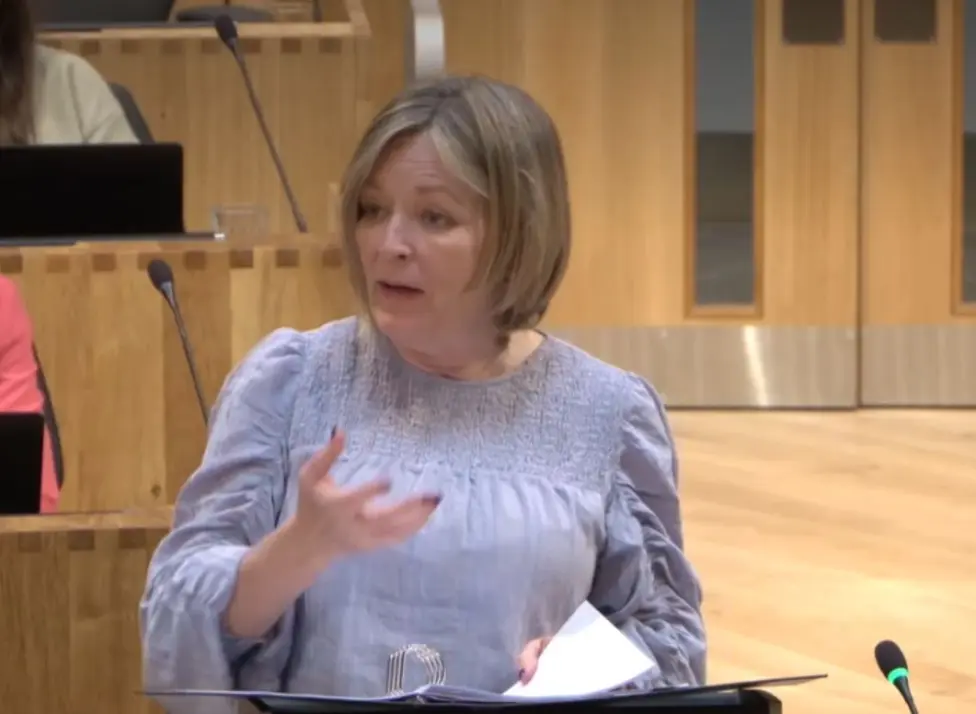
THE WELSH language is “one of our biggest success stories as a small nation on the world stage”, according to the minister responsible for the language.
Education and Welsh language minister Anna Brychan told the Senedd on 7 July that “language does not live solely through policy, but through people and through use.”
Sharing how the language has influenced her life, Ms Brychan said: “My personal story is a bilingual one. My mother learned Welsh as an adult. Today, Welsh and English intertwine in my family at home in Grangetown, and several other languages can be heard around us, and that’s a good thing.”
Concluding her speech, Ms Brychan said: “This is our opportunity to ensure that our two languages drive our future – in the community, digitally, in education and in the economy, and with the Welsh language contributing to making a welcoming, confident bilingual and multilingual country for us all.”
Reform’s deputy leader in Wales, Helen Jenner, described her parents’ decision to send her to a Welsh-medium school as one of “the most precious gifts” they could have given her.
Ms Jenner shared the story of her grandfather, Silgwyn Weston, who didn’t speak any English until he was around eight years old.
She told the Siambr how having received advice from his sister, who attended university in London, her grandfather decided the best way to provide opportunities to his children was for them to speak English at home, meaning her mother did not have the chance to speak Welsh.
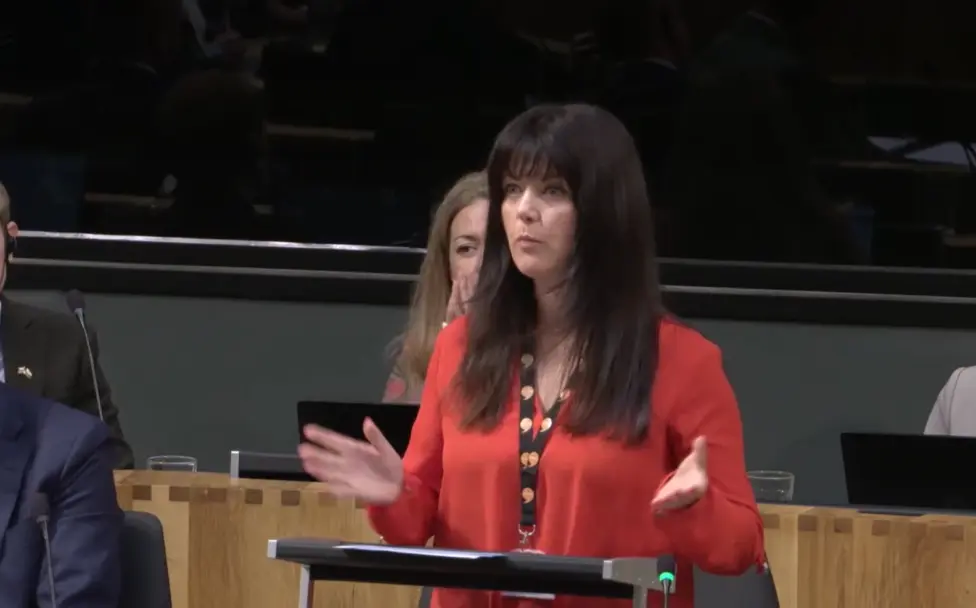
She said: “There was something very special between myself and my grandfather. We were the only two members of the family who could hold a natural conversation in Welsh.
“Silgwyn Weston was a very proud Welshman and in his final years, there was one constant – his hearing was somehow always better if the conversation was about rugby or if someone spoke Welsh to him.”
Reform’s deputy leader agreed with Ms Brychan that language sits at “the heart” of Welsh culture, but criticised the government’s plan to use legislation and targets to secure the language’s future.
She said: “We can’t force people to love a language. We can’t legislate for enthusiasm. We can’t create Welsh-speaking communities through targets alone. The Welsh language flourishes when people choose to use it at home, in the workplace, in the pub, on the rugby pitch and on the street.”
Ms Jenner also welcomed the minister’s commitment to strengthening the Welsh language in digital and AI, adding that if Welsh is not available in these technologies there is a risk of it being “left behind”.

She asked how the government will measure an increase in the daily use of the language and what practical steps will be taken to help learners use Welsh once they have left school.
Responding, Ms Brychan said: “People shouldn’t have to look for opportunities to use the Welsh language.”
She noted importance of including Welsh outside of education, in areas such as “technology, workplaces, sport, culture, planning, research, and leadership in our communities”.

Also sharing his experiences with the Welsh Language, Labour’s Huw Thomas told the Siambr that he himself “couldn’t speak a word of English” until he was around 7.
Discussing the Welsh Government’s target of a million Welsh speakers by 2050, former Cardiff Council leader Mr Thomas called for further details on how the Welsh language will be pushed through childcare and the education system.
He asked Ms Brychan how many Welsh-medium childcare settings will need to be developed to reach the target of free childcare from nine-months-old and how the Welsh Government plans to ensure Welsh-speaking staff will be available to meet demand.
Ms Brychan acknowledged the challenges in terms of developing the necessary workforce, but said there’s “a plan in place” to address this.
The Labour spokesperson for the Welsh language then noted the importance of Welsh in technology and the workforce.
He urged the minister to work with trade unions to promote the Twf Charter, which was developed to promote Welsh in the workplace.
Mr Thomas also questioned what measures the government will be taking to introduce more Welsh-medium apprenticeships.
Ms Brychan revealed she has numerous upcoming meetings on technology, and said the Welsh language is at the forefront of her discussions with such companies.
She also said she’s “always” willing to speak to unions to get their views and expertise.

Conservative Paul Davies voiced his and his party’s support for the Welsh Government’s target of one million Welsh speakers by 2050, but questioned Ms Brychan on Welsh-medium education and socialising through the Welsh language.
Mr Davies highlighted that currently only 21% of children are in Welsh-medium schools, according to the latest schools survey.
He suggested that work could be done in terms of learner travel to help reduce barriers to Welsh language education.
The Conservative spokesperson called on Ms Brychan to reveal whether she will review the Learner Travel (Wales) Measure 2008 to see if more “can be done” to allow children access to Welsh-medium education. However, Ms Brychan did not mention learner travel in her response.
Mr Davies also spoke of the importance of socialising in Welsh in cultural settings, referring to events such as Tafwyl, which took place in Cardiff last month.
He said: “These events and many other community events are held by organisations like the mentrau iaith and others, of course, that do so much in our communities with little resource.”
Mr Davies called on the Welsh Government to consider how it can support community organisations “more effectively” in the future.
Ms Brychan replied: “In terms of socialising through the medium of Welsh, that takes me back to the point that I was making that we need to create the environment where people don’t have to look for opportunities to use the Welsh language.
“As you mentioned, the opportunities provided through the mentrau iaith are key to ensure that those opportunities are available.”
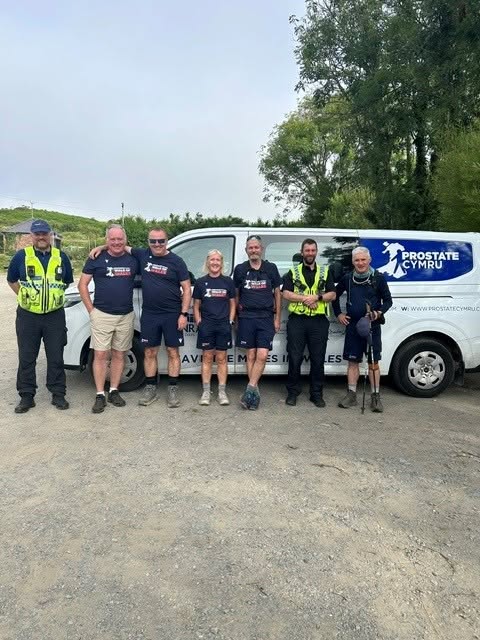
OFFICERS from Haverfordwest Neighbourhood Policing and Prevention Team have taken part in the Prostate Cymru Walk of Wales, completing the scenic leg from Porthclais to Whitesands.
The walk gave the team the chance to support an important cause while helping raise awareness of prostate cancer, which affects one in eight men in the UK and is the most common cancer among men in Wales.
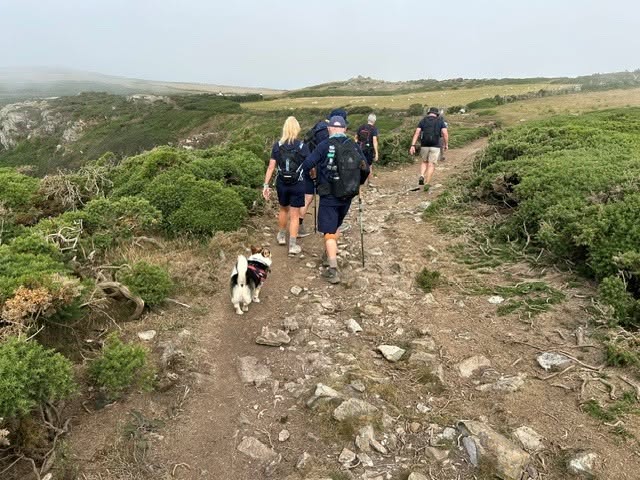
Taking in one of Pembrokeshire’s most beautiful stretches of coastline, the route formed part of a much larger challenge being undertaken between June and August 2026.
Walkers are travelling around Wales via the Wales Coast Path, averaging around 40km a day over 44 days to raise awareness and support the work of Prostate Cymru.
Police praised everyone taking part in the challenge and thanked those supporting the initiative.
Every step helps make a difference.

Former Eisteddfod president says music can “breathe harmony into the soul” as he continues humanitarian work
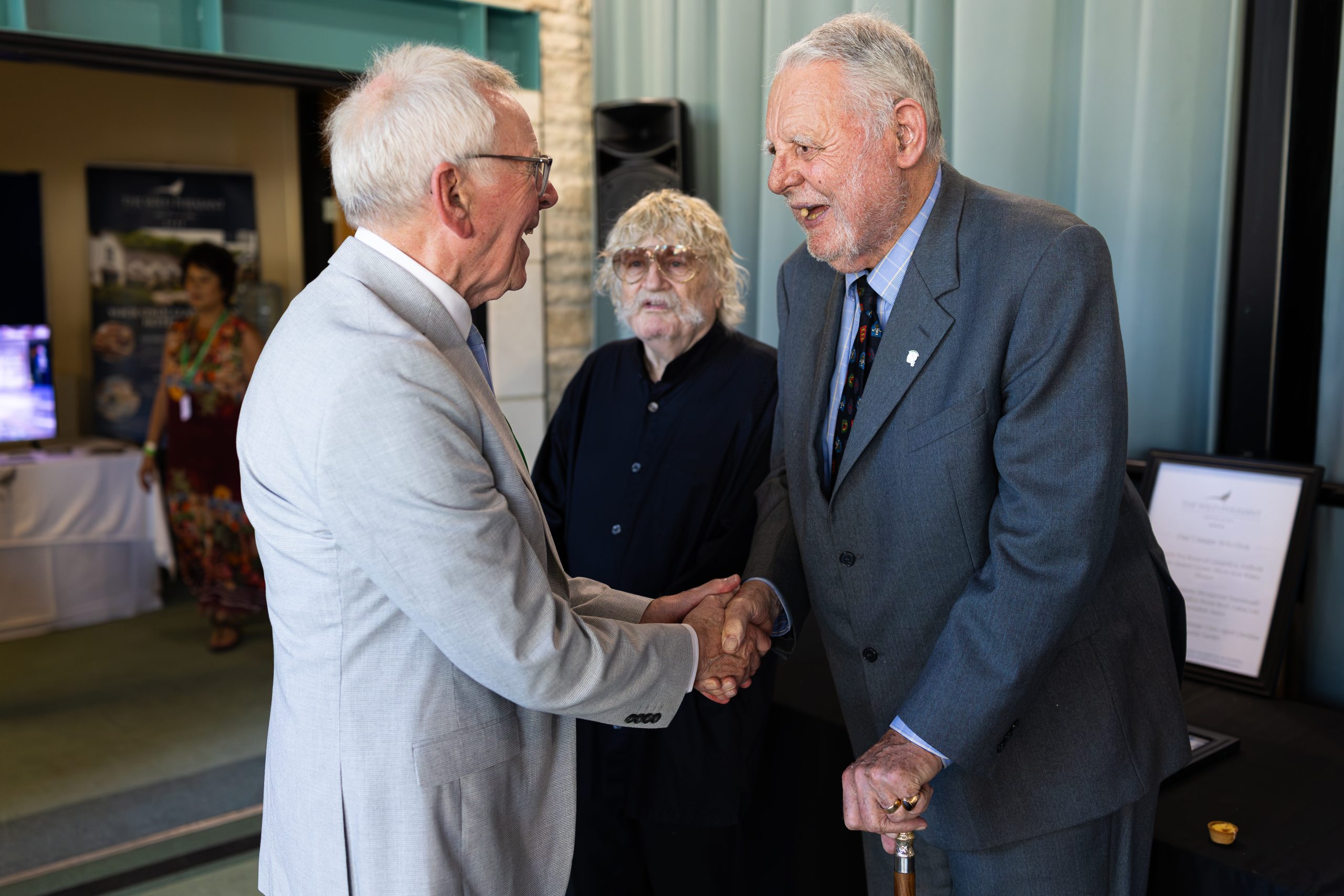
SIR TERRY WAITE returned to the Llangollen International Musical Eisteddfod on its 2026 opening day, six years after stepping down as president, to praise the festival’s continuing role in bringing people together through music.
Sir Terry, who rose to international prominence after being held hostage in Beirut for almost five years, was captured in 1987 while attempting to negotiate the release of other hostages. He was freed in 1991 and has since devoted much of his life to humanitarian work, peacebuilding and supporting people affected by conflict, homelessness and captivity.
Now in his late eighties, he remains closely connected to the Llangollen Eisteddfod, having served as its president from 2006 until 2020. During that time he became a much-loved and respected figure at the festival, and he has continued to visit regularly since leaving the role.
This year he was welcomed warmly by trustees and volunteers, as well as by Sir Karl Jenkins, who has become the 2026 Eisteddfod president and was preparing to feature in the opening concert, Uniting Nations: One World.
Sir Terry said: “It’s great to be back again because the International Eisteddfod has got a very important role to play in the world by bringing people from different communities together.
“The Eisteddfod has had a very rough time, during Covid and beyond. But it has managed to get back on its feet and it has been absolutely vital that international music goes on.”
Reflecting on the challenges the festival has faced over the years, he said: “Over the years, and I saw it when I was president, this festival has faced some very unusual challenges.
“One of them has been getting the people we want to come here from countries that are, some would say, beyond the pale politically, and getting visas for such people is exceptionally difficult. The team here struggle with that problem.
“I remember years ago we got hold of the chief officer in charge of visas in London. We invited him here to speak to us. He saw what was happening and understood the problem. But like all civil servants he was moved on.
“We’re now in an even more complex situation and some of our politicians, I can’t say who, but certainly some prominent people, have not necessarily helped matters at all.
“But I’ve often said that music has the capacity to breathe harmony into the soul, and that’s something that Llangollen certainly does.”
Since stepping down from the Eisteddfod presidency, Sir Terry has continued his work with a number of humanitarian organisations. He is co-founder and president of Hostage International and president of the homelessness charity Emmaus.

He said: “With Hostage International, one hour before coming here this afternoon I was talking to someone who has been held in arbitrary detention in Iraq for the last five years. I’ve been trying to help him and we’ve been giving support to his family. And that’s just one of 100 cases that we have.
“Then with the homeless, there’s also a lot of work to do. I’m still involved in this. We started off with a portable building and we now have 30 communities around England, Wales and Scotland.
“Then there’s the work I do with the children of war, who are often left without parents and left without education. Sometimes they are also highly traumatised.
“When you see what’s happening in places like Gaza and others, my goodness, so many children will grow up with no parents, no home, no education, nothing, and we have to try and do something about this.”
Sir Terry’s return added a poignant note to the opening day of the festival, underlining the Eisteddfod’s founding mission of promoting peace and friendship through music.



Crime16 hours ago
Teacher stabbing trial: The first week of evidence
Jury hears accounts of alleged planned classroom attack, teacher’s fear she was dying, and boy’s words after leaving school A...


Community19 hours ago
Haverfordwest Castle refurbishment reaches new heights as roof goes on
Major milestone reached in project to transform historic gaol building into flagship visitor attraction A MAJOR milestone has been reached...


Business2 days ago
Pembrokeshire lands £98m share of Wales marine energy boom
New industry report says county has received the second highest level of marine energy investment in Wales, supporting more than...
Crime2 days ago
First aider tells jury teacher was “crying, shaking” after classroom stabbing
A SCHOOL first aider has told a jury that teacher Vicki Williams was “crying, shaking” and in “complete shock” after...

Crime3 days ago
Teacher feared she was dying after Milford Haven classroom stabbing
A TEACHER allegedly stabbed in the head at Milford Haven Comprehensive School told a jury she feared she was dying...


News3 days ago
Farage to resign as MP and fight Clacton by-election amid finance row
NIGEL FARAGE has announced he will resign as MP for Clacton and stand again in the by-election he intends to...
Crime3 days ago
Teacher tells jury there were ‘no issues’ with accused pupil hours before ‘stabbing’
Milford Haven teacher gives evidence as trial of 15-year-old continues at Swansea Crown Court A TEACHER allegedly stabbed at Milford...


News3 days ago
Major incident stood down after fire at Impala Terminal in Milford Haven
Fire involved decommissioned oil tank containing residual crude oil and around 60 cylinders A MAJOR incident declared during a fire...

News4 days ago
Large fire breaks out at Impala Terminal in Milford Haven
Black smoke seen for miles as emergency services respond to incident at former Puma Energy site A LARGE fire has...
Crime4 days ago
Prosecution outlines ‘planned attack’ as Milford Haven teacher stabbing trial opens
Jury hears teenager allegedly brought kitchen knife into school before teacher was stabbed in the head THE JURY in the...
-
 Education7 days ago
Education secretary vows to tackle ‘root causes’ of antisocial behaviour in schools
-

 Education7 days ago
Ysgol Glannau Gwaun celebrates prestigious Gold Active Travel award
-
 Community7 days ago
Closure-threatened Stepaside school expected to remain open
-
 Education7 days ago
First Minister pressed on biological sex, additional learning needs, and NHS jobs
-

 Farming3 days ago
Pembrokeshire slaughterhouse given urgent improvement rating after audit failure
-
News4 days ago
Large fire breaks out at Impala Terminal in Milford Haven
-

 Education4 days ago
Council failed Welsh language standards over school closure
-

 Entertainment2 days ago
Swing and big band classics heading to Torch Theatre