


Business
Interest rate cut divides Bank committee as UK growth revised upward


BoE lowers rates to 4.25% amid trade uncertainty and mixed economic signals
THE BANK OF ENGLAND has cut interest rates from 4.5% to 4.25%—the lowest level since May 2023—as it attempts to strike a delicate balance between supporting a fragile recovery and guarding against persistent inflationary risks.
The decision, announced following the Monetary Policy Committee’s latest meeting, was far from unanimous. Out of the nine members, five voted for the 0.25% cut, two favoured a steeper reduction to 4%, and two wanted to keep rates on hold.
“This is an important moment for the UK economy,” said the BBC’s Economics Editor Faisal Islam, noting that rates are now down a full percentage point from their peak last summer. “Further cuts are expected but they will likely be gradual and cautious.”
Interest rates had climbed steadily from late 2021 in response to post-pandemic inflation, peaking at 5.25% in August 2023. Since then, falling inflation and a slowdown in consumer activity have prompted a shift toward easing.
The rate cut aims to make borrowing cheaper, thereby encouraging spending and investment. Mortgage-holders on tracker deals will see immediate savings—around £29 per month on average—but savers are likely to see a dip in returns.

In a fresh economic outlook, the Bank upgraded its growth forecast for 2025 to 1%—up from February’s 0.75% prediction—driven by stronger-than-expected performance in the first quarter. However, the longer-term picture is less rosy: UK growth in 2026 has been revised down to 1.25%, with global growth also forecast to slow due to international trade tensions.
The economic backdrop is being shaped in part by geopolitical uncertainty, including a fresh round of tariffs introduced by US President Donald Trump. Bank governor Andrew Bailey acknowledged the unpredictable global landscape but insisted the UK remains on a “gradual path” of rate easing.
Bailey also welcomed news of a pending UK-US tariff deal, saying it could help reduce uncertainty. However, he confirmed that the Bank had not yet been fully briefed on the agreement’s details.
Mixed reactions

Trade union Unite described the interest rate cut as “long overdue” but called for broader measures to improve living standards. General secretary Sharon Graham said: “This must include a joined-up industrial strategy to tackle energy profiteering, rebuild our industrial base and boost the economy.”
Meanwhile, Nigel Green, CEO of the financial advisory group deVere, warned that the Bank was moving too cautiously. “A half-point cut would have shown the Bank is ready to act decisively,” he said, arguing that the risks of hesitation outweigh the risks of bold action in the current climate.
Chancellor Rachel Reeves struck a more optimistic tone, calling the rate cut “welcome news” for homeowners and businesses, while Shadow Chancellor Mel Stride criticised Labour’s handling of the economy, claiming “interest rates remain high” because of government mismanagement.

Housing market impact
Nathan Emerson, CEO of Propertymark, said the rate cut would be a boost for the housing sector: “With the busier spring and summer months now here, this base rate reduction should attract more buyers and sellers and improve affordability.”
While today’s rate cut is not a silver bullet, it marks a further step in what may become a sustained effort to ease financial pressure on UK households and stimulate economic activity amid a shifting global landscape.


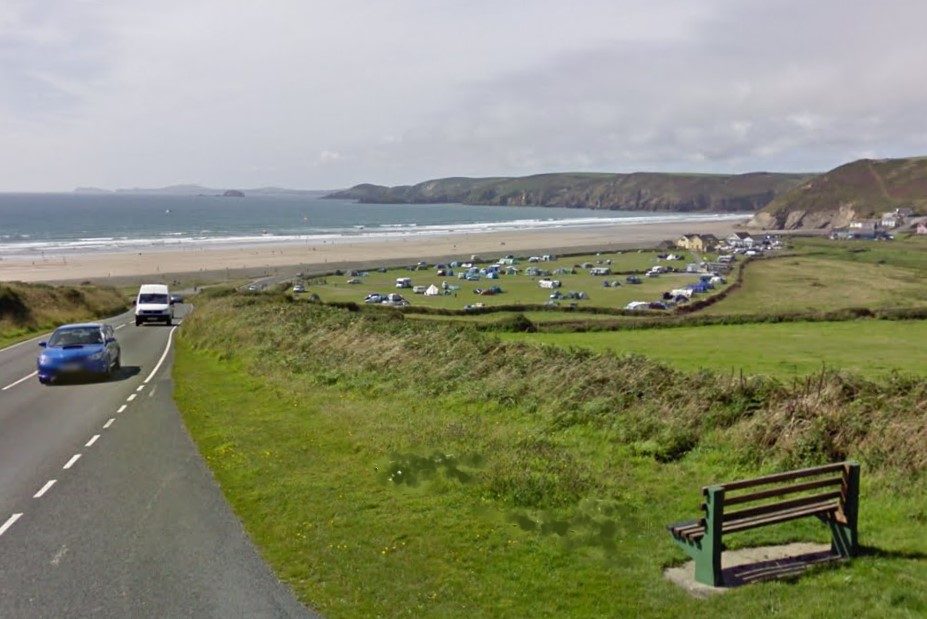
PLANS by a Vodafone phone company subsidiary to bring fibreoptic cables across the sea from Ireland to a Pembrokeshire seaside beach village in order to improve broadband coverage have been lodged.
In an application to Pembrokeshire Coast National Park, Apollo Submarine Cable Systems limited, through agent APEM Group, seeks permission for the construction of four underground telecom chambers and interconnecting ducts, along with Horizontal Directional Drilling (HDD) underneath Brandy Brook, Newgale, and the construction of one HDD bore-to-sea outfall.
A supporting statement accompanying the application says the scheme would form the onshore part of a project to bring a fibreoptic cable onshore from Kilmore Quay, Wexford, Ireland to a site at Newsurf Shop car park, Sands Café Car Park and Duke of Edinburgh Inn, Newgale.
It says the majority of the project is subterranean, with very minor above ground works are proposed, which comprise the installation of a manhole cover.
It adds: “To facilitate improved internet connectivity, the applicant is proposing the installation of a fibreoptic telecoms cable (the Beaufort cable) from Kilmore Quay, Wexford, Ireland to Newgale.
“The project is to facilitate the installation of the Beaufort cable, as it comes ashore in Wales and to link it into the wider network, which will be operated by Vodafone’s wholly-owned subsidiary Apollo Cable System Limited in the UK.”
It says the project would see three underground telecom chambers and a 120-metre interconnecting duct, the 87-metre HDD underneath Brandy Brook, launching from the receiver pit located within the Site, along with the construction of one HDD bore-to-sea outfall, in a subtidal area of Newgale bay, of approximately 920 metres, and one underground telecom chamber and interconnecting duct.
Citing a report on digital connectivity, it says 5G geographic coverage has seen improvements but is still relatively low at 57 per cent of Wales’ landmass, with 4G the primary service.
That report says there is a difference in full fibre coverage between urban and rural areas (83 per cent versus 59 per cent) and highlighting a need for further coverage.
On the scheme itself, the statement says short-term noise and disruption to local residents “is anticipated during the construction phase however this will be limited to 57 days,” adding: “The proposed drilling operations are not to be continuous and will be limited to approximately 20 minutes in each hour,” the works in total expected to last 91 days after which land will return to its former use without restrictions.
It goes on to say: “The HDD is specifically designed to mitigate the risk of any shoreward movement of the shingle bank and beach level changes. The use of HDD reduces the likelihood of potential environmental impact on the landscape and seascape.
“The project is not anticipated to interact with Brandy Brook. All drilling works will take place within excavated launch pits and all construction works will be confined to the hardstanding of the car park.”

The application will be considered by Park planners at a later date.

A CALL to allow a Pembrokeshire seaside hotel to become short-term holiday let accommodation to ensure its long-term viability in a changing tourism sector has been submitted to the national park.
In an application to Pembrokeshire Coast National Park, Abergavenny-based Kyle Williams, seeks permission for a change of use of The Hildebrand Hotel, 29 Victoria Street, just off Tenby’s Esplanade seafront, from a traditional hotel to a short-term holiday letting operation.
A supporting statement accompanying the application says the scheme seeks to “secure the continued viable use of the property through its operation as professionally managed holiday accommodation, providing high-quality visitor accommodation within the established tourism destination of Tenby”.
It adds: “The Hildebrand Hotel is an established visitor accommodation property located within Tenby, Pembrokeshire, one of Wales’ premier coastal tourism destinations. The property has historically operated as hotel accommodation and occupies a sustainable location within walking distance of local services, beaches, restaurants, public transport facilities and tourism attractions.
“The building is well suited to visitor accommodation use and benefits from existing infrastructure, guest facilities and accommodation layouts that support continued tourism-related occupation.”
It says no significant external alterations are proposed, adding the “character, appearance and scale of the building will remain unchanged”.
“The accommodation will be let on a short-term basis to visitors and tourists, supporting the local visitor economy whilst ensuring the building remains occupied, maintained and economically viable.”
It adds: “The proposed use will ensure the continued occupation and maintenance of the building. The hospitality sector has experienced significant operational challenges in recent years, including staffing pressures, increasing energy costs and changing visitor preferences. The proposed use offers a flexible operational model capable of maintaining the long-term viability of the property.”
It concludes: “The proposal will retain the building within the tourism sector, support the local economy, preserve the ongoing use of an established visitor accommodation property and ensure the long-term viability of the site.
“No significant external alterations are proposed, and the development is not expected to result in unacceptable impacts upon neighbouring amenity, highway safety or the character of the area.”
The application will be considered by Park planners at a later date.

PLANS to expand facilities at a popular beauty spot award-winning Pembrokeshire pub, in part using a former public toilet, have been approved.
In an application to Pembrokeshire Coast National Park, Lloyd James C/O Owen & Owen Ltd for Cresselly Estate, through agent Hayston Developments & Planning Ltd, sought permission to upgrade an existing food outlet with the conversion and extension of a former public toilet block to a bespoke kitchen, store and staff toilet, new covered seating area and external bar container unit and associated works, at The Cresselly Arms, Cresswell Quay.
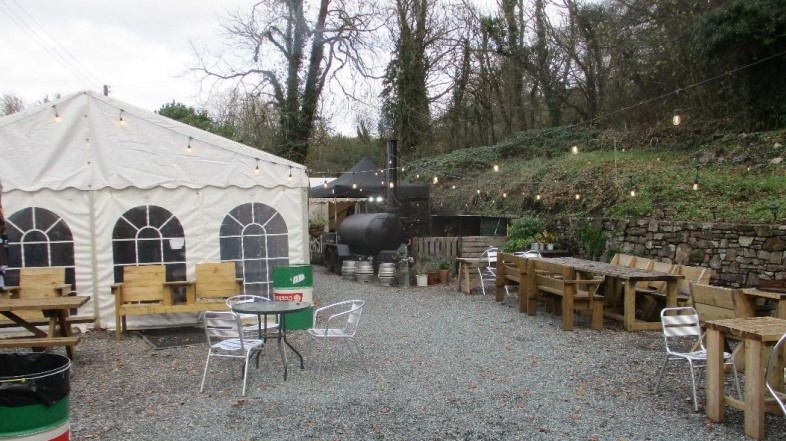
The Grade-II-listed Cresselly Arms originated as an 18th-century dwelling and was a public house by at least the mid-19th century.
In more recent years, the pub under landlord Steve Adams won the CAMRA (Campaign for Real Ale) pub of the year award for the whole of Wales in 2024, having previously been named the best in Pembrokeshire.
A supporting statement said the former toilet block closed some two years ago and is now in the applicant’s ownership, having previously been leased by the county council; the toilet closing after fears of a leaking ‘sealed’ cesspit.
It says nearby listed building the Cresselly Arms “has been purveying a variety of drinks for over 200 years together with a limited range of snacks,” adding: “Whilst the number of customers will have varied over the years, at times when the local Hunt meets at the Cresselly Arms large crowds and their vehicles congregate in the area.”
It went on to say: “Over recent years the Inn has stationed mobile units associated with the preparation and enjoyment of food within its curtilage and this proposal is to improve the quality of the presentation of food and refreshments, including making use of the redundant toilet block to the north.”
It added: “Whilst the proposal would introduce new uses onto the site it is considered that these activities are ancillary to the operation of the long established Cresselly Arms and for the most part take place within the curtilage of the inn.”
The application was supported by local community council Jeffreyston, but it noted concerns regarding parking arrangements and the potential for increased vehicle movements, with one member for the public raising concerns about “fast food outlets in a historical area of natural beauty”.
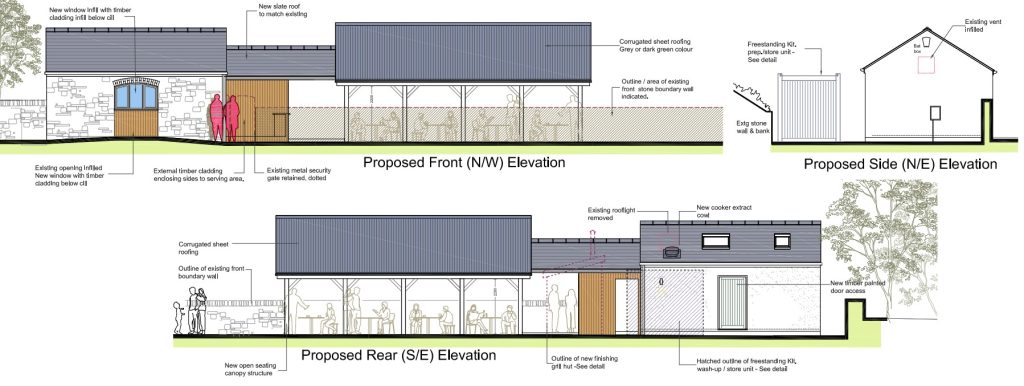
An officer report recommending approval said: “Revisions to some detailed elements of the scheme have been received during the course of the application. The amended proposal is considered to represent a sympathetic enhancement of an established hospitality business which supports the visitor economy whilst respecting the historic character and appearance of Cresswell Quay.”
It said the pub had historically seen temporary barbecue and catering facilities occupying the quay area, the proposal seeking to “rationalise and formalise these activities within the established ancillary yard associated with the Cresselly Arms,” adding: “In heritage and placemaking terms this is considered a positive outcome.”
It went on to say, on highways issues, the proposal sought to improve facilities rather “than significantly expand its capacity or introduce a new use,” and was not considered it would “generate a level of traffic that would result in a severe impact on the local highway network or existing parking arrangements.”

The application was conditionally approved by park planners.



News10 hours ago
First Minister challenged over jobs for student nurses
REFORM WALES has accused the First Minister of failing to guarantee jobs for student nurses in Wales, despite continuing pressure...

Crime12 hours ago
Knife blankets call as school staff face rising violence fears
GMB says protective equipment should be considered where risk assessments show staff could face blades SCHOOL staff should be given...


News12 hours ago
Claire Archibald secures review of Milford Haven train times
RURAL TRANSPORT CONCERNS RAISED WITH TFW CLAIRE ARCHIBALD MS has secured a review of train times between Milford Haven and...


Crime13 hours ago
PCC review calls for stronger youth crime prevention work
REPORT MAKES 13 RECOMMENDATIONS A REVIEW into crime and anti-social behaviour services for young adults has called for stronger prevention...


Crime15 hours ago
Families condemn failed appeal by paddleboard boss jailed over Haverfordwest tragedy
RELATIVES SAY LATEST COURT BID HAS REOPENED PAIN AFTER FOUR DEATHS ON WESTERN CLEDDAU THE FAMILIES of victims of the...


Community1 day ago
Forgotten wartime archive found in Pembroke Dock attic after 80 years
Remarkable family collection reveals story of father and son who served through two world wars A REMARKABLE untouched family archive...


Crime1 day ago
Milford Haven woman left with facial fractures after drunken attack
A WOMAN in her late fifties suffered facial fractures after being repeatedly punched through the window of her car during...


Crime2 days ago
Sex offender in senior role at Tenby family hotel
CREST HOTEL GROUP says it is investigating safeguarding concerns after staff at the Imperial Hotel in Tenby raised alarm over...


Sport2 days ago
Runners tackle new route in Ras Y Castell 10k
MORE than 90 runners took to the streets and paths around Cardigan on Friday evening (June 5) for the annual...


Business2 days ago
Turkish Kitchen reaches Welsh restaurant award semi-finals
Haverfordwest café praised as small independent business flies flag for Pembrokeshire A HAVERFORDWEST café has been named as a semi-finalist...
-
Crime4 days ago
Paddleboard company owner loses bid to cut sentence over Haverfordwest tragedy
-

 Crime3 days ago
Milford Haven man admits harassment and assault
-

 Crime6 days ago
Milford Haven man bit neighbour’s neck near cashpoint
-

 News3 days ago
Community appeal for privacy after serious emergency in Pendine
-

 Crime6 days ago
Pembroke Dock driver avoided jail after drug-drive crash
-

 Crime6 days ago
Dinas Cross man jailed over shop thefts
-
Community1 day ago
Forgotten wartime archive found in Pembroke Dock attic after 80 years
-
Crime2 days ago
Sex offender in senior role at Tenby family hotel