


Politics
‘This can’t happen to anyone else ever again’: Call for ban on strip searching of children


A HUMAN rights expert called for a ban on strip searching of children in Wales, with black children disproportionately subject to the traumatising and degrading practice.
Rhian Croke, of the Children’s Legal Centre Wales, warned strip search is a violation of children’s rights as she called for less invasive alternatives such as body scanners.
Dr Croke said: “Instead of traumatising and degrading children including those who may be involved in offending… children should be treated as children first with dignity and respect.
“In Wales, strip search is contrary to the nation’s commitment to the UN Convention on the Rights of the Child and the Wales-only legislation that promotes children’s rights….
“Wales should take the lead on ending the practice of strip search and instead invest in alternative technologies, so children have their rights protected.”

She stressed: “Children in contact with the police may have already experienced layers upon layers of trauma, to then inflict a strip search on a child is completely inappropriate.”
Dr Croke, who holds a PhD in law, pointed out that in most cases nothing illegal was found during searches conducted in custody, “yet the degrading practice continues”.
In a briefing for Senedd Members, jointly prepared with fellow campaigner Saqib Deshmukh, she expressed concerns about “totally inadequate” monitoring of incidents of strip searches.
Warning of a failure in transparency and accountability, Dr Croke said freedom of information (FoI) requests revealed discrepancies and contradictions in the data reported by police.

A total of 5,428 strip searches of children were undertaken in Wales in two years to 2023, mostly for drugs and weapons, with six cases involving under 13s, according to one review. 85 involved a more thorough or intimate search beyond removing a coat, jacket or gloves.
South Wales Police was among the forces with the highest rate in Wales and England, with research suggesting black children are four times more likely to be strip searched.
In a letter revealed under FoI, Jason Davies, the deputy chief constable, acknowledged disproportionality in the number of ethnic minority children being strip searched.

But South Wales, Dyfed Powys, and Gwent Police refused to provide any data on child strip search cross-referenced by ethnicity in response to FoI requests, according to the briefing.
The researchers wrote: “We question whether the struggle to access data across various agencies and governments is a question of competence.
“It is unclear if it is a failure to achieve basic professional standards of transparency or if it is an act of obfuscation – a failure to share clear and intelligible data to avoid legal challenge.”
Dr Croke raised concerns about the review showing North Wales Police were only able to confirm the presence of an appropriate adult in about half to two-thirds of searches.
“This report has taken over a year to come into the public domain,” she wrote. “It is a report of significant public interest that reveals a lack of compliance with existing legislation, a failure to uphold children’s rights and raises critical questions.”
Concerns first came to light in 2020 when a schoolgirl in London was wrongly accused of having drugs and strip searched while on her period without an appropriate adult present.
During a legal case, the girl said: “I can’t go a single day without wanting to scream, shout, cry or just give up. I don’t know if I’m going to feel normal again. But I do know this can’t happen to anyone else, ever again.”
In another case involving the Met police, an autistic girl, 15, was handcuffed, pinned down and searched, with her underwear cut off in front of male officers, after 20 hours in custody. She was so traumatised she tried to kill herself within weeks, her mother said.
Senedd Members discussed the issue during a social justice committee meeting on May 12.
Plaid Cymru’s Sioned Williams said: “The very thorough inquiry raises major questions about what’s happening in Wales in terms of the fact that we say that we respect children’s rights. I do think we should write as a committee stating that we want to see this come to an end.”

Welsh Liberal Democrat leader Jane Dodds, a social worker for 27 years, questioned whether the Welsh Government would have the powers to ban strip searching of children.
She said: “It is about rights and it is about a complete injustice in that, sadly, we know that most children who are strip searched are those from black and minority ethnic groups.”
With most of the justice system non-devolved, Labour’s Jenny Rathbone, who chairs the committee, said: “I fear we don’t have the powers, I’m sure it sits on the ‘jagged edge’.”
In 2024, an independent commission recommended devolving more powers to Wales, beginning with youth justice, probation and policing.
Lord Timpson – the UK minister responsible for prisons, probation and reducing reoffending – is scheduled to give evidence at the committee’s next meeting on May 19.



THE NUMBER of senior Pembrokeshire councillors holding the top finance job in recent years came under the spotlight at the July meeting of the council.
A submitted question by Cllr Alan Dennison, heard at the July meeting of Pembrokeshire County Council asked: “Since my election in 2022, this administration has experienced a turnover of four finance cabinet members, averaging one per year.”
Those four Cabinet members with responsibility for finance were: Cllr Alec Cormack, Cllr Joshua Beynon, Cllr Alistair Cameron, and former leader Cllr Jon Harvey who has now assumed the finance role.
Cllr Dennison’s question added: “This high turnover raises concerns about the stability of the council’s financial management, particularly in light of the current fiscal challenges and in light of the recent announcement by Finance Cabinet Member number 3 [Cllr Cameron] that under this administration there has been a staggering 97 per cent increase in council tax rates since 2017, in contrast to a mere 37 per cent rise in the inflation rate.
“Could the Leader explain the rationale behind these frequent changes in leadership and what apparent benefit this has to the Pembrokeshire ratepayers?”
Back in May, a previous submitted question by Cllr Dennison asked for the increase in council tax levels since 2017.
Cllr Cameron had responded by saying the level of council tax for a Band D average property had increased by 95.7 per cent in that time.
For the 2026 to ’27 financial year, the county council part of council tax levels in the county rose by 4.6 per cent, equivalent to an extra £76 for the average Band D property, less than half last year’s increase.
The previous year saw Pembrokeshire’s council tax increased by 9.35 per cent, lower than that year’s Cabinet recommendation of 9.85 per cent.
The previous year to that saw a 12.5 per cent rise on top of previous increases of 12.5 per cent, 9.92 per cent, five per cent, 3.75 per cent, five per cent and 7.5 per cent.
The overall council tax bill is made up of the county council element, the largest part, the Dyfed-Powys Police precept, and individual town or community council elements.
Responding to Cllr Dennison’s question at the July meeting, new leader Cllr Tessa Hodgson pointed out that he had got “his facts and figures wrong,” as she had only had cabinet member for finance under her leadership, Cllr Harvey, who was “doing a great job”.

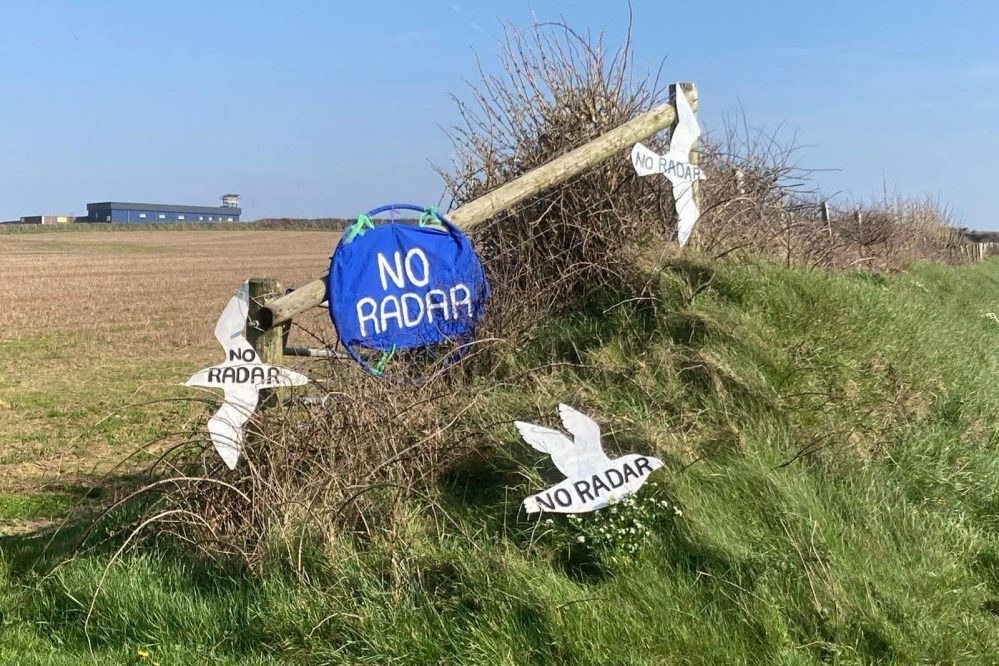
THE CONTENTIOUS DARC ‘space radar’ scheme in Pembrokeshire is to be decided by Welsh Government rather than county planners, just days before it was to be debated by them.
In an application submitted earlier this year to Pembrokeshire County Council following a public consultation, the Ministry of Defence wants to install 27 radar antenna and a long list of associated works at Cawdor Barracks, Brawdy for a worldwide network of sensors called the Deep Space Advanced Radar Concept (DARC) to track active satellites and other objects which would utilise three sites worldwide, part of the AUKUS trilateral security partnership, in the USA, the UK and Australia “enabling 360-degree coverage of the sky at all times of day and under any weather conditions”.
In late 2023, Cawdor Barracks was identified as the preferred UK site by the-then UK Defence Secretary, Grant Shapps.
A supporting statement says of the DARC scheme: “This capability is critical to protect and defend the services provided by satellites, ensuring continuity and resilience against collisions or debris-related incidents.
“Without DARC, the UK faces a significant risk of losing access to these vital services, which would have severe consequences for national security, economic stability, and public safety.”
St Davids City Council members unanimously opposed the pre-application consultation proposals, and public objectors have raised concerns with protests taking place outside the barracks and County Hall, Haverfordwest earlier this year, and the scheme before county planners attracted more than 1,000 objections.
Pembrokeshire-based Jerome Flynn, famous for his roles in Soldier Soldier, Robson & Jerome and more recently Game of Thrones has described the scheme as “the most unspeakably abominable planning application led by the US military, backed by Donald Trump to place 27 radar dishes right on the edge of our beloved coastal national park”.
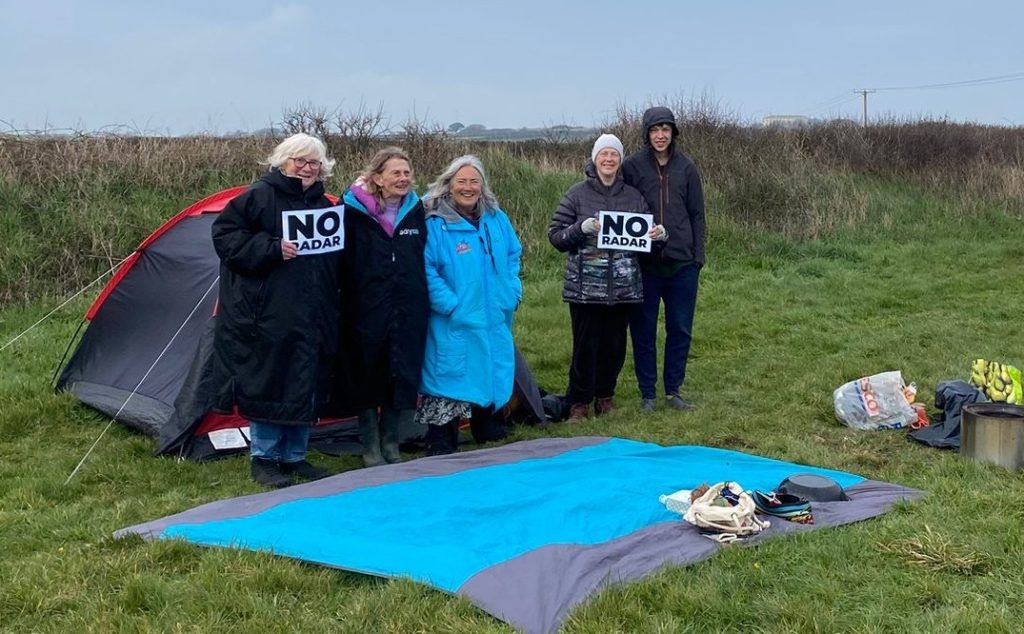
Campaign group PARC against DARC, set up in 2024 to oppose the scheme which it has described as the militarisation of space, submitted an official request to ‘call in’ the application for DARC radar to the newly formed Plaid Cymru Welsh Government.
A ‘call-in’ means the application could be decided at Welsh Government level rather than by county planners.
The application was due to go before Pembrokeshire County Council’s next planning committee, on July 28, but has now been ‘called in by Siân Gwenllian MS, Minister for Local Government, Housing and Planning.
The Cabinet Minister’s letter to Pembrokeshire County Council calling in the application says: “The proposed development raises national security issues given the strategic defence nature of the proposal and is a novel planning issue.
“The proposal potentially conflicts with national policy in relation to landscape, ecology, sustainability and placemaking.

“A decision on the proposal may be controversial beyond the immediate locality, and there is already considerable public interest in the proposal.
“All these matters lead the Cabinet Minister to conclude the development is of more than local importance and the application should be determined by the Welsh Ministers.”
A PARC against DARC spokesperson, welcoming the ‘call-in,’ said: “As we made in our case to Welsh ministers, the DARC proposal is part of a weapons system designed to track and target satellites belonging to other countries around the world.
“It is being developed for the US Space Force, which was created under Donald Trump, at a time when US military spending has doubled since he took office. That is why DARC has been described as a significant escalation in the militarisation of space.”
A planned demonstration at County Hall, Haverfordwest, due to be held on July 28 when Pembrokeshire planners were to deliberate on DARC, is to go ahead as “a vigil in support of Welsh Government’s call-in decision,” PARC against DARC has said.
A spokesman for Pembrokeshire County Council said the call-in had been received on July 21.
“As such the application is transferred to the Welsh Ministers for a decision and the application will no longer be presented to the council’s planning committee at its meeting scheduled for July 28.
“The council now awaits confirmation from the Welsh Ministers regarding the procedure and timetable that will be adopted for their consideration of the application.
“Further information will be provided once the council has been formally notified of the next steps in the decision-making process.”

A CALL to bring to an end a special Pembrokeshire council panel which decides whether some planning applications should be considered by councillors rather than planning officers is to be discussed further.
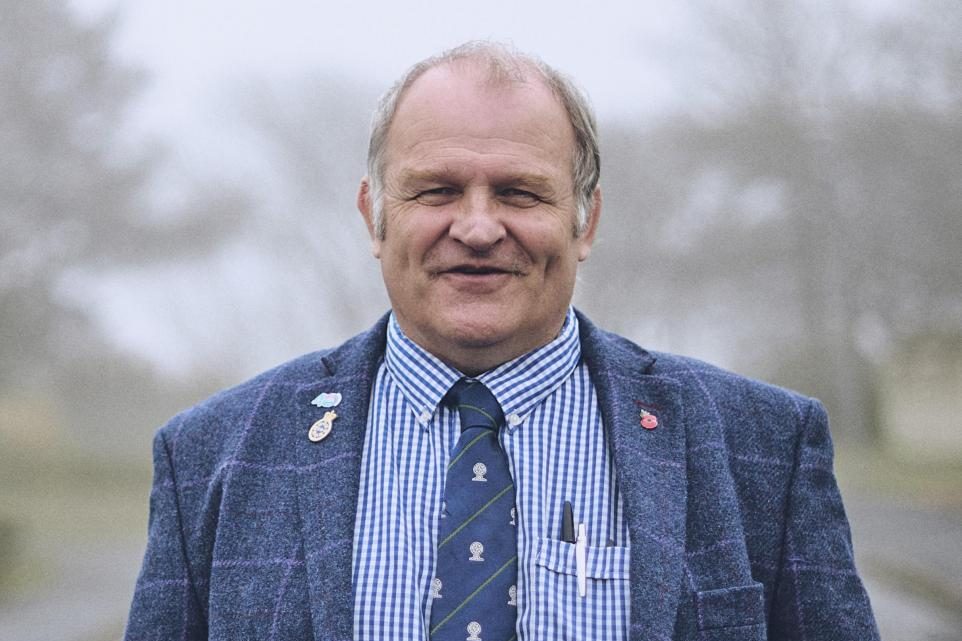
A notice of motion submitted by Councillor Huw Murphy to the July meeting of Pembrokeshire County Council asked: “That council consider disbanding the Planning Delegation Panel (PDP) and review the current arrangements so that planning applications delegated to officers for refusal, where a member requests further consideration, are referred directly to the Planning Committee rather than first being considered by the PDP.”
His supporting statement said: “Under the current arrangements within Pembrokeshire County Council, where a planning application has been delegated to officers and a refusal is recommended, the local county councillor may request that the application be considered by the PDP.
“The PDP then determines whether the application should proceed to full planning committee. It is considered that this additional stage introduces unnecessary bureaucracy into the planning process, leading to increased delays and costs for applicants.
“The current process can also be perceived as limiting democratic oversight, as applications may be refused by the panel without being considered by full planning committee, whose elected members bring local knowledge, experience transparency and democratic accountability to planning decisions.
“By comparison, the Pembrokeshire Coast National Park Authority, which is responsible for planning across more than 30 per cent of the land area of Pembrokeshire, does not operate a planning delegation panel. Instead, planning matters are considered through its established planning procedures, and this approach appears to function effectively without the need for a PDP.”
His supporting statement ended: “The removal of the PDP should simplify decision-making, reduce bureaucracy, improve transparency and democratic accountability, and reduce the workload of Democratic Services.”
At the July meeting, members agreed the notice of motion would be referred to the council’s constitutional review committee for further consideration.



Community12 minutes ago
‘Paying £29 to reach a cashpoint is absurd’: Narberth’s urgent ATM appeal
Residents, businesses and visitors are being urged to provide evidence after two High Street cash machines were removed, leaving the...


Crime16 hours ago
Haverfordwest man jailed for seven years for historic rape and sexual assault of girl
A HAVERFORDWEST man has been jailed for seven years after being convicted of raping and indecently assaulting a girl during...


News21 hours ago
Burnham more willing to listen on Welsh devolution, says First Minister
Rhun ap Iorwerth says he will press the new Prime Minister for powers over policing, railways and Wales’ natural resources...


Crime1 day ago
Women jailed after man chased through Milford home and attacked with knives
Kelly Rees receives further 27-month sentence while already serving prison term for notorious taxi robbery TWO women have been jailed...


Crime1 day ago
Mother headbutted and clawed police officers after threatening social worker
Court shown body-worn footage of violent confrontation at Goodwick property A COURT has been shown police body-worn footage capturing the...


Crime2 days ago
Man, 37, found dead following major police response in Pembroke Dock
Death not being treated as suspicious as police make statutory referral to IOPC following active investigation A 37-YEAR-OLD man has...


Community2 days ago
Household Cavalry drum horse returns home to Pembrokeshire for final farewell
Dyfed Willa Rose, who became Major Juno and the first mare to serve as a Household Cavalry Drum Horse, was...


News3 days ago
Jo Stevens out as Welsh Secretary as Burnham reshapes government
Cardiff East MP repeatedly visited Pembrokeshire to champion clean energy jobs, but her successor inherits unresolved questions over Milford Haven’s...


Crime3 days ago
Teen cleared of attempted murder but guilty of GBH after Milford teacher stabbed
Jury returns 11-1 majority verdict on charge of causing grievous bodily harm with intent, with sentencing set for September 3...


Community3 days ago
French troops march through Fishguard as Britain’s last invasion returns to life
Battle scenes, cavalry displays and a surrender procession brought one of Pembrokeshire’s most extraordinary stories back to the streets MUSKET...
-

 Crime1 day ago
Drunken rail passenger tried to headbutt police after being refused travel
-

 featured2 days ago
From a father-and-son project to an award-winning campervan business
-
Crime1 day ago
Women jailed after man chased through Milford home and attacked with knives
-
Community2 days ago
Household Cavalry drum horse returns home to Pembrokeshire for final farewell
-
News21 hours ago
Burnham more willing to listen on Welsh devolution, says First Minister
-
Crime16 hours ago
Haverfordwest man jailed for seven years for historic rape and sexual assault of girl
-

 Entertainment2 days ago
Robin Hood: A magical show by young talent at The Torch Theatre
-
Crime1 day ago
Mother headbutted and clawed police officers after threatening social worker