


Farming
Plea to lift agricultural occupancy condition rejected

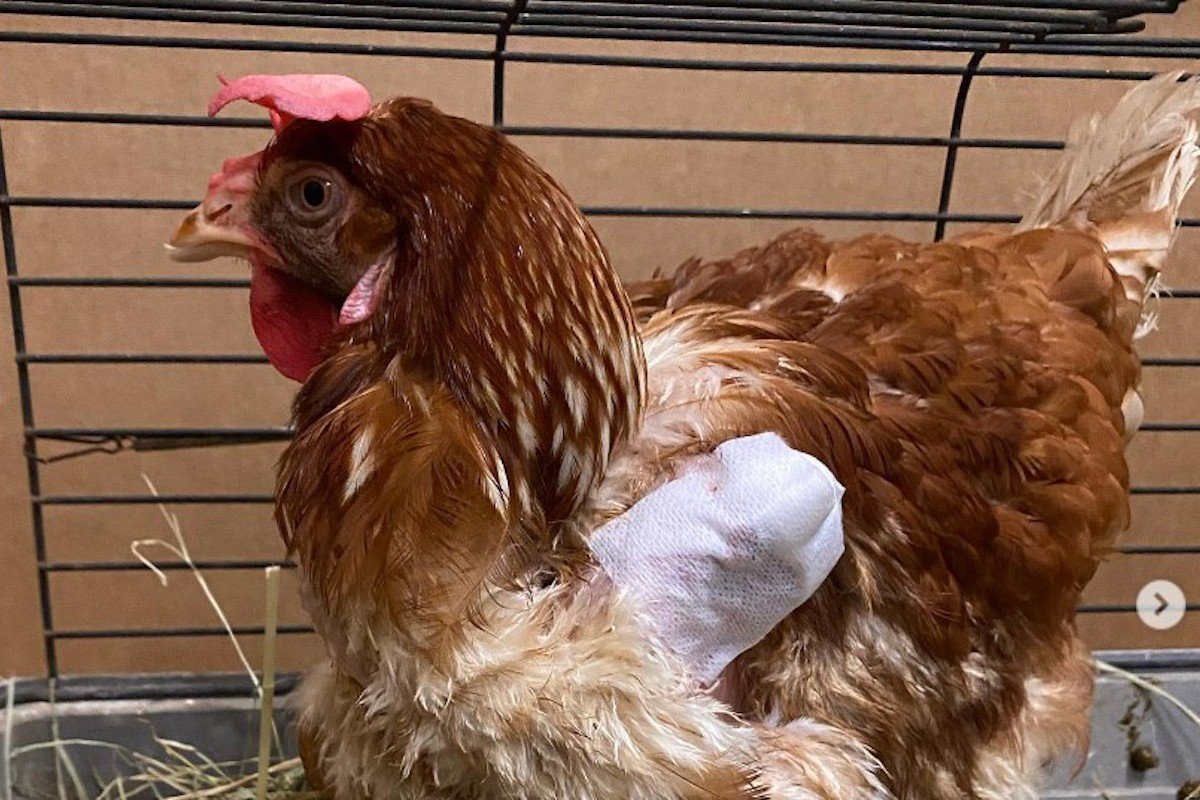
A CALL to allow a rural Pembrokeshire home next to an animal sanctuary for battery hens to be used without an agricultural condition has been refused by county planners.
In an application to Pembrokeshire County Council through agent Colony Architects Ltd, Aaron Player sought permission for a Certificate of Lawful Development, allowing a removal of an agricultural occupancy condition at Brynhaul, near Tegryn, Llanfyrnach.
A supporting statement said the agricultural-only condition was placed on the property, when the house was built in the 1990s; the land formerly part of a larger 75-acre estate.
It added: “The property is owned by Mr and Mrs Player, who purchase the property on April 8, 2022, some three years ago,” adding: “Prior to this, the property was owned by the former owner for over 20 years, and operated the site as a livery and horse box customisation company call VJ Edwards.”
Part of a Certificate of Lawful Development application involves providing evidence that – in this case – a continual non-agricultural use has taken place for at least 10 years.

“The two previous owners (Players and Edwards), have used the property as a dwelling, without any agricultural business for in excess of 20 years. The previous owners operated the company Edquine Ltd, from the property, between 2014 until 2020, when the company was closed.”
It says there is “robust evidence” that illustrates “on the balance of probability” that the property has been used as a residential dwelling for in excess of 10 years”.
Last year, Aaron Player was granted retrospective permission to keep an animal sanctuary for disabled animals and ex-battery hens at the site running, works having started in 2023.
An officer report recommending refusal said the agricultural occupancy condition dates back to 1990.

It references claims the site has been part used as an animal sanctuary, having gained permission last August, but says: “It is noted that this permission did not include the dwelling subject of this application.”
On previous the occupancy to the Players, the livery and horse box customisation company said to be there for some 20 years, it says: “Evidence provided to corroborate this consists only of a file copy of a ‘Certificate of Incorporation of a Private Limited Company’, with a company name of ‘Edquine Ltd’.
“There is no corresponding address with the Certificate to confirm the business was based at Brynhaul, what the business entailed, and who operated the business. In addition, the business name of Edquine Ltd also appears different to the business name of the horse box customisation business referred to previously in the statement as ‘VJ Edwards’. The certificate merely confirms that a business was incorporated on July 7, 2014 under the name ‘Edquine Ltd’.”

It concludes: “It is considered the statement and the certificate of incorporation do not on balance sufficiently demonstrate a continuous breach of the agricultural occupancy condition in excess of a 10-year period at Brynhaul as required.”


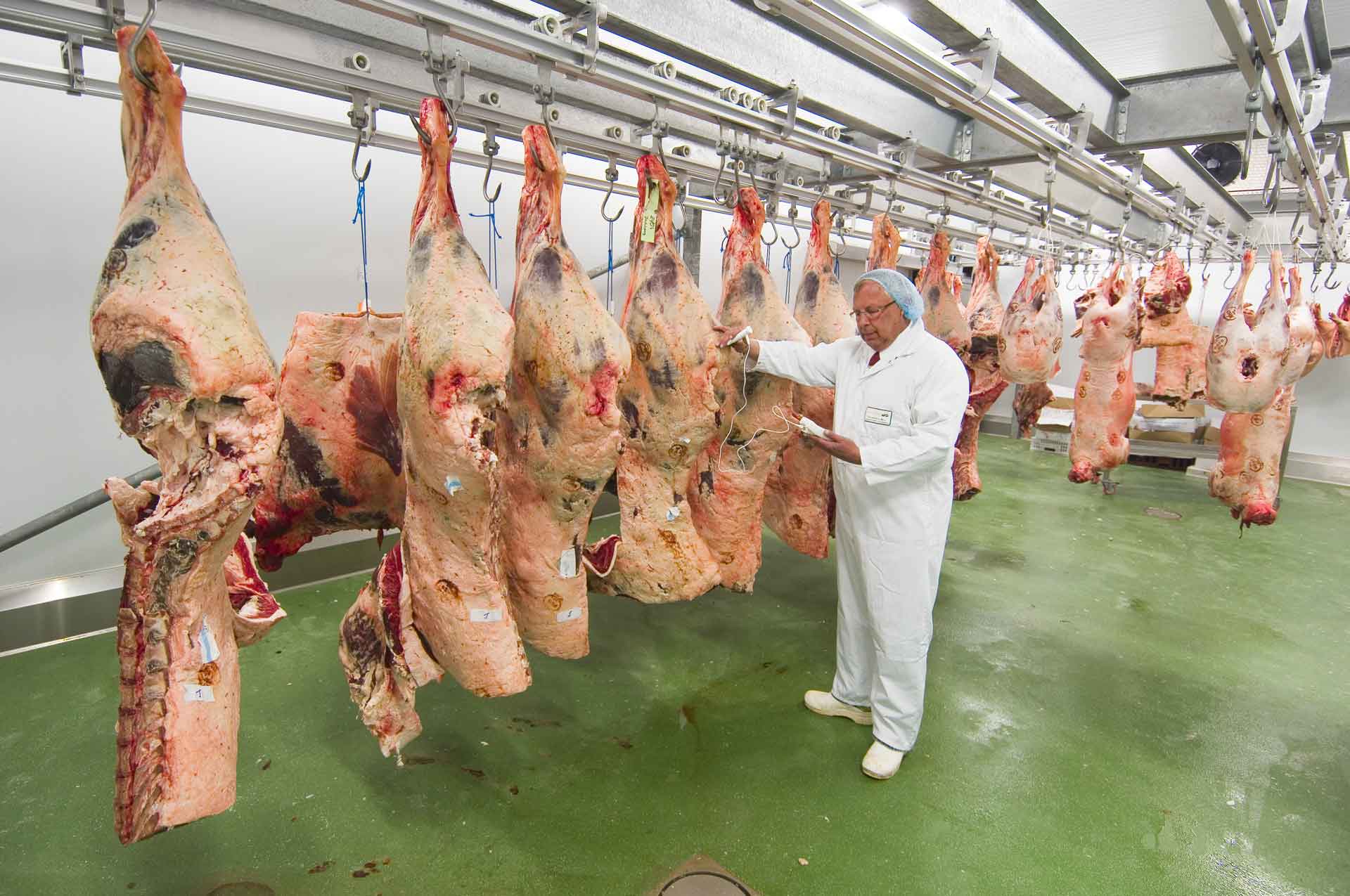
RISING IMPORTS RAISE FOOD SECURITY CONCERNS
THE CO-OP has called for stronger government support for British farmers after new figures showed the UK’s imported meat bill rose to more than £5bn last year.
HMRC data obtained by the retailer shows the value of meat imported into the UK increased by 15 per cent year-on-year, from £4.33bn in 2024 to £5.06bn in 2025.
The Co-op said the figures raised fresh concerns about the resilience of Britain’s food system at a time of climate change, global conflict and disruption to international supply chains.
Poultry was the most imported protein, worth almost £2bn in 2025. Poland and the Netherlands accounted for the largest share, while poultry imports from Thailand rose by almost 50 per cent compared with the previous year.
The retailer, which says it sells and uses 100 per cent British meat and poultry, said the UK’s growing reliance on overseas supply chains left shoppers and farmers more exposed to global shocks.
It is now backing proposals from the Co-operative Party calling for agricultural co-operatives to be scaled up and better supported as part of the Government’s long-term farming plans.
The policy paper argues that farmer-owned co-operatives can help producers share costs, reduce risk, invest collectively and secure stronger bargaining power in the food supply chain.
There are currently estimated to be more than 500 agricultural co-operatives in the UK, generating income of more than £9bn.
Paul Gerrard, Director of Public Affairs and Campaigns at Co-op, said: “The issue of supply chain resilience is upon us now and there is a clear and demonstrable benefit to the co-operative business model in agriculture.
“An expansion of agricultural co-operation is both an economic opportunity and a political imperative: it directly addresses the need for a more secure and sustainable food system, one less exposed to the volatility of global markets and the instability in a rapidly changing world.”
Joe Fortune, Leader of the Co-operative Party, said co-operation was “a form of strategic resilience” and called on Government to help grow the sector.
The party’s proposals include clearer government guidance for farmers, stronger representation for co-operatives in policy-making, improved access to finance, support for producer organisations, and greater use of public procurement to back British farming.


Charity says Wales should continue science-led approach as bovine TB cases fall
BADGER Trust has called on the next Welsh Government to maintain a science-led and non-lethal approach to tackling bovine tuberculosis.
The charity says Wales should continue to focus on cattle testing, farm biosecurity and support for farmers, rather than wildlife intervention.
According to Badger Trust, bovine TB cases in Wales had fallen by 13.6% by the end of 2025, without any wildlife culling. It said this compared with a 5% fall in England over the same period.
The charity said 5.3% of cattle herds in Wales were not officially TB-free at the end of 2025, down 0.4 percentage points on the previous year. It said 567 new herd incidents were recorded during the year, alongside a 27% reduction in early cattle slaughter.
Badger Trust said bovine TB remains a serious threat to cattle health, but argued that the best response is a cattle-focused policy, including more frequent and enhanced testing, improved farm hygiene, and non-slaughter options for cattle testing positive.
The charity said: “The premature culling of cattle due to a failed bovine TB test is outdated and unnecessary. Instead, strict segregation is an effective alternative.
“The main focus must be on eliminating the reservoir of bovine TB in the national herd in preparation for cattle vaccination.”
Badger Trust also argued that bovine TB can remain dormant in cattle and in the environment for long periods before being detected, which can lead to mistaken assumptions that infection has entered a closed herd from wildlife.
It said the disease can also be spread through contaminated vehicles, workwear, manure and slurry if proper biosecurity measures are not followed.
The charity added: “Focusing on badgers distracts from the real issue, as DNA testing shows that 94-95% of bovine TB infections are transmitted directly between cattle.
“The only effective way to combat bovine TB is to address it at its source: within the cattle population.”
Badger Trust is urging the next Welsh Government to “hold its nerve” and continue with a science-led, evidence-based, non-lethal policy.

Nigel Palmer, Chief Executive of Badger Trust, said the charity wanted Wales to continue “leading by example” in its approach to tackling the disease.
Badger Trust says it welcomes the end of intensive badger culling licences in England in 2026, but remains opposed to presenting badger vaccination as the main solution to bovine TB. It argues that improved cattle testing and stronger farm biosecurity offer a more effective and humane way forward.
The charity also warned that badgers face a separate threat from changes linked to the Planning and Infrastructure Bill, which it says could weaken protections for badger setts in development areas.
Badger Trust is the leading voice for badgers in England and Wales and works through a network of local badger groups. Its Badgers Belong Here campaign promotes badger protection and public education.
Union says rising fuel and fertiliser costs are putting pressure on farmers and food supply chains
THE FARMERS’ Union of Wales has warned that food security must be treated as a UK-wide priority as global instability continues to drive up costs for farmers.
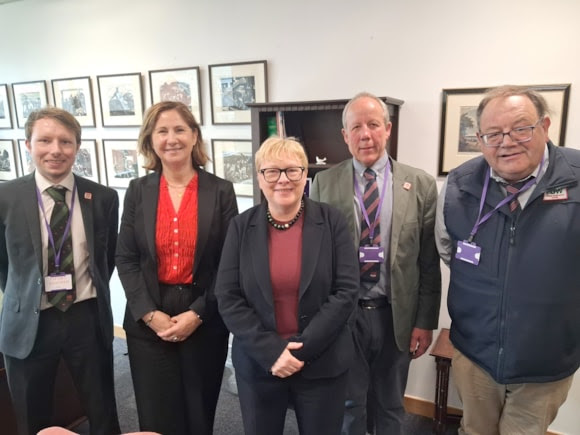
FUW President Ian Rickman and Deputy President Dai Miles met Defra Minister for Food Security and Rural Affairs Dame Angela Eagle MP in Westminster to discuss the impact of international events on farming, production costs and the resilience of food supplies.
They were also joined by Wales Office Minister Anna McMorrin MP.
The union said the ongoing conflict in the Middle East and Gulf region had added significant pressure to key agricultural inputs and energy costs.
According to the FUW, fertiliser prices, particularly urea and ammonium nitrate, have risen by between 20% and 30% since the escalation of the conflict.
The union is calling for greater transparency around fertiliser stocks and distribution across the UK.
Fuel costs have also risen sharply, with the FUW saying red diesel has effectively doubled in price in some cases. Wider agricultural fuel and energy costs are continuing to rise across the sector, placing further pressure on farm businesses already operating on tight margins.
The union warned that these cost increases are feeding through the entire food supply chain, affecting production, transport, processing and manufacturing, and are likely to contribute further to food price inflation.
The FUW repeated its call for a UK-wide legislative food security metric, which it says should be taken forward by the next Welsh Government in collaboration with the UK Government.
It said food security is a cross-UK issue, affecting all four nations because of the closely integrated nature of agri-food supply chains.
The union also pointed to recent government evidence, including Defra’s 2024 Food Security Report and its 2025 national security assessment on biodiversity loss and ecosystem collapse.
It said these highlighted long-term risks to food production, including climate change, nature decline, animal and plant disease, supply chain disruption and exposure to volatile global markets.

FUW President Ian Rickman said: “We welcomed the opportunity to meet Minister Eagle and Minister McMorrin, and highlight the continued impact of recent global instability on Welsh farmers.
“Food security is national security, and recent global instability has made that clearer than ever.
“Farmers are facing surging cost pressures, particularly from fertilisers and sharply rising fuel costs such as red diesel, which in some cases have doubled.
“These are forces far beyond their control, yet they directly threaten the resilience of our food system.
“We urgently need a coordinated UK-wide approach that recognises the strategic importance of domestic food production and reduces our exposure to volatile international markets.
“With that must come regular and meaningful engagement between Defra and agricultural stakeholders across the UK, including the FUW, particularly on policy areas that remain reserved to the UK Government.”



News8 hours ago
Catastrophe for Labour as Plaid and Reform reshape Welsh politics
ELUNED MORGAN LOSES SEAT AS OLD CERTAINTIES ARE SWEPT AWAY THE VOTERS of Wales have delivered one of the most...


News10 hours ago
Labour wiped out in Ceredigion Penfro as Plaid tops poll and First Minister loses seat
Shock result sends political shockwaves across Wales as Reform also surges in historic Senedd count LABOUR suffered one of the...

News16 hours ago
Labour deputy says party ‘will not form next Welsh Government’
LABOUR FACES HISTORIC DEFEAT AS COUNTING CONTINUES ACROSS WALES LABOUR’S Deputy Leader in Wales has effectively conceded the Senedd election,...

News16 hours ago
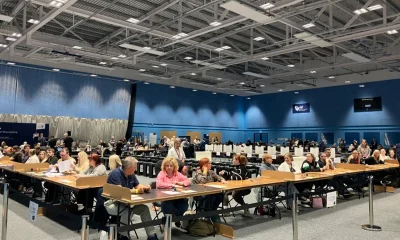
Counts underway in historic Senedd election
Wales waits for results as first election under new voting system reaches count stage COUNTING is underway across Wales today...


Charity1 day ago
Chief’s Tour honours fallen officers with 75-mile Pembrokeshire ride
Dyfed-Powys Police team raises thousands for bereaved police families charity A TEAM of officers and staff from Dyfed-Powys Police cycled...


Crime2 days ago
Racial abuse suspect barricaded himself inside Johnston lodge
ARMED police were called to a supported accommodation building in Johnston after a man allegedly barricaded himself inside a room...


Crime2 days ago
Milford Haven woman denies causing suffering to cat
Jury hears evidence over alleged failure to seek treatment for tumour A MILFORD HAVEN woman has denied causing unnecessary suffering...


News2 days ago
Plaid Cymru projected to lead Senedd as Labour faces historic collapse
Final poll suggests Welsh politics could be on the brink of a major realignment PLAID CYMRU is on course to...

Community3 days ago
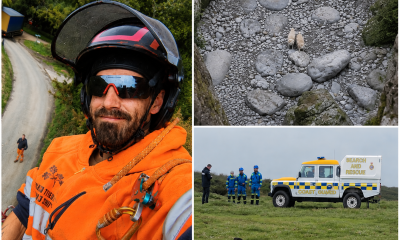
Rescue bid planned for lambs stranded below Stack Rocks cliffs
Tree surgeon preparing 150ft descent after live firing delayed rescue attempt A MAJOR rescue operation is being planned this afternoon...


News3 days ago
Bishop’s report reveals major renewal challenge at St Davids Cathedral
Formal Visitation highlights financial, structural, leadership and spiritual pressures at one of Wales’ most important religious sites ST DAVIDS CATHEDRAL...
-

 News4 days ago
Baby in critical condition after Fishguard emergency
-

 News3 days ago
Former housing officer admits drink-driving in Pembrokeshire retail park
-

 Crime3 days ago
Job loss threat for convicted Pembrokeshire drug-driver
-
 Crime3 days ago
Milford motorist disqualified for drug-driving
-

 Crime3 days ago
Police tip-off leads to driving ban for Milford motorist
-
Crime2 days ago
Racial abuse suspect barricaded himself inside Johnston lodge
-
 Crime3 days ago
Delivery driver caught twice over legal drink-drive limit
-

 Community3 days ago
Sixth-former firefighter balances schoolwork with saving lives