


Farming
’Exceptional’ oat variety bred at Aberystwyth wins major award

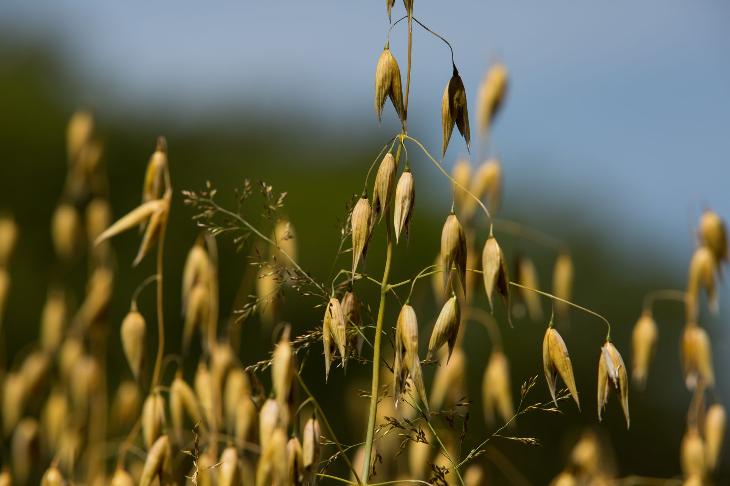
THE UK’s most widely grown oat, bred at Aberystwyth University, has scooped one of the industry’s most prestigious accolades.
The National Institute of Agricultural Botany (NIAB) has awarded its coveted Variety Cup to the winter oat Mascani describing it as an “exceptional variety” and praising “its unmatched quality and reliability”.
Mascani was bred by researchers at Aberystwyth University’s Institute of Biological, Environmental and Rural Sciences (IBERS) and is marketed across the UK by Senova Ltd.
The variety is extremely popular in the milling industry and is known for its consistent grain quality along with reliability in the field and resistance to crop disease.
The 2025 NIAB Variety Cup for Mascani was presented to Dr Catherine Howarth from IBERS and Alison Barrow from Senova Ltd at an awards ceremony at the 2025 Cereals event in Lincolnshire.

The Variety Cup acknowledges exceptional varieties that have made a major contribution to crop productivity through improved quality, disease resistance, grower return or commercial success, and can be drawn from the entire spectrum of horticultural, ornamental and agricultural crops.
Clare Leaman, Niab’s cereal specialist, said: “Despite the emergence of newer oat varieties boasting improved yield and agronomic traits, Mascani has maintained dominance in the industry due to its exceptional quality characteristics, which continue to meet the exacting standards of millers. Its success is testament to the unique dynamics of UK oat breeding programmes which often lead to varieties with remarkable longevity. Mascani’s sustained relevance highlights its unmatched quality and reliability, even in a competitive landscape, making it a prime contender for the Niab Variety Cup.”
Research on developing the Mascani oat began at IBERS thirty years ago and the variety was added to the Agricultural and Horticultural Development Board’s (AHDB) list of recommended seeds in 2004.
Dr Catherine Howarth, oat breeding and research lead at IBERS in Aberystwyth University, said: “As a research team, we are incredibly proud to accept the Niab Variety Cup for Mascani. It’s a huge honour for all those who have been involved in the development of the variety – from the original cross in 1995 and subsequent years of selection to its release onto the market as a game changing variety. Its superb quality, yield and excellent milling consistency has made Mascani a favourite across the UK for growers, merchants and millers alike. Its continuing success is evidenced by its share of the UK winter oat market, which has been over 70% for the past 6 years. Oats offer clear benefits to human health, including lowering cholesterol as well as contributing to a more sustainable environment.”
Alison Barrow, Technical Marketing Manager at Senova Ltd, highlighted that, after 21 years on the AHDB Recommended List, the variety continues to stand the test of time and remains the top-selling winter oat variety, with over 70% of the UK winter oat market.
“We’re delighted with the recognition of Mascani’s status and reputation within the marketplace by Niab. Mascani’s success can be attributed to its combination of superior grain quality and performance in the mill, along with its reliability in the field and suitability for sustainable rotations. Appealing to both end users and farmers alike, the variety has spearheaded the increase in UK-wide oat plantings and boosted development work into alternative oat markets, as the health and nutritional benefits of oats have been recognised. As a result, we now see oats being eaten at different times of day to just the traditional breakfast occasion.”
Speaking at the Cereal awards ceremony, Niab Chief Executive Professor Mario Caccamo, said: “It takes an exceptional variety to win the Niab Variety Cup, or its sister Cereals Cup, with candidates reviewed annually by our crop specialists and agronomists. This year, we had several strong contenders for the Variety Cup, and it is incredibly rewarding to acknowledge Mascani’s long-standing contribution to the industry. Its success exemplifies the impact that superior crop varieties can have on productivity and grower returns.

“As Mascani’s legacy continues to inspire innovation in crop breeding, Niab reaffirms its commitment to recognising and fostering excellence in agriculture. The Niab Variety Cup remains a symbol of achievement and dedication, inspiring breeders to push the boundaries of plant breeding.”
Established in 1986, the Niab Variety Cup is not awarded annually and is only presented when the organisers decide there is an exceptional variety which deserves recognition. It has been won twice before by plant breeders at Aberystwyth – for the perennial ryegrasses Aberdart in 2003 and Abergreen in 2015.


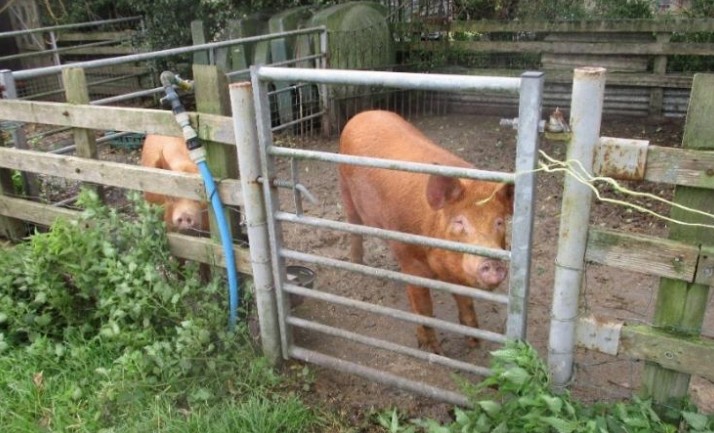
A CALL to allow a Pembrokeshire farm to keep welfare facilities to care for rare breed breeding Tamworth pigs has been given the go-ahead.
In an application to Pembrokeshire County Council, Sharron Nicolas, through agent Hayston Developments & Planning Ltd, sought a certificate of lawfulness permission for the creation of a welfare flat within a previously-approved agricultural building, plus a rear lean-to extension and the erection of two further sheds at Fairybank Fields Farm, Bethesda, near Clynderwen.
An application for a certificate of lawfulness allows an applicant to keep a development if they can provide proof of occupancy or use, without any enforcement taking place, over a prolonged period.
The previous agricultural building application was granted back in 2003.
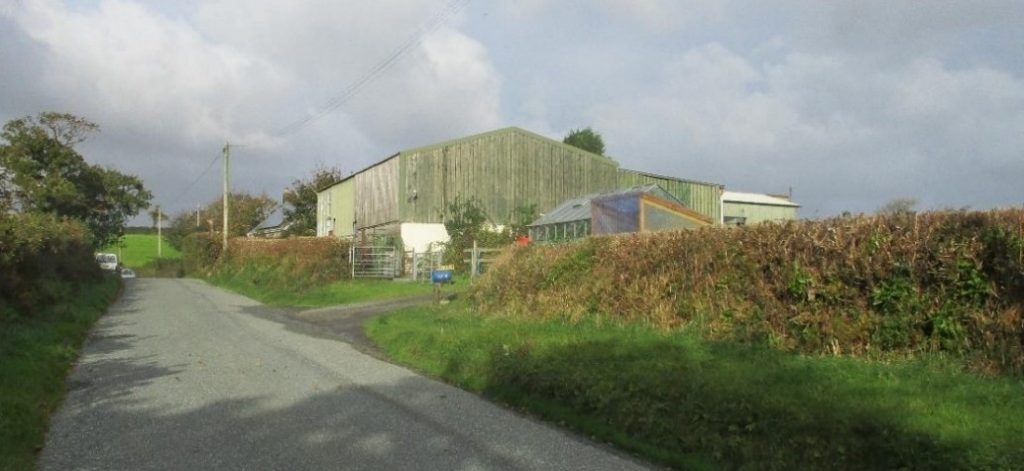
A supporting statement accompanying the application said the two-level welfare unit in the 2003-granted shed “contains the necessary elements to allow overnight stays which are essential when the pigs are farrowing.”
It added: “Mr Allan and Mrs Sharron Nicholas have been owners of Fairybank Fields since 1998. Unfortunately, Mr Nicolas died in February 2025. Although managing the farm at Bethesda, they lived at Pleasant View, Cold Blow, Narberth meaning a round trip of some 12 miles per visit – a visit which was required on a daily basis because of the need to feed and generally care for their animals – which were and still are rare breed pigs together with a number of beef cattle.
“It is essential that the pigs require continuous care when farrowing or when there are other pressures on animal health. When such occasions occurred, it was the practice of Mr Nicholas to spend the night at the farm and to use the welfare provision.”
It said Mr Nicholas would have spent approximately three months’ worth of nights (circa 90 nights) staying over at Fairybank Fields – a period of some 12 years when the bedroom above had been created to late 2024 when his brother assisted Mrs Nicholas in caring for the pigs as Mr Nicholas was too ill.
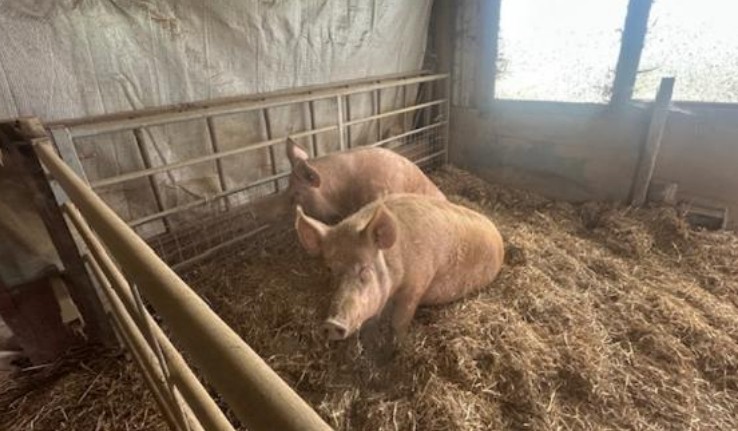
It went on to say: “Whilst the principal activity at the Farm is the breeding of the rare breed, the Tamworth Pig of which there are only currently 290 breeding sows in the UK, Mr and Mrs Nicholas also have had beef cattle on their farm and Mrs Nicholas intends to re-start that element in 2026.”
An officer report recommending approval said a site visit had been undertaken finding no evidence of the unit being occupied as a separate residential dwelling, nor as a primary residence.
It said a range of evidence was submitted in support of the application, including a detailed timeline, aerial imagery and multiple witness statements “which consistently indicate that the rear extension to Building 1 was constructed circa 2008, Shed 2 was completed in September 2012 and Shed 3 was erected in 2015”.
It said historic aerial photographs and witness statements demonstrated “on the balance of probability, that the operational development was substantially completed well in excess of four years prior to the submission of the application and has not been subject to any material interruption,” considered to be lawful by virtue of immunity from enforcement action.

It was granted approval on that basis.
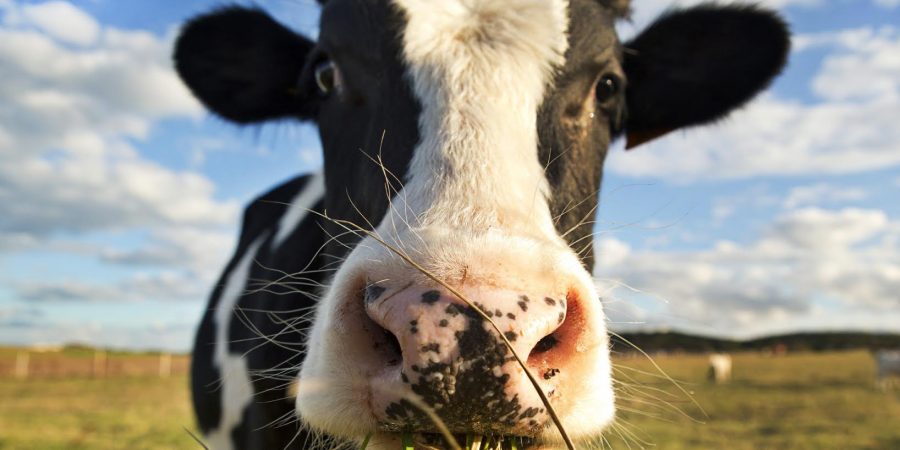
A WELSH GOVERNMENT minister has defended his approach to tackling bovine TB after being accused of lacking ambition by Conservative farming spokesman Andrew RT Davies.
Mr Davies challenged Rural Resilience and Sustainability Minister Llyr Gruffydd in the Senedd on Tuesday (Jun 23), claiming the government’s latest position contained “lots of reviews” but “little substance”.
He warned that bovine TB remained a major concern for farming communities and urged the minister to bring forward a clearer plan to eradicate the disease.
Mr Davies said: “Bovine TB is devastating for the countryside, yet for the past 20 years those in power have let rural communities down.
“Plaid Cymru ministers must get a grip of officials. They must not be allowed to curtail ambition to tackle this terrible disease.”
He added that the Welsh Conservatives would support the minister if he brought forward a “positive vision” for tackling bovine TB.
Responding, Mr Gruffydd said the government needed to wait for advice from the technical advisory group before deciding its next steps.
He said: “They have been charged with bringing forward concrete proposals on the way ahead.
“I think we wait for the experts to speak; we look at the evidence, we look at the science that they provide us, and then we get a grip and take action.”
Bovine TB remains one of the most divisive issues in Welsh farming. Farmers have long argued that the disease causes major financial and emotional pressure, while governments have faced difficult decisions over cattle controls, testing, wildlife management and disease eradication policy.
The exchange comes as farming unions continue to call for stronger measures to reduce the spread of the disease, while ministers say future policy must be guided by evidence and expert advice.
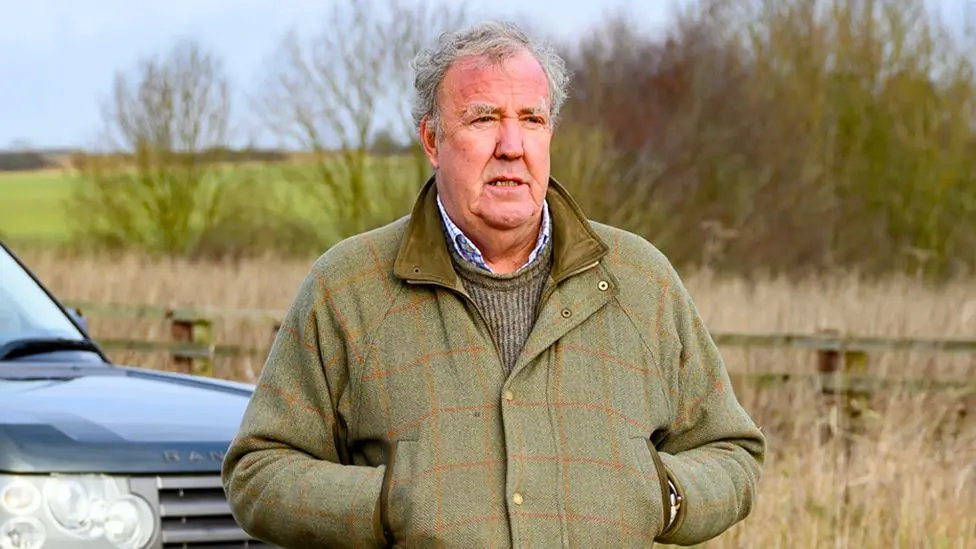
JEREMY CLARKSON’S prostate cancer diagnosis has highlighted a problem familiar to many farming families — what happens when serious illness collides with the daily demands of running a farm.
The presenter revealed in the latest series of Clarkson’s Farm that he had been diagnosed in 2025 with an aggressive form of prostate cancer. He has since confirmed that he is in remission.
But his comments about worrying that treatment would clash with a busy period on his Cotswolds farm have struck a chord with farmers across the country.
For many in agriculture, illness is not just a personal health crisis. It can also raise immediate questions about livestock, crops, machinery, bills, family income and who will carry out essential work if the farmer is forced to stop.
Bridgette Baker, a fifth-generation farmer from Montacute, near Yeovil, said the dilemma was one many farmers would recognise.
She said: “Farmers calculate how many days they would be off and think, ‘how far back in my jobs list am I going to be?’”
Miss Baker, 25, works on her family’s beef and arable farm at Windmill Farm. With no outside employees, she said covering daily duties during periods of illness could be extremely difficult.
She added: “Sometimes you’d think the priority is to get the treatment, but sometimes farmers like to put their farm first to get the jobs done.”
The issue is particularly serious in family-run farms, where the business, home and livelihood are often closely linked. A period of illness can affect not only the patient, but the whole family operation.
The Farming Community Network, which supports farming families, is working with Macmillan Cancer Support to improve help for those affected by cancer in rural communities.
The charity said farmers often faced barriers in accessing cancer services and support because of long working hours, rural isolation and the practical demands of farming.
A spokesperson for FCN said cancer could have a serious impact on a family business, especially where livestock needed immediate care or where the farm employed others.
They said: “That can have significant impacts on an individual and their families, including their housing and extended family situation or immediate welfare issues for livestock.”
Clarkson’s Farm, which launched in 2021, has become one of Amazon’s most successful factual entertainment series. It follows the former Top Gear presenter as he attempts to run Diddly Squat Farm in Oxfordshire, highlighting the financial pressures, red tape, weather problems and practical challenges facing British agriculture.
His diagnosis has now brought another farming issue into the public eye: the difficulty of putting health first when the land, animals and business cannot simply be paused.
Health charities continue to urge men to seek advice if they are concerned about prostate cancer, particularly if they are over 50, have a family history of the disease, or are at higher risk.
Farm support groups say the message is simple: farmers should not delay seeking medical help because of work pressures, and families should reach out for support before a health crisis becomes unmanageable.



Sport2 hours ago
Long Course Weekend gets underway in Tenby as thousands head for county
Three days of swimming, cycling and running begin with The Wales Swim at North Beach THOUSANDS of athletes and supporters...


Climate5 hours ago
Welsh waters, Westminster profits: Crown Estate row reignited in Wales
PLAID CYMRU has renewed calls for the Crown Estate to be devolved to Wales after figures showed income linked to...


Community8 hours ago
Working-class young people ‘shut out’ of marine conservation careers in Wales
New study says marine conservation is becoming a “functionally middle-class” profession as barriers to entry grow A NEW report has...

News10 hours ago
Reform MS: ‘I felt like shouting get out of the water’
Paul Marr says children playing in streams at Pembrokeshire beaches deserve better protection from pollution risks REFORM UK MS Paul...


Health1 day ago
Senedd backs call to rule out hospital downgrades after heated NHS debate
Reform UK amendment passes as West Wales hospital fears remain central political issue THE SENEDD has backed a call for...

News2 days ago
Coastguard callout payments axe sparks fears for coastal communities
VOLUNTEER coastguards across the UK are set to lose callout payments, prompting concern over the future resilience of emergency cover...

Farming2 days ago
Rural Wales ‘left out’ of net zero debate, warns carbon entrepreneur
A WELSH carbon entrepreneur has warned that rural Wales risks being left behind in the national conversation about net zero....


Local Government2 days ago
Tenby Spectacular row continues as organisers say key question remains unanswered
Round Table says legal clarity over pedestrian access is still holding up event plan TENBY ROUND TABLE has welcomed Pembrokeshire...


Community3 days ago
Manorbier fire scandal: Council’s payout just £63,777 after school destroyed
PEMBROKESHIRE COUNTY COUNCIL has accepted an insurance settlement which leaves it with just £63,777.07 after the catastrophic fire which destroyed...


News3 days ago
Bus overturns in major incident near Kidwelly
All passengers rescued as emergency services remain at scene A BUS overturned on the A484 between Kidwelly and Ferryside on...
-

 Health6 days ago
Woman jailed assaults on police, harassment and XL Bully possession
-

 Crime1 day ago
Police appeal after reported rape at Young Farmers rally
-

 Crime6 days ago
Milford Haven woman spared jail despite string of shop thefts
-

 Community5 days ago
The gentle giant behind the tattoos
-

 Crime6 days ago
Spittal man to stand trial accused of ABH
-

 Crime6 days ago
Carmarthenshire pensioner, 86, accused of causing prostitution for gain
-

 Entertainment5 days ago
Harbour Fest to bring music, food and maritime magic to Milford Waterfront
-
 Community7 days ago
Cabinet to review recent decision on crematorium services at special meeting