


Health
Senedd rejects calls to declare health emergency


THE SENEDD narrowly rejected calls to declare a health emergency as the Conservatives warned NHS Wales is in the worst state it has ever been.
James Evans pointed out that nearly one in five people are waiting for treatment, with more than 250,000 people waiting more than nine months for care.
Leading a Tory debate on July 2, the shadow health secretary told the Senedd more than 100,000 people in Wales wait more than 12 hours in A&E each month.
Mr Evans said: “While they wait, ambulances queue outside, unable to offload patients, tying up paramedics who should be on the road saving lives. The ambulance service has not hit its target for eight-minute response times for life-threatening calls for four years straight.”
He warned GP services are overwhelmed, NHS dentistry is collapsing and mental health services are also in crisis. “If that’s not an emergency, I do not know what is,” he said.


Mabon ap Gwynfor, Plaid Cymru’s shadow health secretary, supported the Tory motion, pointing out that his party made calls to declare a health emergency in February 2024.
He said since then: “Waiting lists have broken records another nine times, and every one of the seven regional health boards has stayed in special measures of one kind or another.”
Describing Labour’s record over the past 26 years as unacceptable, Mr ap Gwynfor accused ministers of changing targets on a whim and refusing to admit failure.
The Conservatives’ Natasha Asghar criticised “shameful” treatment times in Wales. She said: “If anything, things continue to go from bad to worse under Labour’s watch and, perhaps more worryingly, failure… to turn things around seems to end in promotion.


“Mark Drakeford, Vaughan Gething and Eluned Morgan all presided over the health brief, failed to deliver successful results and ended up being First Minister.”
Her colleague Gareth Davies, who worked in the north Wales NHS for a decade, told the Senedd: “We just cannot go on like this. The Welsh Government has declared a nature and climate emergency; we now need to declare a health emergency in Wales.
“Unlike the trendy nature and climate emergencies championed by the establishment, this crisis lacks glamour but demands urgent action and means more preventable deaths, prolonged suffering and eroded trust in the NHS….

“Declaring a health emergency is an honest admission that the system is failing and that extraordinary measures are needed.”
Labour’s Carolyn Thomas told the Senedd the NHS has often been ranked among the best health care systems in the developed world. “We must value it,” she said.

Pointing to the impact of the pandemic on waiting lists and Tory austerity, which “tore at the fabric of society”, the former councillor said: “I refuse to talk down our wonderful NHS.”
Jeremy Miles accused the opposition of only seeing the worst in the health service and indulging in their “favourite sport” of political football, “kicking the NHS from pillar to post”.

Hitting back at his opposite number, the health secretary said: “I heard the Conservative health spokesman say… ‘if that’s not an emergency, I don’t know what is’.
“Let me tell him what a health emergency is – it’s Covid, it’s mpox, it’s war, it’s terrorism.
“And the public will look at this debate and see that in it – shamefully, on a matter of such importance – it’s driven by a slogan and not by substance.”
Senedd Members voted 26-24 against the Tory motion before agreeing the Welsh Government’s amended version by the same margin.



Welsh businesses, universities and NHS organisations will be able to develop new technologies and partnerships through the Horizon Europe programme
WALES has secured more than £700,000 in European funding to support the development of new digital healthcare technologies.
The Welsh Government has joined the UNITE European Digital Health Valleys project, marking what ministers say is Wales’ first European Union grant agreement since Brexit.
The funding has been awarded through Horizon Europe, the EU’s main research and innovation programme, which the UK formally rejoined as an associated country in 2024.
Welsh businesses, universities, health boards and innovation organisations will be encouraged to work with partners across Europe to design, test and introduce new digital healthcare products and services.
The programme will focus on major challenges facing health services across Europe, including ageing populations, staff shortages and increasing pressure on frontline services.
Organisations in Wales are now being urged to begin developing potential projects and establishing international partnerships ahead of future funding opportunities.
Cabinet Minister for Enterprise, Connectivity and Energy Adam Price said the agreement would support economic growth while helping NHS Wales adopt new technologies.
He said innovation-led growth, stronger international relationships and improvements to public services were central to the Welsh Government’s economic productivity plans.
Mr Price said: “This major initiative will deliver on all those fronts, with a focus on addressing shared healthcare challenges such as the needs of ageing populations and workforce pressures by connecting industry, healthcare providers, academia and the public sector.”
UNITE brings together regions from across Europe with the aim of creating a connected digital health ecosystem.
The network will allow technology companies, healthcare providers, universities and public bodies to collaborate on the development and deployment of new systems.
As a partner region, Wales will gain access to digital health organisations and potential research partners across Europe.

Ministers believe this could help Welsh organisations compete for further research and development funding while strengthening the country’s position within the international digital health market.
Mr Price added: “As a UNITE partner region, Wales will play a central role in shaping a new digital health innovation ecosystem and gain access to a network of European digital health regions.
“This will open up new opportunities for our most innovative sector organisations to collaborate internationally and access funding.
“Crucially, this will support the adoption of innovative solutions for NHS Wales while strengthening Wales’ position in the global digital health market.”
A free webinar explaining the programme and future opportunities will be held on Thursday, September 3.
Businesses and organisations can also seek further advice through Business Wales.

Annual report, finances and patient experiences will be discussed during online meetings on July 30
THE WELSH AMBULANCE SERVICE is inviting members of the public to attend its Annual General Meeting and bi-monthly Board meeting later this month.
The AGM will be held online via Microsoft Teams on Thursday, July 30, from 9.30am until 10.45am.
Members of the Board will provide updates on the Trust’s performance and financial position, as well as discussing its annual report and accounts for 2025/26.
There will also be an opportunity for stakeholders and members of the public to submit questions.
Colin Dennis, Chair of the Welsh Ambulance Service, said: “Our AGM is an important opportunity to reflect on the achievements and progress of the past year and the impact these have had on our services.
“This includes transforming the way we deliver services to provide patients with the right advice and care, in the right place, every time.
“It also gives us the chance to look ahead, share our vision for the future and explain the actions we are taking to achieve it.”
Questions can be submitted during the AGM using the Microsoft Teams Q&A function.
Alternatively, questions can be sent in advance by emailing [email protected] before Wednesday, July 29.
The Trust’s bi-monthly Board meeting will take place immediately after the AGM, beginning at 11am.
During the meeting, Board members will hear the findings of the Good Governance Institute’s recent external review of the Trust Board’s effectiveness.
They will also hear from Lucy Burrows, whose young son lives with a range of physical and neurodiverse conditions.

Ms Burrows will speak about her family’s experience of the patient-centred care provided by an attending Emergency Medical Service crew.
An agenda for the Board meeting is expected to be published on the Welsh Ambulance Service’s website shortly.
Questions for the Board can also be submitted in advance by emailing [email protected] by Wednesday, July 29.
The Microsoft Teams links for both meetings will become active around ten minutes before each meeting begins.

Health board says it is increasing capacity after figures revealed hip replacement patients waited an average of 64 weeks
HYWEL DDA UNIVERSITY HEALTH BOARD has appointed two additional surgeons as part of efforts to reduce lengthy waits for orthopaedic treatment across west Wales.
The health board confirmed the appointments after figures revealed that patients undergoing elective hip replacement surgery waited an average of 450 days during the 2025/26 financial year.
That is equivalent to more than 64 weeks from referral to treatment.
As of May 28, 2026, a total of 1,608 patients were on Hywel Dda’s waiting list for hip replacement surgery.
Sixteen patients were also removed from the list during the financial year after deciding to undergo private treatment.
Responding to questions from The Herald, Gareth Cottrell, Deputy Chief Operating Officer at Hywel Dda University Health Board, acknowledged the effect prolonged waits were having on patients.
He said: “The current national delivery expectation for health boards in Wales is to treat orthopaedic patients within a maximum of 104 weeks from the point of referral to treatment.
“In recent years, waiting times for orthopaedic treatment in Hywel Dda have been among the lowest of any health board in Wales, but we recognise that waiting times remain too long and the impact these have on our patients while awaiting the treatment they need.”
The health board said it continued to maintain dedicated ward and theatre capacity for elective orthopaedic procedures at Prince Philip Hospital in Llanelli and Bronglais Hospital in Aberystwyth.
Day-case surgery is also being carried out at units across Hywel Dda’s hospital sites.
Mr Cottrell said: “We remain committed to improving waiting times and are working closely with our regional health board partners to maximise the treatment capacity we can offer patients across the wider South West Wales area.
“During the past year, we have appointed two additional surgeons to support our continuing efforts to reduce waiting times.”
The health board did not provide details of where the new surgeons would be based, how many additional operations they were expected to carry out or when patients would begin to see a significant reduction in waiting times.
Plans to expand orthopaedic capacity also formed part of Hywel Dda’s Clinical Services Plan consultation.
Mr Cottrell added: “Improving our orthopaedic services has also been a key part of our Clinical Services Plan that we consulted upon last year, with plans being developed to increase capacity and help more patients access the care they need.”
Hip replacements are commonly offered to patients suffering severe pain, stiffness and loss of mobility after other treatments, including physiotherapy, medication and injections, have failed to provide sufficient relief.
Lengthy waits can leave patients struggling with worsening pain, disturbed sleep and a loss of independence, while some may be forced to reduce their working hours or leave employment.
The waiting-time figures were obtained through a Freedom of Information request submitted by healthcare marketplace My Medical Gateway.
The company said the health board returned its response on June 8, 2026.


Crime13 hours ago
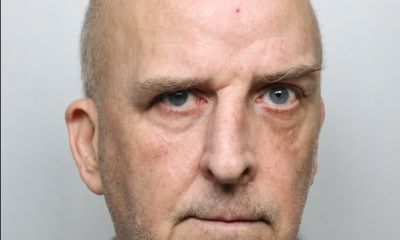
Haverfordwest man jailed for seven years for historic rape and sexual assault of girl
A HAVERFORDWEST man has been jailed for seven years after being convicted of raping and indecently assaulting a girl during...


News18 hours ago
Burnham more willing to listen on Welsh devolution, says First Minister
Rhun ap Iorwerth says he will press the new Prime Minister for powers over policing, railways and Wales’ natural resources...


Crime22 hours ago
Women jailed after man chased through Milford home and attacked with knives
Kelly Rees receives further 27-month sentence while already serving prison term for notorious taxi robbery TWO women have been jailed...


Crime23 hours ago
Mother headbutted and clawed police officers after threatening social worker
Court shown body-worn footage of violent confrontation at Goodwick property A COURT has been shown police body-worn footage capturing the...


Crime2 days ago
Man, 37, found dead following major police response in Pembroke Dock
Death not being treated as suspicious as police make statutory referral to IOPC following active investigation A 37-YEAR-OLD man has...


Community2 days ago
Household Cavalry drum horse returns home to Pembrokeshire for final farewell
Dyfed Willa Rose, who became Major Juno and the first mare to serve as a Household Cavalry Drum Horse, was...


News3 days ago
Jo Stevens out as Welsh Secretary as Burnham reshapes government
Cardiff East MP repeatedly visited Pembrokeshire to champion clean energy jobs, but her successor inherits unresolved questions over Milford Haven’s...


Crime3 days ago
Teen cleared of attempted murder but guilty of GBH after Milford teacher stabbed
Jury returns 11-1 majority verdict on charge of causing grievous bodily harm with intent, with sentencing set for September 3...


Community3 days ago
French troops march through Fishguard as Britain’s last invasion returns to life
Battle scenes, cavalry displays and a surrender procession brought one of Pembrokeshire’s most extraordinary stories back to the streets MUSKET...
News3 days ago
Andy Burnham promises new politics as he enters Downing Street
New Prime Minister admits politicians have “not been good enough” as he sets out a ten-year plan for Britain and...
-

 Crime23 hours ago
Drunken rail passenger tried to headbutt police after being refused travel
-

 featured2 days ago
From a father-and-son project to an award-winning campervan business
-
Crime22 hours ago
Women jailed after man chased through Milford home and attacked with knives
-
Community2 days ago
Household Cavalry drum horse returns home to Pembrokeshire for final farewell
-
News18 hours ago
Burnham more willing to listen on Welsh devolution, says First Minister
-

 Entertainment2 days ago
Robin Hood: A magical show by young talent at The Torch Theatre
-
Crime13 hours ago
Haverfordwest man jailed for seven years for historic rape and sexual assault of girl
-
Crime23 hours ago
Mother headbutted and clawed police officers after threatening social worker