


Health
Charity-funded cancer psychological support service praised by patients and carers


CANCER counselling has helped transform the lives of patients across west Wales – giving many the tools to cope with their diagnosis and look to the future with hope.
One of those patients is Sharon, who says the Cancer Psychological Support (CaPS) Service run by Hywel Dda University Health Board has changed the way she thinks, helping her focus on the positives rather than the negatives.
The CaPS service supports cancer patients in Carmarthenshire, Ceredigion and Pembrokeshire. It was created thanks to generous donations to Hywel Dda Health Charities, the official charity of the health board. A two-year pilot ran between 2019 and 2021, followed by a second phase from 2022 to 2025. Since April this year, the service has been fully embedded into the health board’s core cancer services.
Sharon says counselling allowed her to explore her feelings, make key decisions, and talk openly to a professional without fear of judgement.
“I was able to explore all sorts of things with Helen, my therapist,” Sharon explained. “I hope I don’t have to see her again, but it’s reassuring to know the support is there if I need it. The counselling helped me make decisions and gave me someone to talk to without judgement.”

Carer Maureen who has benefitted from the CaPS service
Maureen, a carer for a cancer patient, added: “I can’t even tell you what part of it helped. I just know when I left, I felt a bit of a lift. For that hour it was just us two talking.
“In a way I looked forward to the sessions because I knew I was going to get things off my chest as well. When things got more difficult for me, I talked to Ann (the therapist) about it, and I felt safe telling her. She just listened.”
Above: Gina Beard, Lead Cancer Nurse at Hywel Dda University Health Board
The CaPS project delivers psychological support to people affected by cancer aged 16+ within the health board population. Specialist Cancer Counsellors are employed across the three counties of Hywel Dda, and they receive a current average of 23 referrals per month.
“There are no waiting lists at all,” explained Gina Beard, Lead Cancer Nurse at the health board. “Referrals are received, assessed and contacted within two weeks, which means that cancer patients in the area get the psychological support they need very quickly.
“The service offers a range of virtual or face-to-face options, so it can adapt to patients’ communication needs. And the service also extends to cancer patients’ carers and the parents of children with cancer.”

Each patient or carer is allocated a counsellor who will deliver up to 12 counselling sessions, depending on need. This results in over 3,000 counselling sessions being delivered every year.
The CaPS team also provides education and training programmes for the cancer workforce to equip them with skills in psychological support in their daily interventions with patients – for example, when breaking bad news and managing difficult conversations.
In addition, the team also provides invaluable psychological support to staff.
Pandora, an Upper Gastrointestinal Clinical Nurse Specialist, said: “It has provided a safe, supportive space to reflect on my practice, explore challenges, and gain valuable insight.
“The process has enhanced my confidence, improved my clinical reasoning, and helped me maintain emotional resilience in a demanding role. I’ve found it to be an essential part of my professional development and overall well-being as a practitioner.”
Through the CaPS Service, Hywel Dda University Health Board has led the way in Wales in providing psychological support for cancer patients, and it is the first health board in Wales to provide Level 3 psychological support for people affected by cancer as part of core services with mainstream NHS funding from April 2025.
“This would not have happened if the project had not received charitable funds which enabled cancer services to identify the needs of patients and the impact of providing a service that met those needs,” said Nicola Llewelyn, Head of Hywel Dda Health Charities.
“Thanks to the generosity of local communities, we are able to fund projects like this which are above and beyond core NHS expenditure, and which make such a big difference to the experiences of patients, carers and staff.
“Never has the charity been more important in helping deliver the very best care and experiences for patients and staff. We are so grateful for every donation we receive.”
For more details about the charity and how you can help support local NHS patients and staff, go to hywelddahealthcharities.org.uk


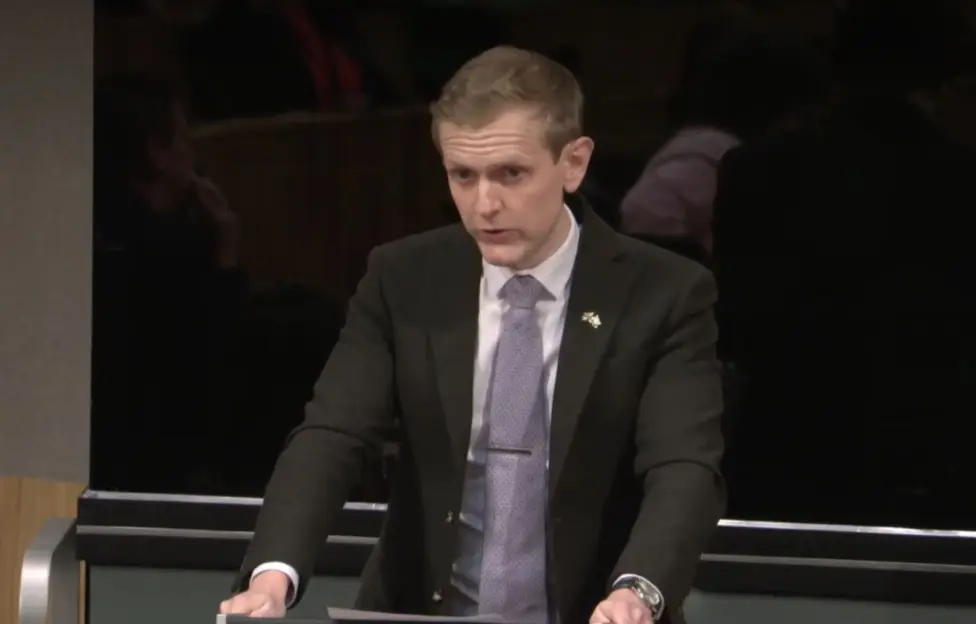
COMMENTS made by a Reform MS led to a walkout in the Senedd during a debate on the Welsh Government’s international spending.
A Reform motion, calling for an end to all Welsh Government international spending, was rejected by Senedd Members on Wednesday June 17.
Wednesday’s plenary opened with Llywydd Huw Irranca-Davies reminding members to mind their language and tone when contributing, following clashes between Reform UK’s Joe Martin and the First Minister in Tuesday’s proceedings.
Mr Irranca-Davies said: “Robust disagreement is part of democratic debate, but it must always be grounded in respect and we must avoid using language that has the potential to inflame debate or to increase tensions.”
The debate was opened by Reform’s shadow minister for finance and government efficiency, Cai Parry-Jones, but it was the contribution made by Caerdydd Penarth MS Joe Martin which sparked the most controversy.

Announcing to his colleagues that he had “good news”, Mr Martin began his statement by sharing that he had “found the £9 million” needed for Plaid’s “childcare idea”.
However, Mr Martin then added that the “bad news” was to get the money the government would have to stop funding “some of the most pointless schemes known to man”.
One example Mr Martin gave of these so-called “pointless schemes” was a beekeeping scheme in Uganda designed to advance gender equality.
The scheme, run by Bees for Development and their partner organisation, The Uganda National Apiculture Development Organisation, aimed to enhance women’s economic empowerment through beekeeping.
It challenged gender norms in the industry, increasing the visibility of women in technical and policy leaderships roles.
Mr Martin then suggested Wales had won the “Who can find the stupidest use of taxpayer money?” competition because of a scheme supporting tree planting in Uganda.
He said: “We actually asked some Ugandan people what they thought about Wales’s scheme to send them money for trees and they said, ‘Why are you sending us money for trees?’

“We then asked the same question to some Welsh students who had been through our underfunded education system, but we didn’t get a reply because we had e-mailed them and they couldn’t read.”
Mr Martin went on to criticise the money spent on mini embassies abroad.
He said: “In India, one of the functions of those mini embassies is to recruit nurses to come and work in our NHS, which is great because it means that the Welsh people who would have otherwise become nurses can instead go on universal credit.”
The Reform MS then added: “I have enquired as to why we can’t just have an enormous pit where we burn all the money, but apparently that’s not compliant with net zero.”
At this point in Mr Martin’s statement Plaid Cymru’s Zaynub Akbar, of Caerdydd Ffynnon Taf, announced she was going to leave the Siambr.
She said: “I don’t accept any of this and I don’t want to be a part of it, so I’ll be leaving the chamber.”

She was followed by numerous other Senedd Members, including Trefnydd and chief whip Heledd Fychan.
Mr Martin was then reminded by the Llywydd of Senedd rules, which mandate respect in the chamber, before he could continue his contribution.
He concluded his speech to the Senedd by saying: “In Westminster, the Tory party doubled foreign aid whilst imposing austerity. There are now only seven of them in this chamber. The same fate awaits any party that insults taxpayers by frittering money overseas on feel-good vanity projects.
“So, I want to encourage the Party of Wales to be nationalist, to put Wales first. Spend your constituents’ money on your constituents. That way, when someone is lying in a hospital corridor and they ask you, ‘are you really the Party of Wales?’, you’ll be able to say ‘yes’.”
At the end of the debate, the Llywydd directly addressed Mr Martin calling for him to “reflect” on his remarks and contributions, noting that it was “not in line with [his] expectations”.
Mr Irranca-Davies described it as “particularly disappointing” given the comments he made at the beginning of plenary.
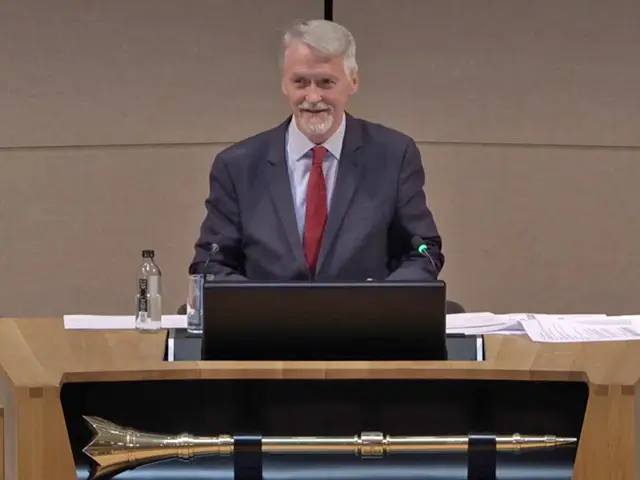
He said: “Going forward, I think we all need to reflect on this and make sure that we comply with our conduct within this chamber and the way we comport ourselves in light of my remarks.”
Welsh Conservative leader Darren Millar expressed his support for the Reform-backed motion, saying it is a debate about where responsibilities lie.
He said: “It’s very clear that foreign relations, international development are matters for the UK Government, not the Welsh Government, and as a result of that, I believe that we respect devolution and can expect respect for devolution back when we respect the boundaries of our legislative competence and the competence of the Welsh Government’s position as well.”

Mr Millar highlighted that his party has continuously argued against the development of “mini embassies” and “overseas offices”.
The Conservative leader did clarify however that he is not “anti-international aid”, and noted the “generous” nature of the people of Wales.
But he added: “I do not believe that when people are dying waiting for ambulances, when we’re at the bottom of the educational tree as far as the league table of the United Kingdom is concerned, and when our road infrastructure isn’t working, our transport infrastructure is creaking, that it’s right to spend those millions of pounds on those things, when the Welsh Government should be focused on the things for which it is responsible.”
Taking an intervention from Labour’s Huw Thomas, Mr Millar was questioned on whether he recognises that the majority of international spending is on economic development for Wales.

Mr Millar once again referred to the role of the UK Government, noting that it is their responsibility to bring inward investment to the UK as a whole.
He said: “We will always want to be an internationalist country, looking out and seeking to influence the world, but we do that as part of the United Kingdom, an integral part of the United Kingdom.
“And I’m proud to be a member not only of the Welsh Conservative Party, but of the Conservative and Unionist Party, and I believe in the union of the United Kingdom, and that these foreign relationships and international development are done better as a United Kingdom as a whole.”
Plaid Cymru’s Gwyn Williams shared a notably different perspective to that of his Conservative and Reform colleagues.
Prior to being elected to the Senedd, Dr Williams was a consultant ophthalmologist specialising in retina care at Swansea Bay University Health Board.

Speaking as someone who has worked within the Welsh NHS Dr Williams said: “Wales has long been a country that looks beyond our own horizons, looking to make a difference in the world and help where we can, but also we rely on help coming in to us as well.
“Many, many healthcare workers, of course, come from abroad, especially here in Wales, and every hospital in the country would crumble if all the international workers went home.”
He continued: “In Singleton Hospital in Swansea, in the eye department, I am the only Welsh-speaking, Welsh-origin consultant there, and much as I like to convince myself that I can do the work of ten people, I cannot, especially now because I am here.
“Chronic shortages in these sectors increase hospital discharge delays, reduce bed availability and create bottlenecks across the healthcare system.
“At a time when the NHS is struggling, we need the support from abroad as well, though we also, of course, need to grow our own ability.”
Concluding his statement Dr Williams said: “This whole debate tries to position international investment and domestic investment as a zero-sum game. It isn’t.
“Looking outwards does not come at the expense of looking inwards. I suggest that such a simplistic outlook condescends to the people of Wales and stymies science.”

The cabinet minister for government effectiveness, Dafydd Trystan Davies, called for reflection on the tone of the debate, suggesting that the “standard of this debate [had] descended to the level of a public house, not of a national Senedd”.
He said: “My friend the leader of the Welsh Conservatives made a speech, and I disagree with more or less all of it, and yet it was conducted properly and in line with the standing orders and the procedures of this Senedd.
“I think we should all take our duties properly as parliamentarians, whatever views we agree or disagree on.”
Dr Trystan Davies highlighted that international spending makes up just 0.03% of the Welsh Government’s overall budget, which he described as a “small contribution” to “building our prosperity, protecting our public services, strengthening our culture, and promoting our values”.
He said: “Our international work turns that belief into action, creating jobs and investment, exports and partnerships, life-changing experiences for students, new colleagues for our NHS and enabling communities in Wales and beyond to learn from one another.
“When Wales works internationally, Welsh people benefit. Our businesses reach new markets, universities build global partnerships, young people return home with skills and confidence, and Wales’s reputation grows.
“We should be proud of that, not in a narrow way, not with our backs turned to others, but proud to be generous and outward-looking, proud to share, proud to learn – internationalist, not isolationist.”
The motion to end all Welsh Government international spending, tabled in the name of Blaenau Gwent Caerffili Rhymni’s Reform MS Llŷr Powell, was rejected by the Senedd with 37 members for and 48 against.
The Siambr then agreed Plaid Cymru minister Heledd Fychan’s amendment, which proposed the Senedd “regrets Reform UK’s isolationist approach to Wales’s place in the world” and “celebrates Wales’ reputation as an internationalist, tolerant and outward-looking nation open for business, which is enhanced by its international engagement, including spending.”
The amended motion was agreed with 48 in favour and 37 against.
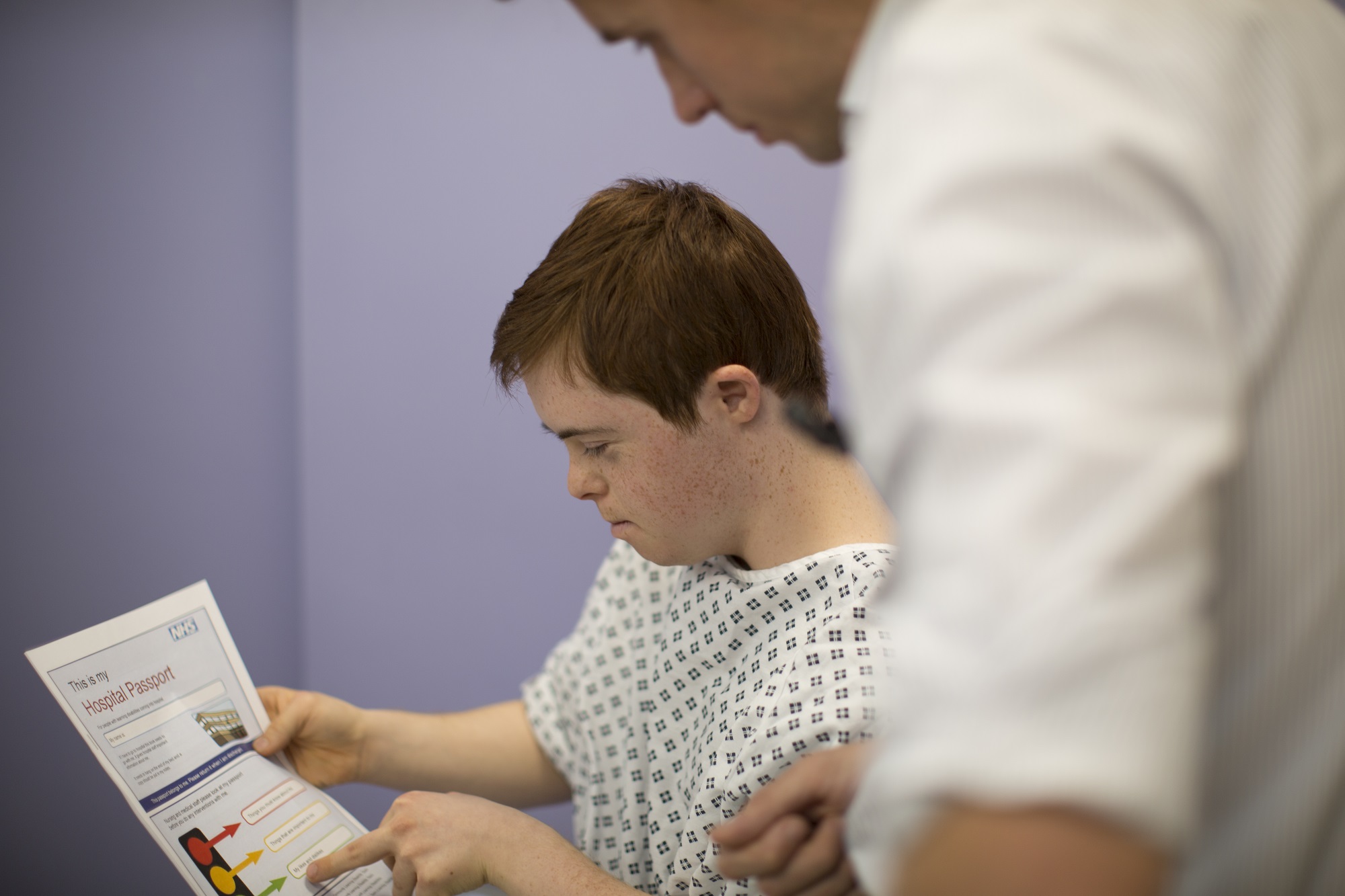
Shortage of specialist nurses could leave people without support needed to access fair healthcare
PEOPLE with learning disabilities are being denied fair access to health and care because of a growing crisis in specialist nursing, the Royal College of Nursing has warned.
A major new RCN review says health and care services across the UK are failing to consistently meet the needs of some of society’s most vulnerable people, despite legal duties designed to protect them.
The report, Safety, Equity and Expertise: A UK review of learning disability nursing, warns that shortages of specialist nurses mean some patients are being overlooked, excluded or harmed when mainstream services are unable to properly adapt to their needs.
The RCN says learning disability nurses play a vital role in helping patients who may struggle to communicate symptoms, understand treatment, attend appointments, or cope with busy hospital and healthcare environments.
Their work includes supporting patients and families, helping services make reasonable adjustments, preventing health problems from escalating, and ensuring people with learning disabilities receive safe and appropriate care.
Workforce under pressure
Figures analysed by the RCN show the number of learning disability nurses employed by the NHS across the UK has fallen sharply over the past 16 years.
Numbers dropped by 33%, from 7,083 nurses in 2009 to 4,768 in 2025.
The college has also raised concerns about the future workforce, with fewer than 500 students enrolling on learning disability nursing courses across the UK in 2025. Over the past decade, the number of students accepted onto courses has fallen by around 40%.
In Wales, the RCN says almost 1,000 registered learning disability nurses live in the country, but fewer than 500 whole-time equivalent nurses are employed within NHS Wales.
The organisation has also highlighted a 32% decline in nursing roles across independent and social care providers, warning that course closures, an ageing workforce and ongoing vacancies are threatening the future of specialist support.
Health inequalities
The RCN says the shortage is particularly concerning because people with learning disabilities already experience significant health inequalities.
The latest Learning from Lives and Deaths report found the median age of death for people with a learning disability was just 62.5, compared with around 82 for the wider population.

Campaigners have long warned that people with learning disabilities can face barriers when accessing healthcare, including difficulties explaining symptoms, services failing to adjust communication, and health concerns being missed.
Under the Equality Act 2010, healthcare providers have a legal duty to make reasonable adjustments to ensure disabled people are not disadvantaged when accessing services.
The RCN says learning disability nurses are often central to making sure those rights are delivered in practice.
‘People deserve better’
RCN Chief Nursing Officer Professor Lynn Woolsey said the findings should serve as a warning.
She said: “We cannot continue this path where learning disability nursing is consistently undermined. It’s a profession that is central to the safety, equity and human rights of people with learning disabilities.
“Yet the learning disability nurse workforce is in absolute crisis, with workforce numbers falling while university student numbers also collapse.
“Their skills are too vital for this to be allowed to continue. The expertise of learning disability nurses has been poorly understood, inconsistently recognised, and insufficiently protected within health and care systems.
“People with learning disabilities deserve better. Learning disability nursing must be recognised by health leaders as the safety-critical profession it is and workforce planning must reflect their value and importance.”
Call for action in Wales
RCN Wales Executive Director Nicola Williams said learning disability nurses are essential in supporting vulnerable people and tackling inequalities.
She said: “Learning disability nurses play a vital role in supporting some of the most vulnerable people in our communities and helping to tackle the significant health inequalities they continue to experience.
“People with learning disabilities have the same right as everyone else to safe, effective and equitable health care.
“Yet this report highlights serious concerns about the future of the specialist workforce that is so often central to making that happen.
“We cannot allow learning disability nursing to become an afterthought. The Welsh government, health boards and education providers must work together to protect and grow this vital workforce so that people with learning disabilities receive the care, support and advocacy they deserve.”
The RCN is calling for long-term workforce planning, improved training opportunities, and action to increase the number of specialist nurses entering the profession.

Cancer treatment targets missed again as opposition says Plaid must share responsibility for health service performance
NHS WALES is facing renewed pressure after the latest performance figures showed waiting lists rising, cancer treatment targets being missed again and more patients waiting over 12 hours in emergency departments.
The figures come as the Welsh Government announced an additional £145m for NHS Wales, including £100m to reduce waiting times and £25m for new surgical hubs.
In April, performance against the 62-day target for patients starting cancer treatment fell to 56.7%, well below the 75% target.
In Swansea Bay, just 48.4% of cancer patients began treatment within the target time.
Treatment waiting lists also increased, with 680,003 patient pathways recorded in April. The estimated number of individual patients waiting for treatment stood at 536,500.
Two-year waits rose to 3,694. In England, the comparable figure was 191.
Emergency care also came under further strain in May. The proportion of patients spending less than four hours in Welsh emergency departments fell to 64.4%, against a target of 95%.
A total of 11,066 patients waited 12 hours or more before being admitted, transferred or discharged, up from 10,287 in April. The target is zero.
Ambulance performance remained under pressure. For red calls, the median response time improved to nine minutes and 12 seconds, but the 90th percentile increased to 22 minutes and 39 seconds, meaning response time targets were still not met.
Welsh Conservative criticism
The Welsh Conservatives said the figures showed a “worrying backslide” in NHS performance and accused Plaid Cymru of sharing responsibility for the state of the health service.
Natasha Asghar MS, Welsh Conservative Shadow Cabinet Secretary for Health and Social Care, said: “These figures show a worrying backslide in NHS performance in Wales. Cancer treatment times have fallen, waiting lists have risen, two-year waits are up and more patients are being left waiting over 12 hours in emergency departments.
“Plaid Cymru cannot escape responsibility for this. They propped up the previous Welsh Labour Government by backing their budgets and are now in Government themselves. Patients across Wales need action, not more talk of improvement.

“Whilst any extra funding for the NHS is welcome, £145m will not be enough unless it is accompanied by urgent reform, a comprehensive workforce strategy and real delivery for patients.
“The Welsh Conservatives have been clear that the Welsh Government needs to declare a health emergency in our NHS. We need more beds in our hospitals, a robust NHS workforce and a serious plan to cut waiting lists and to support our emergency departments.”
Funding announced
The Welsh Government says the extra £145m will support work to reduce waiting times and improve access to treatment.
Of that, £100m has been allocated to reducing waiting lists, while £25m will be invested in new surgical hubs.
Health leaders have welcomed the additional funding, but warned that money alone will not solve the pressures facing hospitals, GP services, social care and emergency departments.
The latest figures are likely to increase pressure on ministers to show clear progress before the winter, when demand on the NHS is expected to rise further.
Welsh Government response
The Welsh Government said the figures related to April, before the new administration took office, and showed that both treatment waiting lists and the longest waits had increased.
Health and Care Minister Mabon ap Gwynfor said too many people were waiting too long for treatment, and said emergency care performance was not yet at the level patients and staff should expect.
He said: “Our focus is clear — cut waiting times, prioritise those who have been waiting the longest, improve access to services and build an NHS that can keep up with demand in the long term.
“To bring waiting times down and keep them down, we need to change the way the NHS works — making sure patients move through the system more smoothly, from their first referral all the way to treatment.
“We’ve got a plan to do this, working with the fantastic NHS staff right across Wales. The £145 million we’re announcing today will be important in tackling the waiting list and waiting times and helping people be seen quicker.”
The Welsh Government said £100m would be used to help reduce waiting lists and waiting times, £25m would be invested in new surgical and diagnostic hubs, and £20m would go towards essential maintenance across the NHS estate.


News19 hours ago
Tragic tribute paid to Haverfordwest man after A4075 collision
FAMILY REMEMBERS “KIND AND LOVING” CALLUM HANSON THE FAMILY of a 22-year-old man from Haverfordwest who died following a road...


News2 days ago
Motorcyclist, 22, dies in A4075 crash in Pembrokeshire
A 22-year-old woman remains in hospital after two-vehicle collision A MOTORCYCLIST has died following a serious two-vehicle crash on the...


Community2 days ago
Why police will be visiting every home in Pembrokeshire
New operation aims to knock on more than 257,000 doors across Dyfed-Powys over the next three years DYFED-POWYS POLICE has...


Crime2 days ago
Prisons at breaking point: MPs warn Wales is paying the price of a failing system
Frozen healthcare budgets, overcrowded jails, homelessness on release and mounting pressure on staff are undermining rehabilitation across Wales, according to...


News3 days ago
Brexit at 10: How Britain was sold a dream that cost us dearly
A decade after the referendum, the promised benefits remain hard to find while the economic costs are increasingly difficult to...


Crime3 days ago
Worcestershire man jailed after violent attack on woman in Tenby
Defendant was already serving a suspended sentence when serious assault took place A WORCESTERSHIRE man has been jailed for more...


Climate3 days ago
Offshore wind ‘could bring new generation of jobs to Milford Haven’
Pembrokeshire ports and Celtic Sea projects placed at centre of Wales’ green energy ambitions MILFORD HAVEN and Pembroke Dock could...

Community3 days ago
Police officer hailed hero after midnight sea rescue in Milford Haven
PC swam 100 metres offshore to save distressed woman heard calling for help in darkness A DYFED-POWYS POLICE officer has...


Local Government4 days ago
Security privately arranged by Mayor at Beating of the Bounds
HAVERFORDWEST TOWN COUNCIL has confirmed that security personnel seen at this year’s Beating of the Bounds were privately arranged and...


Business5 days ago
Celtic Freeport five-year plan puts Milford Haven at centre of green energy future
Strategy promises investment, skilled jobs and new supply chains, but major barriers remain over grid connections, planning and delivery THE...
-
 Community6 days ago
Pembrokeshire Chess Club crowned Welsh champions
-

 Crime2 days ago
Milford Haven man jailed for breaching domestic violence protection order
-
Local Government4 days ago
Security privately arranged by Mayor at Beating of the Bounds
-

 News2 days ago
Crash on Freeman’s Way causes school-run chaos across Haverfordwest
-

 Crime3 days ago
Man wanted by court after failing to attend hearing over alleged shop thefts
-

 Crime3 days ago
Man jailed after admitting strangulation and assaults
-
 Crime3 days ago
Man banned from roads after drink-driving offence
-

 Crime3 days ago
Man sentenced over stalking campaign and lock knife offence