


Health
‘It’s bloody inhumane’: Damning account of corridor care at the Grange

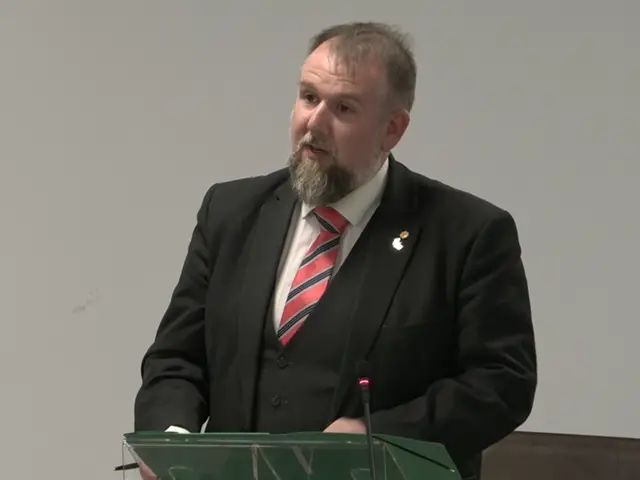
A CANCER patient was forced to spend a “bloody inhumane” night in a chair at the Grange hospital, only getting a bed after collapsing on the floor, the Senedd has heard.
Plaid Cymru’s Peredur Owen Griffiths raised the pensioner’s frank account of so-called corridor care during health questions in the Senedd on October 1.
Warning corridor care has been normalised, Mr Owen Griffiths said his constituent has been back and forth to the Grange hospital in Cwmbran due to medical complications.
Quoting the pensioner’s damning account, Mr Owen Griffiths said: “‘I’m back in the Grange, feeling crap after one night on a chair. The staff are fantastic but the system definitely isn’t.
“‘The only reason I had a bed at last was because I staggered to the loo and collapsed on the floor. I had to get three nurses to pick me up and plonk me in a chair.

“‘I think they realised that I should get a bed. Some people are spending two nights in a chair. It’s bloody inhumane. Thank you, Welsh Government.’”
The South Wales East representative highlighted a petition to end corridor care for the sake of patients and staff who never signed up to provide care in such circumstances.
Health secretary Jeremy Miles replied: “I am as concerned… and it’s upsetting to hear that. I’m very sorry for the experience your constituent has had, which clearly is not acceptable.”

Cautioning that corridor care is a complex question, he said: “I wouldn’t accept the idea of normalisation. I certainly don’t think it is normal and it shouldn’t be normal but there is far too much of it happening in hospitals right across the UK.”
Mr Miles described corridor care as a symptom of a hospital’s inability to manage patient flow but he pointed to signs of improvement with handover delays at the Grange.
Natasha Asghar, the Tory Senedd Member for South Wales East, warned the Grange – which cost about £350m and opened in 2020 – has been plagued by problems.
With the hospital struggling to cope with demands, she raised her constituents’ calls to reopen the A&E department at the Royal Gwent Hospital in Newport.

Ms Asghar surveyed her constituents, with an “overwhelming” majority of respondents in favour of reopening the A&E unit at the Royal Gwent.

Mr Miles said by making the Grange the main hospital for emergencies other local hospitals can focus on planned operations and appointments, helping to clear waiting lists.
He told the Senedd: “The health board is implementing a model that people across the world are trying to implement, which is to separate emergency from elective care.
“We know from evidence everywhere that’s the best way of improving services overall.”
Laura Anne Jones, who defected from the Conservatives to Reform UK over the summer, called for a review of the “massive reorganisation” that has seen services centralised.

She asked whether the Welsh Government regretted “rushing” into the opening of the “not-fit-for-purpose” Grange, claiming it caused unnecessary suffering for patients.
Ms Jones described the current A&E as a small room with “appalling” waiting lists as she called for an update on plans to extend and reconfigure the hospital.
Mr Miles responded: “What I do regret is that if the member’s party was in government, we wouldn’t have a discussion about free access to health care of any sort.
“We’d all be paying privately for insurance premiums because her party’s been absolutely clear: they wouldn’t have an NHS funded from general taxation.”



Ministers say health boards and councils must act now to ease pressure on hospitals, ambulances and social care before winter
THE WELSH GOVERNMENT has told NHS Wales and social care partners to start planning earlier for winter, after a difficult year for emergency care and recent heatwave pressure on ambulance services.
Health and Care Minister Mabon ap Gwynfor said the aim was to make ambulance, emergency department and hospital services safer and more resilient during the colder months, while also recognising that pressure on the NHS is no longer confined to winter.
The announcement will be closely watched in west Wales, where Hywel Dda University Health Board runs Withybush, Glangwili, Bronglais and Prince Philip hospitals.
Latest published figures show Hywel Dda performing better than the Wales average on emergency department waits in May, with 66.5% of patients admitted, transferred or discharged within four hours and 9.9% waiting more than 12 hours. However, the health board remains well short of the Welsh Government’s 95% four-hour target, and therapy waiting times in Hywel Dda were worse than the Wales average.
Across Wales, 64.4% of patients attending emergency departments in May spent less than four hours there, while 11,066 patients waited 12 hours or more. Official figures also showed more than 1,300 “pathway of care” delays on the day data was collected, meaning patients were clinically ready to leave hospital but were still waiting for the right care, support or accommodation.
The Welsh Government says this year’s winter plan will focus on five key areas: preventing illness through improved vaccination uptake, keeping more people well at home, freeing up hospital beds through better infection control and earlier discharge, helping patients leave hospital safely when they are ready, and keeping services running under pressure while supporting staff.
An expansion of the RSV vaccine to people aged over 65 who are clinically at risk will begin in September. Ministers also want stronger uptake of vaccination among people at greatest risk, NHS and care staff, and children.
A new communications campaign is also being developed to help people understand where to go for care, so that emergency departments and ambulances are preserved for those with the most serious needs.
Mr ap Gwynfor said: “Our fantastic NHS and social care staff worked incredibly hard last winter, and we are being clear with health boards and partners more needs to be done.
“Last winter was tough. Too many people waited too long for the care they needed, and that’s not good enough. Early planning and action are key, and I’ve also asked officials to begin planning now so we’re better prepared for the winters ahead.
“I am also clear that this is not just a winter challenge. The recent period of extreme heat is a clear reminder that pressures and risk can arise at any time of year.
“Our ambition is simple: safe services all year round that protect ambulance and hospital capacity for those who really need them, ensuring people get the right care, in the right place, at the right time.”

The statement follows renewed concern from emergency medicine doctors about long waits and so-called corridor care. The Royal College of Emergency Medicine has warned that poor patient flow, delayed discharges and a lack of inpatient beds are leaving too many patients stuck in emergency departments for long periods.
The British Medical Association in Wales has also called for clearer recording and reporting of corridor care, arguing that without better data it is harder to understand the scale of the problem and hold decision-makers to account.
There was a further warning last week when the Welsh Ambulance Service declared a critical incident during the extreme heat. The service said 999 call volumes had risen by 31% compared with two weeks earlier, with around 400 additional emergency calls a day. The critical incident was later stood down, but ambulance chiefs said demand remained high.
The political test for the Plaid-led Welsh Government will be whether early planning can translate into visible improvements by winter. Health boards and councils will be expected to work together more closely, but many of the problems ministers are trying to solve depend on social care capacity, staffing, available beds and community services.
For patients and families in Pembrokeshire, Carmarthenshire and Ceredigion, the key question will be whether the plan leads to shorter ambulance waits, fewer long delays in A&E, and quicker support for people well enough to return home from hospital.

THE WELSH AMBULANCE SERVICE has announced changes to the way it assesses eligibility for its Non-Emergency Patient Transport Service (NEPTS), saying the move is needed to cope with increasing demand and ensure support is available for those who need it most.
The service, which provides transport to and from healthcare appointments for patients who are unable to travel independently because of their medical condition or mobility needs, is introducing a more consistent approach to applying Welsh Government eligibility criteria.
In a statement released on Tuesday (July 1), the trust said it was also improving the way patient journeys are planned and managed, with the aim of reducing short-notice cancellations and making the service more reliable for eligible patients.
The announcement comes just days after the Welsh Ambulance Service declared a critical incident following a significant rise in demand across its emergency services, highlighting the wider pressures facing healthcare transport across Wales.
The trust said the eligibility criteria themselves are not changing, but assessments will be carried out more consistently to ensure limited resources are directed towards patients with the greatest need.
A spokesperson said: “We’re strengthening how we assess eligibility for our non-emergency patient transport to help ensure support is available for those who need it most.
“Due to increasing demand, we are applying Welsh Government eligibility criteria more consistently and improving how journeys are planned and managed. Our aim is to reduce short-notice cancellations and provide a more reliable service for eligible patients.”
Patients who currently use the service may notice additional questions or checks when transport is booked or reviewed.
The Non-Emergency Patient Transport Service is separate from the 999 ambulance service and is primarily used by patients attending regular hospital appointments, dialysis, cancer treatment and other healthcare services where independent travel is not possible.
The Welsh Ambulance Service is encouraging anyone concerned about their eligibility or transport arrangements to contact the service for further information.
The changes are expected to be rolled out across Wales over the coming months.

WALES’ only specialist eye-care hospital, Sana Private Health, has expanded its senior team to welcome Francesca Oak as a new Business Relationships Manager.
Aiming to increase Sana’s optometry network across Wales, Francesca’s appointment represents the Cataract Centres of Excellence’s approach to enhanced patient care, particularly for those with complex eye health conditions.
The new role has been created as demand for specialist eye care continues to grow across Wales, with increasing numbers of patients seeking treatment for age-related eye conditions including cataracts, glaucoma and macular degeneration.
The appointment will see Francesca, who holds extensive experience in optometry practice, provide expert consultation for optometrists. Advising on bespoke treatment options available for patients, Francesca will also take feedback from optometrists to shape Sana’s future planning based on patient needs.
It is the first time the hospital has brought in a specialist in relationship management, demonstrating Sana’s commitment to improving patient pathways to care. Coupled with the recent investment in renovating its Bridgend hospital, the new role highlights Sana’s continued growth.
Speaking of her appointment, Francesca Oak said: “I’m delighted to join the team at Sana Private Health at this exciting time for the hospital. We are seeing real growth and investment in cutting-edge technologies which will enhance patient care, and I’m looking forward to working with optometrists across Wales to shape our approach to care.”
With hospitals in Swansea and Bridgend, Sana Private Health was established in March 2023 by world-leading ophthalmologists Mr Luke Anderson and Mr Mario Saldanha.
The private healthcare centre offers treatment for glaucoma, retinal disorders, macular degeneration, cornea conditions, refractive lens exchange, laser vision correction, and is a leading specialist centre for cataract removal.
Mr Luke Anderson, Founding Director and Ophthalmic Surgeon at Sana Private Health, said: “Bringing Fran into the team represents our commitment to excellence, strengthening our relationships with optometrists across the country.
“Patients need to feel confident that, when they speak to their optometrists, they’ll be able to access the right treatment in outstanding facilities. By bringing Francesca on-board, we’re improving our outreach to optometry practices and ensuring patients have an efficient, practical and tailored referrals process, so they can be seen by a specialist quicker and get back to the life they love.”
To find out more, visit https://www.sana-health.co.uk/



Business5 hours ago
Pembrokeshire-based Ascona Group expands UK portfolio with Truckhaven acquisition
PEMBROKESHIRE-BASED Ascona Group has completed the acquisition of Truckhaven (Carnforth) Ltd, a major trunk road services area in Lancashire. The...


Health1 day ago
Wales begins early NHS winter planning after long waits and ambulance pressure
Ministers say health boards and councils must act now to ease pressure on hospitals, ambulances and social care before winter...


Crime2 days ago
Judge calls pensioner a ‘dirty old man’ as he avoids jail for exposing himself to women
Judge says 75-year-old Stewart Laugharne behaved ‘disgracefully’ as he avoids jail but is ordered to sign sex offenders register A...
Health2 days ago
Stroke services consultation reaches halfway point as public urged to have say
HYWEL DDA University Health Board is urging people to take part in its consultation on the future of stroke services,...


Business2 days ago
Welsh firms eye share of £5bn defence drone boom
WELSH defence and aerospace firms could be in line for a share of billions of pounds in new military spending...


Community4 days ago
Thousands line Cardigan streets for Lord Rhys homecoming parade
THOUSANDS of people lined the streets and quayside in Cardigan on Saturday as the town marked 850 years since Lord...


Crime5 days ago
Dyfed-Powys Police rated only ‘Adequate’ in organised crime inspection
A WATCHDOG has rated Dyfed-Powys Police only “Adequate” in its response to serious and organised crime, despite praise for the...


News5 days ago
Two taken to hospital after aircraft ditches in Cardigan Bay
Coastguard helicopter spotted two casualties after light aircraft came down off west Wales coast TWO people were taken to hospital...


Sport6 days ago
Long Course Weekend gets underway in Tenby as thousands head for county
Three days of swimming, cycling and running begin with The Wales Swim at North Beach THOUSANDS of athletes and supporters...


Climate6 days ago
Welsh waters, Westminster profits: Crown Estate row reignited in Wales
PLAID CYMRU has renewed calls for the Crown Estate to be devolved to Wales after figures showed income linked to...
-
Crime5 days ago
Dyfed-Powys Police rated only ‘Adequate’ in organised crime inspection
-

 Entertainment6 days ago
Torch cuts children’s cinema tickets to £5.25 for summer
-

 News3 days ago
Biker dies and woman seriously injured in Black Mountain crash
-
 News6 days ago
Reform MS: ‘I felt like shouting get out of the water’
-
Climate6 days ago
Welsh waters, Westminster profits: Crown Estate row reignited in Wales
-

 Crime6 days ago
Former Swansea Prison inmate died 48 hours after release
-
 Crime5 days ago
Swansea man jailed for 16 years after attacking vulnerable woman
-

 Community6 days ago
Working-class young people ‘shut out’ of marine conservation careers in Wales