


Entertainment
The economic impact of tourism on rural Welsh communities


Tourism has become the engine of many rural parts of Wales, Pembrokeshire included. Each summer, the caravans roll in, tents pop up on fields, and cottages that stood empty in spring suddenly have lights in every window. That shift is more than a seasonal sight; it’s the difference between a quiet village scraping by and one that has money moving through every till on the high street.
Local spend
B&Bs and guest houses are the most obvious winners. Families book them months ahead, filling every spare bed from Tenby to Fishguard. Once those families arrive, they eat out, they stock up at shops, and they visit the pubs at night. Even the small places feel it. A newsagent in Newport sells more ice creams in July than in the rest of the year combined. Farmers open their fields for parking or sell produce at the gate.
It stretches into sport as well. Local rugby clubs, football teams, and rowing groups all benefit when sponsors can afford to put their name on shirts or help with new kit. Without the surge of summer trade, many of those connections wouldn’t exist.
How visitors spend
Tourism isn’t just buckets and spades anymore. Visitors plan their trips differently now. They scroll through reviews, compare cottages online, and book activities long before they reach the coast. A holidaymaker standing on the harbour at Saundersfoot has already paid for the boat trip weeks earlier with a few taps on their phone.
The same behaviour shows up in online leisure. Casino players look for platforms with the highest payout rates, because value matters as much as the game itself. Tourists act the same way in Pembrokeshire. They weigh up what they’ll get for the price. Choosing a cottage that throws in parking, a café that feels worth the bill, or an attraction that gives a full day’s experience. The thinking is simple: money should stretch as far as possible. That approach is reshaping how local businesses present themselves, putting more focus on value and clarity.

Strain on infrastructure
The sudden crowds also show up in pressure points. Roads into Pembrokeshire are jammed on Saturdays. Parking in Tenby or St Davids becomes impossible by mid-morning on sunny days. Broadband that feels fine in March slows to a crawl in July when every cottage, tent, and caravan tries to stream at once.
Locals grumble about the inconvenience, but they also admit that the pressure brings investment. New bus routes, resurfaced roads, and stronger broadband don’t just serve the visitors; they make life easier for those who live here full-time. The trade-off is ongoing, and it shapes how communities prepare for the future.
Culture and identity
Tourism also supports events that keep rural traditions alive. Agricultural shows, summer fairs, and regattas rely on ticket sales and visiting crowds. Without them, some of those gatherings would fade. Instead, they pull in tourists and locals together, creating moments where culture and economy overlap.
Grassroots sport is lifted in the same way. Football tournaments or local fun runs grow in scale when tourists join in, boosting entry fees and keeping facilities open. The money matters, but so does the sense of community pride that comes with a full crowd on the touchline.



HAVERFORDWEST music teacher and soprano soloist Clare Harrison is set to perform at the International Eisteddfod in Llangollen next month.
Clare will sing under the baton of Sir Karl Jenkins on Tuesday, July 7, as part of the World Choir, an auditioned international chorus of singers, for the long-awaited Welsh premiere of his work One World.
She will also perform in a new commission, Greeting the Dawn, by Sam Buttler, and in Peace Child with Wrexham-based chorus NEW Voices.
Clare combines a busy teaching schedule with regular solo performances across Wales and the borders.
Her next Pembrokeshire appearance will be as soloist with Tenby Male Choir at St Mary’s Church, Tenby, on Thursday, July 16.
Caption:
Clare Harrison: The Haverfordwest soprano will perform at the International Eisteddfod in Llangollen.
Free family festival will celebrate Milford Haven’s seafaring history and coastal community
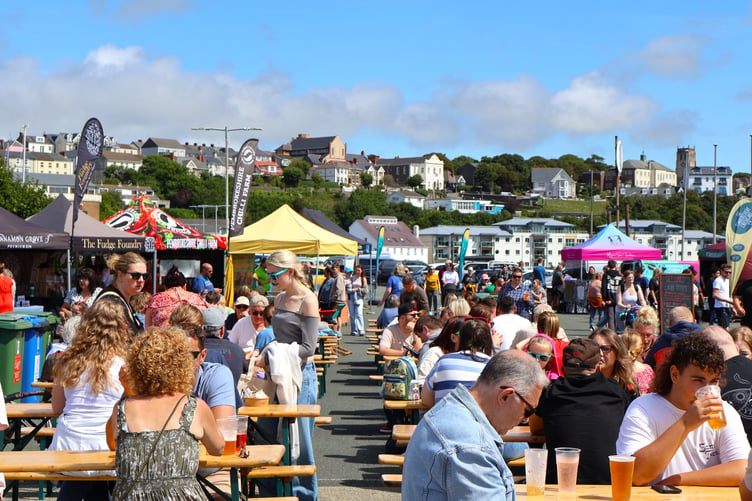
MILFORD WATERFRONT will burst into life on Saturday, June 27, as the first Harbour Fest sails into town for a day of music, food, family fun and maritime celebration.
The free event will run from 10:00am to 6:00pm at Mackerel Quay and across the waterfront, bringing together local traders, live entertainment, coastal organisations and independent businesses for a packed day beside the water.
Organisers say the festival will celebrate everything that makes Milford Haven special, from its seafaring history and working harbour to its growing reputation as a destination for food, shopping, culture and family days out.
Visitors will be able to browse stalls from local makers and producers, enjoy street food and live performances, and explore a Marine Zone featuring organisations involved in sea safety, marine conservation and coastal life.
The Marine Zone will include Seagrass Network Cymru / Project Seagrass, Pembrokeshire Coastal Forum, Mid and West Wales Fire and Rescue Service, Dyfed-Powys Police, NCI Wooltack Point, Rudders Marine Training, RNLI Milford Haven and RNLI Angle Lifeboat.
RNLI Angle Lifeboat is expected to be based on the Mackerel Stage, while the Sea Cadets will be giving rope-tying displays at Milford Haven Museum, where craft activities will also be taking place.
Live entertainment will run throughout the day, with performances from Tom & Abz, Will Scott, Ryan Bristow, Milford Haven Town Band, Kyle Kirkhouse and ShantyJacs Sea Shanties.
Businesses across the waterfront are also joining in. All Pets Vet Care will hold a family-friendly open day with a bouncy castle, treasure hunts, quizzes, craft activities and behind-the-scenes tours. Aurora Artisan Crafts will host vocal performances, Biffy’s Bar & Restaurant will feature solo acoustic music from Laurence Lewis, and Martha’s Vineyard will offer seafood street food with live music from Ryan Bristow and Steve Bartram.
At Tŷ Milford Waterfront’s outdoor plaza there will be face painting, children’s activities, pop-up artists and an afternoon DJ set, while Phoenix Bowl and Pirate Pete’s Adventure Play will have inflatables and glitter tattoos outside.
The Waterfront Gallery will host introduction to felt-making workshops with textile artist Carole Fletcher, giving participants the chance to create a woollen felt flower pin brooch or phone/glasses case. The workshops start at 10:30am, 1:00pm and 3:30pm and cost £5 per person.
A wide range of traders will also be attending, including 5th Flock Spirits Co, Cinnamon Grove Distillery, Cwm Deri Wines & Liqueurs, Ferncraft, Get Loaded, J.J. Pottery, Major Nuts, Orange Garden Design, Pembrokeshire Chilli Farm, Pembrokeshire Gold, Pembrokeshire Lottery, Plumstone Welshcakes and SlateArtSJ.
With music drifting across the marina, food stalls lining the waterfront and lifeboats, sea safety teams and coastal groups adding a strong maritime flavour, Harbour Fest is expected to bring a lively summer atmosphere to one of Pembrokeshire’s best-known waterside destinations.

Organisers say the event is suitable for families, friends and visitors of all ages, with plenty to see and do throughout the day.
Photo caption: Harbour Fest will take place at Milford Waterfront on Saturday, June 27 (Pic: Milford Waterfront).
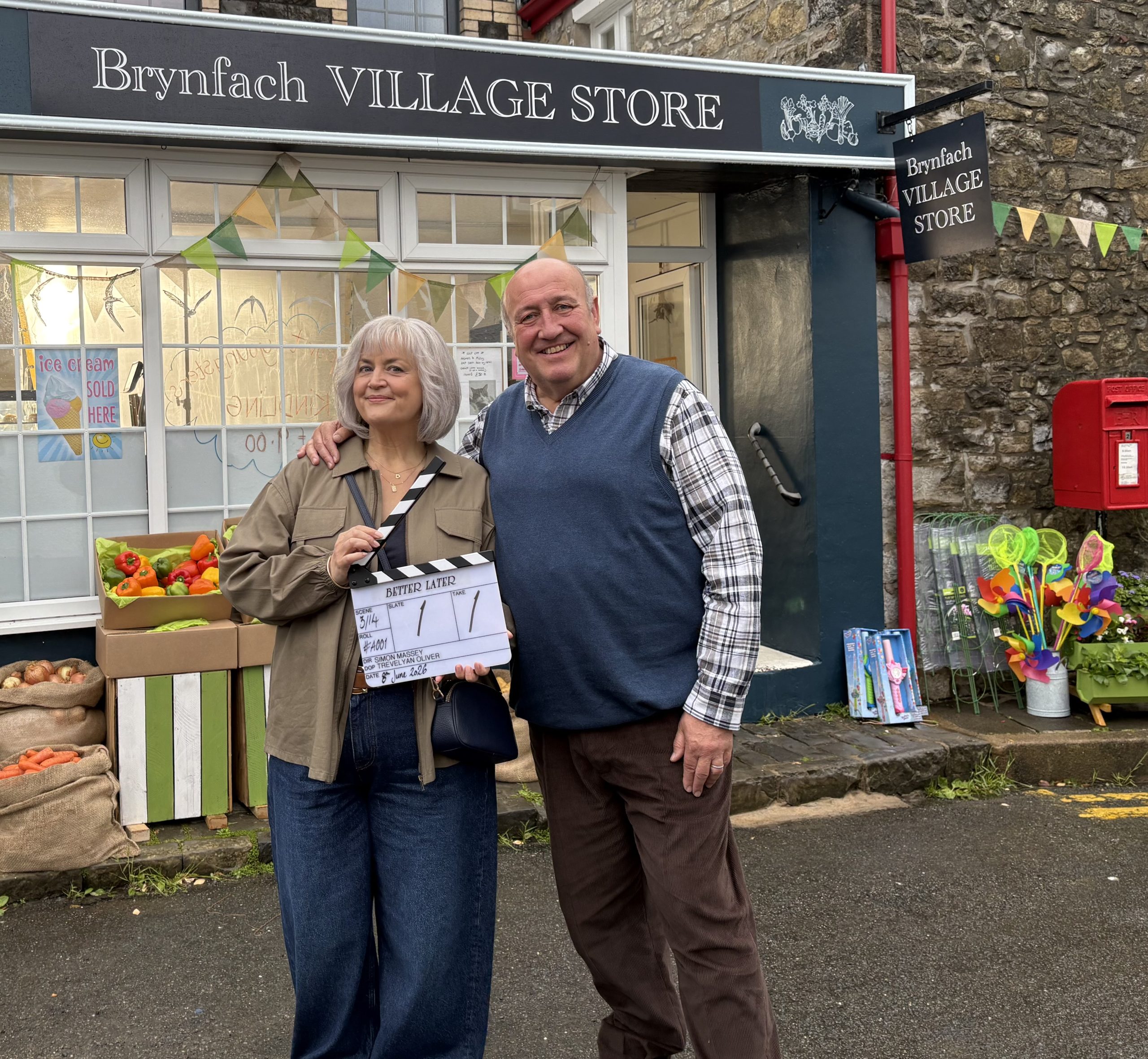
A HEARTWARMING new Welsh BBC comedy co-written by Ruth Jones and Steve Speirs has started filming in South Wales.
Better Later, a six-part series for BBC iPlayer, BBC One and BBC One Wales, will explore the unexpected joys of an unlikely friendship.
The comedy stars Jones and Speirs as two people who meet at a knee trauma clinic. Retired teacher Clive, played by Speirs, is 60, widowed and facing a new chapter in life. Shelley Anne, played by Jones, is a 55-year-old environmental health officer going through a bitter divorce.
The series is being filmed in and around South Wales, including the Brecon Beacons, and is set in the fictional village of Brynfach.
Ruth Jones said: “In a funny way this show has been 35 years in the making, which is when I first met Steve. It’s not that we’re slow writers, it’s just that we’ve been up to other things. It’s fantastic to be back in front of the camera with him again.”
Steve Speirs said: “Our first time acting together for quite a long time. Ruth makes me laugh more than anyone and I’m a terrible giggler. This could be a long shoot.”
Better Later has been commissioned by BBC Cymru Wales and BBC Comedy and is being made by Tidy Productions in association with BBC Studios Comedy, with support from Creative Wales.
The series was commissioned by Nick Andrews, Head of Commissioning at BBC Cymru Wales, and Jon Petrie, Director of Comedy at the BBC. The commissioning editors are Emma Lawson and Paul Forde.
Executive producers are Sarah Fraser for Tidy Productions and Josh Cole for BBC Studios Comedy. The producer is Owen Bell and the director is Simon Massey.
Transmission details will be announced in due course.



Community16 hours ago
Manorbier fire scandal: Council’s payout just £63,777 after school destroyed
PEMBROKESHIRE COUNTY COUNCIL has accepted an insurance settlement which leaves it with just £63,777.07 after the catastrophic fire which destroyed...


News1 day ago
Bus overturns in major incident near Kidwelly
All passengers rescued as emergency services remain at scene A BUS overturned on the A484 between Kidwelly and Ferryside on...


Community2 days ago
Tenby Summer Spectacular cancelled amid council row over harbour access
Organisers say popular charity events cannot safely go ahead without clear powers to control crowds TENBY ROUND TABLE has announced...


News2 days ago
Motorcyclist dies after four-vehicle crash on A40 in Carmarthenshire
A MOTORCYCLIST has died following a four-vehicle collision on the A40 between St Clears and Whitland. Dyfed-Powys Police said the...


News2 days ago
Rhun ap Iorwerth urges new deal for Wales after Starmer quits
First Minister says next Prime Minister must focus on greater powers, fair funding and respect for Wales’ democratic mandate FIRST...


News2 days ago
How Labour’s landslide victory unravelled in just two years
Prime Minister announces resignation after losing support within his own party as Andy Burnham emerges as overwhelming favourite to take...


News3 days ago
Long Course Weekend set to bring thousands to Pembrokeshire
Three days of swimming, cycling and running will once again transform Tenby into one of the UK’s biggest endurance sporting...


Community3 days ago
The gentle giant behind the tattoos
Pembrokeshire security worker Josh Davies praised for professionalism, kindness and proving first impressions can be wrong JOSH Davies is hard...


Charity4 days ago
Toy Story fans fill charity toy box at Haverfordwest cinema
Donations pour in for SNAP Specialist Play as families embrace Toy Story 5 launch A TOY STORY-themed charity appeal at...


Community4 days ago
Lord Rhys emerges from the mist in St Davids
Giant puppet begins historic journey marking 850 years since the first Eisteddfod MIST swirled around St Davids Cathedral on Friday...
-

 Crime6 days ago
Milford Haven man jailed for breaching domestic violence protection order
-

 News6 days ago
Crash on Freeman’s Way causes school-run chaos across Haverfordwest
-

 Health4 days ago
Woman jailed assaults on police, harassment and XL Bully possession
-

 Crime4 days ago
Milford Haven woman spared jail despite string of shop thefts
-
 Crime6 days ago
Portfield Gate man faces careless driving allegation after Tufton crash
-
Community3 days ago
The gentle giant behind the tattoos
-
 Local Government6 days ago
Pembrokeshire faces accessible housing shortage as 403 people wait for homes
-

 News7 days ago
Brexit at 10: How Britain was sold a dream that cost us dearly