


Ministry of Defence
Service family homes in Wales to benefit from £9bn renewal of military housing


Biggest upgrade to Armed Forces accommodation in 50 years
ARMED FORCES families in Wales are set to benefit from the most significant transformation of military housing in more than half a century, as the UK Government unveils a £9 billion strategy to modernise, refurbish and rebuild over 40,000 service homes across the country.
The new Defence Housing Strategy, due to be published on Monday, promises what ministers call a “generational renewal” of UK military accommodation — fixing long-standing issues while unlocking one of Britain’s most ambitious housebuilding programmes in decades.
New Defence Housing Service
The plan includes the creation of a standalone Defence Housing Service to manage all military homes while keeping them in public ownership. The new service will prioritise the voices of Armed Forces families and provide new homeownership opportunities for service personnel and veterans.
Defence Secretary John Healey said the reforms would mark “a decisive break from the past”, following years of underinvestment that damaged morale and retention.
He said: “Our British forces personnel and our veterans fulfil the ultimate public service, and the very least they deserve is a decent home. This new strategy will embed a ‘Forces First’ approach that tells our forces, our veterans and their families: we are on your side.

“We can’t fix forces housing overnight, but this effort is already underway and will now accelerate. By creating a specialist Defence Housing Service, backed by record investment, we will deliver homes fit for heroes.”
Major investment for Wales
There are currently 801 Service Family Accommodation properties in Wales, and rapid improvement works are already underway at 107 homes across mid and west Wales.
The Welsh Secretary, Jo Stevens, said: “Wales has a long and proud tradition of military service, and it is right that the housing provided for our service personnel and their families is of the very best standard.
“The Armed Forces make a vital contribution to the Welsh economy as well as to our national security. With this property modernisation programme, the UK Government is delivering for our servicepeople and their families.”
100,000 new homes on surplus MoD land
The Defence Secretary has identified an opportunity to build over 100,000 new homes on surplus Ministry of Defence land — including properties for both military and civilian families. The move is designed to boost economic growth, support thousands of jobs, and help meet the UK’s wider housing demand.
The investment follows the government’s landmark Annington Homes deal earlier this year, which brought 36,000 military homes back into public ownership, saving taxpayers £600,000 a day. Those savings are now being reinvested into upgrading service accommodation.
A decade of renewal
Over the next ten years, around 14,000 service homes will be fully refurbished or replaced, with tens of thousands more receiving upgrades such as new kitchens, bathrooms, and heating systems.

Wales already benefits significantly from defence investment: £1.1 billion was spent in the last year alone, directly supporting 3,900 Welsh jobs. This equates to £340 per person in defence spending across the country.
Better standards for forces families
The Ministry of Defence has already begun rapid improvements under its new Consumer Charter for Forces Families, introduced earlier this year. Work is underway to upgrade 1,000 homes across the UK by the end of this year, ensuring they meet modern standards for warmth, space and quality.
The strategy will also propose a Defence Development Fund, reinvesting proceeds from released land into future projects — creating a self-sustaining cycle of investment.
To reflect modern family life, housing eligibility will be widened to include couples in long-term relationships and non-resident parents. A rental support scheme will also be introduced to help personnel rent privately while new homes are built.
Under a “Forces First” initiative, serving personnel and veterans will receive priority access to buy homes developed on surplus defence sites, agreed between the MoD, local authorities and developers.


Sanctioned vessel boarded in first UK-led operation of its kind as Britain targets Moscow’s oil revenues
ROYAL MARINE COMMANDOS have boarded and seized a sanctioned Russian-linked oil tanker in the English Channel in a major UK-led military operation targeting Moscow’s so-called “shadow fleet”.
The vessel, named Smyrtos, was intercepted in the early hours of Sunday morning (Jun 14) as it attempted to pass through the Channel.
The six-hour operation involved Royal Marines, officers from the National Crime Agency, HMS Sutherland, HMS Ledbury, RAF P-8 maritime surveillance aircraft, and helicopters including Chinooks, Merlin Mk4s and Wildcats.
The tanker, which has been linked to Russia’s efforts to evade international oil sanctions, is now being held and monitored off the south coast of England while investigations continue.
The Prime Minister, Sir Keir Starmer, said he had directed British forces to intercept the vessel, describing the operation as another blow to Russia’s war economy.
He said: “This successful operation delivers yet another blow to Russia and reminds those fuelling Putin’s war in Ukraine that we will not let them hide.”
The Ministry of Defence said it was the first UK-led operation of its kind against a Russian shadow fleet vessel.

The Smyrtos was reportedly sailing under a Cameroonian flag, although shipping reports say questions had already been raised over its registry status.
The tanker had travelled from Ust-Luga in Russia and was understood to be heading towards Port Said in Egypt. Some reports said it was carrying hundreds of thousands of barrels of Russian crude oil.
The “shadow fleet” is the name given to a network of ageing and often obscurely owned tankers used to move Russian oil around the world despite sanctions imposed after the invasion of Ukraine.
Western governments say the fleet helps generate billions of pounds for Vladimir Putin’s war machine.
Defence Secretary Dan Jarvis praised those involved in the operation, saying missions of this kind required “skill, professionalism and courage”.


Ukraine’s President Volodymyr Zelenskyy thanked the UK for taking action, and called for European countries to go further by passing laws allowing not only detention of suspect vessels but the confiscation of their cargoes.
The operation was carried out in coordination with French authorities and marks a significant escalation in Britain’s enforcement of sanctions at sea.
Officials said the vessel would be monitored for environmental and safety concerns while the investigation continues.
Photo caption: Royal Marines board the tanker Smyrtos during the UK-led operation in the English Channel (Pic: Ministry of Defence / UK Defence Journal).
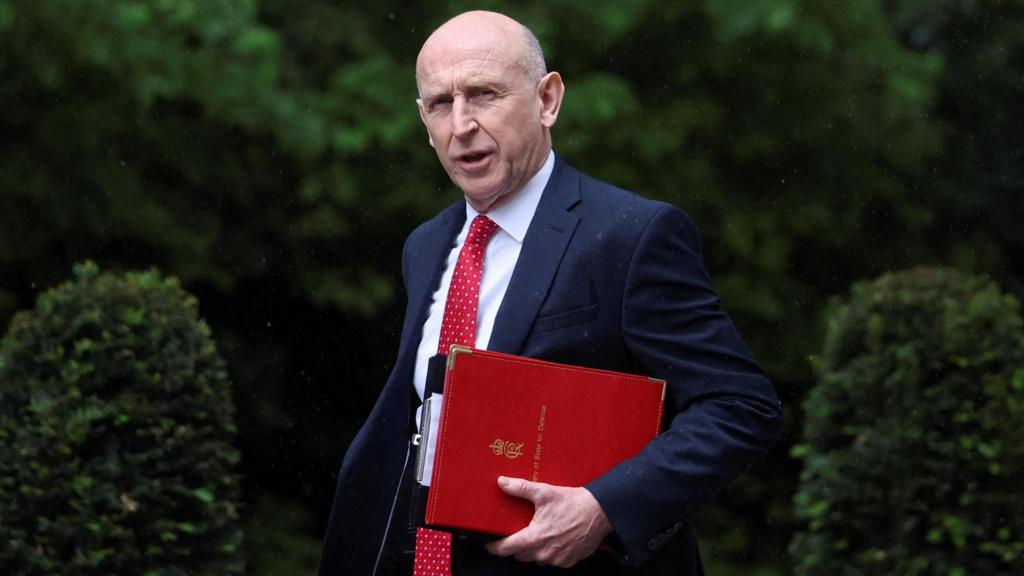
DEFENCE SECRETARY John Healey has resigned in a major blow to Sir Keir Starmer, warning that the Government’s defence spending plans risk leaving Britain less safe at a time of growing international danger.
In a sharply worded resignation letter to the Prime Minister, Mr Healey said he could no longer support the Government’s Defence Investment Plan, arguing that the financial settlement failed to provide the Armed Forces with the resources needed to meet the threats facing the UK.
His departure is one of the most serious resignations of Sir Keir’s premiership and comes ahead of the expected publication of the long-delayed defence plan, which is intended to set out how Britain will rebuild military capability, improve readiness and respond to growing threats from Russia, instability in the Middle East, and wider global insecurity.
The row centres on the pace and scale of defence spending. Sir Keir has pledged to increase defence spending to 2.5% of GDP by 2027 and 3% by 2034, but Mr Healey had pushed for a faster rise, arguing that the pressure on the Armed Forces is immediate and cannot be pushed into the next decade.
The former Defence Secretary is understood to have wanted a stronger commitment to reach 3% by 2030, amid warnings that the Army, Navy and RAF face major gaps in equipment, personnel and readiness.
In his letter, Mr Healey criticised both Number 10 and the Treasury, saying the Prime Minister had been unable, and the Treasury unwilling, to provide the funding needed. He warned that the proposed settlement would force unacceptable choices, including risks to operational readiness and the safety of service personnel.
A resignation with real force
Cabinet resignations are not unusual in Westminster, but this one is different.
Mr Healey was not regarded as a loose cannon or serial rebel. He was seen as a loyal, experienced and serious figure, closely associated with Labour’s attempt to present itself as a responsible party of government on defence and national security.
That is why his resignation is so damaging.
He is not leaving over a personal scandal, a reshuffle grievance, or a minor policy disagreement. He is leaving while accusing the Government of failing to fund the defence of the country properly.
For any Prime Minister, that is a dangerous charge. For Sir Keir Starmer, who has repeatedly sought to present Labour as strong on national security, it is politically explosive.
The timing is also significant. Britain is preparing for a NATO summit next month, Ukraine remains at war with Russia, tensions in the Middle East remain high, and European countries are under growing pressure to take more responsibility for their own defence as US priorities shift.

Mr Healey’s resignation turns what had been a technical dispute between departments into a full political crisis.
The Treasury problem
At the heart of the row is a familiar Whitehall battle: the Ministry of Defence says the threats are growing and the money must follow; the Treasury says the public finances are already under severe pressure.
Rachel Reeves faces demands from every direction. The NHS, schools, local government, welfare, transport and energy all want more money. Defence is now making the same argument, but with one added warning: delay could have consequences not only for public services, but for national security.
That makes the politics difficult. Spending more on defence means either higher taxes, more borrowing, or cuts elsewhere.
But Mr Healey’s argument is that Britain no longer has the luxury of treating defence as something that can be fixed later. His central message is that the threat is now, but the money is being pushed too far into the future.
That “backloading” of funds is likely to become one of the key phrases in the argument. In simple terms, it means promising more money later while leaving the Armed Forces short in the immediate years ahead.
Why the military will be watching closely
The resignation also raises deeper questions about military confidence in the Government’s plans.
Reports that senior military figures have raised concerns about the funding settlement will add to the pressure on Downing Street. If service chiefs believe the money does not match the commitments being made, the issue becomes more than a political row. It becomes a question of whether ministers are asking the Armed Forces to do more than they are properly equipped to deliver.
The UK already has major defence pressures. The Army has shrunk significantly over recent decades. The Royal Navy faces demands across the Atlantic, the High North, the Gulf and Indo-Pacific. The RAF must maintain air defence, support NATO and contribute to operations overseas. Meanwhile, stockpiles, drones, air defence systems, cyber capability and industrial production have all become more urgent because of the war in Ukraine.
Ukraine has shown that modern war burns through equipment, ammunition and technology at a frightening rate. It has also shown that countries which enter a crisis with hollowed-out forces quickly discover that rebuilding military strength cannot be done overnight.
That is the deeper warning behind Mr Healey’s resignation.
Political reaction
The Conservatives are expected to seize on the resignation as proof that Labour cannot be trusted on defence. They will argue that if the Defence Secretary himself believes the Government is underfunding the military, the Prime Minister has a serious credibility problem.
Reform UK is also likely to attack Sir Keir from the right, claiming the Government is failing to protect the country while spending money on other priorities.
The Liberal Democrats may press for clarity on whether the Government’s commitments to NATO, Ukraine and UK defence can still be met.
Within Labour, the reaction may be more complicated. Some MPs will sympathise with Mr Healey’s warning, particularly those concerned about Russia and NATO. Others will worry that increasing defence spending faster could mean less money for public services and social programmes.
That internal tension could become difficult for Sir Keir. Labour came to power promising stability, competence and discipline. A Defence Secretary resigning over national security funding cuts directly against that image.
What Downing Street will say
The Prime Minister is likely to insist that the Government remains committed to the strongest possible defence of the UK and to meeting its spending targets.
Downing Street will argue that defence spending is rising, that the Government has already made major commitments, and that any plan must be financially credible.
It will also stress continued support for Ukraine and Britain’s role in NATO.
But that may not be enough to kill the story.
The problem for Sir Keir is that Mr Healey’s resignation letter gives the opposition a simple line of attack: if the Government’s own Defence Secretary says the plan is not good enough, why should the public believe it is?
What happens next
Sir Keir will now need to appoint a new Defence Secretary quickly. The replacement will face an immediate and difficult task: defend a Defence Investment Plan that helped drive out their predecessor.
That is not an easy starting point.
The new minister will have to reassure the Armed Forces, the defence industry, NATO allies and MPs that Britain’s defence plans remain credible.
They will also have to answer a blunt question: has the Government matched its military promises with the money required to deliver them?
This resignation will not disappear quickly. It goes to the centre of one of the biggest questions facing the UK: whether the country is prepared for the world it now lives in, rather than the safer world it wishes still existed.
For Sir Keir Starmer, the danger is clear. A Prime Minister can survive many rows over spending. But when a Defence Secretary resigns saying the country is being left less safe, the argument becomes far more serious.

ANTI-ARMS campaigners have accused the UK and Welsh Governments of turning west Wales into a centre for military drone development following protests in Cardigan and Aberporth.
West Wales Against Arms said its members took part in the Red Line for Palestine action in Cardigan on Saturday (May 23), before staging a vigil outside MOD Aberporth on Sunday (May 24).
The group says the demonstrations were aimed at drawing attention to the role of defence companies QinetiQ and Tekever in the growing use of unmanned aerial vehicle technology in west Wales.

The protest comes after the announcement of a £50m Wales Defence Growth Deal, which ministers say will support high-skilled jobs and strengthen Wales’ role in autonomous technology.
Campaigners, however, argue that public money should be spent on health, housing and public services rather than expanding military testing and drone development.
A spokesperson for West Wales Against Arms said: “From Cardigan’s march on Saturday to Aberporth’s vigil on Sunday, the message was the same. We see what is happening. We see who is enabling it. And we refuse to be quiet.
“This is not what we want for West Wales or for any part of the UK. It will leave less investment into health and housing and keep Wales complicit in the arms trade and the genocide in Palestine and the ongoing war in the Middle East.”
MOD Aberporth, near Cardigan Bay, has long been used for the testing of weapons systems and unmanned aerial systems.

QinetiQ operates at the site, while Tekever owns West Wales Airport. The two companies have previously announced plans to work together on developing uncrewed systems capability in the UK.
The UK Government has said the Wales Defence Growth Deal will help Welsh communities benefit from high-skilled roles, support small and medium-sized businesses, and improve access to defence contracts.
But campaigners say the deal raises serious ethical questions about the direction of public investment in Wales, particularly while the conflict in Gaza continues.
West Wales Against Arms has also published a pamphlet, Exposing the War Machine in Aberporth, setting out its claims about the defence industry in the area.



News6 hours ago
Motorcyclist, 22, dies in A4075 crash in Pembrokeshire
A 22-year-old woman remains in hospital after two-vehicle collision A MOTORCYCLIST has died following a serious two-vehicle crash on the...


Community7 hours ago
Why police will be visiting every home in Pembrokeshire
New operation aims to knock on more than 257,000 doors across Dyfed-Powys over the next three years DYFED-POWYS POLICE has...


Crime10 hours ago
Prisons at breaking point: MPs warn Wales is paying the price of a failing system
Frozen healthcare budgets, overcrowded jails, homelessness on release and mounting pressure on staff are undermining rehabilitation across Wales, according to...


News24 hours ago
Brexit at 10: How Britain was sold a dream that cost us dearly
A decade after the referendum, the promised benefits remain hard to find while the economic costs are increasingly difficult to...


Crime1 day ago
Worcestershire man jailed after violent attack on woman in Tenby
Defendant was already serving a suspended sentence when serious assault took place A WORCESTERSHIRE man has been jailed for more...


Climate1 day ago
Offshore wind ‘could bring new generation of jobs to Milford Haven’
Pembrokeshire ports and Celtic Sea projects placed at centre of Wales’ green energy ambitions MILFORD HAVEN and Pembroke Dock could...


Community2 days ago
Police officer hailed hero after midnight sea rescue in Milford Haven
PC swam 100 metres offshore to save distressed woman heard calling for help in darkness A DYFED-POWYS POLICE officer has...


Local Government2 days ago
Security privately arranged by Mayor at Beating of the Bounds
HAVERFORDWEST TOWN COUNCIL has confirmed that security personnel seen at this year’s Beating of the Bounds were privately arranged and...


Business3 days ago
Celtic Freeport five-year plan puts Milford Haven at centre of green energy future
Strategy promises investment, skilled jobs and new supply chains, but major barriers remain over grid connections, planning and delivery THE...


Education3 days ago
Closure of Ysgol Clydau approved after emotional council debate
COUNCILLORS WARNED RURAL COMMUNITIES WILL REMEMBER DECISION PEMBROKESHIRE councillors have voted to close Ysgol Clydau following an emotional debate over...
-

 Community4 days ago
Pembrokeshire Chess Club crowned Welsh champions
-
Local Government2 days ago
Security privately arranged by Mayor at Beating of the Bounds
-

 Crime11 hours ago
Milford Haven man jailed for breaching domestic violence protection order
-

 Education6 days ago
Diocese threatens legal action as Manorbier school closure battle intensifies
-

 Crime2 days ago
Man wanted by court after failing to attend hearing over alleged shop thefts
-

 News6 hours ago
Crash on Freeman’s Way causes school-run chaos across Haverfordwest
-

 Local Government6 days ago
Taxi suspended after county-wide licensing checks
-
 Crime2 days ago
Man banned from roads after drink-driving offence