


Science and technology
£2.5m Aberystwyth drone project to tackle malaria in Africa


DRONES and AI will be used in a new £2.5 million Aberystwyth University-led effort to wipe out malaria hot spots in Africa, supported by funding from the Gates Foundation.
Malaria is one of Africa’s most devastating public health challenges, causing hundreds of thousands of preventable deaths each year.
A new international research project in Zanzibar, led by Aberystwyth University, will target the aquatic habitats of mosquito larvae before they mature.
The project will exploit the latest drone, satellite and artificial intelligence technology to help identify these sites more effectively. It builds upon success in previous projects that used smartphones and drones.

The initiative brings together researchers, public health experts, and community stakeholders to develop sustainable, locally-led strategies for mosquito control, supported by funding from the Gates Foundation.

The research team will overcome the limitations of conventional mapping by using drones equipped with advanced sensors – including near-infrared and thermal imaging – to tackle challenges such as water hidden by dense vegetation. Satellite imagery will also be used to map larger water bodies. The combination of these technologies will enable mosquito habitat mapping over a large area without requiring extensive fieldwork.
Artificial intelligence will be trained to analyse the images and accurately find mosquito breeding grounds, even in complex or obscured environments like rice paddies or swamps with thick aquatic vegetation or algae cover.
Key software developed by the project will be open source, with the ultimate goal being to create a transferable and scalable model for malaria-hit regions worldwide.
Dr Andy Hardy, lead researcher from Aberystwyth University’s Department of Geography and Earth Sciences, said:

“This project is reinventing mosquito control in a bid to tackle one of sub-Saharan Africa’s most urgent public health challenges. By using drones, satellite imagery, and AI, we can rapidly and precisely map breeding grounds, making interventions more targeted and effective.
“Our focus on the ecology of mosquito habitats and collaboration with local communities will help build a scalable, sustainable model that could serve as a blueprint for malaria control across the globe.”
In addition to technological innovation, the project will invest in community engagement, in order to overcome any concerns or resistance to the new technologies, and to train people in methods of eradicating mosquito larvae before they emerge from the water as adults.

The three-year project will create a digital toolkit to streamline mosquito control operations. It will feature a central dashboard for managers to plan and oversee activities, alongside a smartphone app that will help field staff to map, spray, and monitor tasks.
The system will recommend the most effective way to map an area based on terrain and budget and include guidelines to support consistent and effective implementation.
Dr Shija Joseph Shija from the Zanzibar Malaria Elimination Program which is collaborating on the project, said:
“Zanzibar has made tremendous progress in the fight against malaria, yet we continue to face the persistent challenge of mosquito breeding sites that are often difficult to detect and control. This new £2.5 million initiative, led by Aberystwyth University and supported by the Gates Foundation, represents a powerful step forward in our efforts to eliminate malaria from our islands.
“We are particularly encouraged that the tools and software developed through this project will be open source. This means Zanzibar will be among the first regions globally to benefit from a fully transferable, data-driven model that can support real-time planning, monitoring, and decision-making in larval source management.”
Other partners on the project include the London School of Hygiene & Tropical Medicine, Liverpool School of Tropical Medicine, Ifakara Health Institute in Tanzania, and Zzapp Malaria.


New government-backed AI Growth Lab will test legal technology for debt claims, conveyancing and access to justice — but regulators say safeguards are essential
THE LEGAL watchdog for England and Wales is backing a new government scheme to test artificial intelligence in the legal sector — a move that could eventually make legal help cheaper and easier to access for consumers and small businesses.
The Legal Services Board (LSB) will join the government’s newly launched AI Growth Lab, which aims to allow legal technology firms and law providers to trial AI systems in supervised real-world settings before they are rolled out more widely.
The announcement, embargoed until Sunday (June 8), will be made during the government’s AI Adoption Summit as part of London Tech Week.
The initiative has been described as an “advisory sandbox”, giving firms the chance to test AI products while receiving guidance from regulators about how existing legal rules apply. Officials stressed that involvement in the scheme does not amount to official approval or endorsement.
For ordinary people, the changes could eventually affect everything from debt recovery and court paperwork to house purchases and legal advice.
One example already authorised under existing rules is an AI-powered law firm called Garfield.Law Ltd, which helps small and medium-sized businesses recover unpaid debts through the small claims court.
The firm uses artificial intelligence to help process cases where pursuing unpaid invoices may otherwise cost more than the debt itself.
However, the Legal Services Board said safeguards remain essential. Although AI may assist with services, regulated solicitors still remain legally accountable for work carried out and firms are expected to have measures in place to reduce risks such as inaccurate information or poor legal advice.
House buyers could also see changes in the future.
A second example being explored involves an AI system designed to analyse property sales packs during conveyancing to flag inconsistencies or potential legal issues for solicitors to investigate.
Supporters say such tools could speed up house sales, identify problems earlier and reduce delays in what is often one of the most stressful stages of buying a property.
But concerns remain around transparency, confidentiality and trust.

The Legal Services Board said public confidence in legal AI would depend on strong protections, clear explanations of how systems work, and accountability when mistakes happen.
Richard Orpin, Chief Executive of the Legal Services Board, said the project was a “pragmatic and timely initiative” that could help firms innovate safely while improving access to legal services.
He said the regulator hoped AI could ultimately help lower costs, improve user experience and increase access to justice, while ensuring consumers remained protected.
The Legal Services Board oversees legal regulators in England and Wales, including the Solicitors Regulation Authority and the Council for Licensed Conveyancers.
Applications for companies wishing to join the AI Growth Lab are expected to open later this summer.
The development raises a bigger question for consumers: if AI can make legal help cheaper and faster, would you trust a computer to help fight your case?

Treasury plans would make it harder for major clean-energy and infrastructure projects to be delayed by legal challenges
THE MILFORD HAVEN Waterway could be one of the areas most affected by new UK Government plans to speed up the delivery of major energy and infrastructure projects.
Chancellor Rachel Reeves is expected to announce reforms giving Parliament greater power to approve nationally important clean-energy schemes, including new power stations, offshore wind farms and grid connections.
The Treasury says the move is designed to strengthen energy security, reduce bills and support economic growth.
But the proposals could also prove highly significant for Pembrokeshire, where the Haven Waterway is increasingly being promoted as a key hub for floating offshore wind, port infrastructure, grid upgrades, hydrogen, and other clean-energy projects.
Under the plans, Parliament would be able to designate key clean-energy schemes as being of “Critical National Importance”. That would reduce the scope for judicial review challenges, except on human rights grounds.
For other nationally significant infrastructure projects, including transport and water schemes, the government plans to introduce a fixed legal challenge window. Once that period has passed, developers would have greater certainty that projects could proceed.
The Treasury said the aim was to stop repeated legal challenges from delaying projects considered vital to the country.
A Treasury spokesperson said: “For too long, vital infrastructure delivery has been delayed by judicial reviews of projects the country needs.
“The Chancellor won’t stand for it any longer and is bringing forward bold changes to support delivery.”
The announcement will be watched closely in Pembrokeshire, where Milford Haven Waterway already plays a major role in the UK’s energy system.
The waterway is home to major port, fuel, gas and power infrastructure, and is central to plans for the next generation of low-carbon energy development in west Wales.
Supporters are likely to argue that faster decision-making could bring investment, jobs and supply-chain opportunities to Pembrokeshire.

However, the proposals may also raise concerns about local accountability, particularly if smaller energy projects are allowed to apply directly to the Planning Inspectorate rather than going through local councils.
That could leave communities feeling they have less influence over developments affecting their landscape, coastline and infrastructure.
The government says the new route would apply specifically to clean-energy projects, reflecting what it describes as the urgent need to move away from reliance on fossil fuels.
For Milford Haven Waterway, the reforms could mean major schemes connected to offshore wind, power generation, grid reinforcement and port-linked infrastructure move forward more quickly.
But they may also intensify debate over who gets the final say when national energy policy meets local communities.


A CALL has been lodged for the contentious DARC ‘space radar’ scheme in Pembrokeshire to be decided by Welsh Government rather than county planners.
In an application recently submitted to Pembrokeshire County Council following a public consultation, the Ministry of Defence wants to install 27 radar antenna and a long list of associated works at Cawdor Barracks, Brawdy for a worldwide network of sensors called the Deep Space Advanced Radar Concept (DARC) to track active satellites and other objects which would utilise three sites worldwide, part of the AUKUS trilateral security partnership, in the USA, the UK and Australia “enabling 360-degree coverage of the sky at all times of day and under any weather conditions”.
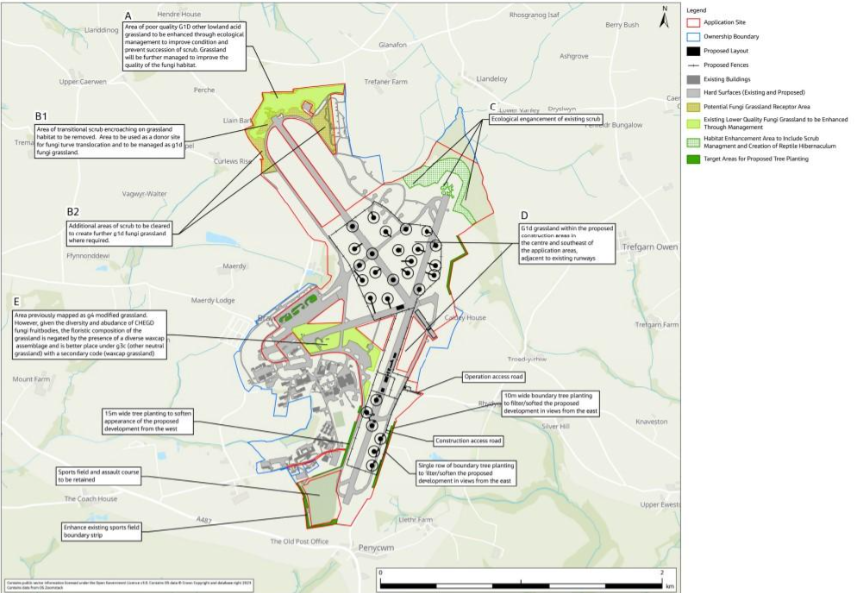
In late 2023, Cawdor Barracks was identified as the preferred UK site by the-then UK Defence Secretary, Grant Shapps.

A supporting statement says of the DARC scheme: “This capability is critical to protect and defend the services provided by satellites, ensuring continuity and resilience against collisions or debris-related incidents.
“Without DARC, the UK faces a significant risk of losing access to these vital services, which would have severe consequences for national security, economic stability, and public safety.”
It says the scheme would create 90 full time equivalent construction jobs, and, when operational, will result in the creation of 60 full time equivalent jobs including operation, maintenance and security staff.
St Davids City Council members recently unanimously opposed the pre-application consultation proposals, and public objectors have raised concerns with protests recently taking place outside the barracks and County Hall, Haverfordwest, and former First Minister Eluned Morgan called for the scheme to be put on hold while Donald Trump is President of the USA.
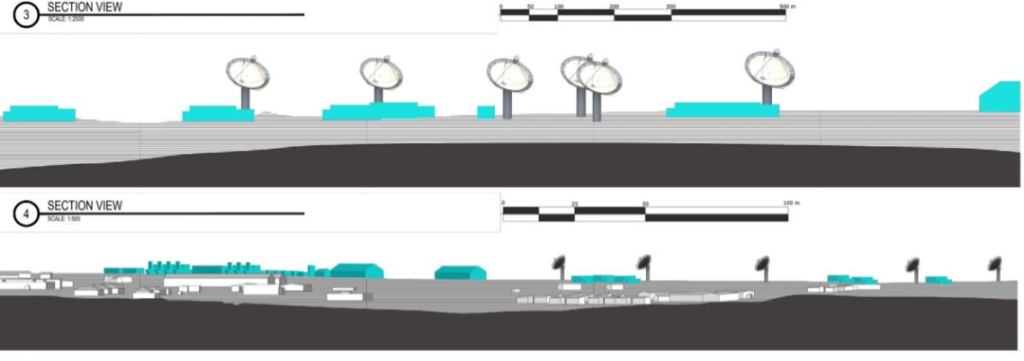
Campaign group PARC against DARC, set up in 2024 to oppose scheme, has submitted an official request to ‘call in’ the application for DARC radar to the newly formed Plaid Cymru Welsh government, citing what it describes as “an extremely promising step forward for the campaign with an anti-DARC Plaid Cymru government now elected in the Senedd”.
A ‘call-in’ means the application could be decided at Welsh Government level rather than by county planners.
Campaigners argue that DARC should be called in to Welsh Government on the basis that it is “clearly a nationally significant development that lies well outside of the scope for consideration of Pembrokeshire County Council alone,” urging that it is called in so that a “fair and appropriate consideration of the suitability of a development that is so widely opposed can be placed within the context of the national priorities of Wales going forward”.
Plaid Cymru voted at their national conference in October 2024 to take action to oppose the project.
Anyone wishing to comment on the application before the county council has until May 20.

Pembrokeshire-based Jerome Flynn, who was first famous for his roles in Soldier Soldier, Robson & Jerome and more recently Game Of Thrones has described the scheme as “the most unspeakably abominable planning application led by the US military, backed by Donald Trump to place 27 radar dishes right on the edge of our beloved coastal national park”.



News6 hours ago
First Minister challenged over jobs for student nurses
REFORM WALES has accused the First Minister of failing to guarantee jobs for student nurses in Wales, despite continuing pressure...


Crime8 hours ago
Knife blankets call as school staff face rising violence fears
GMB says protective equipment should be considered where risk assessments show staff could face blades SCHOOL staff should be given...


News8 hours ago
Claire Archibald secures review of Milford Haven train times
RURAL TRANSPORT CONCERNS RAISED WITH TFW CLAIRE ARCHIBALD MS has secured a review of train times between Milford Haven and...


Crime9 hours ago
PCC review calls for stronger youth crime prevention work
REPORT MAKES 13 RECOMMENDATIONS A REVIEW into crime and anti-social behaviour services for young adults has called for stronger prevention...


Crime11 hours ago
Families condemn failed appeal by paddleboard boss jailed over Haverfordwest tragedy
RELATIVES SAY LATEST COURT BID HAS REOPENED PAIN AFTER FOUR DEATHS ON WESTERN CLEDDAU THE FAMILIES of victims of the...


Community1 day ago
Forgotten wartime archive found in Pembroke Dock attic after 80 years
Remarkable family collection reveals story of father and son who served through two world wars A REMARKABLE untouched family archive...


Crime1 day ago
Milford Haven woman left with facial fractures after drunken attack
A WOMAN in her late fifties suffered facial fractures after being repeatedly punched through the window of her car during...


Crime1 day ago
Sex offender in senior role at Tenby family hotel
CREST HOTEL GROUP says it is investigating safeguarding concerns after staff at the Imperial Hotel in Tenby raised alarm over...


Sport2 days ago
Runners tackle new route in Ras Y Castell 10k
MORE than 90 runners took to the streets and paths around Cardigan on Friday evening (June 5) for the annual...


Business2 days ago
Turkish Kitchen reaches Welsh restaurant award semi-finals
Haverfordwest café praised as small independent business flies flag for Pembrokeshire A HAVERFORDWEST café has been named as a semi-finalist...
-
Crime4 days ago
Paddleboard company owner loses bid to cut sentence over Haverfordwest tragedy
-

 Crime3 days ago
Milford Haven man admits harassment and assault
-

 Crime6 days ago
Milford Haven man bit neighbour’s neck near cashpoint
-

 News3 days ago
Community appeal for privacy after serious emergency in Pendine
-

 Crime6 days ago
Pembroke Dock driver avoided jail after drug-drive crash
-

 Crime6 days ago
Dinas Cross man jailed over shop thefts
-
Crime1 day ago
Sex offender in senior role at Tenby family hotel
-

 News6 days ago
Mass rescue as west Wales lifeguards save three lives during busy half-term