


Community
From Milford Haven to the world: the story of The Evolution Experience


IN AUGUST 2000, a 21st birthday party in Milford Haven became something few could have imagined at the time: one of the largest, loudest and most ambitious club movements west Wales has ever seen.
That night marked the birth of The Evolution Experience, a club brand and events collective founded by Tom Sinclair and best friend John Lee, and run by a voluntary group of around twelve young people aged between 15 and 22. Within two years, it would attract crowds of up to 2,500, host BBC Radio 1 DJs, tour internationally, and be described by Mixmag as “the biggest, loudest night in Wales”.
Evolution’s first events were held at the Kings Function Centre in Milford Haven, drawing crowds of around 1,000. As demand grew, the operation moved to the Park House Exhibition Centre in Haverfordwest, where capacity crowds of approximately 2,500 became possible — a scale of dance event unprecedented in the county at the time.
Despite later assumptions, Evolution was not a loose or illegal operation. It traded as Evolution Event Promotions Limited, hired professional sound and lighting, worked with licensed venues, used trained security, and even hired ambulance cover staffed by serving paramedics. What made it unusual was that it was run almost entirely by unpaid volunteers — young people learning in real time how to organise large-scale public events legally, in an era still shaped by fear of illegal raves and drug culture.
The collective operated out of two key locations. One was an improvised booking office in Wiseman’s Bridge, where resident DJ Danny Slade ran Evolution’s unofficial booking operation from his garage, stacked floor-to-ceiling with vinyl promos, white labels and fax paper, juggling three landlines while negotiating deals directly with promoters and agents. The other was Evolution’s own office, located two doors down from Sinclair’s home in Milford Haven, in a former dental surgery complete with oak panelling and a reception hatch into what had once been the lab. Although events ran roughly once a month, the office was in daily use, handling promotion, logistics, licensing correspondence and administration.

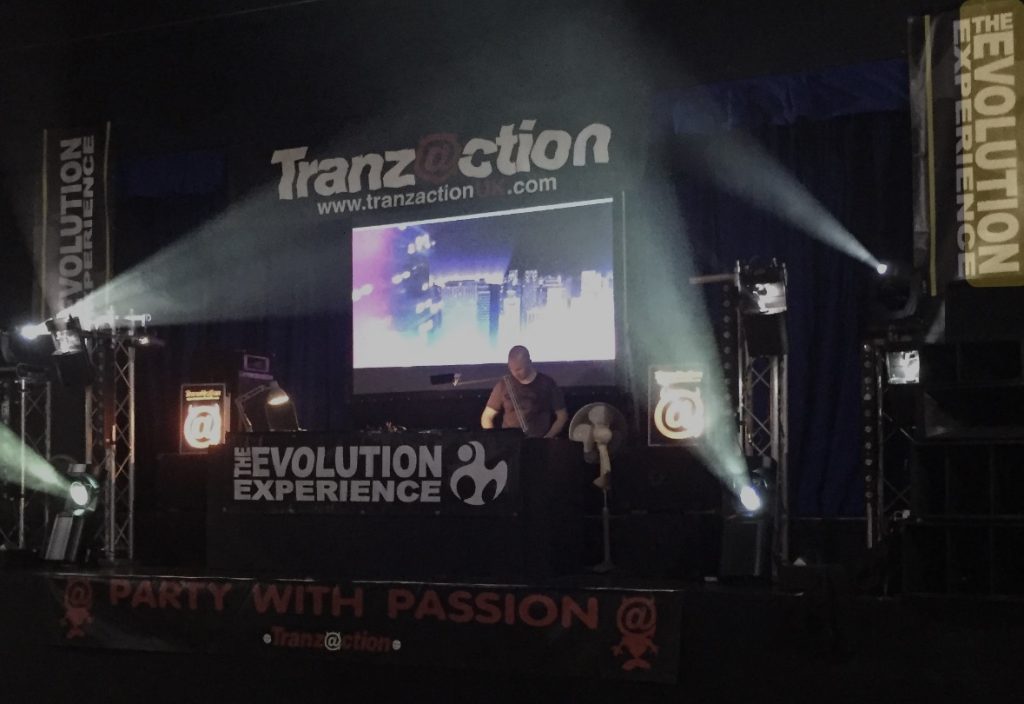
Promotion was hands-on and physical. Old vans were used to tour Pembrokeshire flyposting events — and, unusually, the same team would later return with pressure washers to remove posters. A handwritten mailing list of around 1,600 people was maintained long before social media existed, with flyers posted directly to supporters across the county.
Evolution’s line-ups quickly rivalled major city nights. Acts included Lisa Pin-Up, Graham Gold, Slipmatt, Cosmic Gate, DJ Sy, Billy Bunter, Lady Jane, BK, Knuckleheadz, Warp Brothers, Sash!, Dirt Devils, Judge Jules, Lisa Lashes and Dave Pearce. Radio 1’s Dave Pearce described the event as “epic” and was flown into Haverfordwest Airport to perform in May 2002.
When Slipmatt arrived in Milford Haven to play at The Kings, he was driven to the venue by John Lee. Having travelled deep into west Wales, Slipmatt was reportedly unimpressed, believing he was heading to a small, out-of-the-way club night.
According to Lee, Slipmatt assumed he would be playing to a handful of people — perhaps twenty at most.

That assumption lasted right up until the car pulled in.
As the stage door opened, he was met not by an empty room, but by around 1,000 people already packed inside the venue.
The reaction was instant.

Lee recalls that Slipmatt stopped, looked at the crowd, and said simply that he hadn’t expected anything like this.
The mood changed immediately.
What had begun as a reluctant booking turned into one of those nights that artists remember — a reaction later reflected years on, when Slipmatt commented on a YouTube video of the event: “Blimey, I actually remember this.”
The biggest crowd came when German trance act PPK were booked in Haverfordwest — coinciding by chance with their track ResuRection reaching number one in the UK charts in March 2002. The result was a full-capacity night that remains one of the largest dance events ever held in the town.
Evolution was also a launchpad. Several DJs played their first-ever club gigs at Evolution events, including Cally and Juice, at a time when many established nights operated closed booking circles.

Despite its professionalism, the group faced constant scrutiny. Organisers were frequently stopped and searched while promoting. On one occasion, police believed they had discovered drugs during a vehicle search, only to find a bag of Unibond wallpaper paste powder used for flyposting. On another night, Evolution voluntarily deployed drug dogs at the entrance and collected surrendered substances in a “sin bin”, only to be told by Milford Haven police station that officers would not accept the bag when it was handed in.
Licensing tensions were common. Sinclair routinely carried a copy of Paterson’s Licensing Acts and would quote sections to officers when disputes arose — something that did not always go down well. One memorable exchange ended with a police licensing officer expecting backup to arrive, only to find the flashing lights and siren belonged to an ambulance vehicle hired by Evolution, crewed by serving paramedics. “Alright Tom, want a lift down to the main building?” one called out, to visible frustration from the officer.
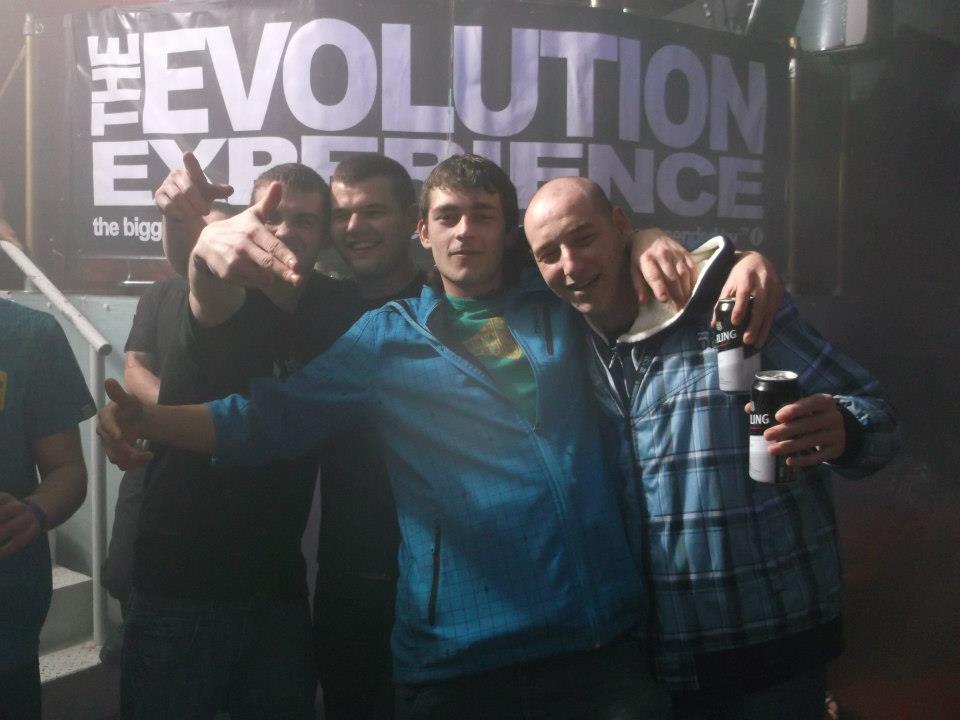
Financial risk was constant. Cheques were sometimes written to PA companies before ticket income was guaranteed, clearing only at the last moment. Decisions were often made between stopping a night abruptly or managing it safely to conclusion — always with crowd safety in mind.

Between 2002 and 2004, Evolution expanded beyond Wales, staging events at The Fridge in London, Aberystwyth University, and touring China and the Far East. The Asia tours would later shape the lives of several organisers and DJs.
Eventually, the scale became unsustainable. Plans to establish a permanent venue at Chequers in Tenby were blocked after a licence refusal, and a short-lived private members’ club faced legal challenges. Evolution wound down as a large-scale promoter, but did not disappear.
Legal battles, controversy and lasting consequences
By the early 2000s, the scale and visibility of The Evolution Experience had brought it into increasingly frequent conflict with regulators and licensing authorities, with consequences that extended far beyond nightlife.
One of the most high-profile episodes occurred in May 2002, when Pembrokeshire County Council brought a private prosecution against founder Tom Sinclair under the Trade Descriptions Act, in relation to advertising connected to a planned Evolution event.
The court heard that Ali G had been properly booked to make a voluntary appearance at the Haverfordwest Carnival, which was due to take place on the same day as the Evolution event. However, the Evolution event itself was cancelled by the council before any tickets were sold, following the imposition of a noise limit.

With the carnival still going ahead, Sinclair did not want organisers or the public to be left without the advertised attraction. Acting at his own expense, he arranged for a look-alike performer to attend the carnival in place of Ali G.
Sinclair was nevertheless convicted of one count of false advertising, on the basis that promotional material continued to reference Ali G’s appearance. The court heard that no members of the public suffered financial loss, as the Evolution event had already been cancelled.
Before sentencing at Swansea Crown Court, the judge was presented with letters of support, including from the organisers of the Haverfordwest Carnival, acknowledging that Sinclair’s actions were intended to prevent the event being left without its advertised attraction. Sinclair was fined £500 and ordered to complete 40 hours of unpaid work.

The prosecution, which lasted more than a week and is understood to have cost the council in excess of £110,000, attracted widespread national media attention, including coverage by The Times, BBC Wales, and the News of the World.
Some contemporaneous reporting was highly critical. A BBC Wales court report described Sinclair as a “fraudster” and stated that he had produced a “fake contract”. Sinclair has consistently disputed that characterisation. He has said that no contract was fabricated, and that the document in question was presumed to be fake after it was faxed to the Milford & West Wales Mercury during attempts to verify the booking. The fax was sent from PC World in Enfield, where Sinclair was working at the time, a fact which trading standards officers later cited when questioning its authenticity.
Sinclair has also maintained that the Ali G booking itself was genuine, a point accepted by the jury, and that the decision to book a look-alike was taken only after the Evolution event had been cancelled, in order to ensure the Haverfordwest Carnival was not left without its advertised attraction.
He declined to accept a caution, later explaining that he believed it would be used to argue that he was unfit to hold an entertainments licence, a concern that would later feature in licensing disputes.
The impact of the case extended beyond the courtroom. Reporting in The Times, particularly on its law pages, almost resulted in Sinclair being removed from his university law course after the dean became aware of the case through national coverage. He was ultimately permitted to continue his studies.
A further turning point followed during efforts to establish The Evolution Experience as a permanent licensed venue at Chequers in Tenby. By that stage, Sinclair was already under severe financial pressure following a large-scale Evolution event which had been stopped by the local authority amid concerns over noise pollution, resulting in significant losses and leading to bankruptcy proceedings.
In an extraordinary coincidence, the bankruptcy hearing was listed for the same date and time as Sinclair’s application for an entertainments licence at County Hall, Haverfordwest. Sinclair chose to attend the licensing hearing.
According to those present, representatives from the police and council who had been at Haverfordwest County Court, expecting Sinclair to attend the insolvency hearing, rushed to County Hall on realising he was not there. The licensing hearing was interrupted mid-session when officers entered the chamber and addressed councillors, prompting audible gasps and an immediate adjournment. The licence was not granted, and the incident effectively ended any realistic prospect of Chequers opening as a publicly licensed venue.
Although the club later operated briefly as a private members’ venue, continuing legal and regulatory difficulties meant it could not be sustained.
Sinclair has since said that what he regards as the unfair treatment he experienced from the council and police during this period was a defining influence on his future direction. He has described those events as the reason he chose to study law, in order to better understand the systems that had such a profound impact on his life, and later to found The Pembrokeshire Herald, with the aim of scrutinising authority and ensuring decisions are properly documented and challenged through the public record.

The brand returned in 2008–2010 with smaller club nights at The Haven Hotel, Milford Haven, followed by a high-profile homecoming at Matisse Music Venue, Haverfordwest, featuring an Oz-themed production with a bespoke Emerald City stage set illuminated by thousands of green lights. In 2011, Evolution organised Sash! to appear at the launch night of DJs Club in Tenby. A further Matisse event followed in 2012, and between 2016 and 2019 Evolution co-promoted well-attended headline events at De Valence Pavilion, Tenby.
The people behind Evolution went on to diverse careers. Gareth Jones (DJ Gaza Jay) remained in China after the 2004 tour, learned Mandarin and later worked on the Large Hadron Collider. Denys Jones (DJ Escher) became head of graphic design at Pembrokeshire College, while Mike Knight, responsible for Evolution’s video and screen visuals using Mac systems, became head of the college’s Mac suite. Declan, who helped organise security alongside his mother Linda, is now a serving police officer. John Lee works as a school manager in Saigon.
Sinclair went on to study law, later founding The Pembrokeshire Herald, which he still edits.
One Sunday morning after an Evolution event, Sinclair was driving a clearly marked van over Hakin Bridge when three people walking along the pavement stopped, knelt, and bowed as it passed — a quiet, spontaneous gesture of thanks.

More than two decades on, The Evolution Experience stands as a rare example of youth-led organisation in west Wales: ambitious, legal, disciplined, and ahead of its time. It was not undone by lack of demand or imagination, but by an environment not yet ready to recognise what it was witnessing.
You never know, any time soon The Evolution Experience could be back! Cheers!


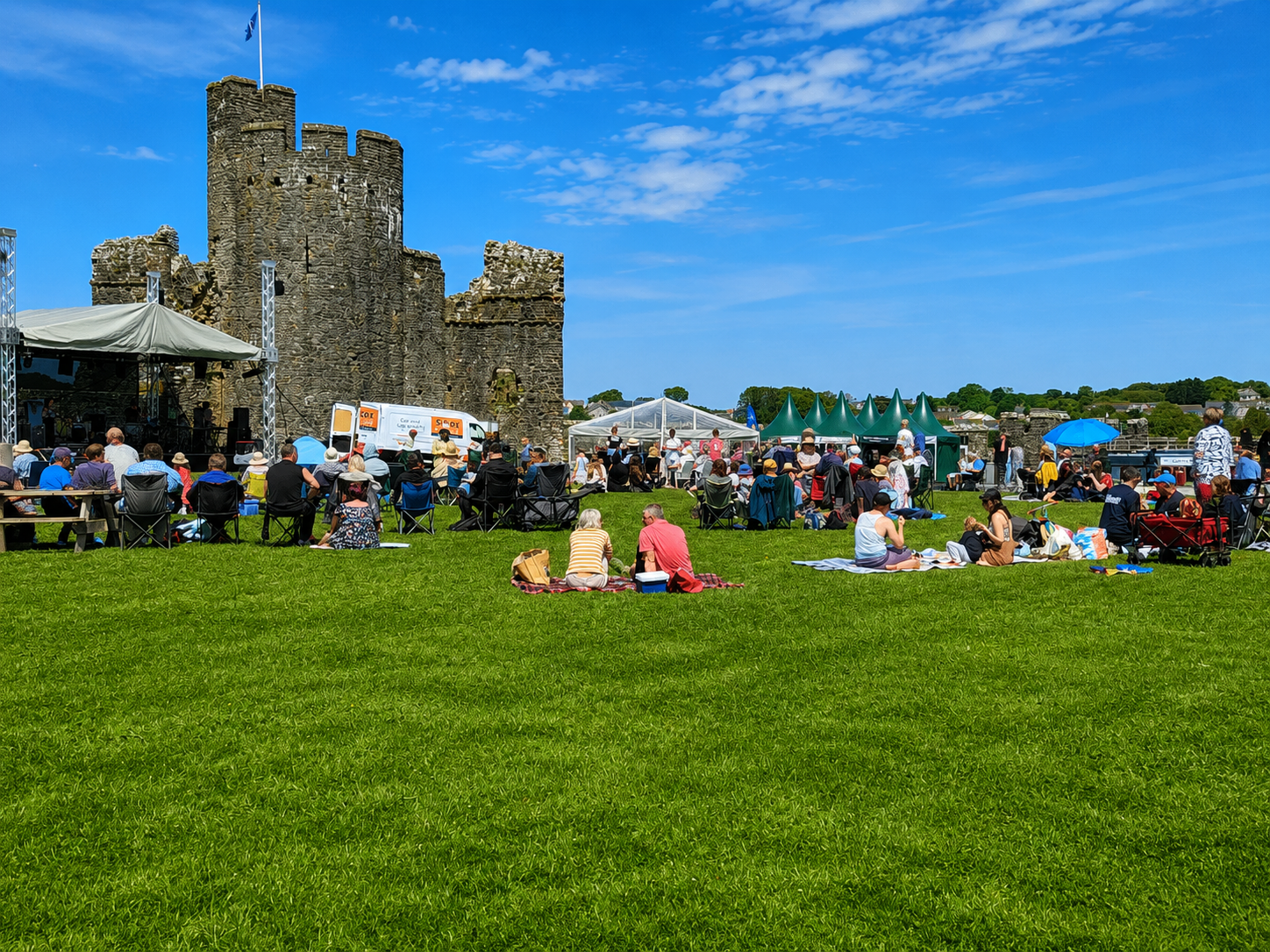
HUNDREDS of worshippers gathered at Pembroke Castle today for a major Christian event bringing churches together from across Pembrokeshire and beyond.
The Picnic, Prayer and Praise event took place on Sunday (Jun 14), with people invited to bring chairs, blankets and picnics for an afternoon of worship inside one of Wales’ most historic castles.
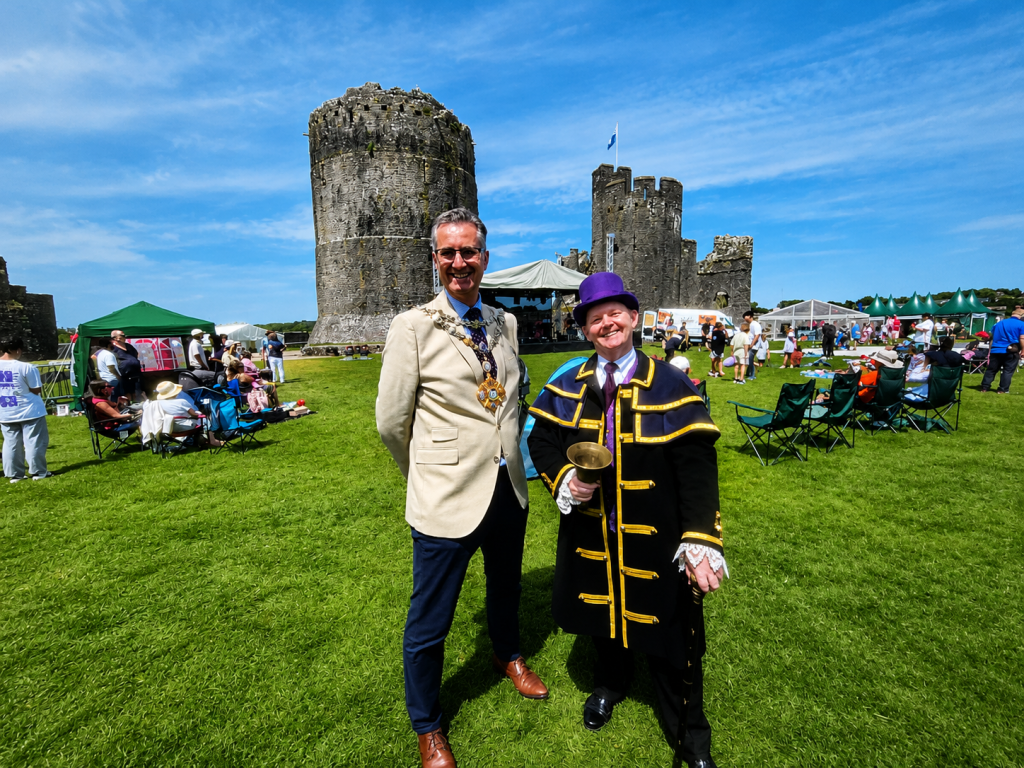
The event was led by Sound of Wales, alongside local churches, and also included Korean Christians from London who took part in their own distinctive style.
The programme began at 1:00pm, with free entry for worshippers between 12 noon and 5:00pm.
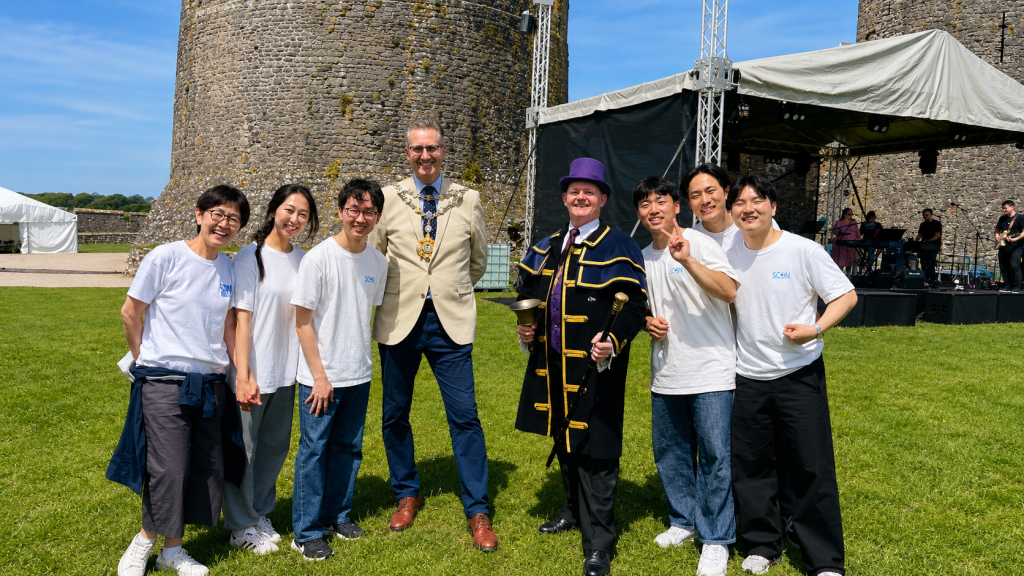
Organisers said the aim was to unite Christians in prayer for Pembrokeshire and Wales, while celebrating faith through music, worship and fellowship.
Castle Trustee Roger Baker previously described the gathering as “an extraordinary opportunity to unite Christians in one of the great castles of Wales.”
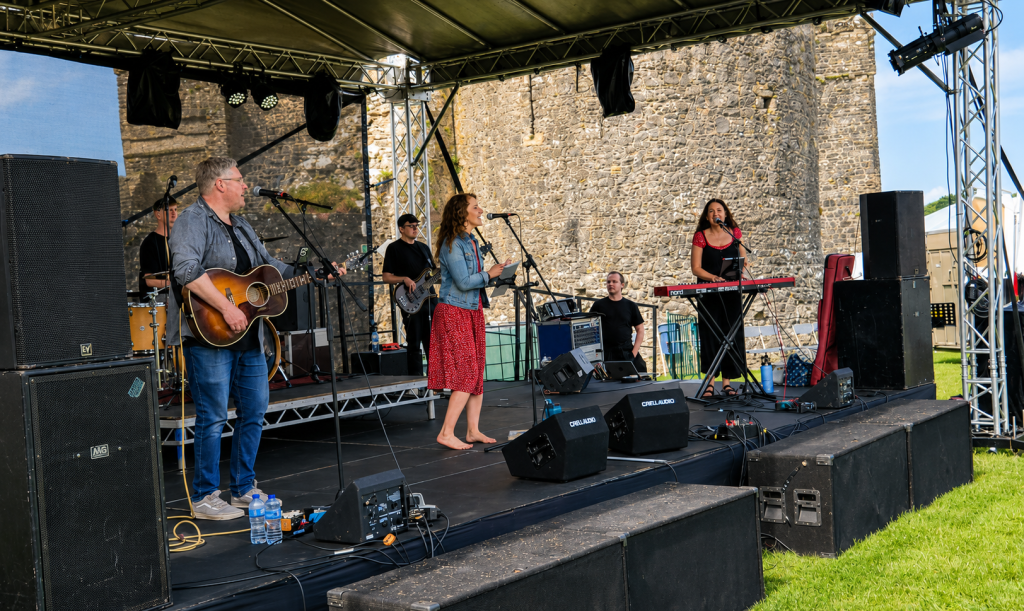
He said: “What a way to give Pembrokeshire a united voice of praise to our God and our Lord Jesus Christ.”
The event has become a growing fixture in the Pembrokeshire Christian calendar, with previous gatherings attracting large crowds despite challenging weather.
Today’s event made full use of the castle’s dramatic setting, with worshippers gathering within the ancient walls for an afternoon of praise, reflection and community.


A YEAR 11 pupil at Milford Haven School has been praised after putting his first aid training into action to help an injured member of the public following an accident.
Aryan, who is currently working towards lifesaving qualifications, including first aid training, found himself faced with a real emergency when a woman suffered a head injury after a fall.
Rather than panic, the teenager stepped in immediately and calmly took control of the situation.
According to Milford Haven School, Aryan used a first aid kit to treat the injury, helped make the woman comfortable, and provided clear aftercare advice while remaining calm and compassionate throughout the incident.
School staff said his actions demonstrated maturity, confidence and professionalism beyond his years.
Applying first aid in a genuine emergency can be far more challenging than practising in a classroom setting, but Aryan rose to the occasion and put his training into practice when it mattered most.
Milford Haven School said it was “incredibly proud” of the Year 11 pupil, describing him as “a fantastic example of courage, responsibility and care for others.”
The school added that Aryan’s response showed the importance of young people learning practical lifesaving skills and highlighted the positive impact they can have within the community.
Da iawn, Aryan — a credit to Milford Haven School and the wider community.
Photo caption: Helping hand: Year 11 pupil Aryan has been praised after using his first aid training to help an injured member of the public following a fall (Pic: Milford Haven School).

Pembrokeshire Care, Share & Give highlighted at Haverfordwest River Festival
A LONG-RUNNING Pembrokeshire charity that has quietly helped thousands of people over more than a decade was given recognition during the Haverfordwest River Festival.
County councillor Thomas Tudor met with charity founder Amanda Absalom-Lowe during Saturday’s (June 13) event at the Riverside Shopping Centre, praising the work of Pembrokeshire Care, Share & Give.
Cllr Tudor said it was “lovely to catch up” with Amanda, describing the organisation as a charity that does “amazing work in our community.”
Founded in 2009, Pembrokeshire Care, Share & Give has spent more than 13 years helping vulnerable people across Pembrokeshire and beyond by combining environmental recycling projects with practical community support.
The charity, based in Haverfordwest, helps redistribute surplus food, unwanted household items, clothing and essential goods to people struggling financially, homeless people, hospitals, charities and community groups.
Its work also includes providing “Rainbow Emergency Packs” for patients unexpectedly admitted to hospital, Christmas toy donations for children, emergency household support for families affected by fires or hardship, and aid for animal rescue centres.
The group says it has helped divert tonnes of waste from landfill through its recycling initiatives, encouraging residents to donate items rather than throw them away.
Amanda Absalom-Lowe, founder and chairperson of the charity, has received a string of honours for her work over the years, including the Radio Pembrokeshire Local Hero Green Award, the Haverfordwest Town Council Award of Merit, and the Pembrokeshire Association of Voluntary Services Volunteer of the Year Award.
In 2020, she was also recognised nationally after being named in the BBC Radio 4 Woman’s Hour Power List, celebrating inspirational women making a difference.
The charity has supported numerous causes including Patch Charity, Wales Air Ambulance, Paul Sartori Foundation, Blood Bikes, Greenacres Rescue, Bristol Children’s Hospital, children’s wards across Wales and homeless support initiatives.
Pembrokeshire Care, Share & Give operates from Kiln Road in Haverfordwest and relies heavily on donations and community support.
The charity’s message remains simple: “Recycle4Charity — don’t throw it away, donate it.”

Community support: Amanda Absalom-Lowe with County Councillor Thomas Tudor at the Haverfordwest River Festival (Pic: Supplied).



Community4 hours ago
Milford Haven School pupil praised after stepping in during real-life emergency
A YEAR 11 pupil at Milford Haven School has been praised after putting his first aid training into action to...

Community8 hours ago
River festival brings crowds to Haverfordwest
A CELEBRATION of the River Cleddau brought crowds into Haverfordwest on Saturday (June 13) as the town’s River Festival returned...

Charity8 hours ago
Voices at the Castle hailed as unforgettable night after weather setback
Russell Watson headlines spectacular charity concert at Pembroke Castle A SPECTACULAR evening of live music at Pembroke Castle has been...

Local Government1 day ago
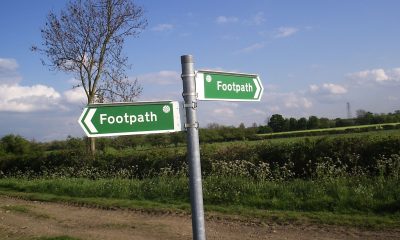
Council admits 74 rights of way complaints remain unresolved
Key post vacant since February as walker raises safety concerns over paths near Llanteg and Amroth PEMBROKESHIRE COUNTY COUNCIL has...


Education2 days ago
Diocese threatens legal action as Manorbier school closure battle intensifies
Church says council could face judicial review over fire-hit school A BITTER row over the future of Manorbier Church in...


Health2 days ago
Baby loss charity calls for urgent action after latest Wales figures published
Sands says Welsh Government must set clearer targets to reduce stillbirths and neonatal deaths A BABY loss charity has called...

Health2 days ago
Cancer delays worsening as west Wales hospitals struggle to recruit specialists
Health board admits standards are difficult to meet as doctors warn of “extremely dangerous” shortages PATIENTS in west Wales are...


News2 days ago
Rhun ap Iorwerth highlights first 25 days in office as First Minister
Plaid Cymru leader says government is moving quickly on NHS, farming and economic priorities FIRST MINISTER Rhun ap Iorwerth has...


Crime3 days ago
Man accused of six rapes including alleged Haverfordwest offence
A MAN has been sent to Crown Court accused of six rapes, including an alleged offence at a Haverfordwest campsite....


News3 days ago
Childcare row erupts as Plaid faces questions over costs and delivery
Opposition parties clash over flagship pledge as Senedd debate exposes growing divisions PLAID CYMRU’S flagship promise to create what it...
-

 Crime6 days ago
Sex offender in senior role at Tenby family hotel
-
 Crime5 days ago
Haverfordwest pair accused of £80,000 rogue trading frauds
-
Crime3 days ago
Man accused of six rapes including alleged Haverfordwest offence
-
Education2 days ago
Diocese threatens legal action as Manorbier school closure battle intensifies
-

 Community6 days ago
Forgotten wartime archive found in Pembroke Dock attic after 80 years
-

 Crime5 days ago
Families condemn failed appeal by paddleboard boss jailed over Haverfordwest tragedy
-
 Crime5 days ago
Knife blankets call as school staff face rising violence fears
-

 Local Government2 days ago
Taxi suspended after county-wide licensing checks