


Education
Pembrokeshire Learning Centre placed in special measures following Estyn inspection

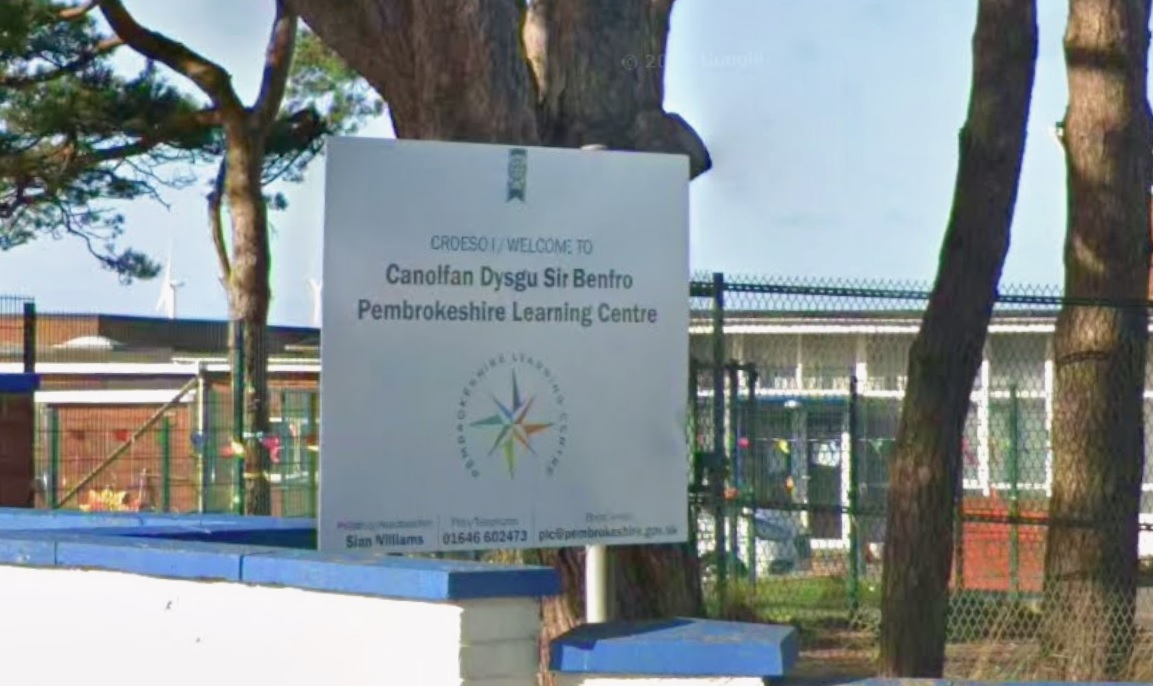
PEMBROKESHIRE LEARNING CENTRE has been placed in special measures after inspectors raised serious concerns about standards and leadership at the pupil referral unit.
The Centre is a pupil referral unit (PRU) run by Pembrokeshire County Council and operates across three sites in the county:
- Neyland (main site)
- Penally
- Pembroke Dock
It provides education for pupils aged five to sixteen who are unable to attend mainstream school, often due to exclusion, anxiety, or complex additional learning needs.
Estyn confirmed the decision following a recent inspection of the centre, which supports pupils who are unable to attend mainstream school. The move means the provision will now be subject to increased monitoring, with inspectors returning to assess progress.
Pembrokeshire County Council said it has accepted the inspection findings in full and has begun implementing urgent improvement measures.

The council and school are required to submit a detailed post-inspection action plan to Estyn by February 5, 2026, setting out how each recommendation will be addressed. Work on the plan is already underway.
According to the council, immediate actions include increasing staffing across Pembrokeshire Learning Centre to strengthen leadership and classroom support, along with urgent planning to resolve site condition issues highlighted by inspectors. Governance arrangements are also being reinforced through the appointment of additional members to the centre’s management committee.
The council said these early steps are intended to ensure pupils are educated in a safe, supportive environment and receive teaching that meets their needs.

Cabinet Member for Education and Welsh Language, Guy Woodham, said the authority had acted swiftly following the inspection.

“Our priority is the wellbeing and success of every pupil,” he said. “We have moved quickly to strengthen leadership, improve facilities and enhance governance, and we will continue to work closely with Estyn to raise standards at Pembrokeshire Learning Centre.”
While identifying significant weaknesses, Estyn also highlighted areas of strength within the provision. Inspectors noted that leaders promote a clear vision centred on pupils’ wellbeing, supported by a trauma-informed approach, and that many pupils who attend regularly report feeling safe due to positive relationships with staff.
The inspection also found that the qualifications offer for older pupils has improved since the previous visit, helping learners progress into further education, training or employment.

Pembrokeshire Learning Centre, based in Neyland, plays a key role in supporting some of the county’s most vulnerable learners. The council said parents, carers and the wider community will be kept informed as improvements are implemented.
Further details of the post-inspection action plan are expected to be published in the coming weeks.
What went wrong at Pembrokeshire Learning Centre?
Inspectors have identified serious weaknesses at Pembrokeshire Learning Centre following a critical inspection that resulted in the pupil referral unit being placed in special measures.
The inspection found that leadership oversight across the Centre’s three sites in Neyland, Penally and Pembroke Dock has been inconsistent, limiting leaders’ ability to ensure standards are applied evenly. Senior leaders were largely based at the main site, reducing their visibility and impact at other locations.
While leaders were praised for setting out a clear vision centred on pupils’ wellbeing and trauma-informed practice, inspectors concluded that this vision has not been translated consistently into classroom practice. In many lessons, expectations were found to be too low, with pupils insufficiently challenged and making uneven progress.
Teaching quality was reported to vary widely. Inspectors said only a minority of lessons were well-planned, engaging and effective, while most lacked pace, clarity and appropriate challenge. As a result, too many pupils were not making the progress expected of them over time.
Curriculum planning was also highlighted as a major weakness. The Centre was found to lack overarching schemes of work, meaning teaching is often driven by individual staff rather than a consistent, centre-wide approach. This has led to fragmented provision and unequal learning experiences for pupils.
Attendance remains a significant concern. Inspectors found that attendance levels are too low, with inconsistent monitoring of reduced timetables and Pastoral Support Plans. Fixed-term exclusions were described as unacceptably high and have increased sharply compared with the previous year.
Learning environments were another area of concern. Inspectors said that many areas are not fit for purpose and in some cases do not provide safe learning spaces. At one site, public access to the grounds means pupils have no secure outdoor learning environment.
Safeguarding systems and reporting processes were generally found to be in place, but inspectors raised specific safeguarding and site management concerns during the inspection, which were formally reported to the local authority.
Support for pupils with additional learning needs was described as variable. While Individual Development Plans contain detailed information, inspectors found that these plans are not always delivered effectively in practice, limiting the support some pupils receive.
Despite these shortcomings, inspectors also identified positive aspects of the provision. Many pupils who attend regularly reported feeling safe, supported by strong relationships with staff. The qualifications offer for older pupils has improved, helping many move on to education, training or employment.
However, inspectors concluded that insufficient progress has been made since the previous inspection in 2017, and that urgent and sustained improvement is now required.
As a result, Pembrokeshire Learning Centre will be subject to regular monitoring visits, with inspectors returning to assess whether leadership, teaching standards, attendance and learning environments are improving.














Figures show 87% of UK graduates were in work or further study 15 months after graduation
GRADUATE outcomes have remained resilient despite a challenging economy and a cautious jobs market, new figures show.
The National Centre for Universities and Business (NCUB) said 87% of graduates with permanent residence in the UK were in employment or further study 15 months after graduation.
The data reflects a cohort entering the labour market during a period of subdued economic growth. UK GDP grew by just 0.3% in 2023 and 1.0% in 2024, while business investment and hiring remained cautious.
However, the figures also show that graduate unemployment has increased slightly, although it still rounds to 5%.
There were also significant differences between subject areas. Unemployment reached 10% among Computing graduates and 8% among Business and Management graduates.
The figures also showed that 67% of postgraduate Physical Sciences graduates were in full-time employment, compared with 47% of undergraduates in the same field.
Despite the tougher labour market, graduate satisfaction remained high, with 73% of graduates saying they felt satisfied or very satisfied with their lives 15 months after graduating.
Dr Joe Marshall, Chief Executive of NCUB, said the figures showed universities and employers had adapted to changing labour market needs.
He said: “We know that this is a challenging time for the economy and a changing time for the labour market. Against that backdrop, it is encouraging to see that graduate outcomes remain resilient, with the overwhelming majority of graduates progressing into employment or further study.
“This resilience has not happened by accident. Universities have worked hard, alongside employers and other partners, to adapt to changing labour market needs and develop new and innovative ways to prepare students for the world of work.
“Across the sector, we have seen growing employer partnerships, placements, work-based learning and other opportunities that help students build the skills and experience they need to succeed.”
Dr Marshall said the figures should not lead to complacency, particularly as some graduates are finding the transition into work harder than in previous years.

He added: “Graduate success reflects the strength of the wider economy, the opportunities available to young people, and how effectively universities, employers and policymakers work together to develop and deploy talent.
“If the UK wants stronger growth, higher productivity and greater competitiveness, helping graduates succeed remains a critical part of the answer.
“No university can achieve this alone. Creating more opportunities for graduates and ensuring their skills are fully utilised requires genuine collaboration between universities, employers, government and other education providers.”
The NCUB said institutions with the strongest outcomes were often those embedded within strong networks of partnership between universities, employers and other education providers.


FURTHER discussion are to take place about where pupils from a Pembrokeshire school will go while its roof is rebuilt after failing when it was less than 10 years old.
Tenby VC School, a 3–11 English-medium primary school with an additional Learning Resource Centre (LRC) provision, was built in 2016.
Just a few years after its build, there were reports of water ingress.
In November 2024, a £75,000 feasibility budget to look at ways of tackling roof leaks at Tenby’s VC school, including a complete new roof, was backed by members of Pembrokeshire County Council’s Cabinet.
The council implemented a series of urgent health and safety measures to mitigate immediate risks, including the installation of 510 ‘acro’ props to support vulnerable roof areas and the full closure of the Early Years/Playgroup wing, along with regular inspections.
At the November 2025 Cabinet meeting, members received a report detailing the findings of the feasibility study, with a favoured option of the replacement of entire roof, backing tenders for the works being sought.
It was warned there would need to be a “a comprehensive decant strategy” for pupils to go elsewhere while the works took place.
At the June 2026 Cabinet meeting, in a report presented by Deputy Leader and Cabinet Member for Education and Regeneration Cllr Paul Miller, members were asked to approve the award of a Pre-Construction Services Agreement (PCSA) for Stage 1 of the Tenby VC School Roof Replacement Project following tendering; Morgan Sindall Construction the most successful applicant.
Stage 2 construction contract will only proceed following a separate formal approval based on market tested packages, validated cost plans, and an assessment of value for money, a report for members said.
Members were also asked to consider which decant strategies are to be considered for detailed feasibility, in order to enable the roof replacement works to take place.
Seven initial options have now been narrowed down to five the report said.
Options include: decanting the whole school to Saundersfoot CP and Stepaside Schools while retaining Tenby VC as a separate entity at a cost of some £0.5m a year; distribute Tenby VC pupils across multiple local schools across the wider Tenby cluster; decant to nearby comprehensive Greenhill School which currently has 302 surplus places; establish a modular village at the northern boundary of Greenhill School, a self-contained modular village adjacent to Heywood Lane, comprising nine classrooms and associated facilities for Tenby VC; and a hybrid model combining the modular village and Greenhill accommodation.

Two earlier options of a modular village on alternative council owned land in Tenby and a modular village on the Tenby VC site have been discounted.
Members agreed to further consideration on the ‘decant’ strategy, subject to a more detailed feasibility exercise, a final decant proposal be brought to Cabinet for consideration, along with the setting aside of up to £75,000 to support the final proposal; Cllr Miller saying there were, in effect, two options for the building: to replace the roof “or don’t, and effectively abandon that site”.
“A roof completely failing on a 10-year-old building is completely bad news, but we have 180 children being educated in a building that is no longer fit for purpose, and we have to get on with it.”
A further report will be brought to Cabinet at the conclusion of Stage 1 to seek approval for entering the Stage 2 construction contract.

AN OUTLINE business case to Welsh Government for new schools in Milford Haven, which would be “the most expensive capital project ever undertaken by the council” has been backed by senior councillors.
At the Pembrokeshire County Council Cabinet meeting of May 27, members were asked to approve the submission of an outline business case for the Milford Haven Schools redevelopment to Welsh Government, and to approve the new updated budget for the scheme, in light of completing the outline business case , and make provision within the capital programme.
It was previously reported at the May meeting of full council that the scheme, for both a new English Medium and a Welsh Medium School, won’t be built before 2030 and 2032 respectively.
At that meeting, Cabinet member for education, Cllr Guy Woodham, who had earlier announced he was stepping down from his Cabinet education role, said he felt a personal disappointment to be stepping down before there was “a spade in the ground”.
A report for Cabinet members, presented by Cabinet Member for Residents’ Services, Cllr Rhys Sinnett, said following the Sustainable Communities for Learning Strategic Programme Board considering a report on the draft business case it was recommended a new Welsh Medium 3-11 primary school be built on the existing Milford Haven Community Primary School (junior site) and an English Medium provision combined new primary and secondary school building on the existing secondary school site, with some sharing of services.
The schemes also include a 40-place Flying Start centre, a 36-place secondary learning resource centre and a 24-place primary learning resource centre.
It also includes a leisure centre on site, with Thornton Sports Hall demolished as part of scheme, following a March Cabinet backing to support a new leisure investment programme, the funding for that not forming part of the business plan approved.
The report added: “The estimated cost of the scheme has changed from £141,598,965 to £143,617,659, primarily as a result of a change of Welsh Government requirements, from the Building Bulletin to new Area Guidelines, which has required an increase in the Gross Internal Floor Area (GIFA) of the schools to comply, together with further development of the project towards more accurate costs.”
The scheme would see a funding split of: Welsh Government 67.75 per cent, Pembrokeshire County Council 32.25 per cent, a total contribution from the council of £46,316,467
In the report, Director of Resources Jonathan Haswell the scheme would be “the most expensive capital project ever undertaken by the council”.
Members backed the recommendation, new Leader Cllr Tessa Hodgson reflecting it was the first Cabinet meeting without Cllr Guy Woodham in the education role, having stepped back due to health issues, saying he had “worked so hard for this”.
Members backed the recommendations.
Mike Cavanagh, Head of Culture, Leisure, and School Modernisation stressed the business case was not the last part of the process with a full business case expected by the end of the year, and hopes construction would be complete by 2030 and ’32 respectively.



Crime3 hours ago
Sex offender in senior role at Tenby family hotel
CREST HOTEL GROUP says it is investigating safeguarding concerns after staff at the Imperial Hotel in Tenby raised alarm over...


Sport15 hours ago
Runners tackle new route in Ras Y Castell 10k
MORE than 90 runners took to the streets and paths around Cardigan on Friday evening (June 5) for the annual...


Business22 hours ago
Turkish Kitchen reaches Welsh restaurant award semi-finals
Haverfordwest café praised as small independent business flies flag for Pembrokeshire A HAVERFORDWEST café has been named as a semi-finalist...


News22 hours ago
Person taken to hospital after major emergency response on Tenby Esplanade
A PERSON has been taken to hospital following a major multi-agency emergency response on The Esplanade in Tenby. Dyfed-Powys Police...


News23 hours ago
St Davids lifeboat crews rescue damaged yacht and stranded kayaker
TWO St Davids RNLI lifeboats were launched within hours of each other after a yacht was left disabled in a...


Community2 days ago
D-Day 82: Milford Haven remembers sacrifice of Normandy landings
COMMUNITIES gathered in Milford Haven on Saturday (Jun 6) to mark the 82nd anniversary of D-Day. The service, held at...


News2 days ago
D-Day at 82: The secret Pembrokeshire invasion that helped prepare for Normandy
Forgotten wartime operation saw thousands of troops storm Pembrokeshire beaches in rehearsal for D-Day LONG before Allied troops landed on...


News2 days ago
Welsh Water hit with £44.7m enforcement package over sewage failures
Pembrokeshire campaigners say regulator’s action vindicates years of concern over pollution in rivers and coastal waters DŴR Cymru Welsh Water...


News3 days ago
Council tax shake-up in doubt as Welsh Government reviews reform plans
Questions over 2028 revaluation as ministers reconsider next steps THE FUTURE of council tax reform in Wales has been thrown...


Crime3 days ago
Paddleboard company owner loses bid to cut sentence over Haverfordwest tragedy
A FORMER paddleboard company owner jailed over the deaths of four people on the Western Cleddau has failed in a...
-
Crime3 days ago
Paddleboard company owner loses bid to cut sentence over Haverfordwest tragedy
-

 Crime2 days ago
Milford Haven man admits harassment and assault
-

 Crime5 days ago
Milford Haven man bit neighbour’s neck near cashpoint
-

 Crime6 days ago
Milford Haven man jailed for illegal Premier League streaming service
-

 News2 days ago
Community appeal for privacy after serious emergency in Pendine
-

 Crime6 days ago
Haverfordwest man admits cocaine offence as Crown disputes basis of plea
-

 Crime5 days ago
Pembroke Dock driver avoided jail after drug-drive crash
-

 Local Government6 days ago
National Express use of new Haverfordwest interchange still subject to risk checks