


Crime
Too young to vote, old enough for the dock: Calls to raise age of criminal responsibility grow


A TEN-YEAR-old is too young to leave the school gates without a parent’s permission, let alone cast a ballot. They can’t work a paper round, open a bank account or see a 12A film without an adult. They are, in almost every sense, dependent on the grown-ups around them.
Yet, the moment they cross a certain line – that protective bubble vanishes. Under current law, a child still in primary school is considered mature enough to stand in a dock, be questioned under caution and carry a criminal record that could follow them for decades.
This paradox was at the heart of a Senedd debate on Wednesday (January 14) as Plaid Cymru’s Adam Price called for the age of criminal responsibility to be raised from ten to 14.
He told the Welsh Parliament: “A child still in primary school can be arrested, questioned under caution, prosecuted, convicted, and marked, sometimes for years, by an encounter with the criminal courts. I believe we should raise the age of criminal responsibility to 14.
“That’s not to be soft on crime, as some would see it – it’s to be smart on crime, clear-eyed, with a hard-headed focus on what the evidence tells us.”

He warned: “The evidence is all in one direction: criminalising ten, 11, 12 and 13-year-olds is to create a conveyor belt of future crime, pulling children deeper into the system, widening the net, turning one incident into the beginning of a longer offending career.”
The former Plaid Cymru leader criticised the “crude” current threshold, saying: “The age of criminal responsibility is not just a number, it’s a line that determines whether we treat a child primarily as a child who needs help or an offender to be processed.
Mr Price pointed out that the doctrine of “doli incapax” – which presumed children aged ten to 13 were incapable of criminal intent unless proven otherwise – was abolished in 1998.
Warning of an incoherent and unfair system, he said: “Nothing better replaced it. So, now we have the worst of both worlds – a very low threshold with none of the old protections.”

He added: “As long as the legal age for criminal responsibility stays at ten, that… creates a constant pull towards court when what a child actually needs is something else: protection, support, supervision, help with mental health and, where necessary, secure care.”
Mr Price stressed early intervention does not require early criminalisation. “This is not an argument for doing nothing,” he said. “It’s an argument for doing the right thing.”
A 2023 inquiry by the Senedd’s equality committee highlighted a hidden crisis: at least 60% of young people in the justice system have a speech, language or communication need.

“Think about what that means,” said Mr Price. “It affects whether a child understands the police caution, whether they can tell their story clearly, whether they can follow what’s happening in court, take instructions, understand consequences or engage with anything designed to change their behavior.”
The MP-turned-Senedd Member added: “Sometimes, the most serious harm by children is tangled up with exploitation. Children can be groomed into offending, coerced, threatened, controlled by older criminals. When that happens, a purely punitive response misses the point. It treats the exploited child as the problem rather than as a child in danger.”
Rhian Croke, a human rights expert at the Children’s Legal Centre Wales, has warned of a “glaring contradiction” within the Wales and England legal system.
She wrote: “This legal mismatch is not just technical – it reflects a deeper inconsistency…. On the one hand, we delay rights like voting, full medical consent or signing contracts until 16 or 18. On the other, we impose adult-like punishments on children still in primary school.”
Dr Croke pointed out that the age of criminal responsibility in Wales is the lowest in Europe. This means children can be interviewed, detained, subject to strip searches, prosecuted, sentenced and given a criminal record that follows them into adulthood.
Warning Wales and England is an international outlier, she said: “Further afield, it may be interesting to learn the minimum age of criminal responsibility is higher in China and Russia.”
Dr Croke cautioned that criminalising children as young as ten can cause significant and lasting harm as well as make reoffending more likely – not less.
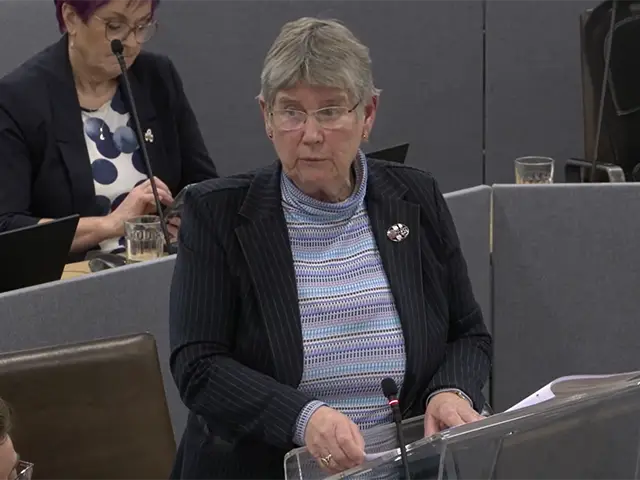
Jane Hutt, Wales’ social justice secretary, stressed that while the Senedd can debate the issue – the power to change the law remains locked in Westminster.
Reiterating calls for powers over youth justice, she committed to raising the issue during a forthcoming meeting with Jake Richards, the UK youth justice minister.
Ms Hutt told the Welsh Parliament: “I’m very conscious of the extensive evidence in favour of raising the age of criminal responsibility.”
In 2019, John Thomas – the ex-head of the judiciary – led a commission on justice in Wales, which recommended raising the age of criminal responsibility to at least 12.
Scotland raised the age to 12 in 2021. The United Nations has urged the UK Government to raise the age to 14 in Wales and England but Westminster has resisted the calls.



A CALL to sell alcohol from a coffee shop at a Pembrokeshire railway station, which recently a mass violence incident which led to 11 arrests and several people being taken to hospital, has been given the go-ahead.
At the June 4 meeting of Pembrokeshire County Council’s licensing sub-committee, members were asked to consider the granting of a new premises licence for Lisheens Coffee Pod, Tenby Station, which included the sale of alcohol off-site from 11am to 10pm, seven days a week.
Emergency services were called to the station at around 9.50pm on Tuesday, April 7, following reports of disorder involving a group of people.
During the incident, one individual was reported to be carrying a knife. Four teenagers, aged 13 to 17 were injured and taken to hospital.
A total of 11 arrests for offences including grievous bodily harm and violent disorder were made. All of those arrested were aged between 13 and 19 years old and all local to the Tenby and Pembroke Dock area, police have previously said.
While the incident was unconnected to the licensing application, it was raised in objections to the scheme.
A report for members of the committee said two objections to the application by Mrs Nicola Nolan were received, from The British Transport Police, as a responsible authority, and another from a lease of the railway building, which said: “It encourages group gatherings, encouraging vandalism, and violence such at stabbings by group gatherings as of April 7.”
Jessica Jones, Designing Out Crime Officer for British Transport Police, who later spoke at the meeting had raised concerns “based on crime data, operational policing considerations, lone-working risks, public safety concerns, and Violence Against Women and Girls (VAWG) risks”.

Her report said, over the past two years, there had been 12 incidents of violence, three serious public order offences, and one motor vehicle crime incident, the majority between 9pm and 11pm, a timeframe overlapping the proposed hours of alcohol sales, raising concern that alcohol availability “may further exacerbate existing issues of violence and disorder”.
That report added there were many outlets in Tenby town centre selling alcohol, questioning the need for a further facility at the station, and there was “significant concern regarding the risk to a lone worker having to refuse alcohol sales to intoxicated individuals or manage customers who refuse to leave”.
It went on to say that, while British Transport Police already deploy dedicated policing operations throughout the six-week summer holiday period to manage increased passenger numbers and deter crime, “introducing another alcohol sales point during these peak periods may heighten existing risks”.
Jessica Jones later told committee members introducing the scheme in Tenby would mean it was the only such offer at an unmanned station in Wales.

Speaking at the meeting, Barry Nolan, husband of the applicant, said it was hoped to supplement the ‘coffee pod’ with “genteel” and “trendy alcoholic products” such as wine, “really cool craft beer,” and Barti Ddu rum in cans for consumption elsewhere rather than “pints of lager and triple vodkas”.
He said the facility wouldn’t lead to youths congregating due to the products being at the more premium price end; also offering security if needed.
He later offered a reduction in alcohol serving hours to 8.30pm, with committee chair Cllr Tim Evans mooting an 8pm finish.
After retiring to deliberate, members agreed to the granting of the licensing, subject to an 8pm cut-off, wishing the applicants well in their business.


WALES’ four Police and Crime Commissioners are to be questioned by MPs over the future of policing and proposed UK Government reforms.
The Welsh Affairs Committee will hold a session on 8 July to examine what planned changes in the Police Reform Bill could mean for Wales.
A White Paper published in January set out plans to abolish Police and Crime Commissioners, the elected officials responsible for overseeing police budgets and setting the overall strategy for individual forces in England and Wales.
In England, those responsibilities are expected to pass to elected regional mayors or council leaders. However, it remains unclear who would take on those functions in Wales.
The White Paper also raised the prospect of merging some of the 43 territorial police forces across England and Wales, but there is no firm detail yet on whether Wales’ four forces could be affected.
The session will allow MPs to question the PCCs from Dyfed-Powys Police, South Wales Police, North Wales Police and Gwent Police about the likely impact of the proposed reforms.
Committee members are also expected to discuss wider policing issues affecting Wales, including violence against women and girls, the use of facial recognition technology, and whether policing should be devolved to the Welsh Government.
Ruth Jones MP, Chair of the Welsh Affairs Committee, said the session would be an important opportunity to examine what the reforms could mean for Welsh communities.
She said: “If PCCs are to be abolished, it is essential that any new arrangements ensure police forces in Wales remain clearly accountable to the public and that communities continue to have a strong voice in shaping policing priorities.
“We also want to explore views on the optimal number of forces for Wales and the importance of striking a balance between efficiency and preserving a strong understanding of local needs.”
Call for evidence
Ahead of the session, the committee is inviting written evidence from academic and policy experts.
It is asking how Welsh police forces should be held to account if PCCs are abolished, what lessons should be learned from the current model, and what the optimal number of police forces for Wales should be.

The committee also wants views on how other parts of the UK Government’s policing reforms could affect Wales, and the arguments for and against devolving policing to the Welsh Government.
The Welsh Affairs Committee is a House of Commons select committee. It scrutinises the work of the Wales Office and UK Government policies that affect Wales.

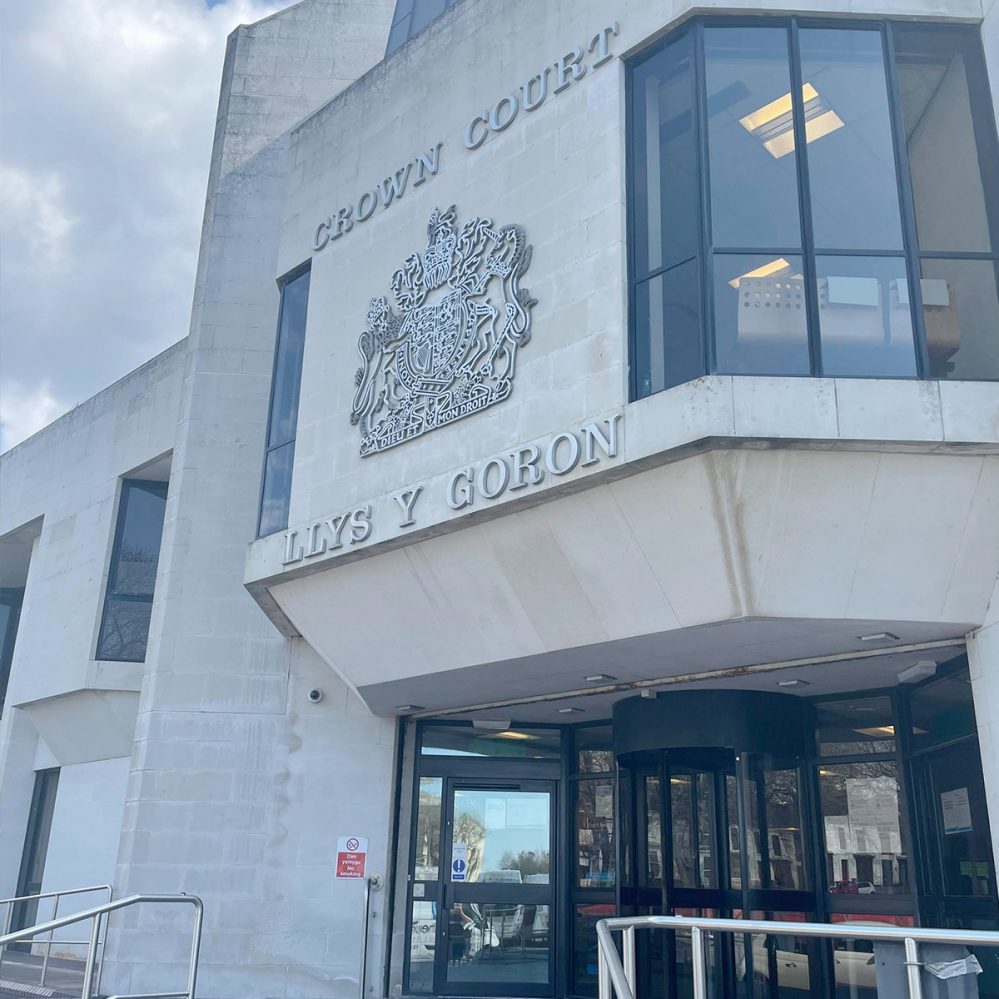
A PEMBROKE Dock man has been given a suspended prison sentence after admitting assaulting his former partner and his young son.
Paul Griffiths, aged 40, of Stranraer Road, Pennar, appeared for sentence this week after pleading guilty to offences arising from two separate incidents.
The court heard that, on April 16, 2022, Griffiths assaulted his former partner during an argument concerning their child.
During the dispute, he either pushed or threw a chair, which struck her leg and caused bruising.
A second incident took place on March 13, 2026, during an argument between Griffiths and his son.
The court heard that another adult intervened and told the pair to stop arguing. After the child may have thrown a teddy bear at him, Griffiths grabbed his son by the neck with both hands.
The adult stepped in and pushed Griffiths away from the child. The boy was left with reddening to his neck.
‘Utterly ashamed’
Sentencing Griffiths, the judge described the offences as “appalling”.
“You should be utterly ashamed of yourself,” the judge told him. “You assaulted your partner and your own son. You’ve lost your good character.”
For the assault on his former partner, which was classified as actual bodily harm, the judge found the offence to be of medium culpability and imposed a sentence of 24 weeks’ imprisonment.
A further eight weeks’ imprisonment was imposed for the assault on his son.
Griffiths was sentenced to a total of 30 weeks’ imprisonment, suspended for 12 months.

He was also made subject to a 20-day rehabilitation activity requirement.



Community21 hours ago
Crisis response dogs launched to support people through trauma and distress
A NEW project using specially trained dogs to support people during moments of trauma, grief and crisis has been launched...


News1 day ago
Major fire breaks out at Tata Steel site in Port Talbot
TATA STEEL has confirmed that a major fire broke out at its Port Talbot steelworks on Wednesday night, with emergency...


Community2 days ago
HMS Erebus tragedy links Pembroke Dock ship to Templeton family
DNA breakthrough identifies cabin boy David Young as exhibition marks 200 years since ship’s launch ON MAY 19, 1845, a...


Community2 days ago
Narberth cash machine closures spark urgent access review
CALLS have been made for an urgent review of access to cash in Narberth after two town centre ATMs were...


Health3 days ago
First Minister quizzed on Welsh NHS pressures in his first-ever FMQs
SENEDD Members pressed the First Minister over the state of the health service in Wales, as the Plaid Cymru leader...


Community3 days ago
Historic paddle steamer Waverley to return to Fishguard this month
THE WORLD’S last seagoing paddle steamer will return to Fishguard this month as part of her annual visit to South...


Local Government3 days ago
National Express use of new Haverfordwest interchange still subject to risk checks
A RUMOUR that National Express coaches may struggle to use Haverfordwest’s new transport interchange has been denied by Pembrokeshire County...


Crime3 days ago
Milford Haven man jailed for illegal Premier League streaming service
A MILFORD HAVEN man who supplied illegal Premier League streams and loaded Firesticks to almost 2,000 customers has been jailed...


Community4 days ago
RNLI lifeguards rescue beachgoers during busy heatwave weekend
FOUR PEOPLE RESCUED AS RIP CURRENTS AND OFFSHORE WINDS HIT PEMBROKESHIRE BEACHES RNLI lifeguards in Pembrokeshire rescued four people and...


Local Government4 days ago
Council and school staff pay row could hit Pembrokeshire services
COUNCIL workers, carers and school support staff in Pembrokeshire could be drawn into a growing UK-wide pay dispute after GMB...
-

 Crime2 days ago
Milford Haven man bit neighbour’s neck near cashpoint
-
Crime3 days ago
Milford Haven man jailed for illegal Premier League streaming service
-

 Crime3 days ago
Haverfordwest man admits cocaine offence as Crown disputes basis of plea
-

 Crime2 days ago
Pembroke Dock driver avoided jail after drug-drive crash
-
Local Government3 days ago
National Express use of new Haverfordwest interchange still subject to risk checks
-

 Crime2 days ago
Dinas Cross man jailed over shop thefts
-

 Community5 days ago
Charles Street to come alive for Milford Haven Founders Day
-

 Health5 days ago
Hywel Dda to hold second consultation on future of stroke services